

Acquiring an online business is only the starting line. The real challenge begins the day the transaction closes, when every decision either compounds growth or quietly erodes profit margins.
Most buyers inherit a website that functions well enough to generate revenue but still carries years of overlooked inefficiencies.
Addressing those gaps early can turn a moderately profitable acquisition into a high-performing asset within months rather than years.
Buyers who browse online businesses for sale often evaluate listings based on traffic and revenue data alone. While those numbers matter, the post-acquisition period is where real value gets unlocked.
A website that already earns revenue can usually earn significantly more once conversion bottlenecks, speed issues, and content gaps are resolved.
The optimizations below focus on changes that directly impact bottom-line performance for any newly acquired digital property.
1. Fix Site Speed and Core Web Vitals First
Page load time is one of the fastest levers a new owner can pull. When page load time increases from one second to three seconds, bounce probability jumps.
Newly acquired sites frequently carry bloated themes, uncompressed images, and render-blocking scripts that accumulated under previous ownership. These slowdowns cost real money every single day they remain unfixed.
Slow pages don’t just annoy visitors. They drain revenue in ways most new owners don’t notice right away. Walmart tested this years ago, and the numbers were hard to ignore.
Google’s own research paints a similar picture on mobile. When load time creeps from one second to three, bounce probability shoots up by 32%.
That’s nearly a third of your visitors gone before they even see your offer. Most acquired sites carry the same kind of bloat, and they suffer the same losses until someone steps in and cleans things up.
2. Run a Speed Audit on a Newly Acquired Site
Start with a full audit using tools available in the Chrome browser developer suite.
Prioritize fixing Largest Contentful Paint and Cumulative Layout Shift scores first, since these two metrics influence both user experience and search rankings.
Compressing images, enabling browser caching, and removing unused plugins can often cut load time in half without touching the site’s design or layout.
The performance gains tend to show up in conversion data within days.

Source: Freepik
3. Optimize Conversion Rates Before Driving More Traffic
Traffic means nothing if visitors leave without taking action. Many acquired websites have call-to-action buttons buried below the fold, product pages with thin descriptions, or checkout flows that require too many steps.
Even small friction points compound over thousands of visits and translate into significant lost revenue over a quarter.
Focus on the highest-traffic pages first. Test different headline copy, simplify navigation menus, and reduce the number of form fields wherever possible.
A/B testing two variations of a landing page over a few weeks can reveal surprisingly large revenue differences.
According to industry benchmarks, a well-optimized landing page converts between two and five percent of visitors, while a poorly structured one often sits below one percent. Closing that gap is usually the single biggest revenue driver in the first 90 days of ownership.
4. Build a Data-Driven CRO Process (Not Random Tweaks)
Here’s what trips up most new owners. They start swapping button colors, rewriting headlines, and rearranging layouts, all before looking at any data.
It feels productive, but it isn’t. Peep Laja built CXL into one of the most respected conversion optimization resources on the web. He’s been blunt about this trap.
His argument is straightforward. Random tweaks rarely stick. What works is sitting down with the data first.
- Where do visitors drop off?
- Which pages carry real buying intent?
- What’s actually causing friction?
Answer those questions, then build a testing plan around what the numbers tell you. A structured process beats a scattered list of quick fixes every time.
Source: Freepik
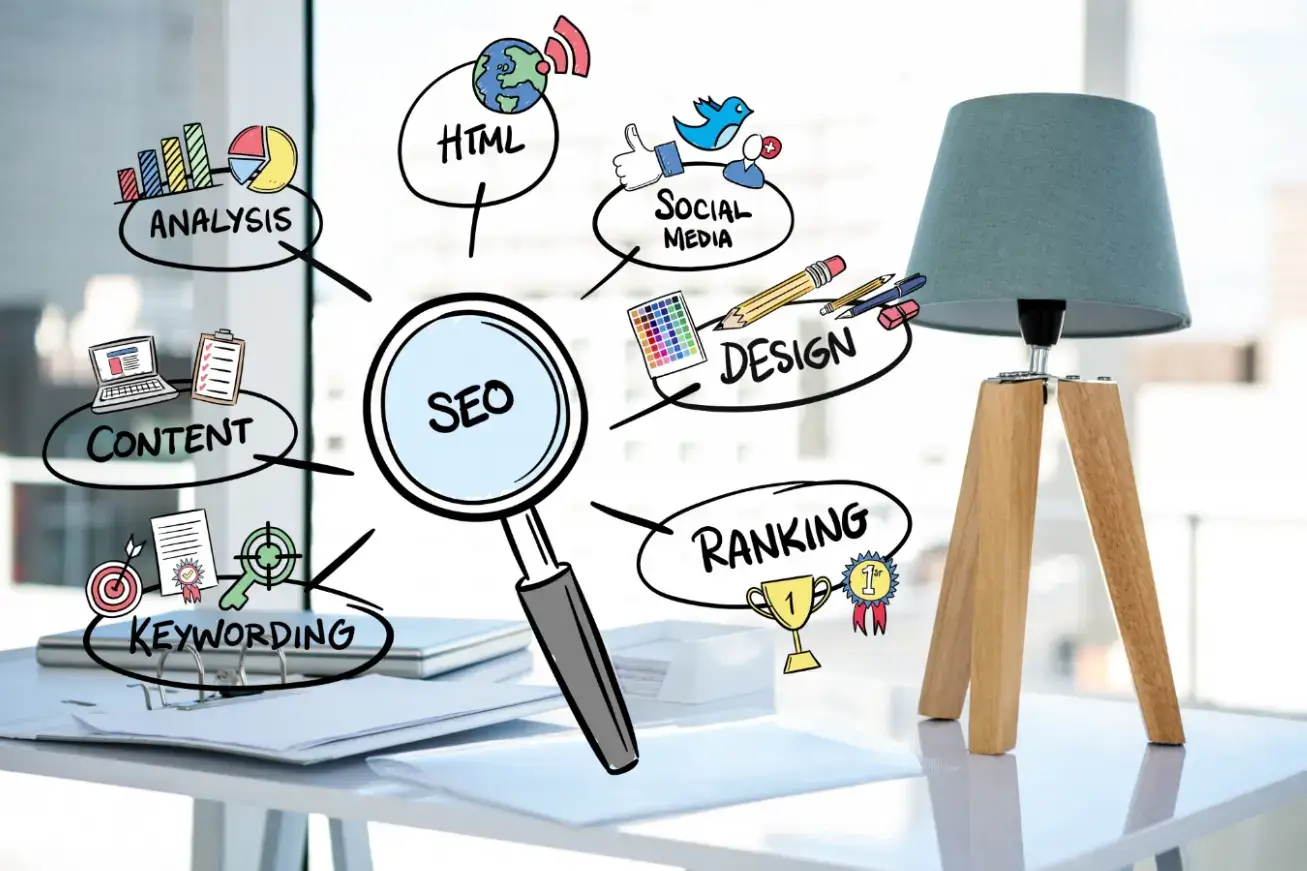
5. Close Content Gaps and Improve SEO Health
Most acquired websites have content that ranks for some keywords but misses entire clusters of related search terms.
A thorough content audit helps identify pages that could rank higher with minor updates, such as adding internal links, refreshing outdated statistics, or expanding thin sections. It also reveals topics the site has never covered at all, which represent untapped organic traffic opportunities.
Check for technical SEO issues at the same time. Broken links, duplicate meta descriptions, missing alt text on images, and orphaned pages are common problems that accumulate when a previous owner stops actively managing the site.
Fixing these issues sends stronger relevance signals to search engines and often results in noticeable ranking improvements within a few weeks. Pairing technical fixes with fresh content creates a compounding effect that steadily grows organic traffic.
6. Monetize the Existing Email List
An inherited email list is one of the most undervalued assets in any acquisition. Many sellers let their email strategy stagnate long before listing the business, which means the list is often larger and more engaged than the current revenue suggests.
Setting up a basic welcome sequence, a weekly newsletter, and a cart abandonment flow can recover revenue that was simply slipping through the cracks under previous management.
Most buyers underestimate how much money a neglected email list leaves on the table. The ROI on email is remarkable compared to other channels, and it’s not even close.
Neil Patel, co-founder of NP Digital and a New York Times bestselling author on marketing, has written about this gap repeatedly.
He puts the average return at 36 to 40 dollars for every dollar spent on email. That number sounds absurd until you see it play out.
Patel has also stressed that volume alone won’t get you there.
If the previous owner was blasting the same generic promo to the whole list, there’s almost certainly untapped revenue hiding in those subscribers. Set up a proper welcome sequence. Segment by purchase history. The difference shows up fast.
7. Segment and Clean Your Email List for Higher ROI
Segment the email list based on purchase history and engagement levels.
Sending targeted offers to repeat buyers typically generates a much higher return per email than blasting the same promotion to the entire database.
Clean the list regularly by removing inactive subscribers so deliverability rates stay high and open rates reflect genuine audience interest.
Your First 90-Day Optimization Plan
The difference between a flat acquisition and a compounding one usually comes down to what happens in the first 90 days.
This is your window to identify leaks, capture quick wins, and build systems that keep generating revenue long after the initial fixes are done.
Instead of trying to do everything at once, break the work into focused phases.
Weeks 1–2: Audit and Fix the Foundations
Start by understanding what you actually bought.
Run a full audit across performance, analytics, and user experience before making any major changes. This is where you uncover the silent issues that have been suppressing growth.
Focus on:
- Running a speed audit and fixing major Core Web Vitals issues
- Verifying analytics tracking, conversion goals, and revenue attribution
- Identifying your top 5–10 highest-traffic pages
- Reviewing the checkout flow or primary conversion paths for obvious friction
At this stage, you’re not optimizing yet—you’re diagnosing. The goal is clarity. Once you know where users drop off and what’s underperforming, your next steps become obvious.
Weeks 3–6: Optimize Conversions and Capture Lost Revenue
Now shift from analysis to action.
Start with the pages that already get traffic. These are your fastest path to revenue gains because even small improvements compound quickly.
Prioritize:
- Simplifying forms and reducing unnecessary fields
- Moving or strengthening calls-to-action above the fold
- Improving product or landing page clarity (headlines, descriptions, trust signals)
- Launching your first A/B tests based on real drop-off data
At the same time, activate your email channel:
- Set up a welcome sequence for new subscribers
- Implement a cart abandonment flow
- Send your first targeted campaign to re-engage the existing list
This phase is where most of your early revenue lift happens. You’re not increasing traffic—you’re making better use of the traffic you already have.
Weeks 7–12: Expand Traffic and Scale What Works
Once your conversion foundation is stronger, you can start scaling with confidence.
Now it makes sense to invest in SEO, content, and traffic growth because you know the site can convert that traffic efficiently.
Focus on:
- Updating existing content to improve rankings and capture more keywords
- Publishing new content to fill high-intent gaps
- Fixing technical SEO issues like broken links and missing metadata
- Segmenting your email list and increasing send frequency with targeted campaigns
This is also the stage where patterns emerge. You’ll start to see which pages convert best, which traffic sources perform strongest, and which email segments generate the most revenue.
Double down on those.
Build Momentum, Not Perfection
The goal of the first 90 days isn’t to create a perfect website. It’s to build momentum.
A faster site improves conversions. Better conversions justify more traffic investment. More traffic feeds your email list. And your email list amplifies everything else.
Stack those gains, and the business starts to grow predictably.
Miss this window, and you risk inheriting the same stagnation that led the previous owner to sell in the first place.
Take Action Before Revenue Slips Away
Every optimization discussed above shares one trait: it rewards early action. Page speed fixes stop bleeding conversions on day one.
A structured CRO process turns guesswork into measurable lifts within weeks. A revived email channel starts pulling revenue from a list that was collecting dust.
And accurate analytics tie all of it together, giving you a clear picture of what drives growth and what still needs work.
The businesses that scale fastest after acquisition are the ones where the new owner treats the first 90 days as an intensive audit-and-improve cycle.
Stack these optimizations on top of each other, and the gains compound. A faster site improves conversion rates, better conversions justify more content investment, and a growing email list amplifies every piece of content you publish.
Do not wait for the perfect moment to begin. Open your analytics dashboard today, run a speed test, and identify the single highest-impact fix on your site.
That one change will generate momentum, and momentum is what turns a newly acquired website into a business that grows predictably month after month.

Source: Freepik
Frequently Asked Questions
1. What is the first optimization a new owner should make after acquiring a website?
Start with site speed and analytics. Run a speed audit to catch the worst performance issues. Also, verify that all tracking codes and conversion goals are configured correctly. Once those foundations are solid, move to conversion rate optimization on your highest-traffic pages.
2. How quickly can conversion rate improvements affect revenue?
Some changes produce results almost immediately. Fixing a slow-loading checkout page or simplifying a form can shift conversion numbers within days. A/B tests on landing pages typically need two to four weeks to reach statistical significance. But even modest improvements in conversion rate compound quickly when multiplied across steady traffic volumes.
3. Why is an inherited email list so valuable after an acquisition?
An email list represents an audience that has already shown interest in the business. Unlike paid traffic, reaching these subscribers costs almost nothing per message. Many sellers stop investing in email long before selling, so a new owner who sets up welcome sequences, cart abandonment flows, and segmented campaigns can often recover significant revenue in the first few weeks.
4. How do I know if my website analytics are set up correctly?
Check for common issues like duplicate tracking tags, misconfigured conversion goals, missing e-commerce tracking, and broken event tags. Run a test transaction or form submission and verify that it registers correctly in your analytics dashboard. If revenue attribution looks inconsistent or traffic numbers seem inflated, there is likely a configuration problem that needs fixing before you trust the data for decision-making.

Author Bio
Oakr Wuvy is a digital growth strategist and content contributor specializing in website optimization and post-acquisition performance. With a strong focus on conversion rate optimization, user experience, and revenue scaling, Oakr helps businesses unlock the full potential of newly acquired websites. Through practical insights and data-driven strategies, Oakr’s work guides brands in improving site performance, increasing engagement, and maximizing long-term return on investment.