

Most businesses focus on getting more traffic, more clicks, and more visibility. But none of that converts consistently without trust—and today, trust is built in one place first: your Google reviews.
The challenge is that customers rarely think about leaving reviews on their own. Even satisfied ones move on quickly unless something prompts them at the right moment. That’s why review generation isn’t about luck—it’s about timing, structure, and making the process effortless.
In this guide, you’ll learn 15 practical strategies to consistently generate Google reviews by turning everyday customer interactions into natural opportunities for feedback. These are simple, repeatable tactics you can build into your workflow—so reviews come in steadily without relying on guesswork.
In this article:
- 15 Proven Ways to Get More Google Reviews
- Real Examples of Businesses Getting More Google Reviews
Why Google Reviews Matter for Business Growth
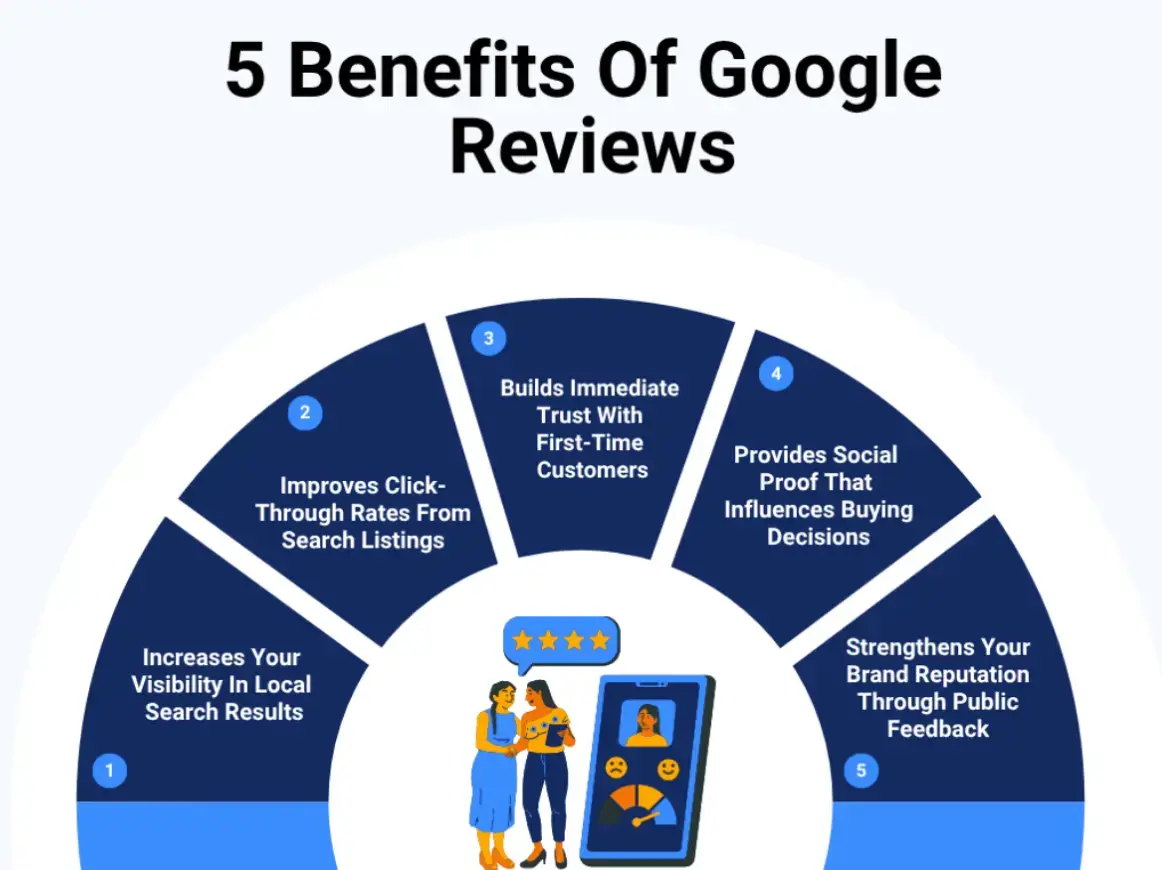
Here’s where you see the exact ways Google reviews push your business forward:
1. Improve Local Search Visibility
Google is constantly trying to figure out which local businesses are actually active right now. Reviews are one of the clearest signals.
When people keep leaving organic feedback on your business, it tells Google that this place is being visited. It is current. It is relevant. And that matters a lot more than just having your profile filled out perfectly.
Also, online reviews tend to mention very specific things – “open late,” “quick repair,” and your neighborhood name. You didn’t write that, your customers did. But Google still picks up on it.
So without doing anything extra, your reviews quietly expand the number of ways people can discover you. It is like your customers are helping you show up in searches you didn’t even think about.
2. Increase Click-Through Rates From Google Search
When you search for something, you don’t carefully analyze every option. You scan. And in that quick scan, your eyes go straight to two things: the stars… and how many people left them. That is it.
If one business has 4.6 stars with 300 reviews, and another has 4.8 with 6 reviews, you instantly start making assumptions. You haven’t even clicked yet, but you are already leaning one way.
That split-second judgment is where positive reviews do their job. They don’t convince people slowly. They work fast. They make your listing feel “picked by others,” which makes it safer to click.
So even if you are already showing up in search, having more Google Business reviews is what actually pulls people in.
3. Build Trust With First-Time Customers
Potential customers don’t know you. They haven’t experienced your quality or your reliability. So they look for clues. And reviews are the first thing they check.
Businesses can use customer insights to better understand user behavior, identify customer preferences, and improve the overall online experience.
What is interesting is that people don’t expect perfection. Consumers trust online reviews when they are mixed, because they look real. What builds confidence is how your business is consistently described over time.
If multiple people mention punctuality or helpful staff, that creates a pattern. And patterns are believable.
Another subtle factor is the tone. Having more reviews that are written naturally and humanly makes your business more approachable and less risky.
So instead of you saying you are great, your customers are saying it for you – and that carries a lot more weight.
4. Create Social Proof That Drives Conversions
There is this mental shortcut people use: If enough others did this and didn’t complain… it is probably fine.” That is exactly what reviews create.
It is not about one amazing comment. It is about seeing the same outcome repeated again and again. Different people, same experience. That repeated social proof gets more sales than perfection.
Even mixed reviews can help here. When people see a few negative reviews but notice that most are positive, it actually makes everything more real.
So instead of trying to look flawless, reviews make you look chosen. And being chosen by others is what pushes people to choose you, too.
5. Strengthen Your Online Reputation
Your reviews are a running public conversation about your business. Not a campaign. Not a one-time impression. A continuous stream.
Over time, patterns start forming. People keep mentioning the same strengths… or the same issues. And anyone checking you out can see those patterns within minutes.
But your responses shape that story just as much. Ignore reviews, and it looks like you don’t care. Respond defensively, and it looks bad. Respond calmly and consistently, and it shows control.
That behavior becomes part of your brand. So it is not just what people say about you – it is how you handle it in full view of everyone else. That is what really builds (or breaks) your reputation over time.
15 Proven Ways to Get More Google Reviews
Here are 15 simple ways that get customers to respond and leave more Google reviews:
1. Optimize Your Google Business Profile
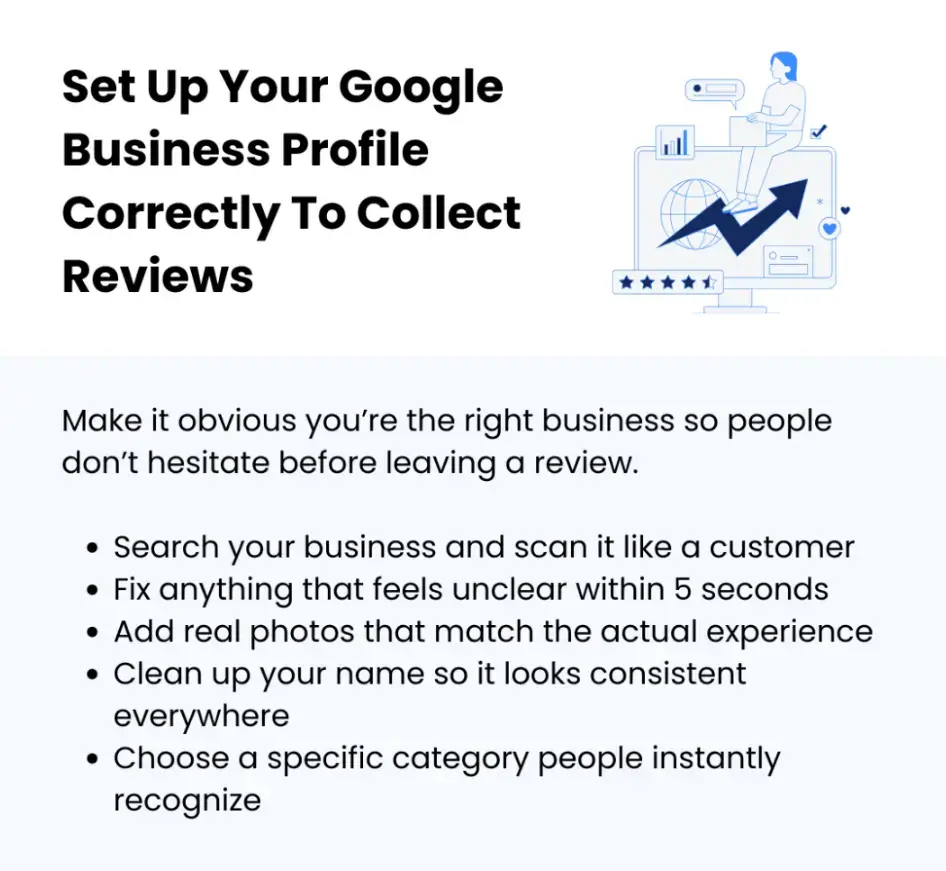
If your Google Business Profile or Google Maps listing looks even slightly weird, people hesitate to leave a review. Not because they don’t want to – but because they are unsure.
Wrong hours, no photos, weird business name formatting… it creates this friction where they think if this is the right place. And that small doubt is enough for them to do nothing.
Do This:
- Search your own business as a customer would. If anything feels unclear in 5 seconds, fix that first.
- Add photos that match what customers actually saw, not what you wish things looked like.
- Make sure your category is specific enough that customers instantly recognize it is you (not a vague or broad label).
2. Build a Consistent Review Request Process
Most businesses rely on memory for a review. That is the problem. Memory is inconsistent. And inconsistency is why review flow dries up.
Instead, reviews should be a step in your workflow – just like sending an invoice or confirming an order. Something that happens because the process says so.
Once it becomes routine, you stop relying on manual effort altogether.
Do This:
- Pick one exact moment in your workflow where asking always happens – no exceptions, even on bad days.
- Reduce it to something almost automatic – handing over a receipt + saying one line.
- Track it casually for a week. Just notice how often you actually ask vs. how often you think you asked.
3. Ask for Reviews at the Right Moment
There is a very specific second – literally a few seconds – where a customer is most open to saying yes. It is right after something clicks for them. Not before, not later.
And you will recognize it: they relax, they nod, they say it is perfect. That is the moment most people accidentally ignore because they move on too quickly.
Do This:
- When you hear a positive reaction, pause instead of rushing ahead. That pause is where the ask fits naturally.
- Don’t switch tone – keep the same energy: “Glad that worked out – would you mind dropping that in a quick Google review?”
- If you miss the moment, don’t force it later. Late asks are disconnected and get ignored more often.
Pro Tip: Don’t just ask – anchor the wording to what they just reacted to. If they said “that was quick,” reflect that exact word. This increases the chances they repeat that same phrase in the review, which strengthens keyword relevance and makes the feedback more real.
4. Use Direct Google Review Links
Every extra step you add reduces your chances by half. If someone has to find your profile and figure things out, you have already lost most of them.
Not because they are lazy, but because life interrupts. A direct link removes all decision-making. It turns “I’ll do it later” into “I can do it right now.”
Do This:
- Keep your review link somewhere you can grab instantly – notes app, pinned chat, wherever you won’t fumble.
- Send it immediately after asking – not 10 minutes later when the moment has cooled off.
- Open your own link on different phones. If it doesn’t land exactly where it should, fix that before sending it to anyone.
5. Request Reviews Through SMS
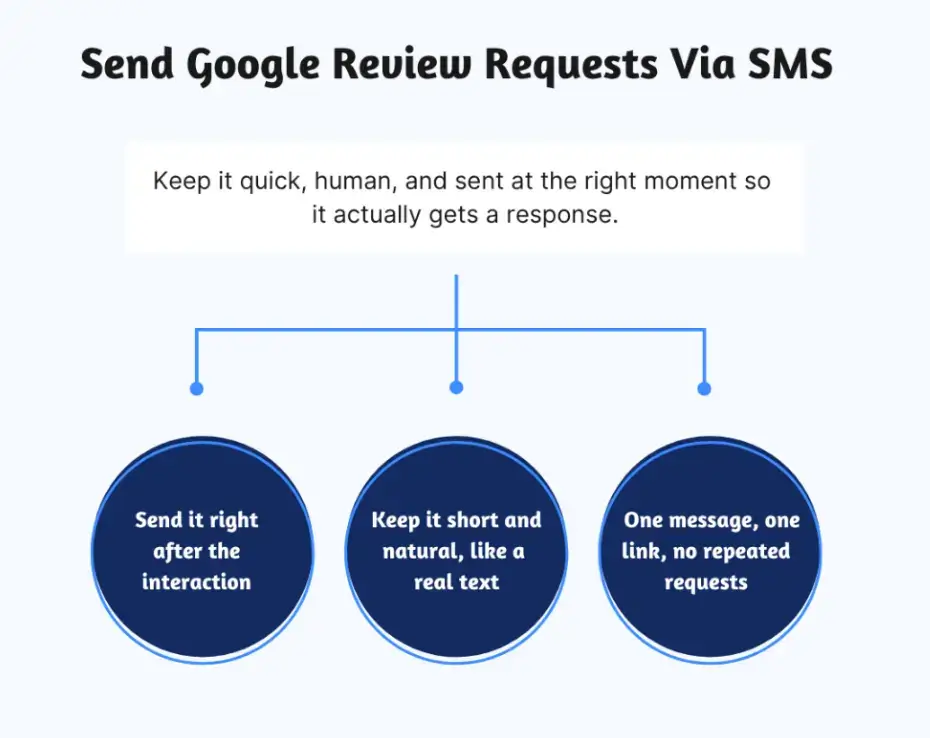
Text messages create a different kind of attention. They don’t get left there quietly like emails – they interrupt, slightly. That is why they work. But that is also why you need to be careful.
If your message is long or looks unnecessary, it will be ignored just as quickly as it was opened. It only gets you anywhere if the message is like something a real person would send.
Do This:
- Send it while the interaction is still recent, not the next day when you are just another notification.
- Write as you talk: short, slightly imperfect, human. Anything too polished gets ignored.
- Avoid stacking messages. One message, one link. Don’t follow up repeatedly. It starts feeling like pressure fast.
6. Send Review Requests by Email
Email is slower, but it works in a different way – it catches people when they are in a “sitting down and clearing things” mindset. That makes it useful for customers who wouldn’t act instantly but will respond when they have a quiet moment.
Do This:
- Keep the email visually simple. If it looks like a newsletter, it will be treated like one… ignored.
- Mention something specific about their interaction so it doesn’t look like a mass send.
- Time it for when people are likely checking emails calmly (evening works better than busy hours).
Pro Tip: Send the review email as a reply in an existing thread, not a new email. When it shows up in an ongoing conversation, it becomes personal and is opened more often. Even a short “Following up here – would you mind dropping a quick review?” performs better than a fresh subject line competing in the inbox.
7. Ask For Reviews in Person
This one is uncomfortable at first – but it works because it removes all ambiguity.
When you ask in person, there is no algorithm, no inbox, no distractions. Just a moment. But people can sense pressure instantly.
So the way you ask matters more than the fact that you asked. Done right, it is like a casual request. Done wrong, it becomes awkward.
Do This:
- Attach the ask to the end of a natural sentence rather than making it a separate moment.
- Keep your tone neutral. Neither too eager nor too casual. Just matter-of-fact.
- Don’t linger after asking. Say it and move on. Staying there makes it awkward.
8. Use QR Codes to Simplify Reviews
QR codes work best when someone is already holding their phone and waiting. Think about those idle moments – standing at a counter, waiting for a bill, sitting for a minute before leaving. That is where QR codes do their job.
Businesses can use IMQRScan's Google Review QR Code Generator to create a scannable review QR code for counters, receipts, packaging, invoices, and follow-up materials, making it easier for customers to open the review page quickly.
Do This:
- Place the QR code exactly where people pause – not where they pass by quickly.
- Add a very specific instruction (“Scan → Tap → Review”) so there is no confusion.
- Keep the design clean. If it is cluttered or overly designed, people ignore it completely.
Pro Tip: Link your QR code to a short web story created with Made.io instead of sending people directly to the review page. The story can walk them through a quick recap like “What you got → What stood out → What others usually mention,” and then end with the Google review link. This warms them up in a few seconds and increases the chances they actually follow through after scanning.
9. Add Review Requests to Your Website
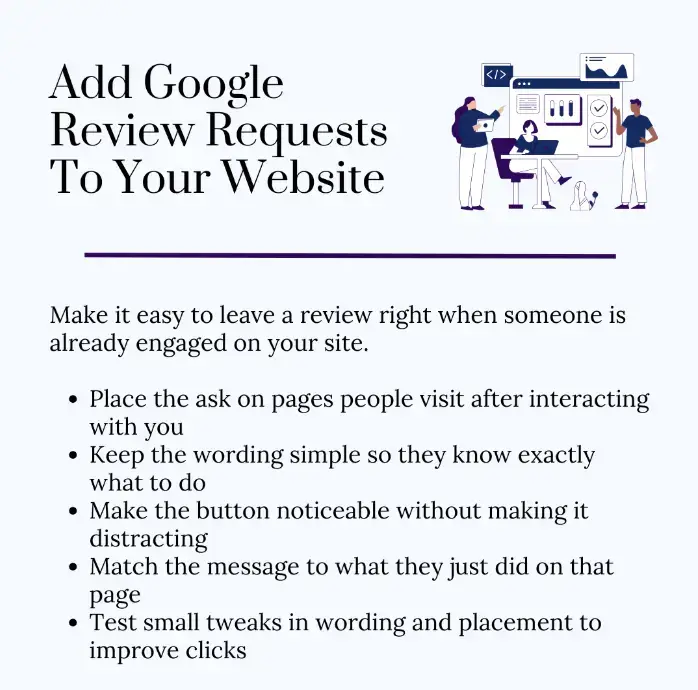
Your website gets a mix of people – some new, some returning, some who have already used your service. A small portion of them are willing to leave a review right then, but only if it is easy.
Do This:
- Place the review option on pages people visit after interacting with you.
- Don’t oversell it. One simple line works better than a paragraph explaining why reviews matter.
- Make sure the button stands out just enough to be noticed, but not so much that it becomes a pop-up ad.
Pro Tip: Hire a UI/UX design partner like Elisol to test microcopy and intent-based variations of your review ask across different pages. Instead of using the same line everywhere, they can match the wording to user intent, like “Quick feedback on your order?” on a checkout page vs. “Share your experience” on a service page. It lets you track which version actually gets more clicks.
10. Automate Review Requests Strategically
Review automation fails when it is robotic. It works when it feels like good timing. The difference is when the message is triggered.
If it arrives too early, it is disconnected. Too late, and the moment is gone. But when it matches the customer’s experience, it becomes almost intentional.
Do This:
- Trigger messages based on actual completion points – not fixed time intervals.
- Add slight delays that mimic human behavior. Not instant, not too late.
- Periodically check your automated messages yourself. They start fine, then slowly feel more like a bot wrote them.
11. Use Social Media to Encourage Reviews
Social media isn’t where people go to leave reviews – but it is where they are already paying attention to you. And that attention can be redirected.
When people see others talking about your business, it makes them add their own voice. Not because you asked, but because it is something people are doing.
Do This:
- Post casually – like you are talking to your regulars, not broadcasting an announcement.
- Share moments or experiences instead of just asking. Context increases response.
- Space out these posts. Too frequent, and people filter them out completely.
12. Resolve Customer Issues Before Asking
Asking for a review from someone who is even slightly unhappy almost guarantees a bad one. But more importantly, it shows poor timing. Fixing the issue first changes the entire tone of what they will say… if they choose to say anything at all.
Do This:
- Listen for hesitation in their tone or responses. That is usually a sign that something is not right.
- Address issues fully before even thinking about reviews. Not partially, not quickly – properly.
- After resolution, give it time. Don’t jump straight into a review ask. That becomes transactional.
Pro Tip: After fixing the issue, watch for a shift in language. When a customer goes from neutral (“okay”) to specific (“that actually helped” or “that’s much better”), that is your signal. That change means they have mentally moved on from the problem… and that is the earliest point where a future review won’t lean negatively.
13. Follow Google’s Review Guidelines
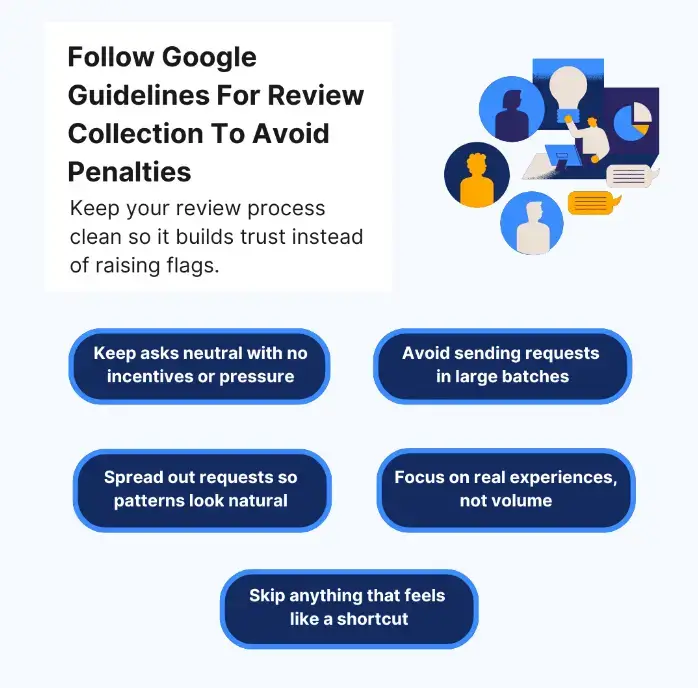
Taking shortcuts with reviews doesn’t just blow up on you – it can ruin the trust you have built. Google isn’t just looking at how many reviews you get, but how you get them. Patterns matter. Behavior matters. And once something looks manipulated, it is hard to undo that damage.
Do This:
- Keep your asks neutral – no rewards, no pressure, no “only if you had a good experience.”
- Avoid sending large batches of requests at once.
- If something seems like a shortcut, it usually is. And shortcuts here don’t go well.
14. Standardize Review Collection Across Teams
If one person asks confidently and another forgets, you get inconsistent results. And customers notice inconsistency… even if they don’t say it. Consistency comes from clarity. Everyone should know exactly what to do without thinking.
Do This:
- Write down the exact wording and timing so nobody has to improvise.
- Run through it once or twice as a team so it becomes natural.
- Check in occasionally. Not to pressure, but to see what is actually happening on the ground.
Pro Tip: For bigger teams or multiple locations, use a workflow management software to embed review collection steps directly into your standard operating procedures. Set up simple workflows where a review request becomes a required step after a service is completed or a sale is closed. This way, your team sees it as part of the process they already follow. You can also track completion, so you quickly spot gaps between locations or team members and fix them early.
15. Repurpose Reviews Across Marketing Channels
Most businesses collect reviews… and then leave them untouched. That is a lot going to waste.
A good review can influence dozens if they actually see it at the right moment. And you are not creating new content – you are redistributing proof.
Do This:
- Pull specific lines from existing Google reviews that highlight clear outcomes or experiences.
- Place them near decision points – like pricing pages or service descriptions.
- Rotate different reviews regularly so your content doesn’t look static.
Pro Tip: Use reviews in paid social and search campaigns through performance marketing agencies like Code3 so the same proof shows up right when people are comparing options and deciding where to click.
Real Examples of Businesses Getting More Google Reviews
Let’s see how these 5 businesses actually put all of this into practice and turned it into a steady flow of Google reviews.
1. Roto-Rooter
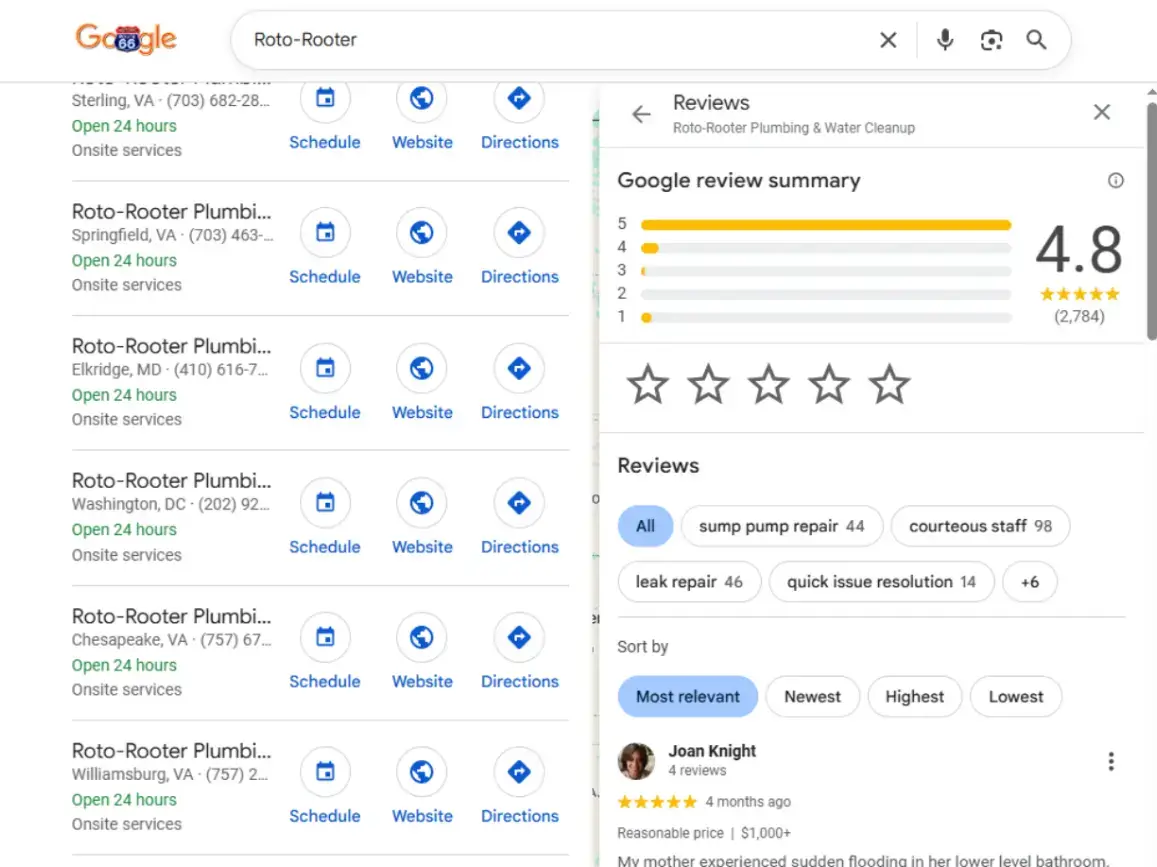
How They Generate Reviews After Service Calls
Roto-Rooter (U.S. plumbing and water cleanup services) built one of the most consistent field-based review systems in home services. Instead of relying on office follow-ups, they shifted the responsibility to the technician on-site.
Here’s what they actually do:
- Technicians are trained to request a review immediately after service completion, while the customer is still present
- They use a simple SMS-based follow-up system tied to the job ticket
- Customers receive a direct link to leave feedback right after the service call closes
The key move is timing ownership. The review request is not delayed by marketing. It happens at the exact moment the problem is solved, and the customer is most relieved.
This is one of the reasons Roto-Rooter consistently maintains a large volume of reviews across local branches in the U.S., especially in competitive metro areas.
2. Nootropics Depot
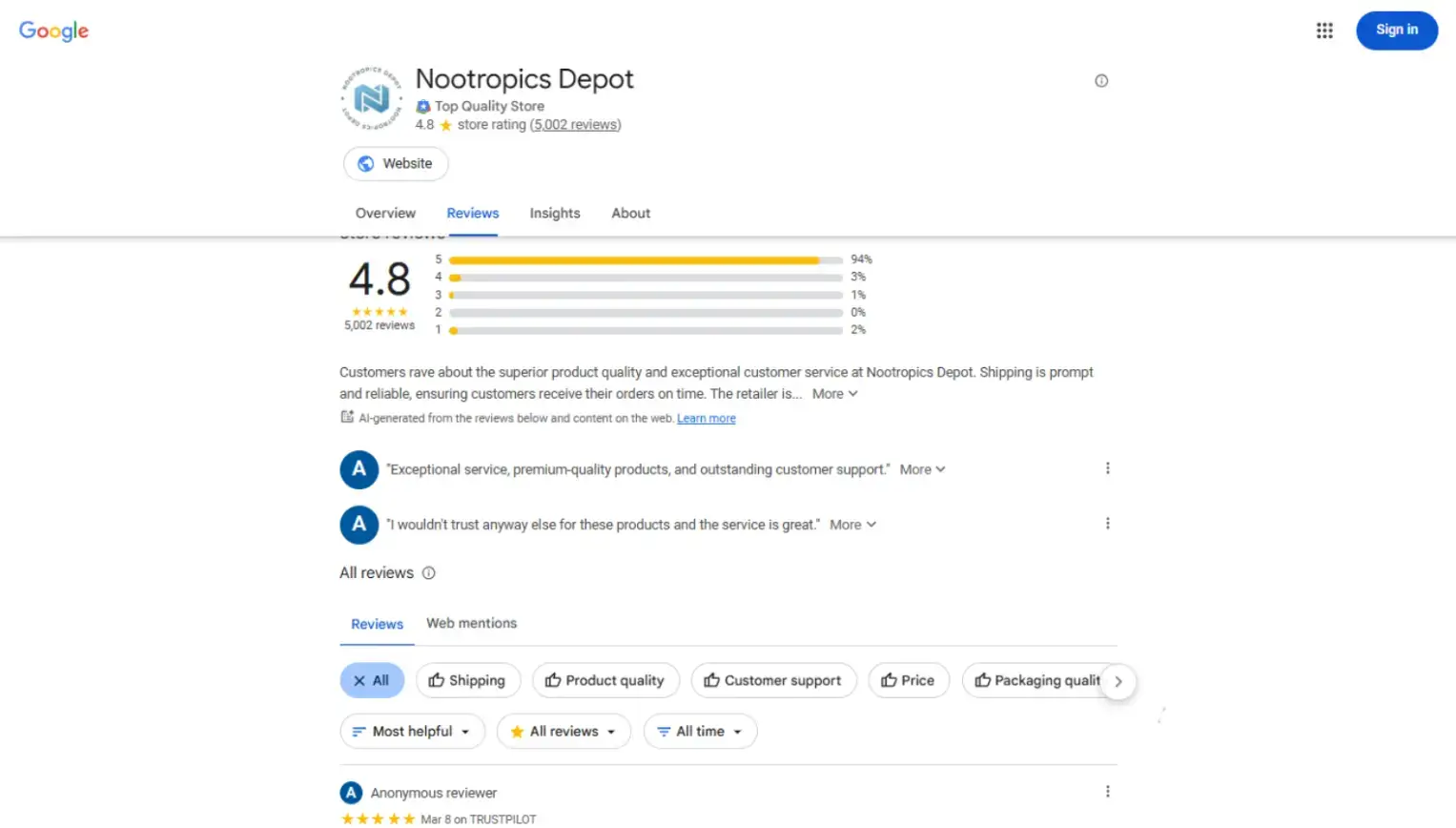
How Product Education Improves Review Quality
Nootropics Depot’s online supplement store sells products where trust is everything. People are putting these into their bodies, so vague feedback does nothing. You will notice their reviews feel unusually detailed compared to most supplement brands. That does not happen by accident.
Here’s what they are actually doing differently:
- They anchor reviews to batch-level transparency, not just the product
- They subtly educate customers before they ever write a review
- They keep the review flow close to repeat buyers, not one-time customers
- They don’t interrupt the buying experience with aggressive prompts
Each product page ties back to specific lab testing and batch data. Customers who care about purity and consistency already have that context when they leave a review. So instead of “worked great,” you see comments about taste differences between batches or measured effects over time.
Product descriptions go deep. Dosage, expected effects, timelines. By the time someone is ready to leave feedback, they already know what to pay attention to. That is why their reviews read like mini-reports rather than one-liners.
A big chunk of their customers reorder. That second or third purchase is where reviews spike. People feel more confident sharing feedback after consistency checks across multiple orders. So, instead of aggressively chasing first-time buyers, they benefit from loyalty-driven reviews that carry more weight.
3. Brondell
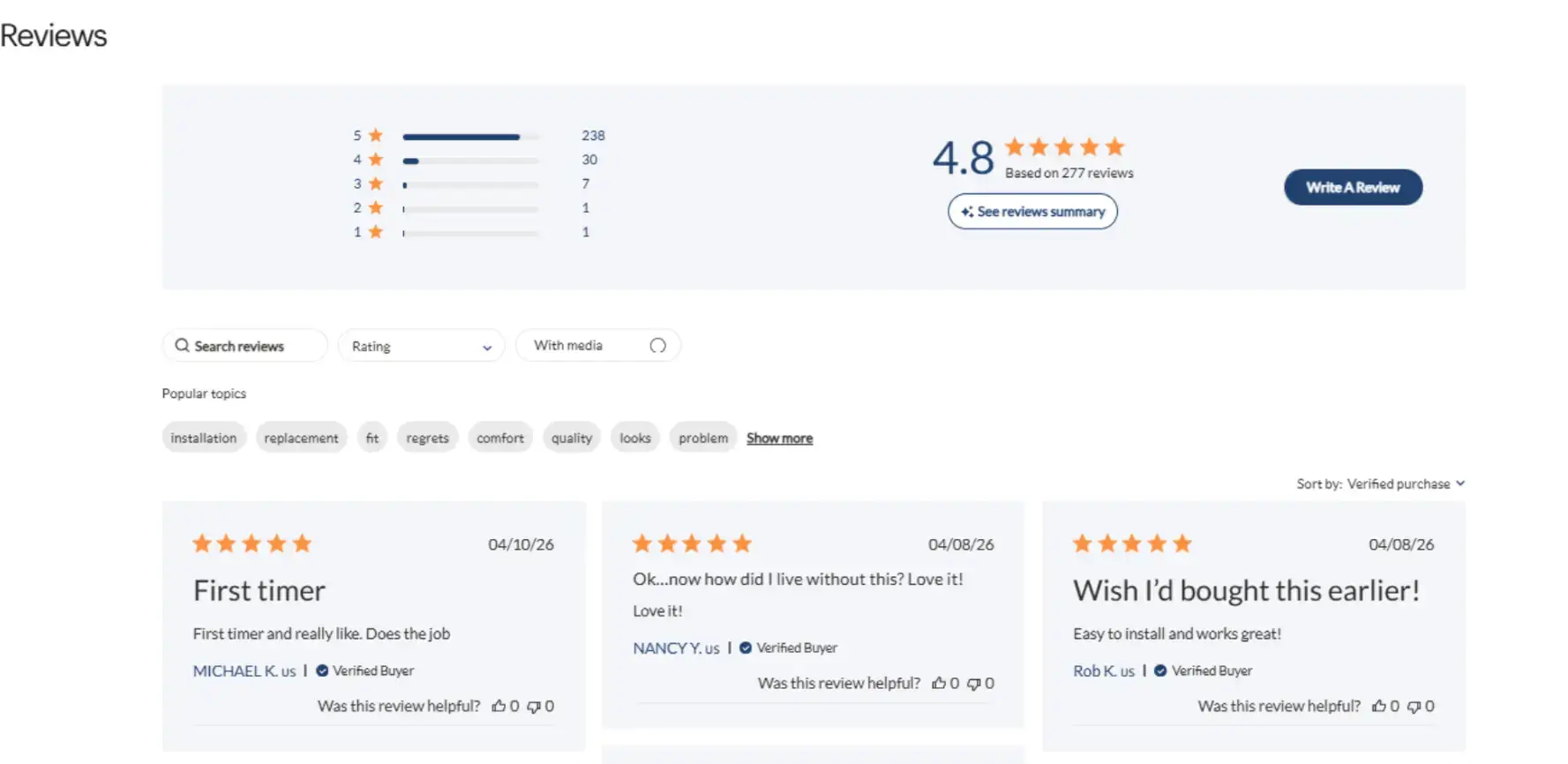
How Delayed Review Requests Increase Responses
Brondell’s EcoSeat S101 is a product that customers don’t review instantly. It needs a few days of actual use before someone can say anything meaningful. They built their review collection around that delay instead of pushing for immediate feedback.
Here’s what they are doing:
- Their eCommerce stack includes Yotpo, which triggers post-purchase review requests for completed orders
- Review requests are sent after a short usage window, not right after delivery, so customers have something real to say
- Each product has short but specific user quotes tied to real usage, which gives people a clear idea of what to write
This changes the quality and volume at the same time. Customers are more willing to respond because the timing makes sense, and the feedback ends up being more specific. What stands out here is timing based on product experience… not transaction completion.
4. Panther Trax
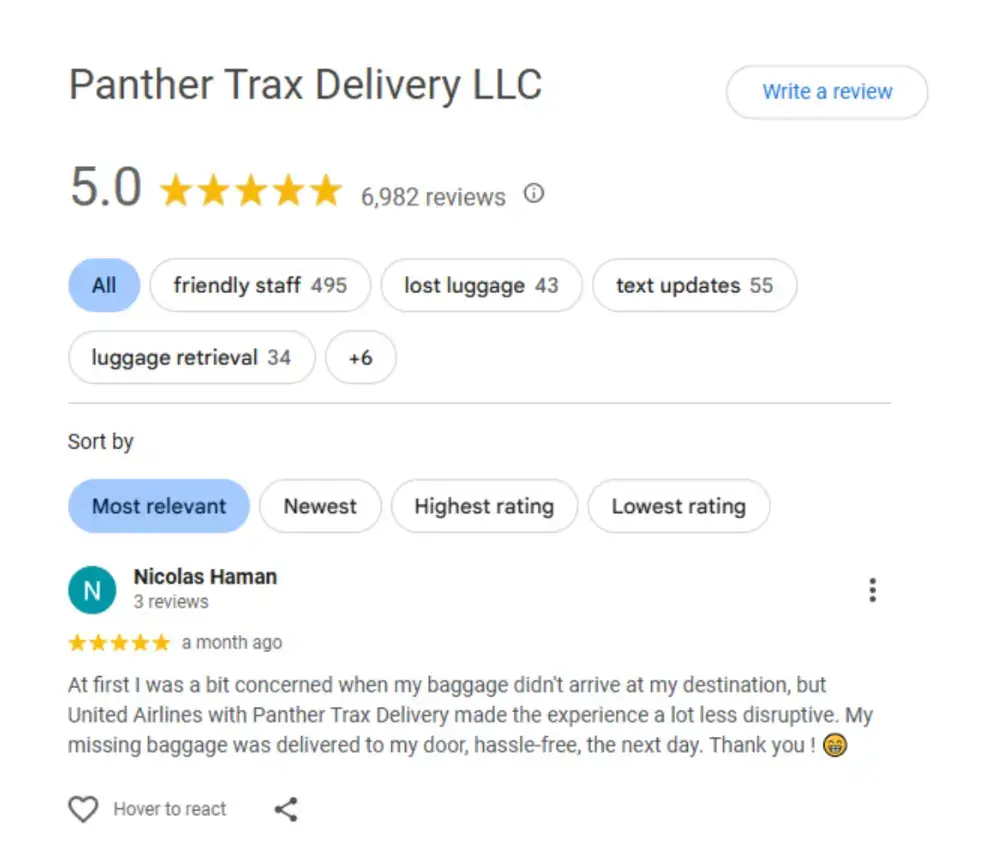
How Trigger-Based SMS Requests Drive Reviews
Panther Trax operates in a space where customers interact with them at very specific moments: when lost luggage is returned. That moment is emotional and time-sensitive. They built their review process around that exact point.
Here’s what they changed:
- They replaced batch email follow-ups with a trigger inside their delivery system that fires only when a bag is marked “delivered and signed.”
- Drivers confirm the handoff in real time, which immediately logs the job as complete and eligible for a review request.
- A short SMS with a direct Google review link is sent within minutes, tied to that specific delivery record.
Before this, their review flow was inconsistent and manual. After aligning requests with completed deliveries, they built a steady stream of feedback tied to real experiences. What stands out here is the precision. They asked at the exact moment the service outcome was clear.
5. Quiet Monk
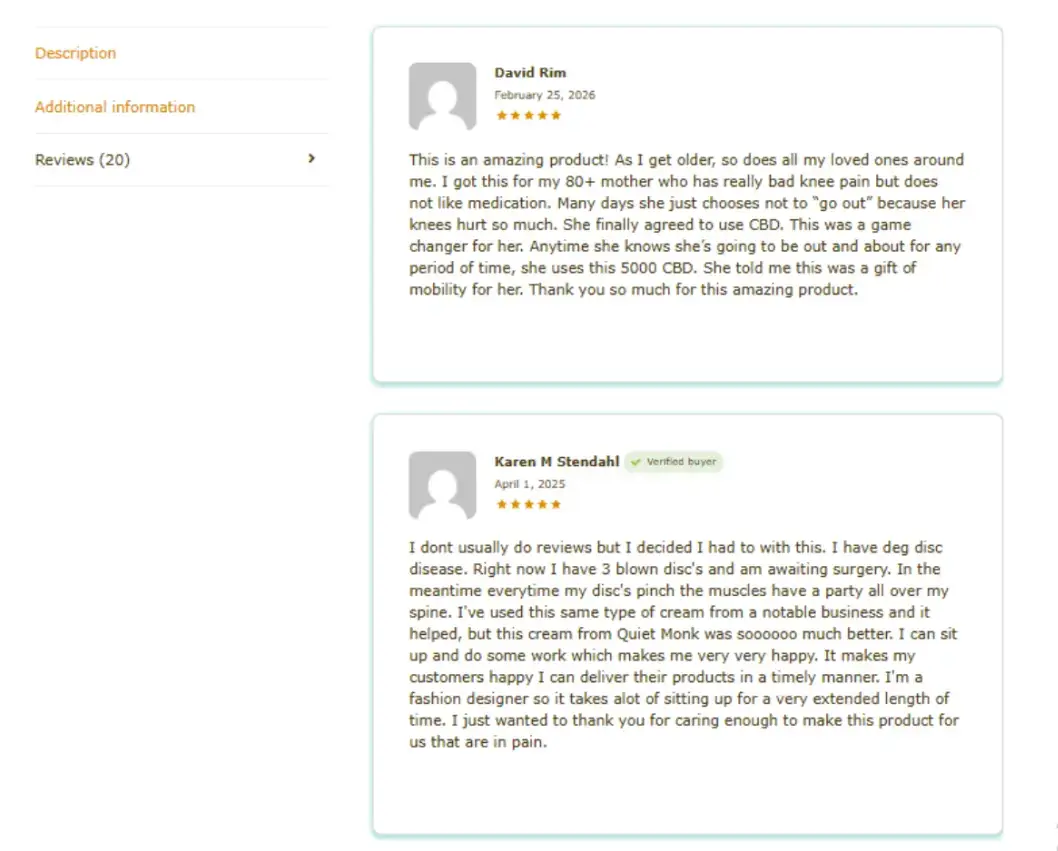
How Lifecycle Timing Improves Review Collection
Quiet Monk operates in the wellness space where hesitation is built into the buying decision. People take their time. They read labels twice. They compare options. That hesitation carries over into reviews, too.
Most customers don’t feel ready to say anything after a single use. Quiet Monk leaned into that instead of pushing for fast feedback.
Here’s what they are actually doing:
- They delay review requests based on product type, not order date
- They segment customers by usage intent before asking for feedback
- They collect micro-feedback first, then convert it into full Google reviews
- They use refill timing to trigger second-touch review requests
For example, someone buying a sleep tincture doesn’t get a review request right after delivery. They get a short check-in several days later, asking a single question like “Have you noticed any difference in your sleep routine yet?” That response is captured privately first.
Only after that initial response do they send a follow-up asking the customer to share their experience publicly on Google. By then, the customer already has something specific to say.
They also revisit customers when they reorder. That second purchase becomes a stronger review trigger because the customer now has a point of comparison. The review angle shifts from first impressions to consistency over time.
Conclusion
Getting more Google reviews isn’t about using every tactic at once—it’s about building a simple system that works consistently over time. When the timing feels natural, the ask is clear, and the process is easy, customers are far more likely to follow through.
The strategies in this guide all point to the same idea: remove friction and make review collection part of how your business operates day to day. Start with one or two methods that fit your workflow, refine them, and build from there.
Over time, those small, consistent actions turn into a steady stream of feedback that strengthens your visibility, credibility, and customer trust—without forcing the process.
Tools like POWR’s Product Reviews app can help automate review collection and display customer feedback directly on your site, making it easier to turn reviews into ongoing social proof.
Everything runs without code. You pick the app, customize it in minutes, and drop it into your site.
Forms, popups, review widgets, email capture, all in one place. Over 60 apps, one dashboard, and full control over how everything looks and behaves.
Start building that system today. Get started for free.
Frequently Asked Questions
1. How do I ask for a 5-star Google review?
Ask right after a positive experience. Keep it direct. Share your Google review link. Example: “Glad everything went well. It would help a lot if you shared your experience here.”
2. Can I pay for Google reviews?
No. Paying for Google reviews goes against Google’s policies and can lead to penalties, including removal of reviews or suspension of your listing.
3. When is the best time to ask for a Google review?
The best time is immediately after a successful interaction, when the customer is still satisfied, and the experience is fresh in their mind.
4. How many follow-ups should I send?
Follow up once, gently. Space it 2–3 days later. Keep it short and include the direct link to the review page again. If there is no response, stop. Repeated reminders reduce trust and lower response rates.
5. What mistakes should businesses avoid when asking for reviews?
The most common mistakes that businesses make are asking too late, making the process complicated, sending too many follow-ups, using generic messages, and focusing on quantity instead of timing and ease.

Author Bio
Burkhard Berger is the founder of Novum™. He helps innovative B2B companies implement modern SEO strategies to scale their organic traffic to 1,000,000+ visitors per month. Curious about what your true traffic potential is?