

You run ads, but it feels like no one’s listening. Your website is beautiful, but the visitors just aren't clicking "buy." Sound familiar?
It is about using the information you already have about your customers (with their permission, of course) to understand their needs and wants.
To make things easier for you, we will break down exactly what data-driven marketing is and give you a step-by-step guide on how to make it work for you.
What Is Data-Driven Marketing?
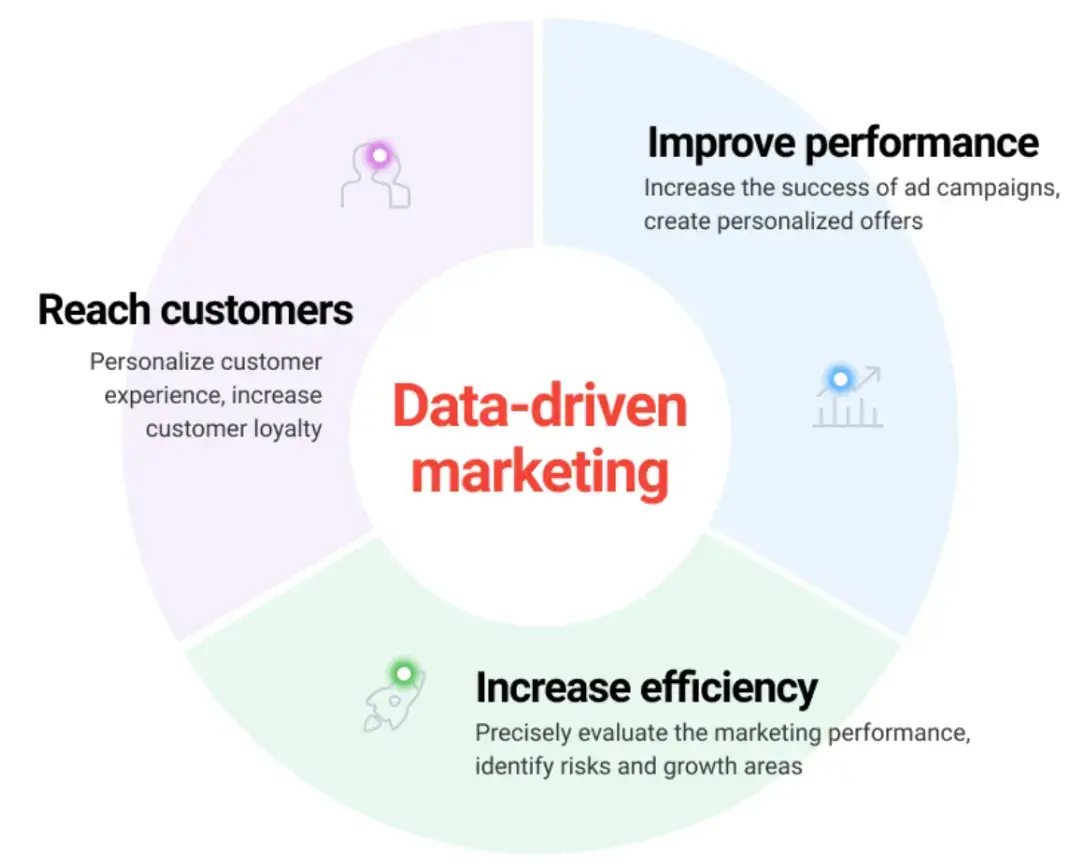
Source: Owox
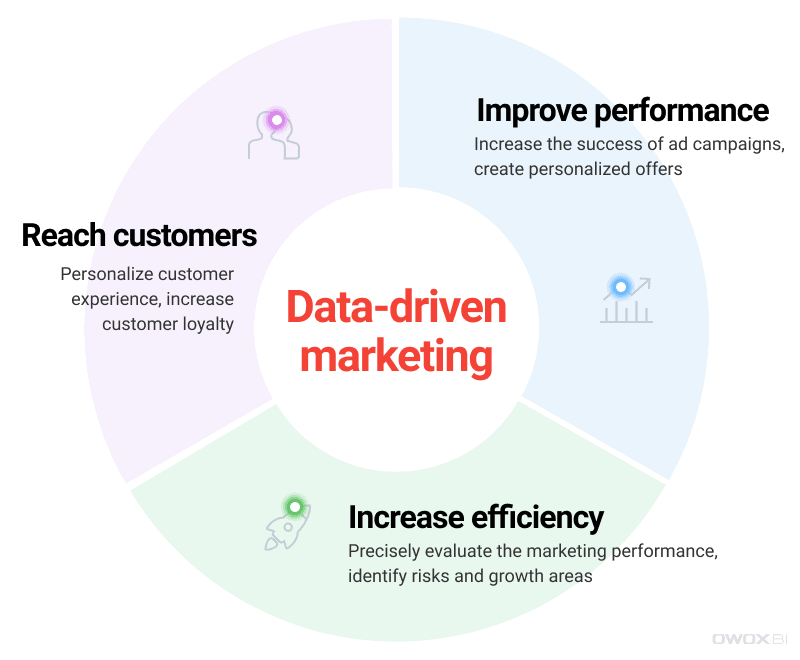
Data-driven marketing involves using data to inform decision-making and strategy planning.
Marketing teams collect customer data from various sources and analyze it to understand customer interests and how they interact with the brand, often supported by data integration consulting services.
This information is then used to develop targeted marketing campaigns that are more likely to succeed.
How To Implement Data-Driven Marketing In Your Business: 7 Easy Steps To Get You Started
Source: Persuasion Nation
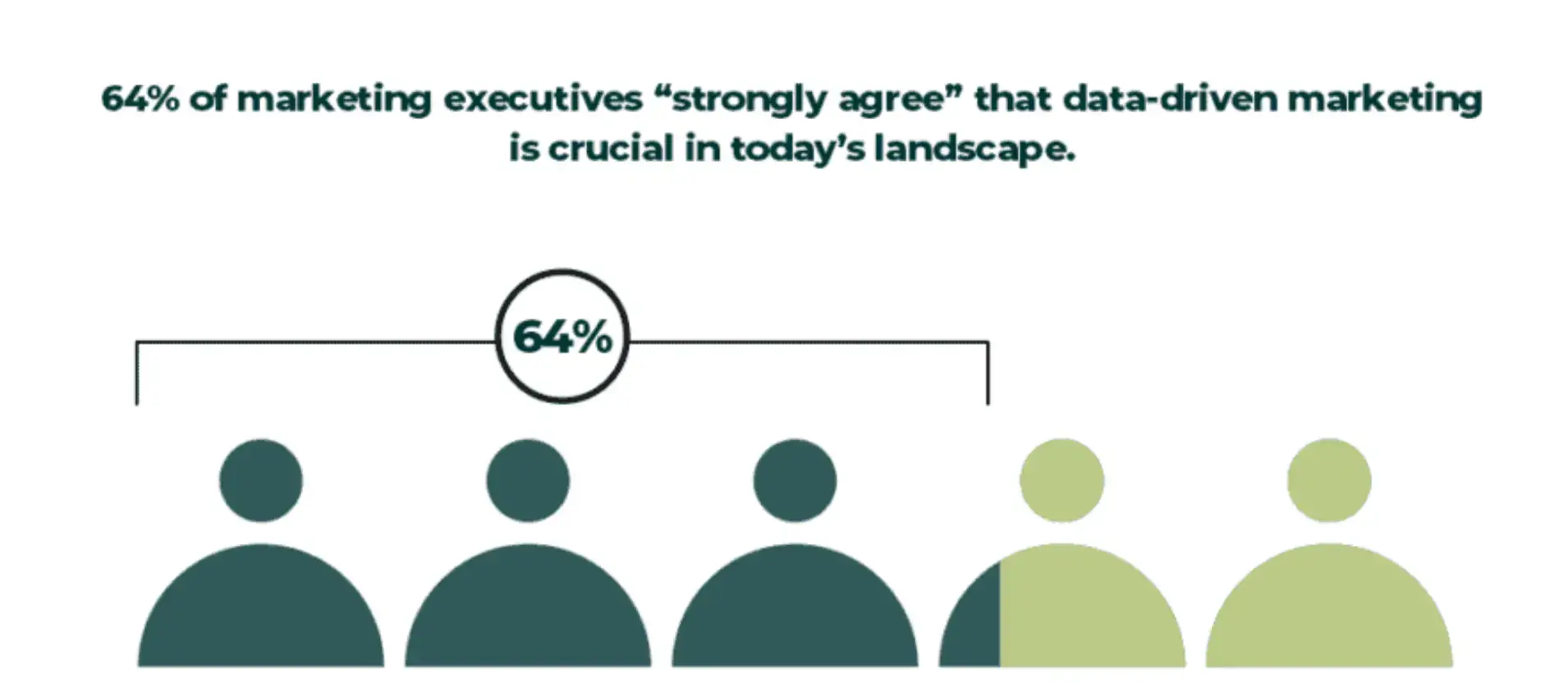
64% of marketing executives agree that data-driven marketing is needed to maximize ROI. So if you haven't jumped on board yet, now's the perfect time to start. Here’s how you can do it.
1. Define SMART marketing goals to guide data collection
This first step is crucial.
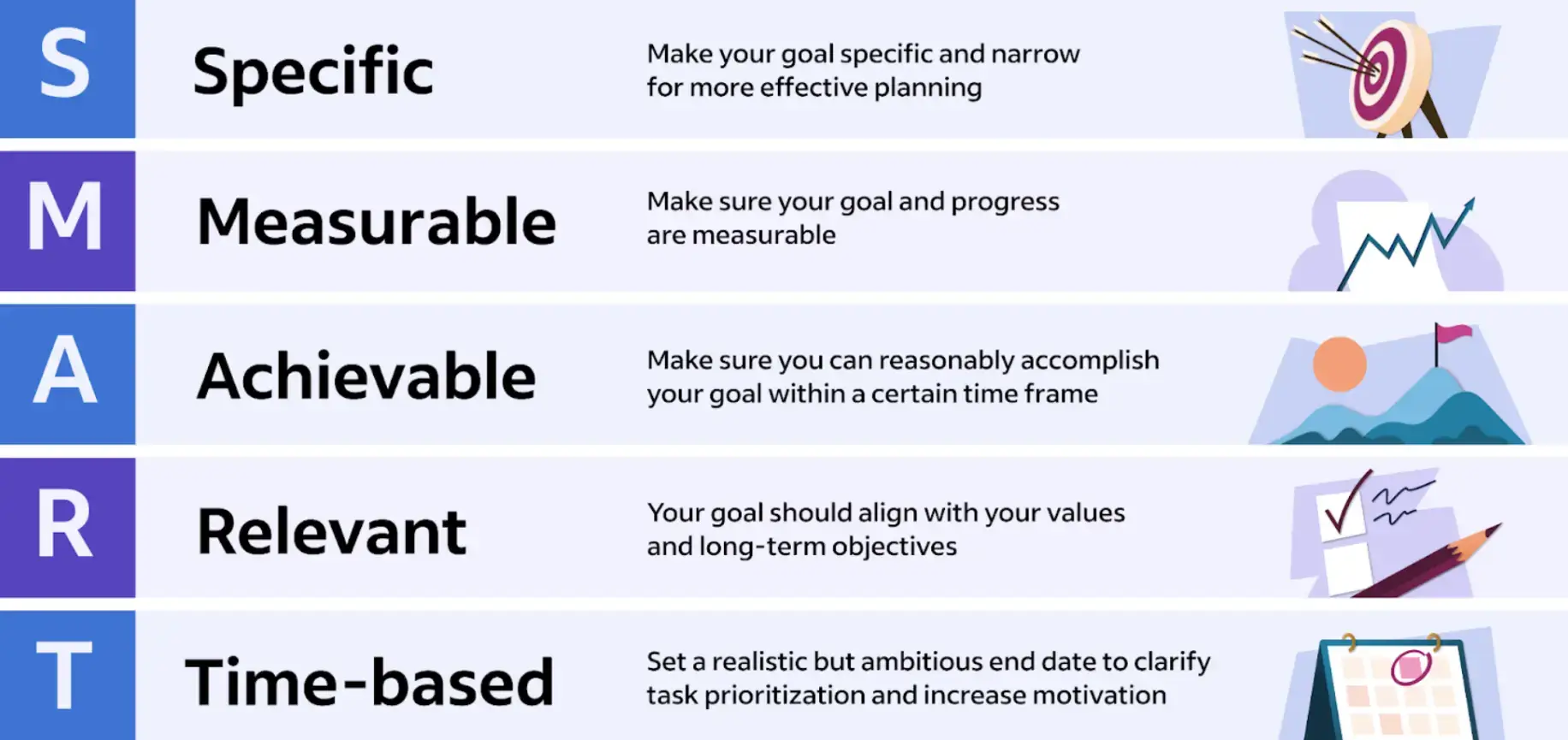
You need SMART goals to identify exactly what you want to achieve with your marketing efforts. They will give you a clear direction, and you will know exactly what data points to collect to measure your progress.
Source: Indeed
Here's how to get started with defining SMART goals:
- Specific: Don't say "increase brand awareness." Instead, say "increase website traffic from organic search by 20% in the next quarter." This tells you exactly what you are aiming for.
- Measurable: How will you know if you hit your target? Identify the metrics you will track. In this case, you will monitor website traffic from organic searches using Google Search Console.
- Achievable: Be ambitious but realistic. A 200% traffic increase in a month is not feasible. Aim for a goal that stretches you but can be reached with the right strategy.
- Relevant: Make sure your goals align with your overall business objectives. Does more website traffic mean more sales or leads? If not, revise your goals to ensure you get the right results.
- Time-bound: Set a deadline for achieving your goal. This creates a sense of urgency and helps you track progress over time.
2. Centralize data across departments
Data-driven marketing strategy thrives on a complete picture of your customers.
But customer data often gets trapped in different departments. This fragmented approach makes it nearly impossible to understand your customers as a whole.
Here's how to break down these data silos and build a unified source of truth:
- Start by mapping out where customer data lives in your business. This includes your:
- Website analytics
- CRM system
- Email marketing platform
- Social media channels
- Sales call recordings
- Make sure data is collected consistently across all these touchpoints. This means everyone uses the same definitions and formats to capture customer information.
- Use a Customer Data Platform (CDP) like Treasure Data CDP or Blueshift to pull information from different sources and create a unified customer profile. This gives you a single source of truth for all your marketing efforts.
- Break down departmental walls. Encourage your marketing, sales, and customer service teams to share information and enrich your customer profiles. You can set up regular data exchange meetings or create shared dashboards for this. Using data observability helps your teams easily track and understand customer behavior, improving collaboration across departments.
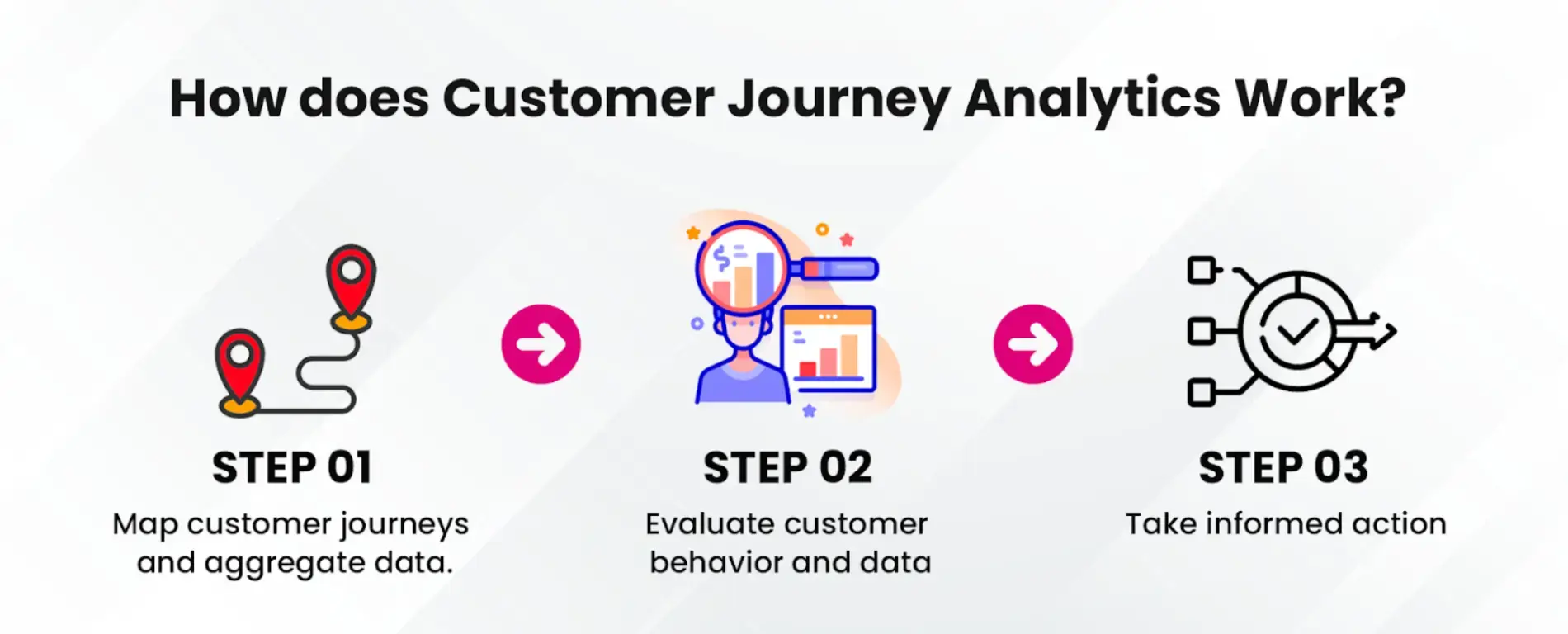
3. Use customer journey analytics to identify key touchpoints
Source: Storylane

Think about your ideal customer.
Here's how to get the most out of customer journey analytics:
- Create a customer journey map that outlines the different stages a customer goes through, from initial awareness to purchase and beyond.
- Track customer behavior, but go beyond basics. Website analytics are a good starting point, but they only tell part of the story. Look for tools that track customer behavior across all marketing channels. This can include UTM parameters for website traffic attribution, social media analytics platforms, and CRM software with customer interaction tracking.
- Look for trends and patterns in the data. For example, you might see a high drop-off rate after a certain point in the sales funnel. This could be due to a potential issue you should resolve.
- Focus on high-impact touchpoints. Customer journey analytics helps you identify the moments that have the biggest influence on customer decisions. Here's what you need to watch out for:
- Moments of Truth: These are the critical interactions that shape customer perception. This could be the first impression your website makes, the experience of a sales call, or the responsiveness of your customer service team.
- Friction Points: Identify any obstacles customers face along the journey. Maybe your website checkout process is too complex, or your email marketing blasts feel irrelevant.
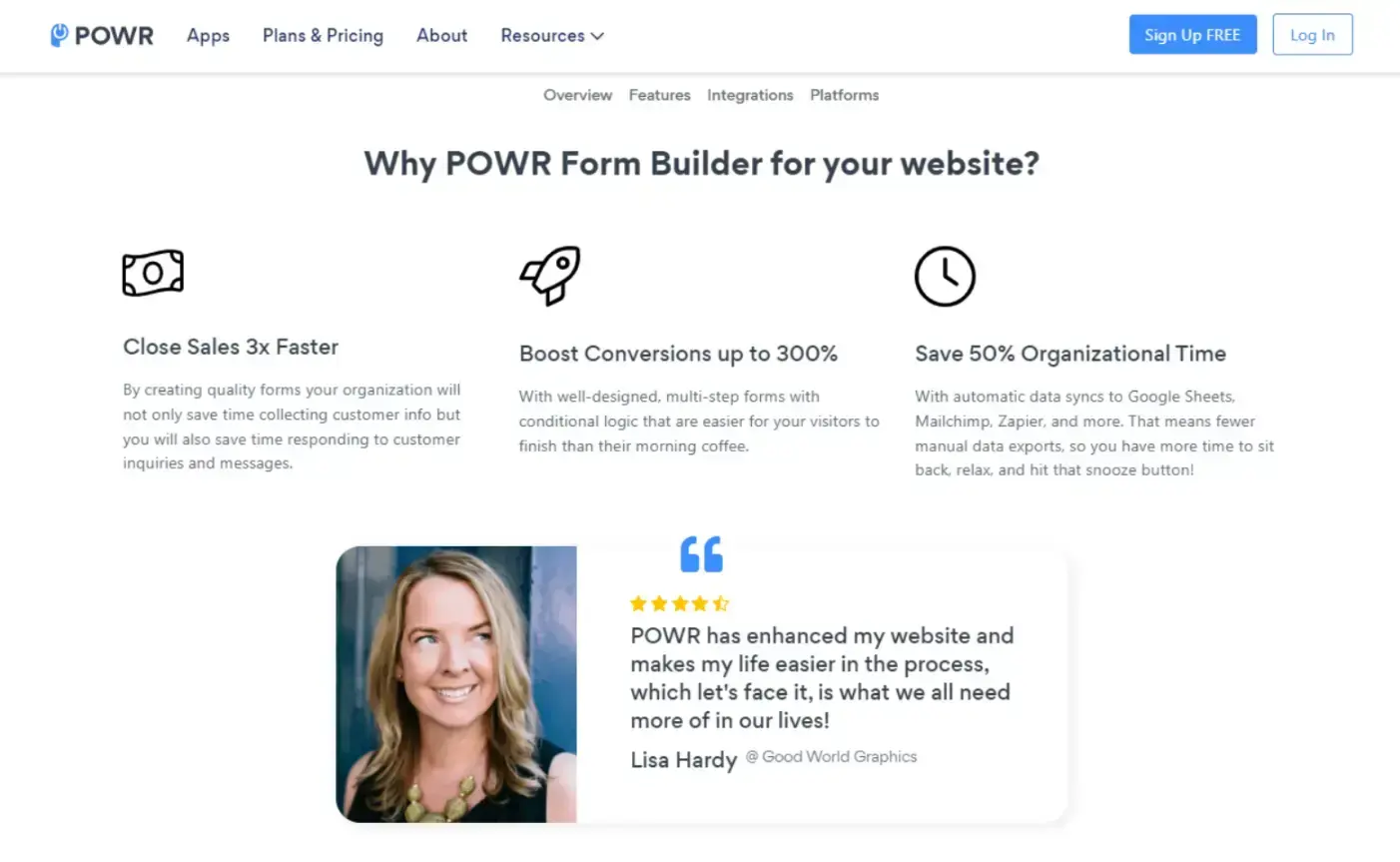
Once you identify key touchpoints and friction points in your customer journey, you can use POWR to address them and improve the overall customer experience. For instance, if you see a high drop-off rate during ordering, POWR’s Form Builder can help you create a user-friendly online order form.
POWR offers many pre-built form templates to get you started quickly, and its drag-and-drop interface lets you customize the form to match your website's design.
4. Segment audiences based on behavior & demographics
The key to successful segmentation is using the right data.
There are 2 main ways to segment your target audience:
- Demographic Data: This includes things like age, gender, location, income, and education level. While demographics can be a good starting point, they don't paint the whole picture.
- Behavioral Data: This goes beyond demographics and looks at how customers interact with your brand. Here's what to consider:
- Website Behavior: Use website analytics to segment users based on their browsing activity. This could include pages visited, time spent on specific content, and downloads. For instance, you can target website visitors who viewed product demos with retargeting ads offering free trials.
- Purchase History: Analyze customer purchase history to identify buying patterns and preferences. You can then segment customers based on their past purchases and recommend relevant products or services.
- Email Engagement: Track how subscribers interact with your email marketing campaigns and its lead magnets. Analyze data and segment audiences based on open rates, click-through rates, and what types of content they engage with most.
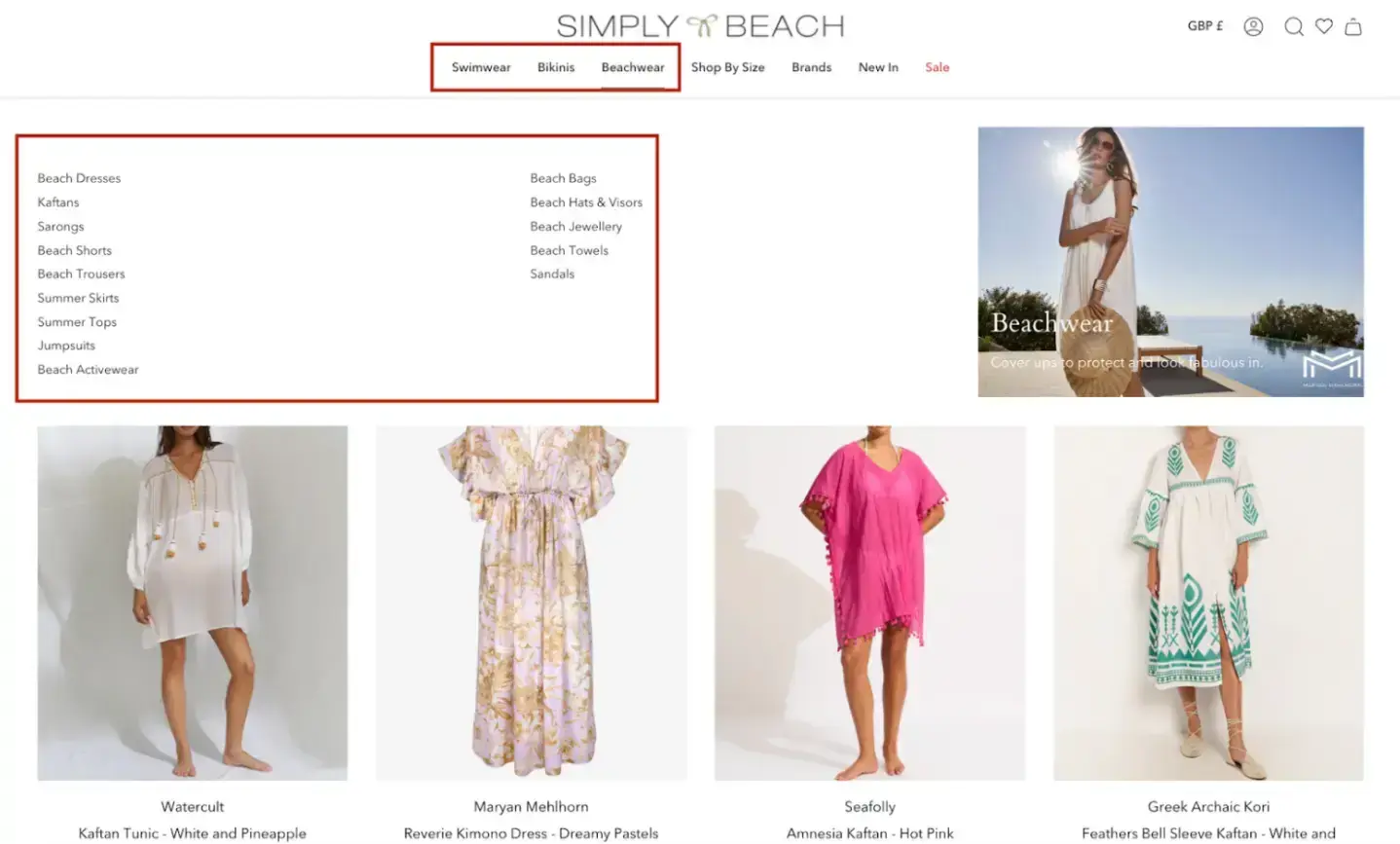
Here’s an excellent example:
This beachwear eCommerce site has hundreds of beach-related items. How would they know what to recommend to whom?
Identify users who frequently visit categories like 'kaftans' or 'swimwear sets.' Target these segments with dynamic content that showcases new arrivals or seasonal collections in their preferred categories, so they see relevant products on their next visit.
5. Employ A/B testing to optimize marketing messages & creatives
Source: Appradar
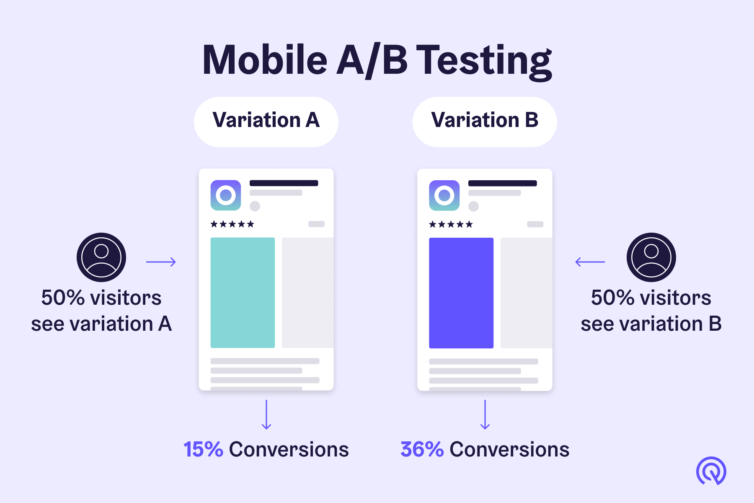
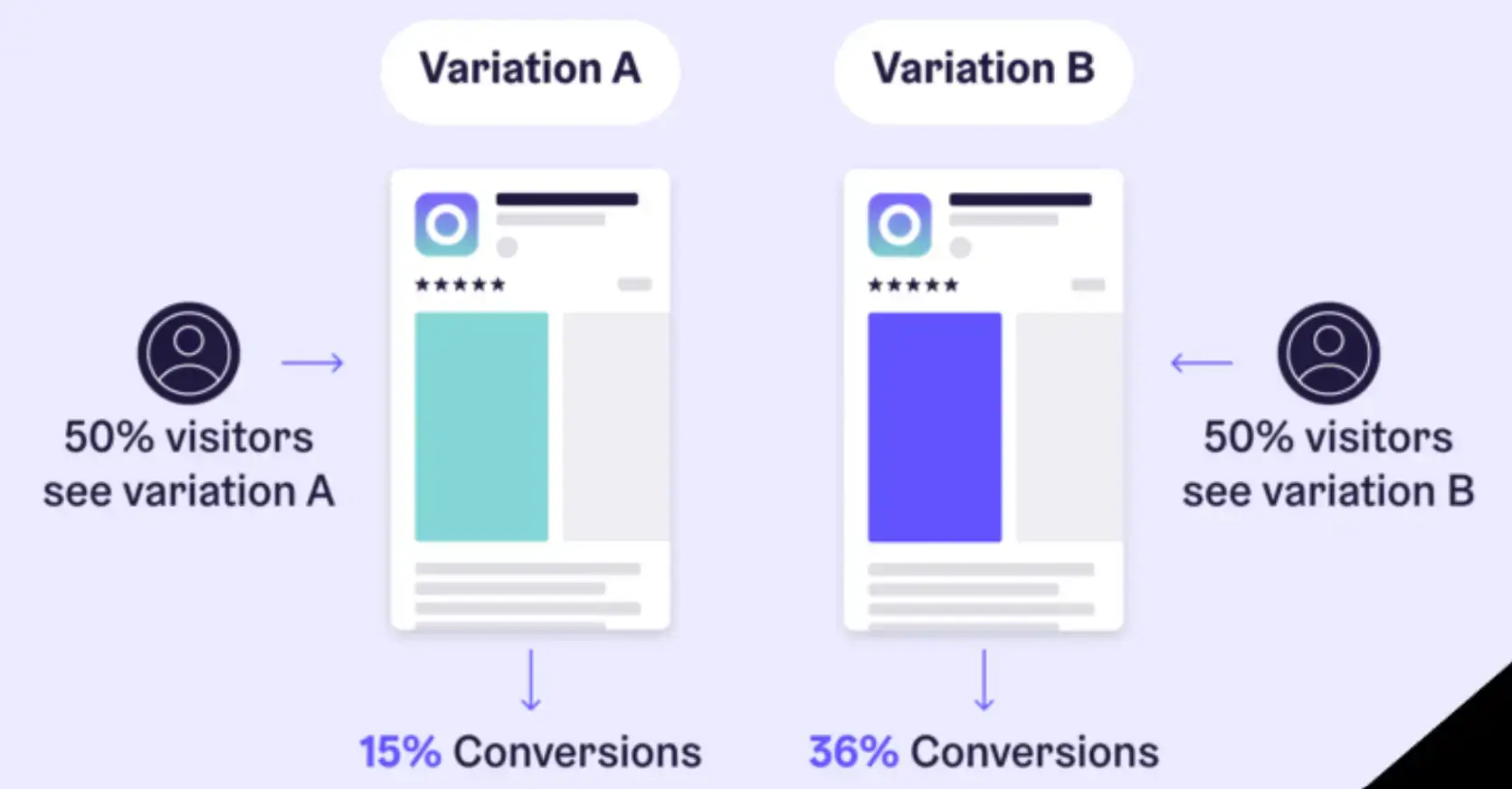
A/B testing lets you compare 2 different versions of something, like a subject line, landing page design, or call to action button, to see which one performs better. Here's what to focus on:
- Identify what to test. Look at your marketing campaigns and pinpoint elements you suspect influence performance. This could be the headline in an email or the image on a social media ad.
- Create slightly different versions of the chosen element.
- Show a portion of your audience each variation and track relevant data points like open rates, click-through rates, or conversion rates. Analyze the results to see which version performs statistically better.
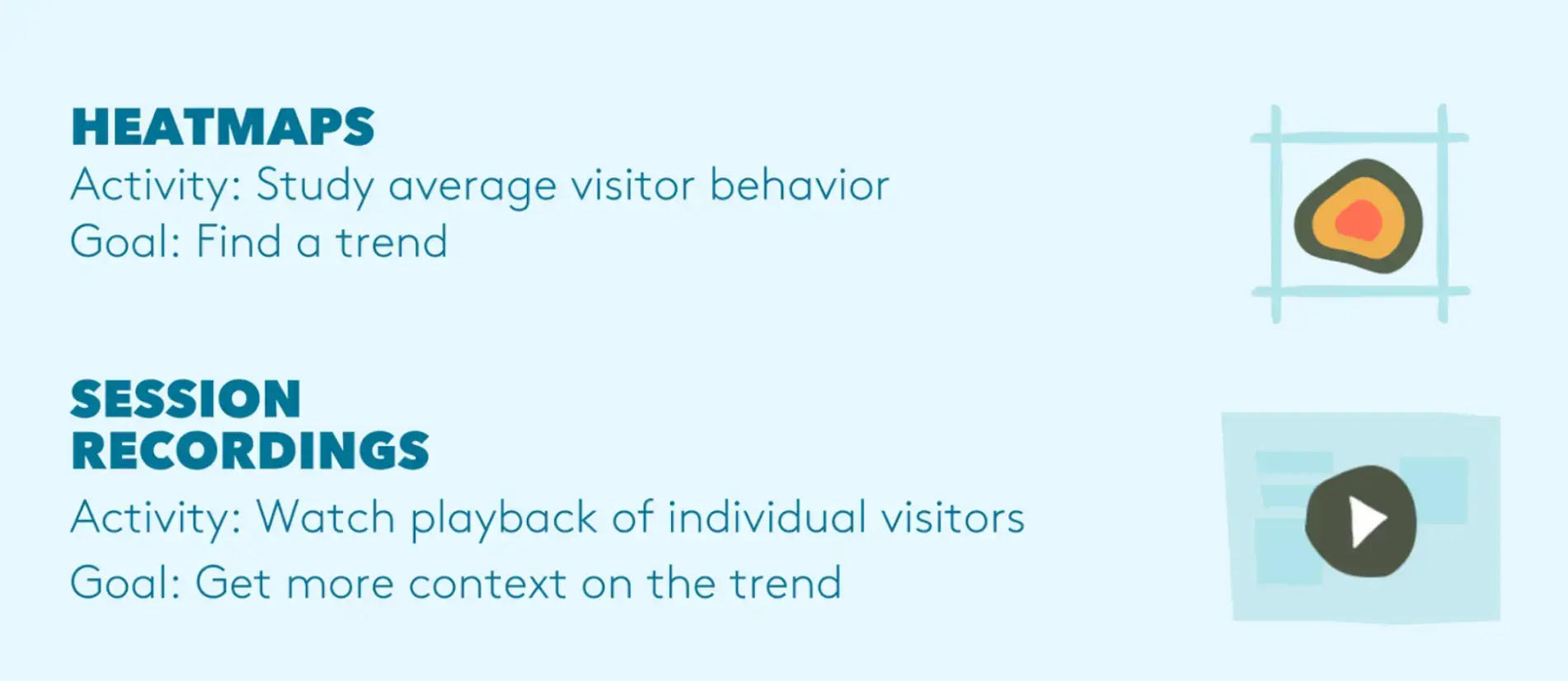
6. Understand user behavior using website heatmaps & session recordings
Source: Framerusercontent

To truly understand how visitors interact with your website, you need to see their actions firsthand. Website heatmaps and session recordings help you do that.
It can reveal:
- See which sections of your website grab attention and which ones go unnoticed.
- Identify buttons, links, and CTAs that get the most clicks, and those that need improvement.
- Understand how far down visitors typically scroll on your pages. This helps you prioritize where to place major information.
Session recordings take website user behavior a step further.
They capture a complete video record of a visitor's journey on your site. This lets you see exactly how users move through your pages, what elements they interact with, and where they encounter any difficulties.
Here's how session recordings can be used:
- Watch recordings to pinpoint confusing website elements, unclear navigation menus, or frustrating checkout processes.
- Optimize conversion funnels. See where visitors drop off during the conversion process and improve those areas.
- Put yourself in your visitor's shoes and understand their thought processes as they move through your website.
7. Track goal-oriented KPIs
Remember those SMART goals you defined in step 1?
Your KPIs should directly connect back to those goals. KPIs are quantifiable metrics that track your marketing performance towards your goals. They tell you if your strategies are working and where adjustments are needed.
Here are the KPIs you should track based on marketing goals:
- Increase Brand Awareness
- Website traffic, social media engagement (likes, shares, comments)
- Brand mentions online
- Influencer engagement (mentions or collaborations)
- PR mentions or media coverage
- Brand sentiment analysis (positive, neutral, negative)
- Generate Leads
- Lead capture forms submitted
- Landing page conversion rates
- Email opt-ins
- Webinar or event registrations
- Free trial sign-ups, content downloads (e.g., ebooks, whitepapers)
- Lead qualification rate (MQL to SQL conversion rate)
- Boost Sales:
- Website conversion rates
- Customer acquisition cost (CAC)
- Average order value
- Sales growth percentage
- Cart abandonment rate
- Customer lifetime value (CLV)
- ROI from marketing campaigns
Action Tip: Start by identifying 3–5 key KPIs that directly tie to your most important marketing goals.
Establish baseline metrics for your KPIs before implementing any major changes. Then, track your progress and see if your marketing efforts are moving the needle in the right direction.
Why Is Data-Driven Marketing Important For Your Business? 7 Proven Benefits
Source: huptech
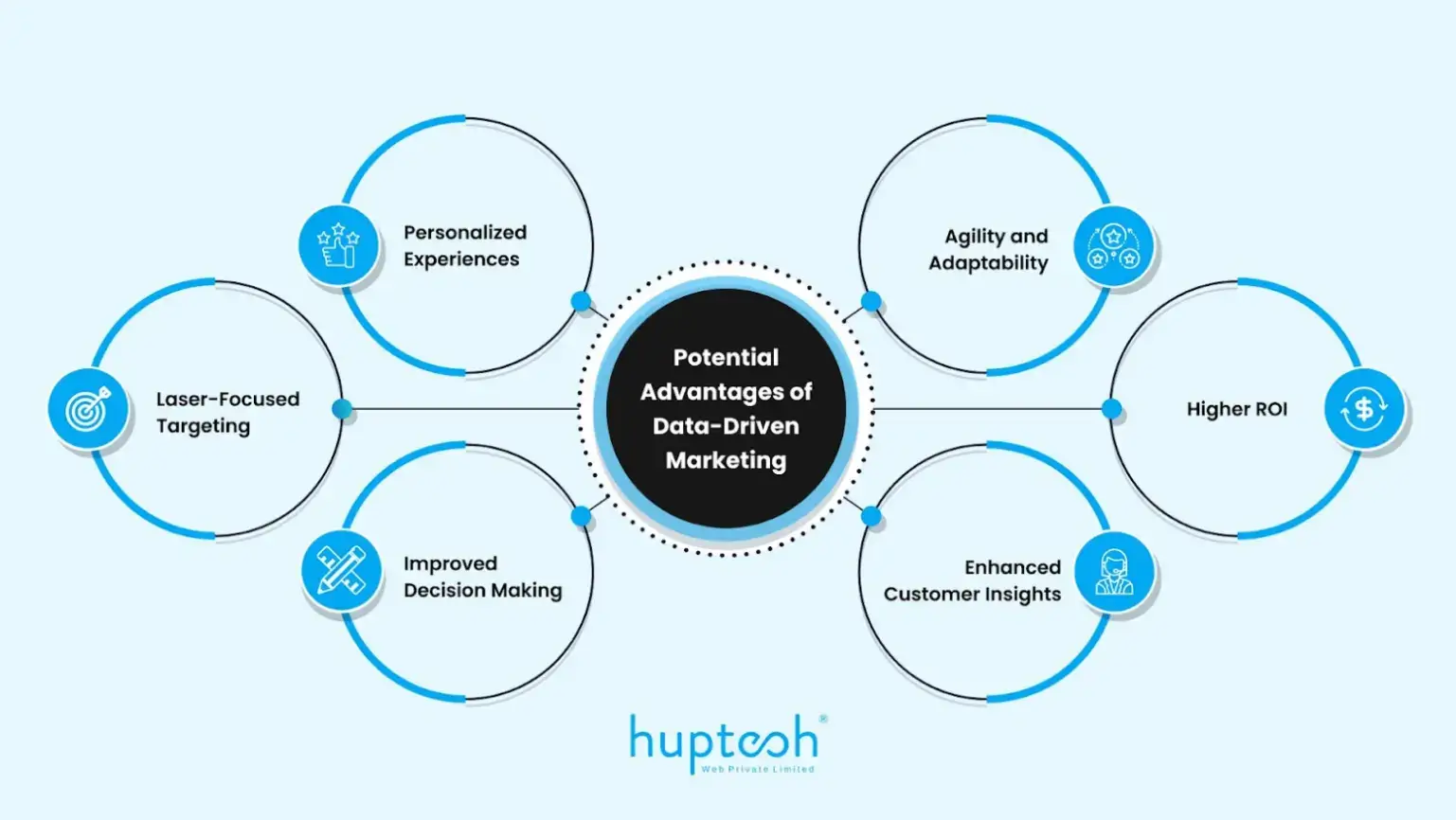
Data-driven marketing is all about hyper-personalization, which pays off 8x the return on your investment. Here are 7 more reasons why you should make it a part of your overall business strategy.
1. Improves decision-making with accurate insights
Data-driven marketing gives you hard numbers to back up your choices.
Analyzing your marketing campaign data lets you see which ad resonated more with your target audience.
You can then ditch the underperforming ad and invest more in the winning one. No more wasting resources on what might work – you know exactly what does.
2. Helps with targeted marketing efforts
Data lets you create a precise picture of your ideal customer.
You see demographics like age, location, interests, purchase history, and site behavior. You learn their online behavior, what content they engage with, and what catches their eye.
This lets you create targeted marketing messages, target the right bloggers, or recommend products they would likely be interested in that resonate directly with their needs and wants.
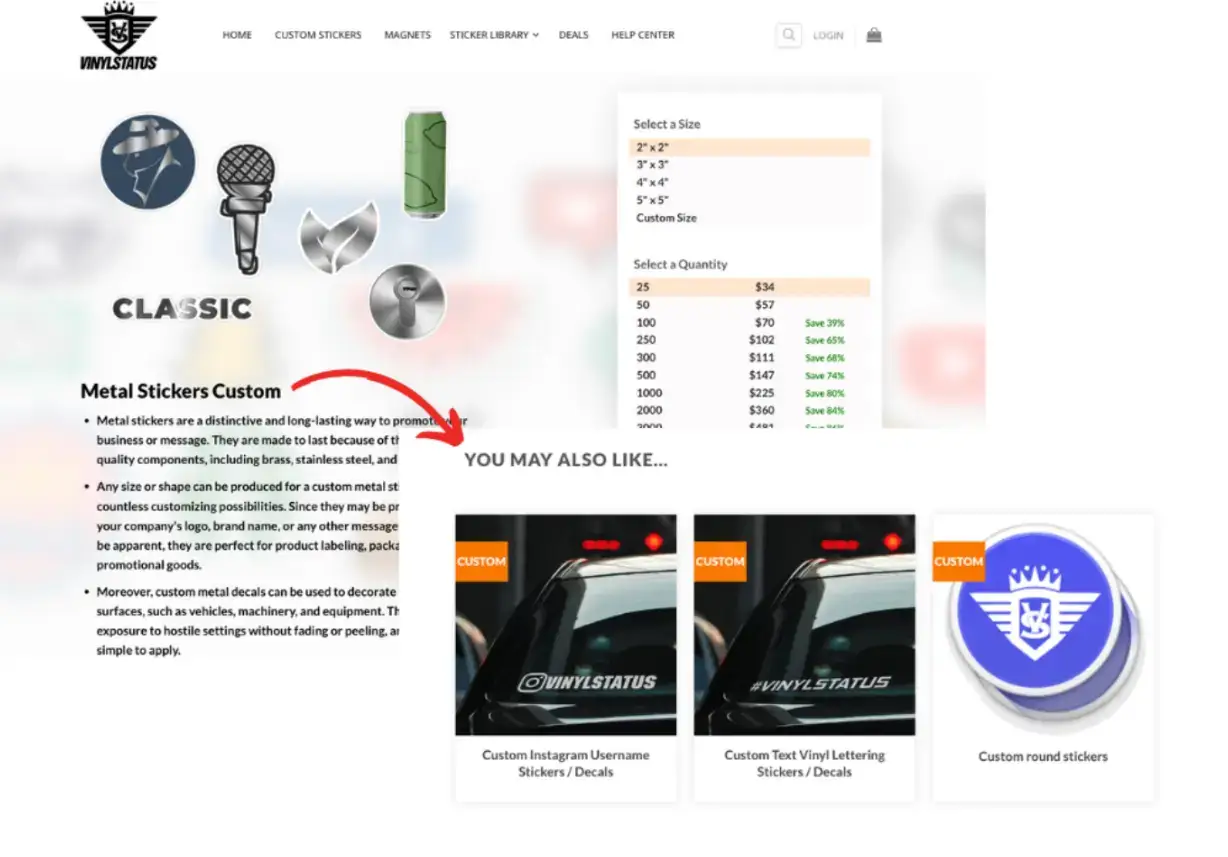
Here’s an excellent example:
This sticker store has tons of varied inventory available.
Using data will help them upsell the right products by recommending the right kinds of stickers to those currently exploring options. It will also help them stock up on the right supplies based on what sells the most.
More than that, data helps with your organic traffic efforts.
For example, professional SEO agencies don’t rely on guesswork about which search terms to rank for or what companies to work with for their link-building efforts, they use data collection tools like Ahrefs, SEMrush, and Google Analytics to pinpoint what conversion-ready users use when searching for a solution online.
3. Improves customer engagement strategies
Data can reveal the specific challenges and frustrations your customers face. You can then use this to create content and marketing campaigns that address these pain points directly. This way, you can deliver the right content at the right time to keep customers engaged and move them to purchase.
4. Optimizes resource allocation for campaigns
Imagine you are running social media ads and email marketing campaigns simultaneously. Data analysis shows your social media ads are generating tons of leads, while your email campaign is falling flat.
With this information, you can shift resources. Allocate more budget to high-performing social media ads and, if needed, pause the email campaign for some retooling. This ensures you are pouring money into what actually drives results.
5. Provides real-time analytics for quick adjustments
With data-driven marketing, you get real-time insights that let you course-correct your campaigns mid-flight.
You can immediately analyze what is not working – maybe the messaging is off-target or the visuals aren't grabbing attention.
This real-time feedback lets you swap out visuals or adjust your messaging to improve performance before the campaign loses steam.
6. Helps create personalized customer experiences
Today's customers make decisions in micro-moments – quick bursts of information gathering throughout the day. Data can help you be there at those crucial moments. With it, you can:
- Show products relevant to a customer's browsing history.
- Display ads for items a customer has shown interest in.
- Recommend products based on past purchases. Offer discounts for items left in their shopping cart.
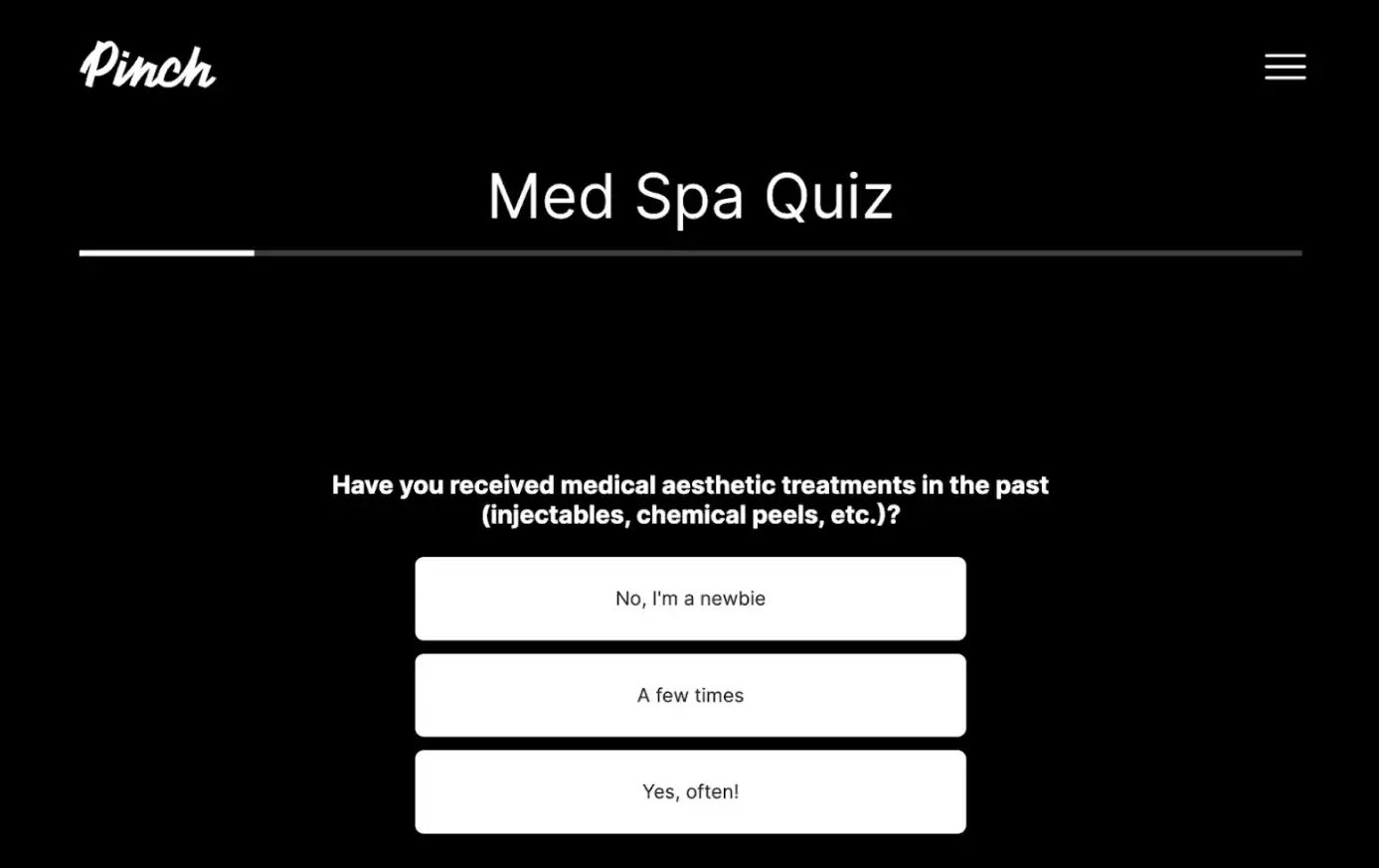
Pro Tip: When users feel their information is secure and the data collection process is interactive, they're more inclined to participate. A great example of this is this medical spa site, which collects data using an interactive quiz to make users more likely to engage with it.
Another way to do this is to use helpful AI tools.
A great example of this is this on-the-ground hiring platform’s job description generator. Using the right questions, they don’t just “help” the user get a job description they can use instantly; they also tell the user what this particular user needs, which they can leverage to pitch the right offers.
Frequently Asked Questions (FAQ)
1. What is data-driven marketing?
Data-driven marketing is the practice of using customer data—such as behavior, demographics, purchase history, and engagement—to guide marketing decisions. This approach helps businesses create more relevant messaging, optimize campaigns, and improve ROI.
2. Why is data-driven marketing important?
It reduces guesswork, allowing marketers to understand what actually works. This leads to smarter decisions, more personalized experiences, better campaign performance, and stronger customer relationships.
3. What tools do I need to start data-driven marketing?
You can begin with basic tools like Google Analytics, a CRM platform, an email marketing system, and a Customer Data Platform (CDP). Heatmap tools, A/B testing platforms, and marketing automation tools can further enhance your data insights.
4. How do I know which KPIs to track?
Your KPIs should always connect to your SMART goals. For example:
- Want brand awareness? Track reach, traffic, and engagement.
- Want leads? Track form submissions and conversion rates.
- Want sales? Track CAC, AOV, CLV, and overall revenue.
If a KPI doesn’t tie back to a goal, it’s noise.
5. How do I avoid “data overwhelm”?
Start small. Identify 3–5 core metrics that directly impact your marketing goals. Use dashboards to visualize data, automate reporting where possible, and revisit your metrics monthly to refine what truly matters.
6. What types of data should I collect?
Focus on:
- Demographic data (age, location, income)
- Behavioral data (pages visited, emails clicked, products viewed)
- Transactional data (purchases, revenue, lifetime value)
- Engagement data (social interactions, email engagement, customer support interactions)
Avoid collecting unnecessary data—only gather information that helps you improve targeting or customer experience.
Conclusion
Data-driven marketing isn't just a trend—it’s the foundation of modern marketing success. By understanding how your customers behave, what they want, and where friction occurs, you can create highly targeted campaigns that drive measurable results.
Whether you're optimizing touchpoints, segmenting your audience, testing creative variations, or perfecting your KPIs, every step brings you closer to smarter marketing and stronger ROI.
The businesses that thrive today aren’t the ones that guess—they’re the ones that listen to their data and act on it.
Start small, build your data strategy step by step, and watch your marketing become more efficient, personalized, and impactful than ever before.
