
Email marketing is one strategy that every business must invest in. Statistics reveal that business email is 40x more effective than Twitter and Facebook combined.
Incredible, isn’t it?
The right type of marketing email, crafted with an intriguing subject line and persuasive copy, can go a long way toward engaging prospects and boosting sales.
Today, we will discuss seven types of marketing emails that you must include in your email marketing strategy to charm your subscribers.
Importance of Email Marketing
The number of email users is expected to reach 4.6 billion by 2025. Furthermore, 73% of millennials prefer to interact with businesses via email.
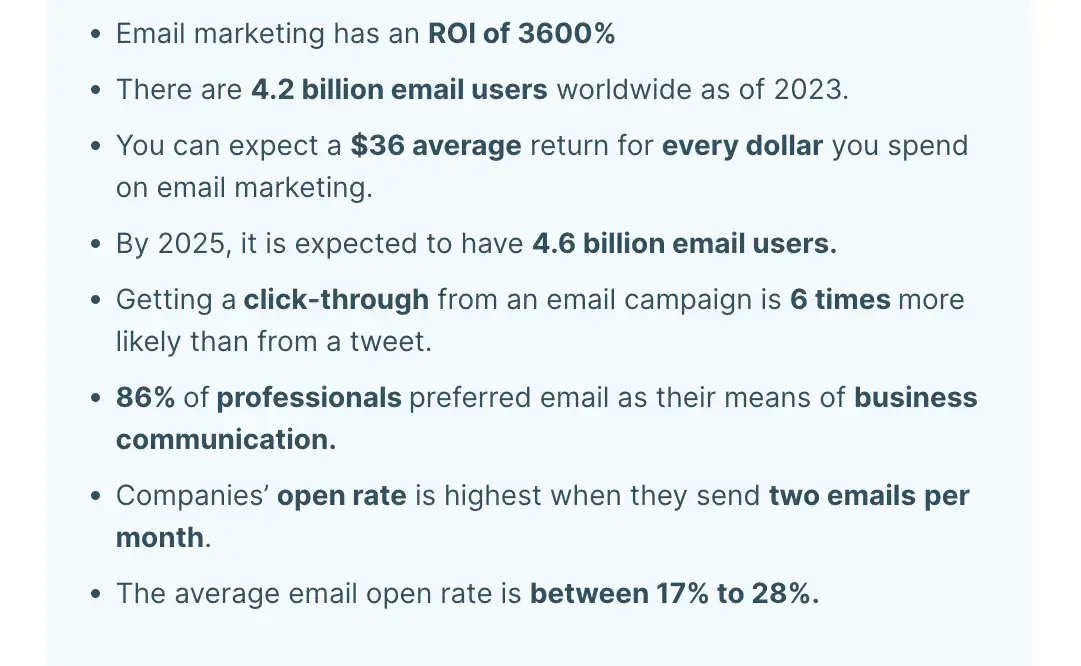
Source: TechJury
Email marketing offers extensive benefits for businesses of all sizes and industries. With billions of email users worldwide, you can reach a vast audience instantly.
One of the main benefits of email marketing campaigns is their exceptionally high ROI. They don’t cost any money to start, and they can generate significant revenue, along with brand awareness!
Additionally, email marketing allows for precise targeting and segmentation of your audience based on demographics and engagement levels.
It will let you personalize your emails and increase their relevance to your subscribers.
7 Awesome Emails That Will Attract More Customers
- Welcome emails
- New product launches
- Limited-time deals
- Seasonal/holiday special offers
- Your brand story
- Re-engagement
- Giveaways
1. Welcome Emails
Also known as introductory emails, welcome emails introduce you and your brand to potential customers. These emails are the first interaction once a prospect confirms interest in your business.
A warm, friendly welcome message will make a strong first impression and encourage the recipients to interact with your product/service.
If done well, it may also lead to enhanced customer retention.
A welcome email must not be sales-focused. Instead, it should be informational and convey how your product/service can help clients.
Here are some quick tips for crafting effective welcome emails:
- Personalize your welcome email by including an interesting or peculiar fact about your brand.
- Avoid talking about your product or service in the welcome email.
- Explain how your brand helps customers improve their lives or business workflows.
- Use the email to forge a connection with the recipient.
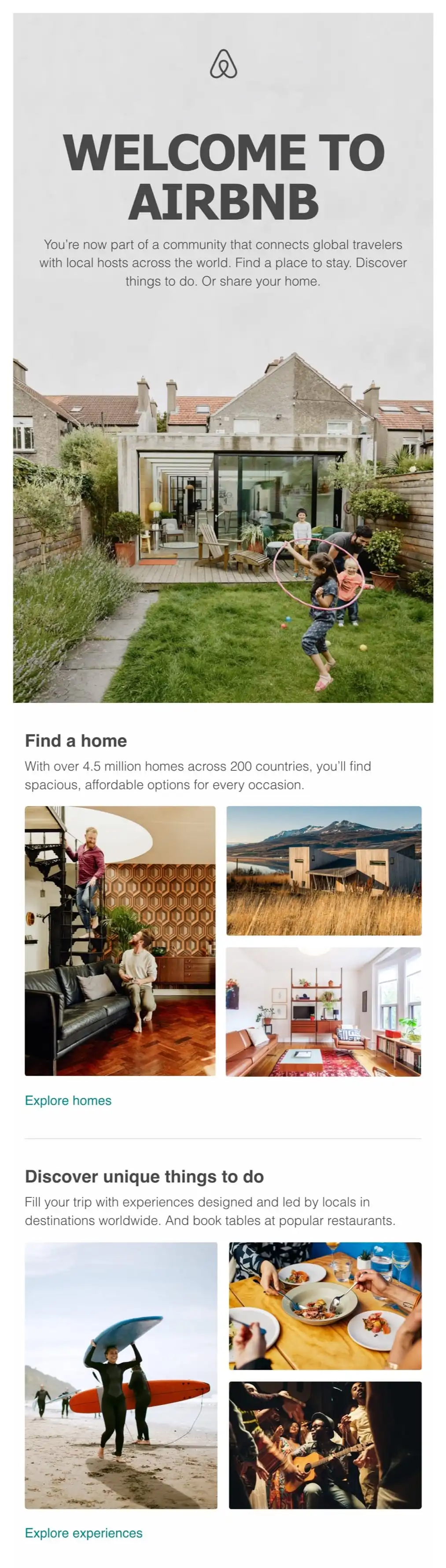
Airbnb’s welcome email stands out for its clean email design, attractive visuals, and concise, actionable copy.
The email offers a friendly introduction to how things work. Instead of pushy CTAs like ‘Book Now,’ the company subtly prompts its recipients to ‘Explore.’
2. New Product Launches
Product launch emails offer an exciting way to attract new customers.
It is a targeted, planned communication designed to announce the introduction of a new product, service, or feature to existing or potential customers.
The purpose of these emails is to provide valuable insights into how the new product can help your customers.
A good product launch email reveals enough information to increase awareness and pique recipient interest. Here are some helpful tips to keep in mind:
- Opt for a product launch email sequence (pre-launch, release day, post-release).
- Include a short and crisp description of your product.
- Link out to additional information, such as a landing page, demo video, or blog post.
- Explain in brief how the product can benefit the customer.
- Include multiple CTAs in your email body.
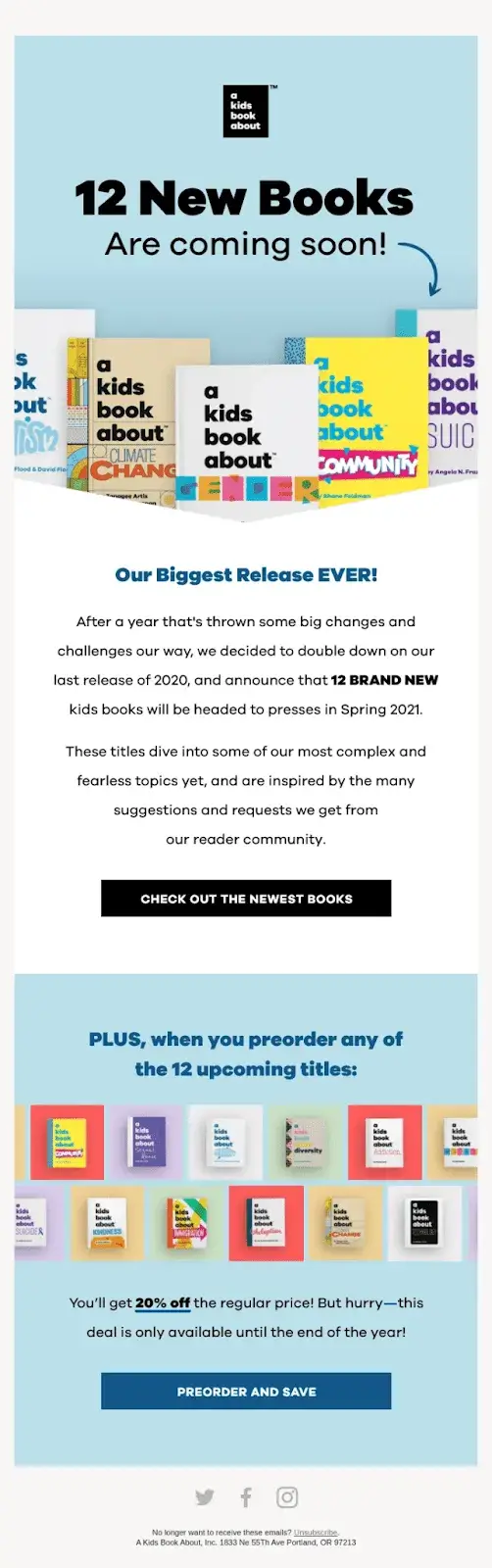
The email below from Kids Book About is a compelling teaser to generate pre-launch hype among customers.
They are promoting the launch of 12 new eBooks with short, persuasive copy. Additionally, offering a special discount code to pre-order customers is a great way to attract more customers.
3. Limited-Time Deals
These are among the best email formats for attracting customers, especially when promoting an eCommerce website.
They are effective because of the way they create a sense of urgency. It persuades recipients to act quickly and make a purchase, which is crucial for those seeking the best websites to make money.
You can send a limited-time offer email with a unique discount code, gift, or free shipping—all available for a limited time. Here are some helpful tips for sending limited-time email offers:
- Do not overuse them.
- Clearly mention the offer validity period.
- Use phrases that suggest swift or immediate action (shop now, claim your free gift today, flash sale, etc.).
- Tease the upcoming offer in advance.
- Drive urgency with countdown timers.
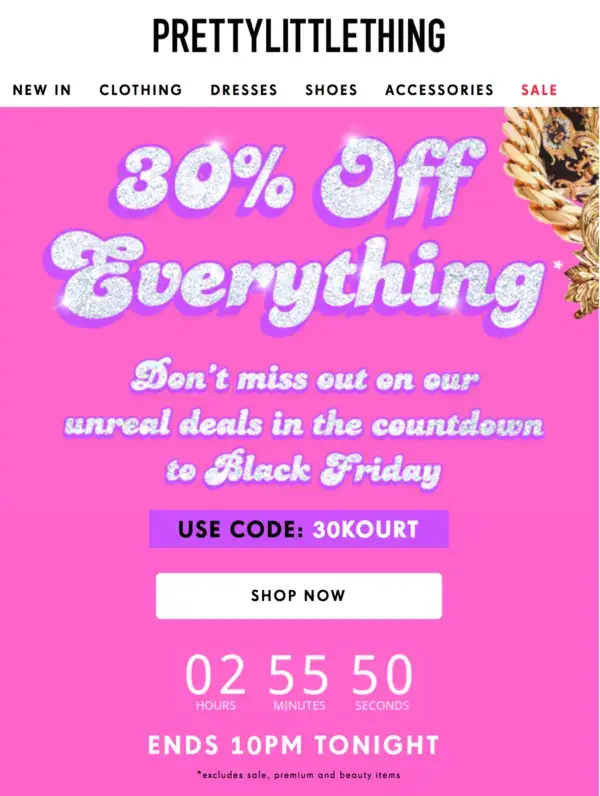
The email below from PrettyLittleThing, a renowned clothing retailer, is a brilliant example.
The bright pink background with glittery font quickly grabs customers' attention. Additionally, the offer is clear, and the countdown timer effectively creates a sense of urgency.
4. Seasonal/Holiday Special Offers
The holiday season is the time everyone looks forward to.
Whether Christmas, Halloween, or Thanksgiving, it's an excellent time to run a thoughtful email campaign and forge meaningful connections with your customers.
Seasonal campaigns are not just promoting holiday sales. They are about generating more revenue, traffic, and engagement. Let’s look at some tips to craft persuasive holiday emails:
- Run your holiday email campaign at least a week before the holiday.
- Offer seasonal greetings—wishes unique to the holiday that resonate with your brand values.
- Include gift guides—curated recommendations to help buyers pick the perfect gift.
- Send exclusive offers available for a limited time.
- Offer additional perks such as free shipping and free gift wrapping.
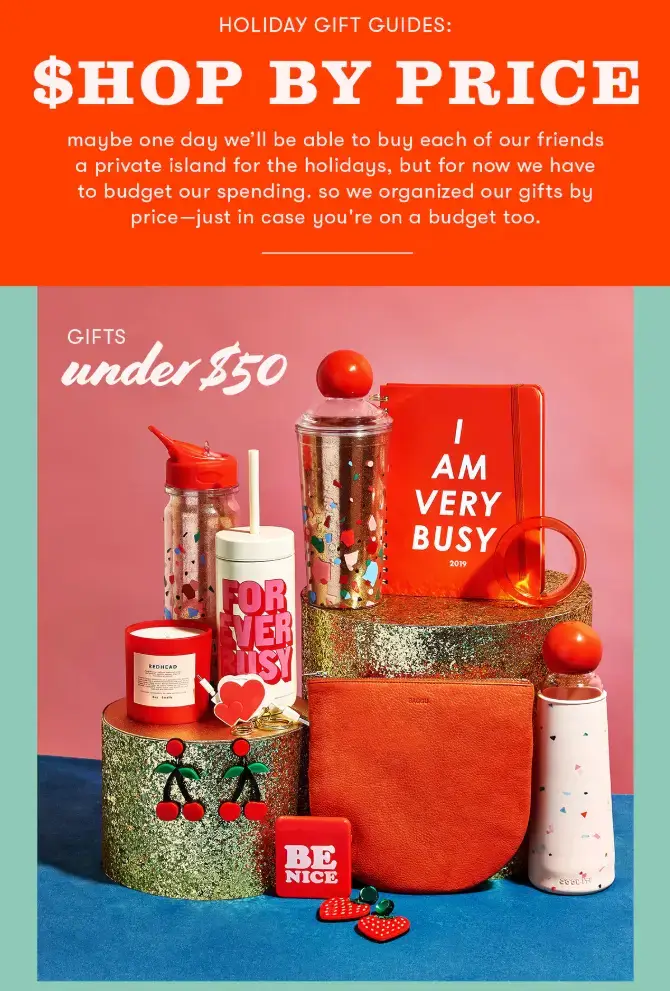
Ban.do’s holiday emails are extremely impressive as they understand customers’ problems.
Recognizing that holidays are about gifting, the brand takes a realistic approach by offering budget-friendly options.
5. Brand Story Emails
Consumers today have very high expectations of the brands they like.
They prefer brands that proactively foster meaningful connections with their audience. It has become one of the leading social media marketing trends.
Capitalizing on a storytelling approach, these emails are typically sent to your existing customers to increase awareness. They create an emotional connection with the customers and differentiate your brand from your competitors.
A brand story email must have a warm, friendly tone and an engaging narrative that illustrates your brand’s history, philosophy, mission, and values. Here are some tips for crafting brand story emails:
- Explain who you are, what you do, and who you do it for. Be as authentic as possible.
- Opt for a mix of text, images, and videos to engage the recipients.
- Add social proof to reinforce your brand story.
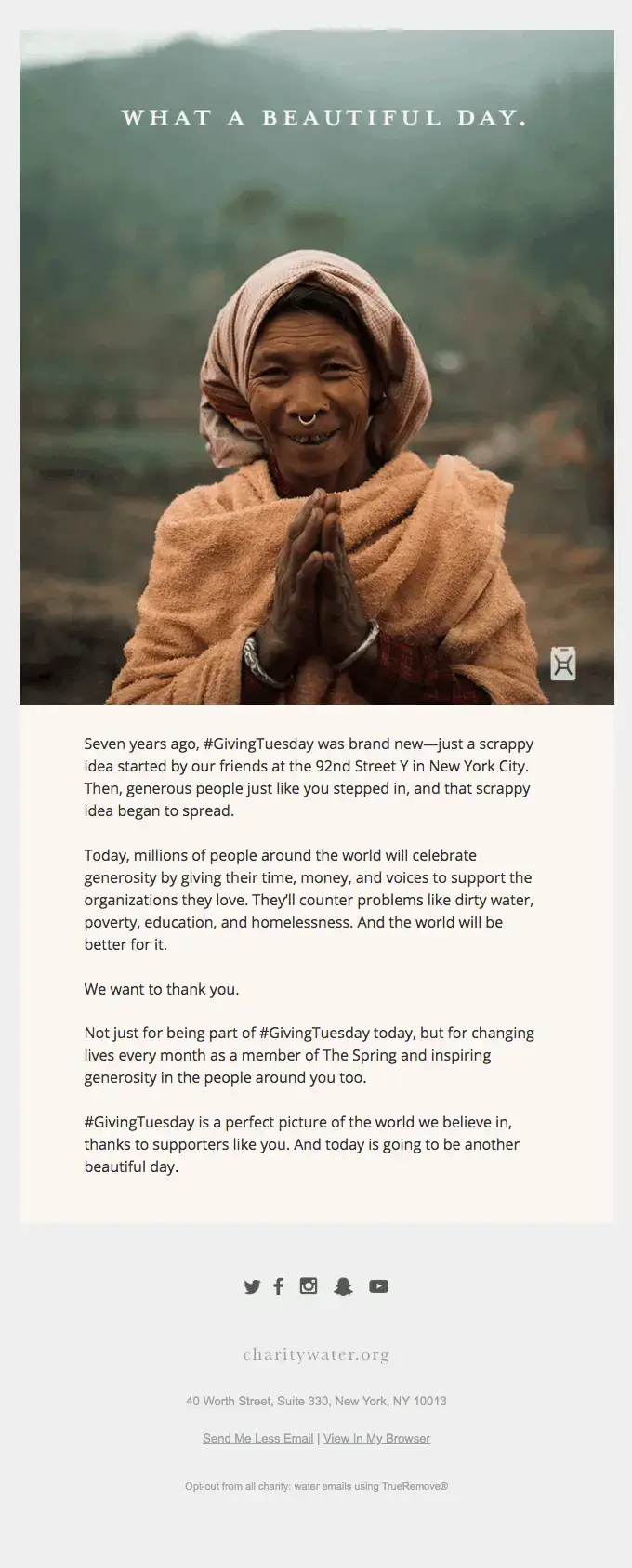
Charity Water’s brand story email is a classic example that immediately grips its customers’ attention.
The email starts with an inspirational photograph and a compelling story about the brand. They explain how they brought their idea to life and sent authentic thank-you notes to their customers.
6. Re-engagement emails
Customer re-engagement emails are used to grab the attention of past customers or lost subscribers.
These emails remind customers of your brand and spark renewed engagement by offering relevant content, attractive offers, and personalized interactions. Re-engagement emails are typically sent out in 4–5 emails.
For instance, you can start with a friendly reminder, showcase success stories, provide tailored recommendations, and provide an exclusive offer.
Let’s look at some helpful tips for crafting re-engagement emails:
- Add a personalized ‘we miss you’ note.
- Include insights on how your brand has evolved and what new it has to offer.
- Create a sense of urgency by offering an exclusive discount code.
- Try to be helpful instead of pushy. Provide the recipients with an option to unsubscribe.
- Have a healthy waiting period between two re-engagement emails.
SaaS companies such as Salesforce, Notion, Ahsuite, etc., often use re-engagement emails to regain lost subscribers.
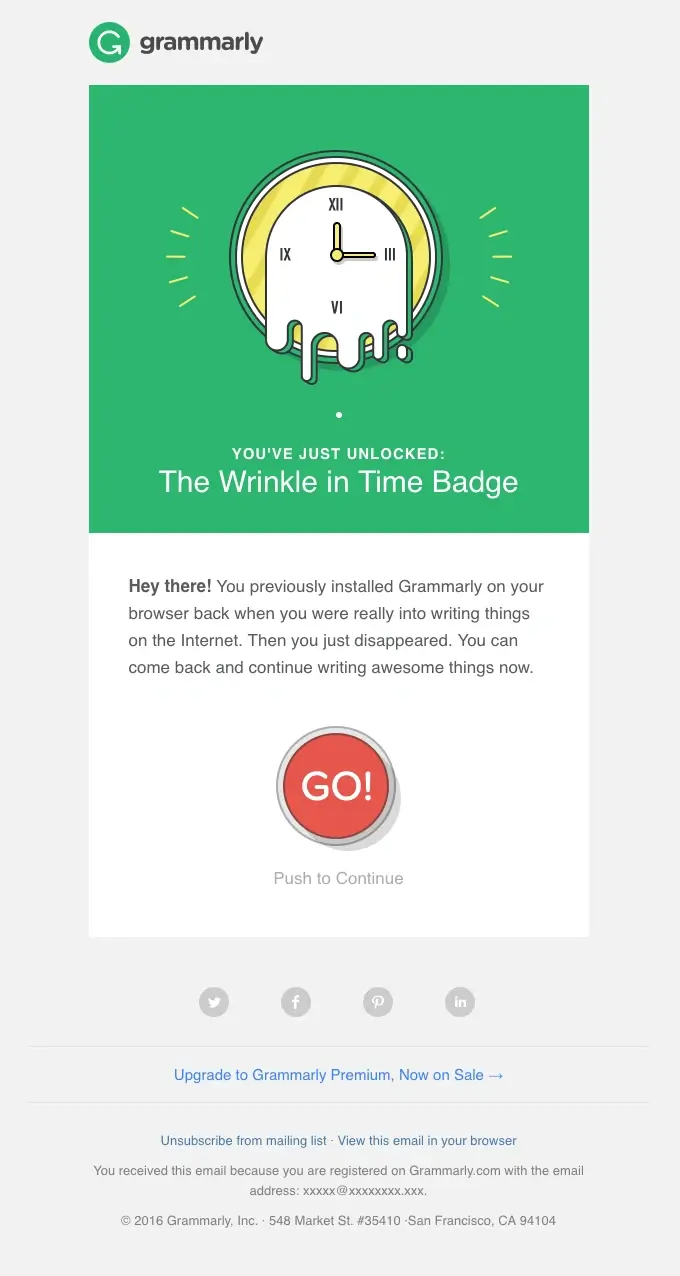
In the below example, Grammarly attempts to re-engage its inactive subscribers by offering them a “Wrinkle in Time” badge.
The prominent and effective CTA, appearing as a ‘GO’ button, encourages users to try the service again. It also subtly promotes its premium version at the bottom, with a hint of special pricing.
7. Giveaway emails
Giveaways are among the favorite tools of every eCommerce marketer.
Whether it is a contest, a cash prize, or a free product, giveaways help to drive customer engagement and boost business sales. Additionally, giveaways are great for strengthening your relationship with your subscribers.
The hope of receiving a free item often brings positive emotions to subscribers associated with your brand. Giveaway emails vary by product category. Here are some practical tips to keep in mind:
- Mention the word ‘giveaway’ in your subject line. Use interesting phrases, such as ‘win an exciting product’, to grab attention.
- Provide precise details about the giveaway submission, deadline, and winner announcement.
- Limit your giveaway emails to a small audience group to avoid unqualified leads in your subscriber list.
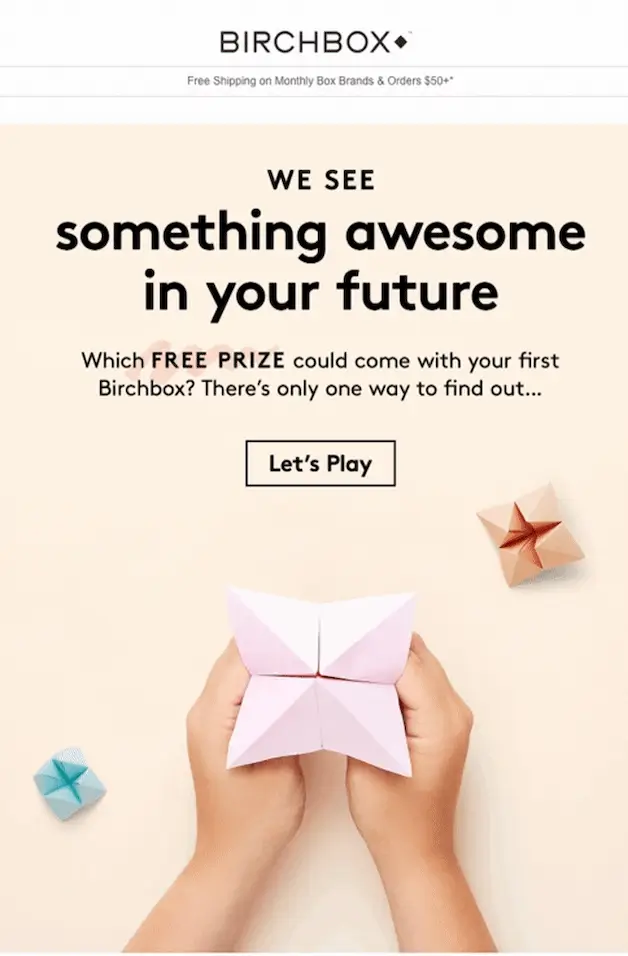
Birchbox’s giveaway email effectively captures customers’ attention.
They launched a single-person giveaway in which each participant would win a prize; therefore, all customers would be winners.
Their copy is impressive, and the giveaway is gamified, adding a dash of fun.
Conclusion
Email marketing remains a strategic tool for attracting and growing your customer base. Including the types of emails mentioned above in your marketing arsenal can keep your audience engaged with your brand.
FAQ
1. What makes email marketing so effective compared to other channels?
Email marketing lets you reach people directly, segment audiences by behavior or demographics, and personalize content at scale—often leading to stronger engagement and a higher ROI than many social channels.
2. Which type of marketing email should I send first?
Start with a welcome email (or a short welcome sequence). It sets expectations, introduces your brand, and builds trust before you ask for a sale.
3. How do I structure a product launch email for maximum impact?
Use a launch sequence (pre-launch teaser → launch day announcement → follow-up reminder). Keep the value proposition clear, include visuals or a short demo link, and add a strong CTA that matches the reader’s intent.
4. How can I run limited-time deal emails without annoying subscribers?
Don’t overuse them. Be transparent about the deadline, segment your list (so only relevant subscribers receive the promo), and reserve urgency-driven campaigns for truly meaningful offers.
5. What’s the best way to re-engage inactive subscribers?
Send a re-engagement series (typically 3–5 emails) that starts on a friendly note (“We miss you”), highlights what’s new, offers something valuable (content or an incentive), and includes an easy opt-out to keep your list healthy and reduce spam complaints.

Author Bio
Vineet is the Founder of 2xSaS, a results-oriented digital PR and link-building agency that works with brands such as HubSpot, Hunter, G2, and more. He specializes in developing custom outreach campaigns and content marketing strategies to help B2B & SaaS companies increase organic traffic.