

Not too long ago, businesses would rely on search engines and good old SEO to attract customers.
It didn’t matter if you ran a small e-commerce store or a brick-and-mortar shoe store with an online storefront—with the right keywords and a solid ad campaign, you had a good chance of shining a brighter light on your brand.
But nowadays, users have AI-powered search assistants that reply to queries with a neat summary at the top of the search page (aka the AI overview). Or they can just ask ChatGPT or Gemini.
In this article:
- How to Optimize for AI Search as a Small Business
- Fix Your Core SEO Issues First
- Make Your Content Structure AI-Readable
- Add FAQs to Every Important Page
- Strengthen Trust and Credibility Signals
- Target Long-Tail and Question-Based Keywords
- Increase Media Mentions and Brand Citations
So why would anyone want to click on links and browse websites?
Ever since AI platforms went mainstream, around 60% of searches are zero-click (users don’t investigate further). Furthermore, websites that rank right below an AI overview (first in search results) can lose up to 79% of traffic.
The situation is quickly turning on its head, and what used to be up is now down. What does this mean for small businesses? Should you even invest in digital marketing in 2026? How do you convince ChatGPT to recommend your brand?
We’ll answer all these questions and more in today’s piece, so stay tuned until the end.
Is SEO Dead in the Age of AI Search?
Every couple of years, someone somewhere will proclaim that SEO is dead.
The internet will do its thing, turning the topic into a few articles and social media posts. Then the topic is forgotten, and digital marketers continue creating amazing SEO campaigns.
But things seem a little too real this time. As you can see from the Google Trends search below, interest in the topic has increased since AI-powered search engines and zero-click searches emerged.
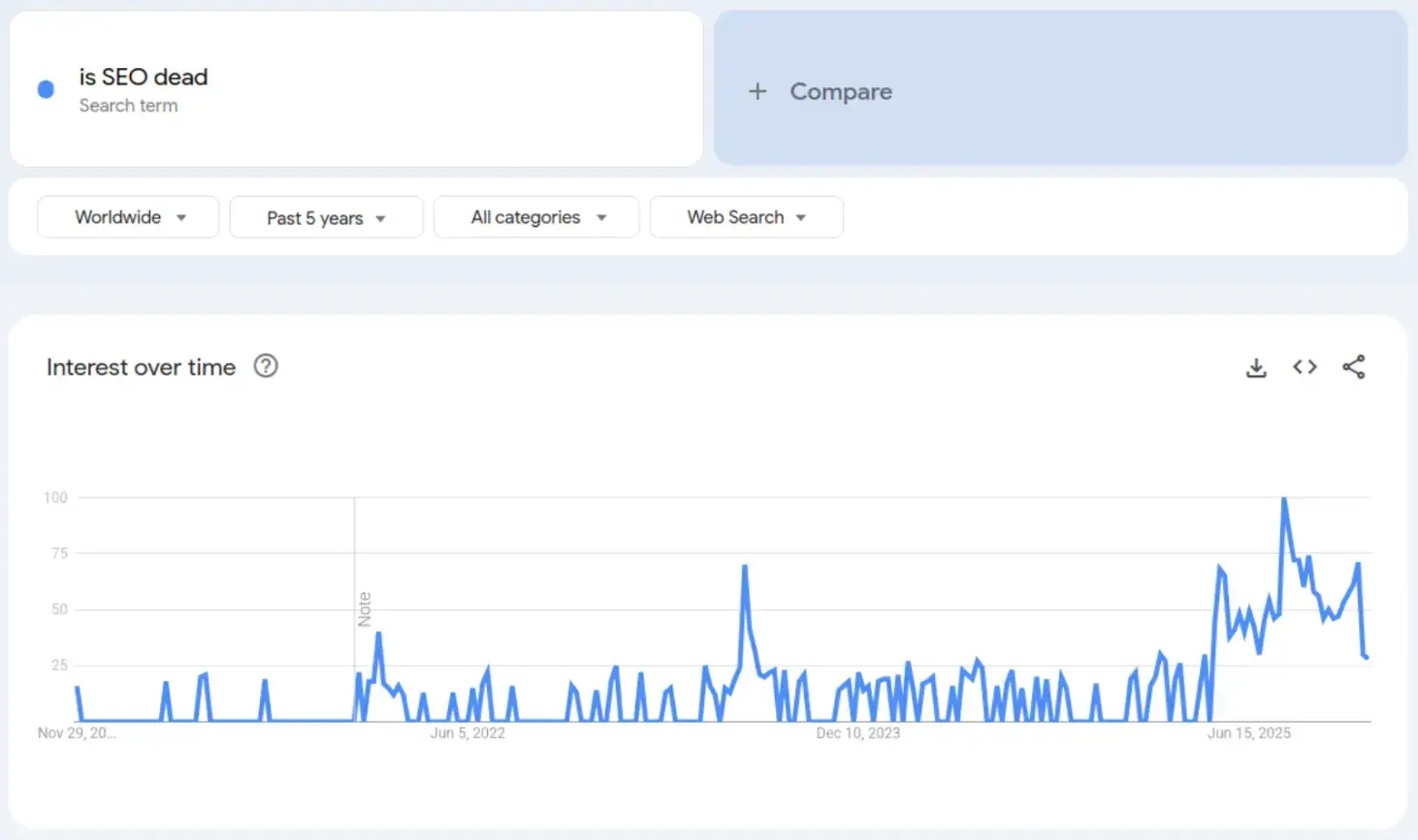
When 42% of users trust AI summaries without clicking links, is it still worth it to invest in traditional SEO practices?
Well, AI search may be new-ish to the game, but this is not the first time that a challenger has disputed the supremacy of search engines. Internet users, especially younger ones, also use social media platforms for search.
Google is still the global market leader, with 89.94% of the share, but this is also the first time in 10 years that its dominance has dipped below 90%.
This sends out a clear signal that users’ search behavior is shifting and digital marketers should take note.
So, is SEO truly dead this time? No, it’s just changing.
Despite the traffic drops and almost palpable unrest, the underlying principle of SEO—making your content discoverable, authoritative, and structured—is more important than ever.
But, unlike old practices, where the goal is to rank high in traditional SERPs, the new game is about Generative Engine Optimization (GEO) and being the source of truth the AI trusts.
GEO is the art (yes, let’s call it an art) of making your brand and content discoverable, comprehendible, and recommendable by generative AI (GenAI) tools. Not necessarily even linking to it.
From SEO to GEO: What Generative Engine Optimization Means
GEO is SEO, but for AI. It’s the art (yes, let’s call it an art) of making your brand and content discoverable, comprehendible, and recommendable by generative AI (GenAI) tools.
For instance, with classical search engine optimization, your major concern would be: “How do I rank higher on Google/Bing/Yahoo?”
When optimizing for AI search, the focus is on: “How can I appear in ChatGPT responses?” Or: “How do I get my brand mentioned by Perplexity?” (Or any other AI-powered assistant or search engine generating results to users’ queries.)
How Small Businesses Should Adjust Their Strategy for AI Search
The secret lies in understanding that people’s search intent and behavior are evolving. Users don’t want to click and read through the top five SERP results.
Instead, they expect direct, precise answers to questions that start with “Should,” “Can,” “Is/Are,” etc.
Let’s look at searches for healthcare as an example:
- Standard Google search: “How to stay healthy?” The result: a list of links from various websites that you have to comb through.
- Today’s AI-powered search: “How can I be healthy if I work night shifts?” Or: “Can you stay healthy without eating vegetables?” The result: an AI Overview, with well-targeted advice and solutions to your problem.
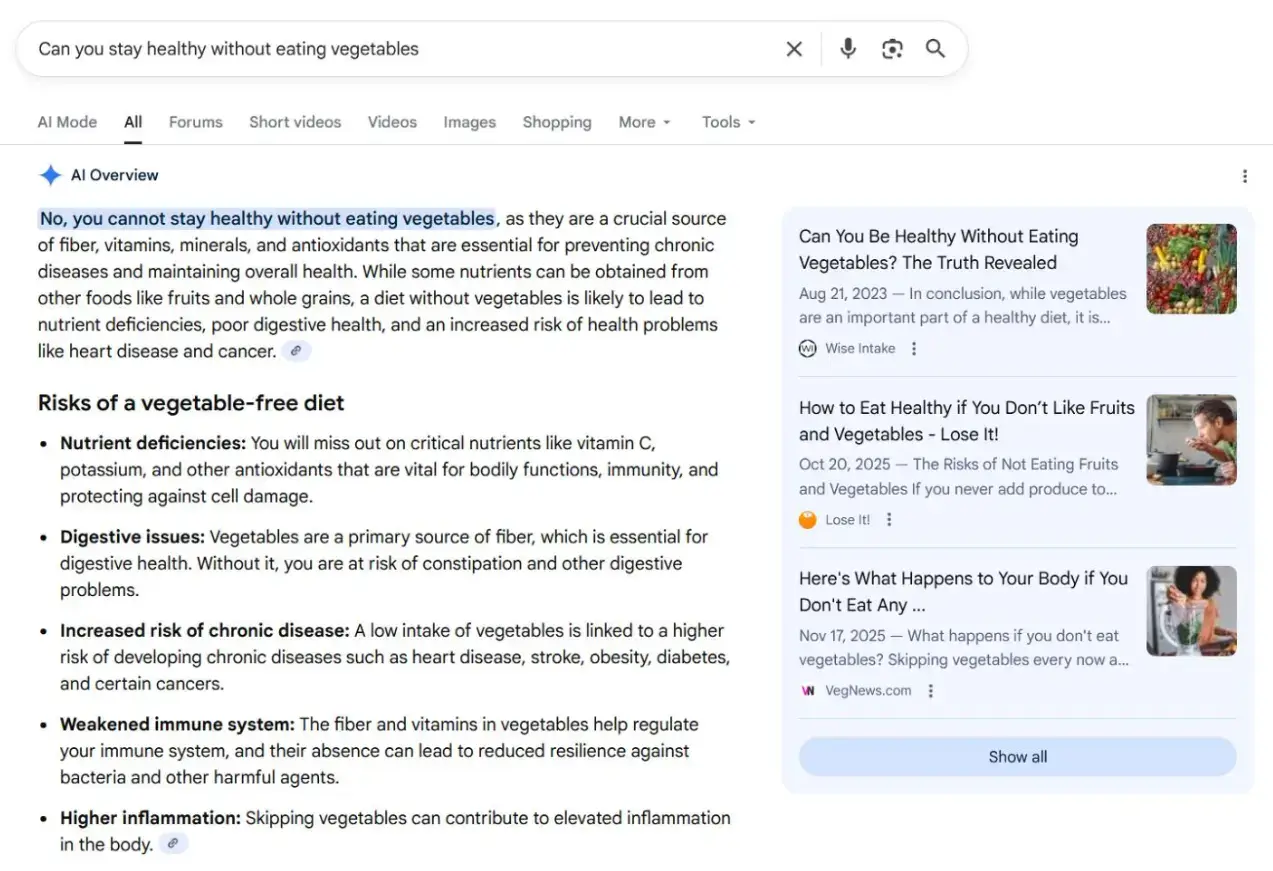
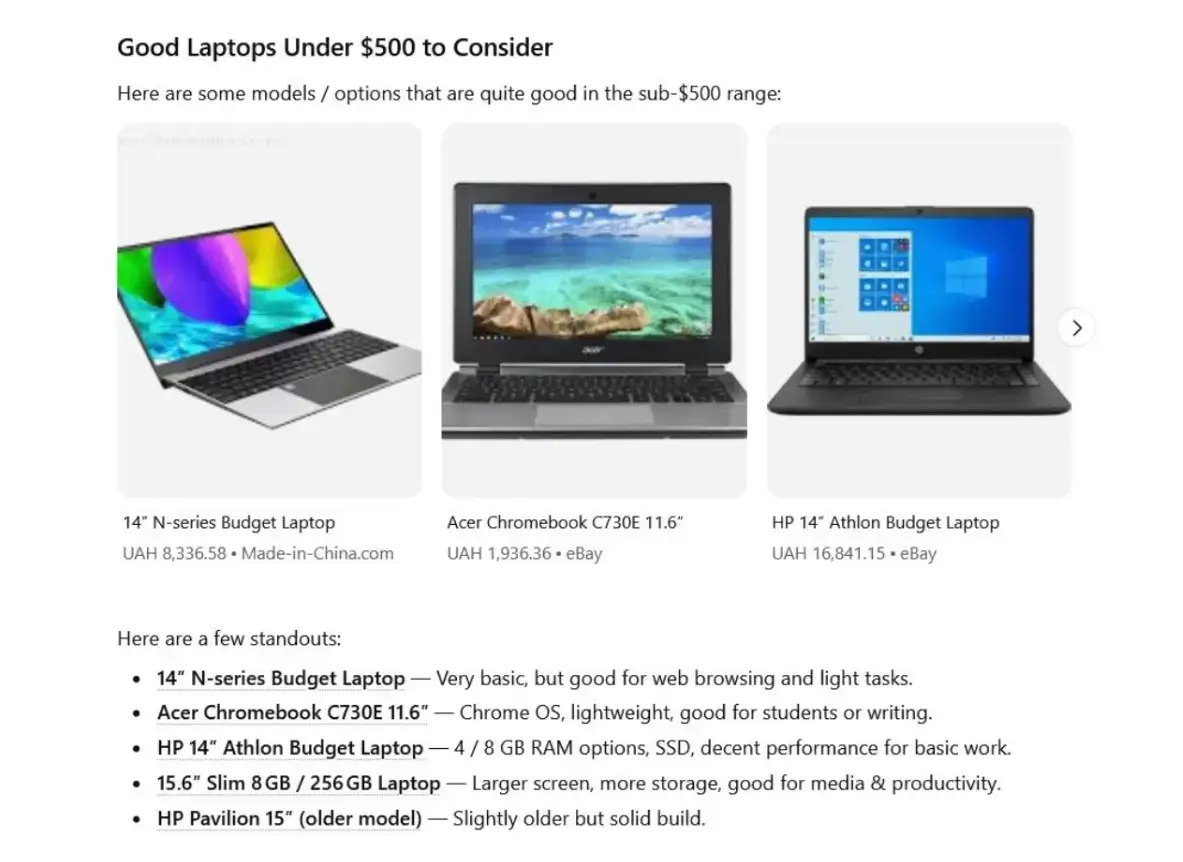
The situation is similar in any other niche. A large number of users who want to buy an affordable laptop nowadays won’t type “best cheap laptops for gaming” in Google. Instead, they’ll go:
“Hey, Grok! Which laptop is the best for gaming and the cheapest?” Or: “Can I buy a gaming laptop for less than $500?”
Regardless of which AI search engine they ask, they’ll receive a well-structured reply with prices, features, and models that fit the $500 budget.
In short, SEO is not dead; it’s simply no longer a simple traffic engine. It has matured into a complex, high-stakes discipline focused on authority, structure, and intent-matching.
The competition has moved from the 10 blue links to the precious, top-of-SERP real estate. Your new goal is to be the most trustworthy and well-structured source the AI can confidently cite, driving high-intent traffic and converting it.
How to Optimize for AI Search as a Small Business
The Genie’s out of the bottle. And no one is putting it back in. Even though Google search is still holding strong (for now), AI search is the future.
Its impact is so significant that when a keyword appears in an overview, the average click-through rate (CTR) on the top-ranking page drops by 34.5%.
If your audience’s favorite AI assistant isn’t recommending your brand, you’ll soon start to see the effects (even with a solid SEO strategy).
Therefore, the best thing to do, especially as a small business or a solopreneur, is to make friends with GenAI platforms.
Here are a few tips and tricks digital marketing experts and business owners recommend:
Fix Your Core SEO Issues First
In today’s day and age, you can’t achieve good online visibility with shaky SEO techniques. The first thing to do is audit your current strategy and fix any mistakes that pop up.
This is particularly essential for technical SEO, where even the tiniest errors can tank your searchability and visibility in AI results.
Look for things like:
- “404 Error” pages, aka dead links;
- URLs with non-descriptive symbols or special characters
- Crawling difficulties, such as blocked pages or robot.txt misconfigurations
- Missing or duplicate meta tags (titles and descriptions)
- Poorly optimized images and videos (e.g., zero alt tags)
You can easily identify all these tiny errors that tend to pile up with a free SEO checker. This handy tool scans every web page, discovers and flags every problem, and provides how-to-fix-it guidelines.
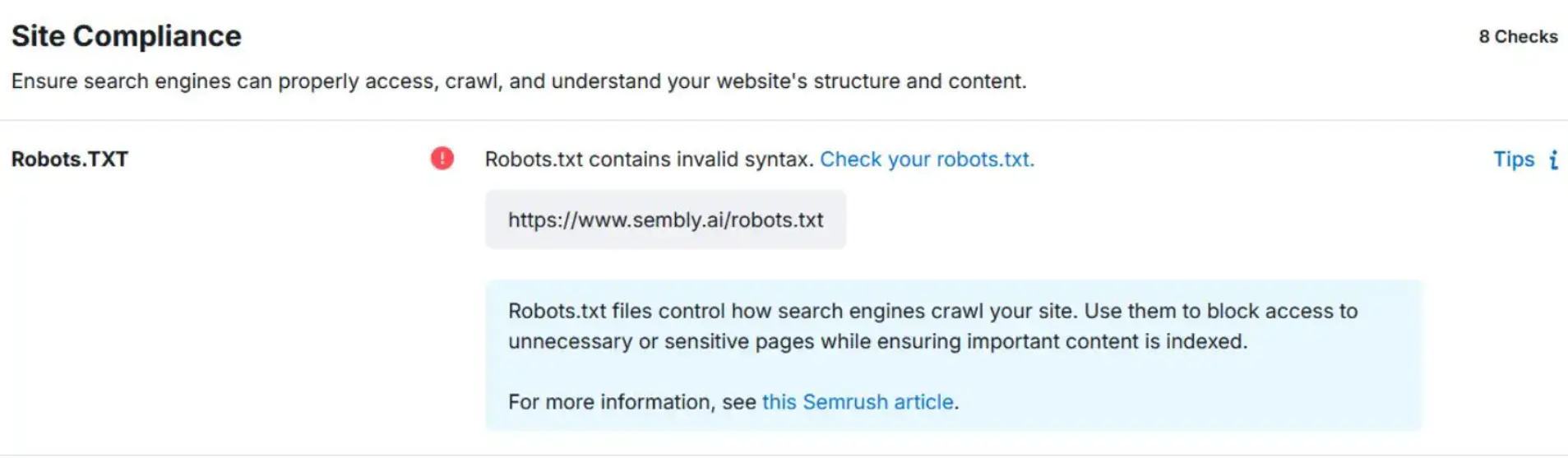
Once your SEO is fixed, your ranking will improve, leading to an increase in organic search traffic. According to recent data, websites that have lots of organic search traffic are mentioned more in AI search results, so it’s a win-win strategy.
Make Your Content Structure AI-Readable
AIs don’t perceive content the way people do—word by word and sentence by sentence. They consume it in a pattern-like manner and “read” it in schemes.
So, if you want to write content that ranks high among generative AI engines, format and chunk it as follows:
- Sections and sub-sections (H2s, H3s, H4s, H5s, or even H6s)
- Table of contents
- Schema markups (Article, How-To, Recipe, Product, Event, FAQ, etc.)
- Bullet/numbered lists
- Key points, highlights, or TL;DRs
In the opinion of Emily Ruby, owner of Abogada De Lesiones, AIs don’t need lengthy storytelling. She clarifies:
Indeed, if you browse blog posts from her law firm, you’ll notice that each article has tables of contents as jump links, rich subheadings, and plenty of numbered or bullet lists.
Check out this page with frequently asked questions (FAQs) on workers’ compensation claims.
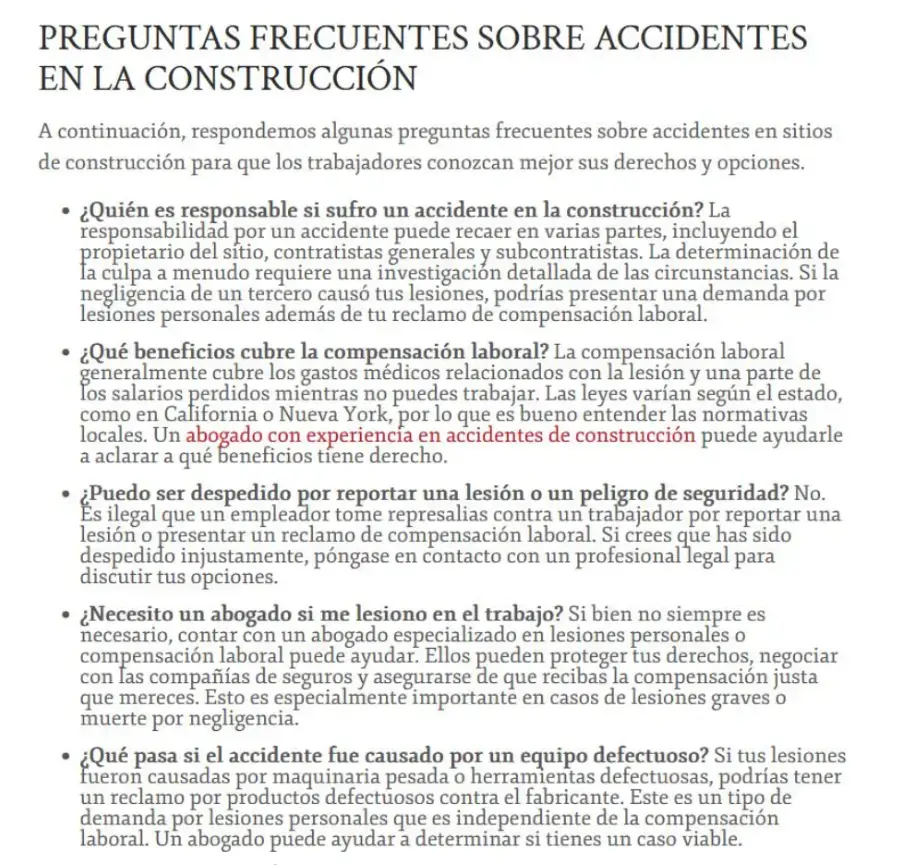
Source: Abogada De Lesiones
Actually, the FAQ topic deserves more consideration for AI search, so keep reading.
Add FAQs to Every Important Page
Nope, not like, “Oh, I have a separate FAQ page somewhere on the website.”
That won’t do any more. GenAI engines are obsessed with crisp and sweet answers (preferably in bullet points).
So, give them what they’re looking for on your:
- Homepage
- Promo landing page
- Product/service page
- “About Us” page
- “Careers” page (yep, even on this one)
- And others.
In fact, generative AI algorithms would love an FAQ section for every blog post—and even more so for every evergreen guide in your resource hub (if any). So, start adding FAQ widgets to all content pieces if you want them to rank in AI answers.
Here’s how Freedom Debt Relief used its local SEO optimization strategy to score points with AI search engines as well.
The company optimized the Texas debt relief guide with local FAQs, such as: “What are the average fees or costs associated with debt management plans in Texas?”
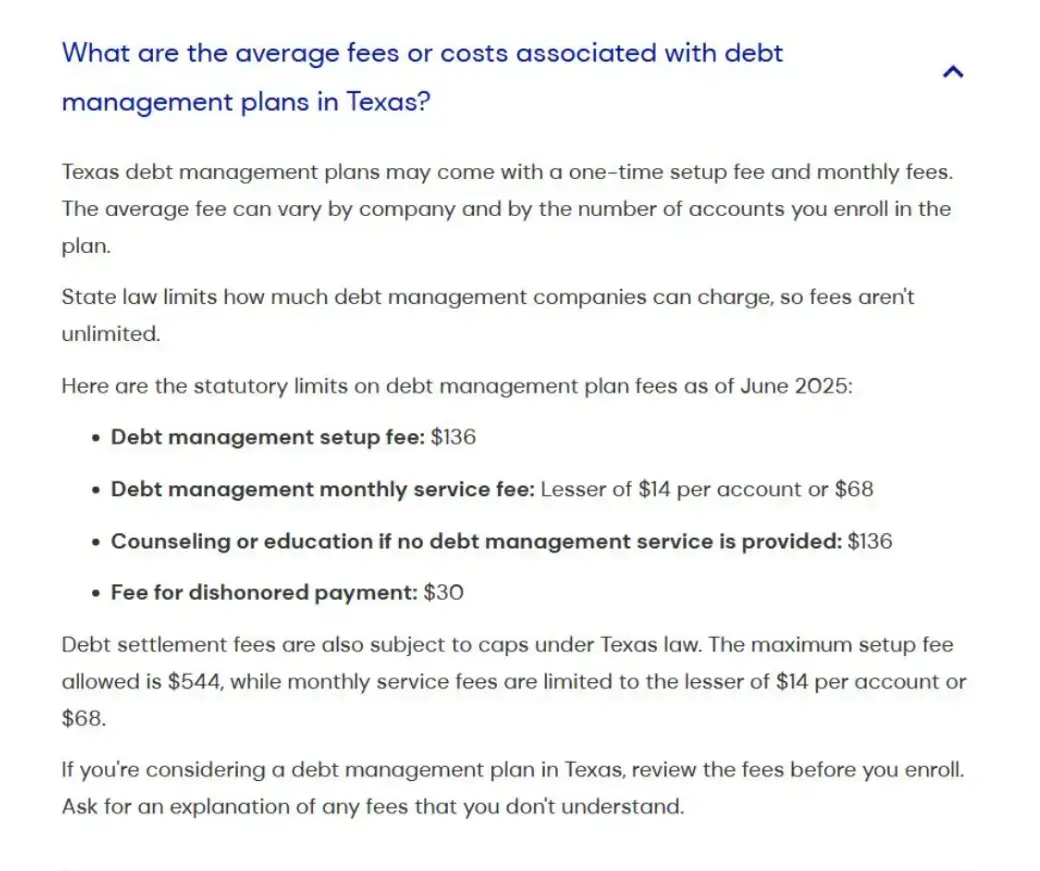
FAQs also help with Google ranking, which again, is a factor for getting AI platforms to notice your content. Data shows that 76% of AI Overview citations come from the top 10 Google search results.
Strengthen Trust and Credibility Signals
Generative AIs use trust markers to assess your brand’s trustworthiness and decide whether to cite it in their results.
These markers can be:
- Quotes from industry experts and thought leaders
- Awards
- Badges or seals
- Customer reviews
- Case studies
- Partnerships and affiliations
- Named authors with credentials (for blog articles in particular)
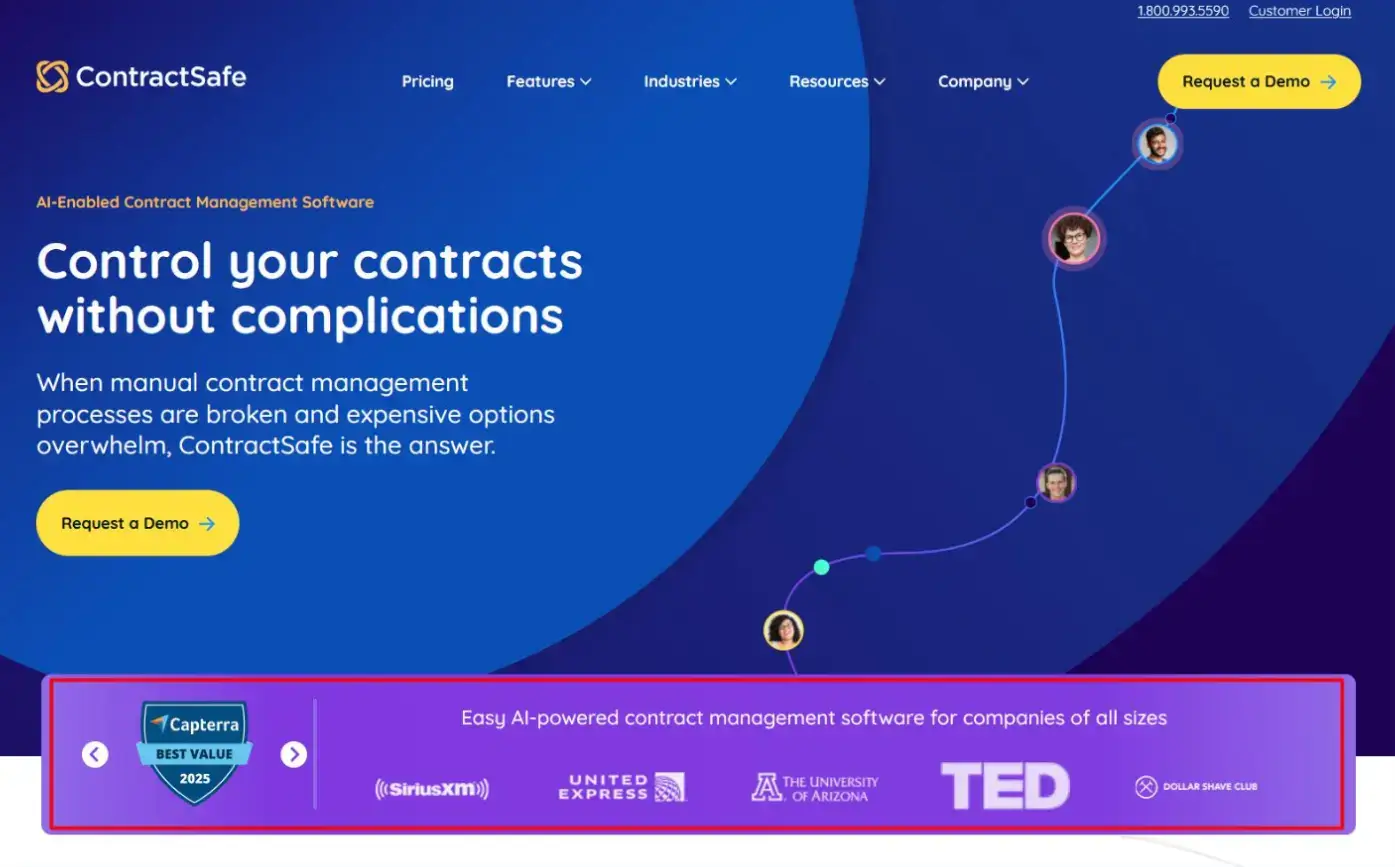
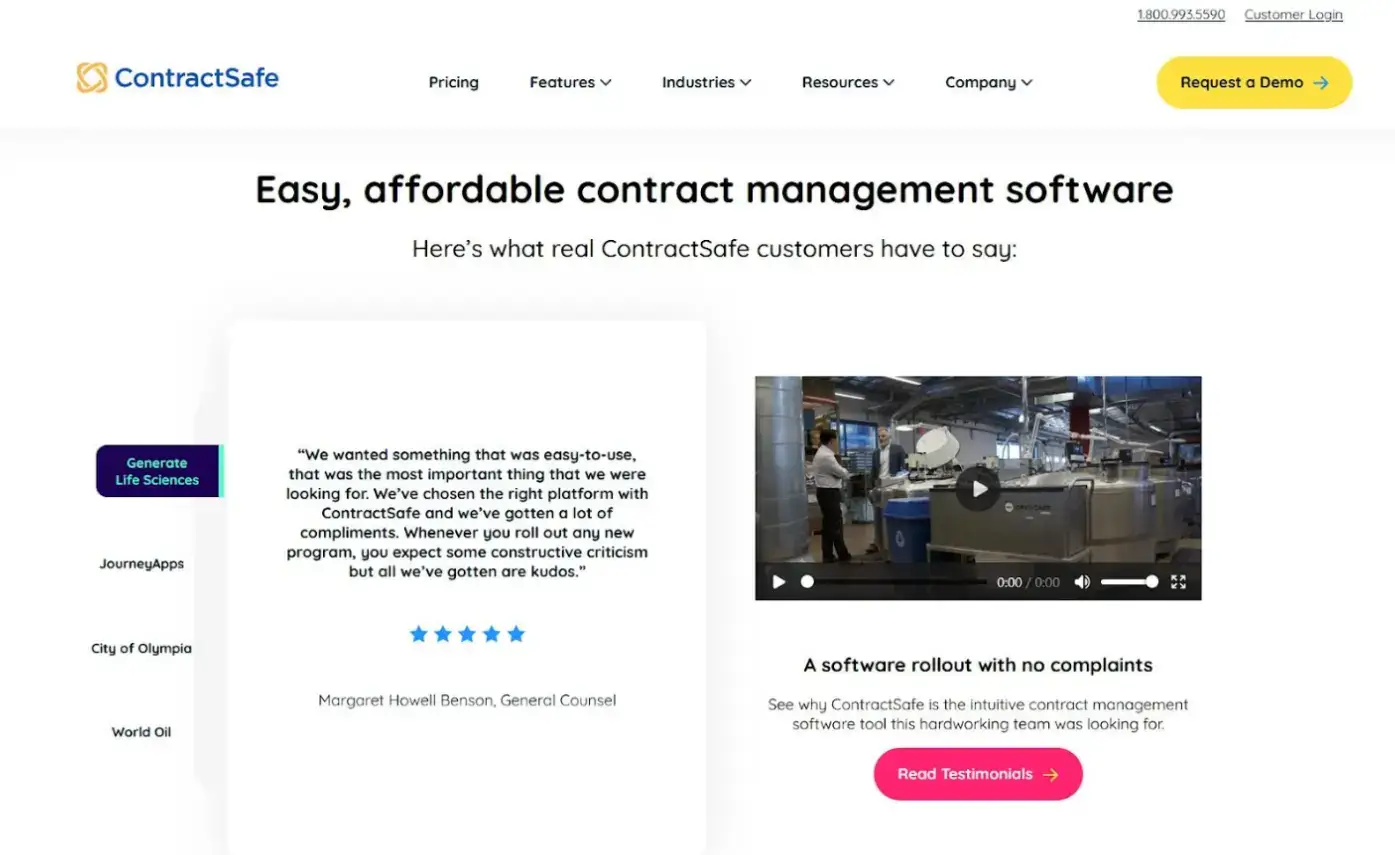
Here’s how ContractSafe used trust markers to get both traditional and AI search engines’ attention:
Right above the fold, they added an image slider featuring awarded badges (e.g., “Best Ease of Use 2025” from Capterra) and a list of companies of all sizes that use their contract management software.
Additionally, they embedded both text and video testimonials from clients below the fold.
Target Long-Tail and Question-Based Keywords
One of the most significant search behavior changes that’s relevant for both traditional and AI search engines is users’ preference for longer queries (long-tail keywords) and questions.
Note: Sometimes, these keywords can be overly conversational and informal or even grammatically incorrect.
Working in the legal niche, Kathryn MacDonell, CEO at Trilby Misso Lawyers, an Australian Queensland-based law firm, remarks:
For this purpose, Trilby Misso Lawyers created situational pages (e.g., “I hurt my arm or leg”), including both long-tail and question keywords, such as: “Are there time limits for filing a claim for an arm or leg injury in Queensland?”

Source: Trilby Misso Lawyers
Increase Media Mentions and Brand Citations
This one’s not just for the AI search engines.
References from high-quality digital places that are relevant to your niche help boost your pages’ visibility and ranking, which in turn may land you on a ChatGPT/Gemini/Claude recommendation.
So, if you want to win brand mentions in AI answers, first earn them from:
- News outlets
- Guest blogs and listicles
- Review sites
- Forums
- Social media
At this point, Samuel Charmetant, Founder of ArtMajeur, recommends:
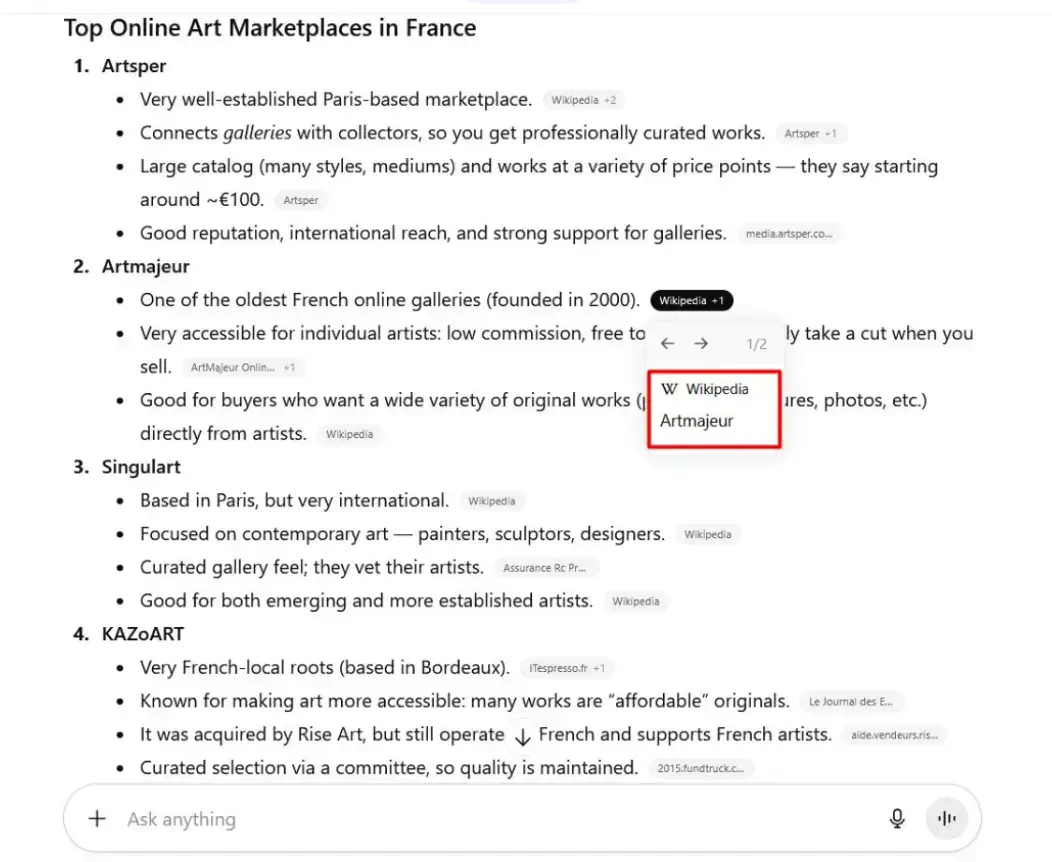
What Samuel is trying to say here is that each AI platform has its preferred citation sources. For instance, ChatGPT is like Wikipedia: when asked about the “best online art marketplace in France,” the platform lists ArtMajeur, citing its Wikipedia page.
Perplexity, on the other hand, has different favorite sources, as you can see in the list below:
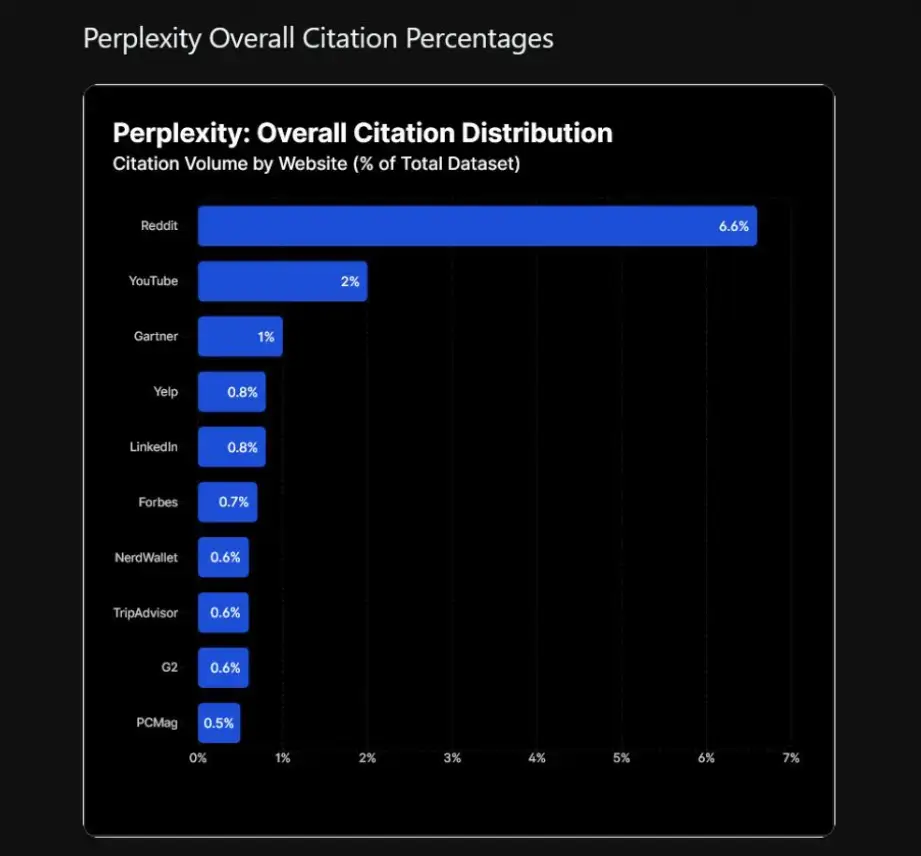
Source: Profound
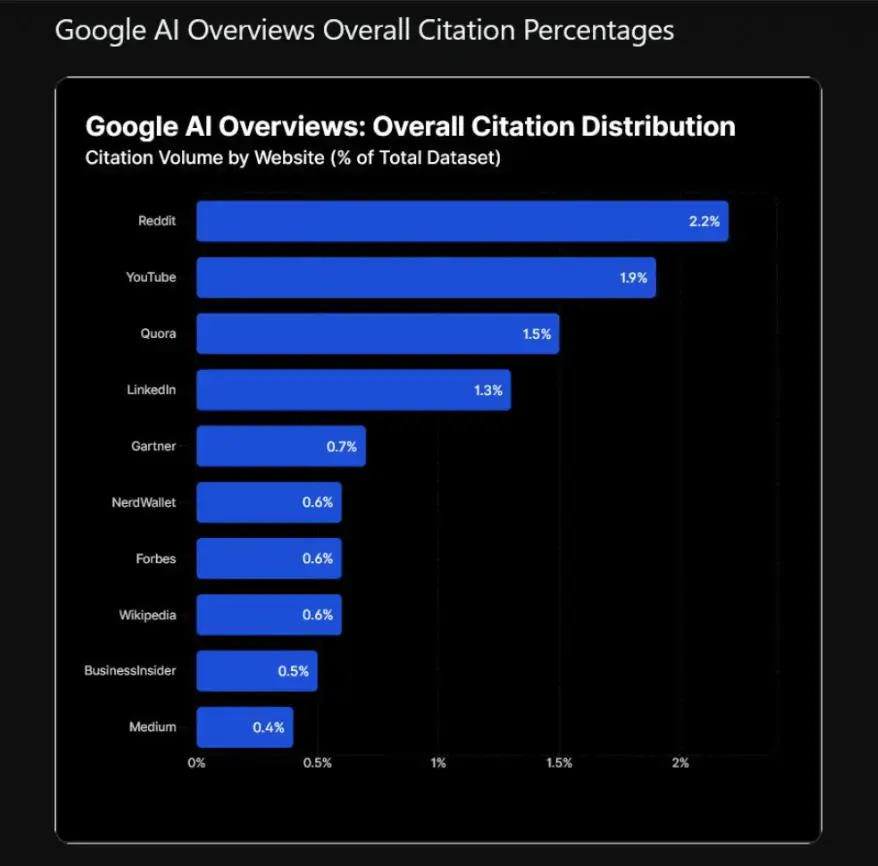
Google’s AI Overviews seems to like Reddit, YouTube, and Quora:
The Time to Act is Now
AI is here, and it’s staying. It’s no longer a matter of “if,” but of “when,” and its influence is already showing.
Small businesses that don’t have a huge marketing budget must find ways to adapt to AI-powered search as soon as possible, before big brands swoop in.
For now, even big companies are still confused about how AI technology is changing everything. That’s because no one really knows how to measure AI usage in enterprises—which KPIs matter and how to interpret the data.
But things are getting clearer by the minute with new studies showing customers’ shift in search behavior and AI’s impact on internal processes.
These studies show that AI platforms tend to prioritize answers from the most authoritative, trustworthy, and structured sources. So, the methods we discussed today are the perfect starting point to better online visibility and increased sales.
Take it step by step, and let AI help build your empire!
Frequently Asked Questions About AI Search for Small Businesses
Should I Stop Using Keywords and Just Write Naturally?
No. You must shift from short-tail keywords (e.g., "plumber Austin") to conversational, long-tail queries (e.g., "where can I find a reliable plumber near me who works on weekends?"). AI systems prioritize semantic relevance (meaning) over keyword density, so your priority is to optimize for the questions your potential customers ask.
Should I Create All My Content Using AI Tools?
Absolutely not. AI prioritizes content that demonstrates E-E-A-T (Experience, Expertise, Authoritativeness, and Trustworthiness). Content that shows unique, real-world experience (case studies, proprietary data, local knowledge, staff credentials) is essential. You can use GenAI tools for drafting, but human expertise must be the final editor.
Does AI Recommend Local Businesses?
Absolutely! People actively use GenAI assistants for local brand or product/service discovery. A properly AI-oriented strategy helps local brands appear in AI-generated results for “near me,” “in [City],” or similar geography-based queries.
If Fewer People Click, How Do I Measure SEO Success?
You must redefine success beyond the click. The new metrics are focused on Visibility, Authority, and Conversions.
Here’s what to track to know things are going in the right direction:
- AI Visibility: How often your brand/site is cited or named in AI Overviews and PAA boxes (Impressions).
- Brand Lift: Increases in branded search volume (people searching for your company name directly).
- High-Intent Traffic: The quality and conversion rate of the clicks you do get (e.g., calls, form fills, map directions).
Do I Need to Optimize for AI Platforms Beyond Google?
Yes, but prioritize Google. While other LLMs (like Perplexity or ChatGPT) are relevant, Google's AI Overview is the direct threat/opportunity to your existing search traffic. Once your content is well-structured and authoritative (E-E-A-T) for Google, it will naturally perform better across other generative platforms.
Tip: Monitor platforms where your audience is active (e.g., Reddit, YouTube, which AI models frequently cite).

Author Bio
Brooke Webber is a passionate freelance writer who turned her love for writing into a thriving career. Starting as a content writer, she has honed her skills through continuous learning and diverse experiences. With a relentless pursuit of excellence, Brooke has built a strong portfolio and established herself as a respected voice in the content writing industry.