

A must-read guide for devs aiming to build and test MVP quickly with minimal risk. If you are new to building products, it is easy to think an MVP is just a quick, rough draft. But it is not!
You built your MVP. But did it land? You’ve spent weeks or even months creating your MVP. Everything runs. It’s clean, it’s live. You hit “launch”, and then? Silence. It’s a gut punch many first-time founders experience.
So, what does MVP mean? MVPs aren’t built to impress. They’re built to validate. And that’s where most developers slip: they confuse a functional product with a proven one.
An MVP should answer one simple question: “Does this solve a real problem for someone, right now?”
The beginner's guide? Let’s unpack the critical steps to build and launch MVPs, and how a powerful, often-overlooked tool like grants can help you learn, develop and test MVPs with less risk.
In this article:
- The 5 Critical Steps to Build and Launch an MVP
- Step 1 – Start With a Real Problem, Not a Polished Prototype
- Step 2 – Launch Early to Learn Faster
- Step 3 – Build a Feedback Loop Into Every Iteration
- Step 4 – Plan for Financial and Strategic Risk
- Step 5 – Distribute Your MVP From Day One
- Using Grants to Fund and De-Risk Your MVP
What Does MVP Mean? The Real Purpose of an MVP
An MVP, by definition, is a minimum viable product. The sad reality is that it might be minimal, but that does not imply that it is feasible. And just because it works, it does not mean it resolves a legitimate problem people care about.
Too often, beginner programmers mix up value and functionality. They build login systems, dashboards, and even integrations. Then ship something technically sound but strategically shallow. A working product is not a validated product.
If your MVP doesn’t answer these three questions, you’re building in a vacuum:
- What user problem are we solving?
- Will real users take action like signing up, buying, or returning?
- What evidence shows this is worth building further?
The goal of an MVP is to gather insights and learn, not to gain admiration.
That learning fuels iteration, shapes roadmaps, and attracts partners or investors. But if your MVP lacks a clear hypothesis or measurable outcomes, it becomes a demo, not a test. And demos don’t scale.
“The only way to win is to learn faster than anyone else.” – Eric Ries, The Lean Startup
What MVP Really Means in Product Development
When starting, many ask: What does "MVP" mean beyond a simple product? Understanding the key factors behind developing and launching your MVP is essential for success.
- Focus on a real user problem: Solve a clear, urgent pain point.
- Keep core functionality simple: Build one feature that truly matters.
- Launch quickly: Speed beats perfection to gain early feedback.
- Test with real users: Validate your idea outside internal teams.
- Define clear success metrics: Track signups, usage, or conversions.
- Iterate based on data: Use feedback to improve purposefully.
- Plan funding strategically: Explore grants or non-dilutive options.
- Distribute smartly: Reach niche users and early adopters for traction.
If you are from a non-technical background and want to launch a minimal product for your business, consider hiring MVP development companies.
Let’s now look into the 5 most crucial steps developers need to know when building their first MVP.
The 5 Critical Steps to Build and Launch an MVP
Step 1 – Start With a Real Problem, Not a Polished Prototype
A common error among developers is believing that a polished prototype or a minimal version of the finished product counts as an MVP. But aesthetics aren’t the point.
What does MVP mean here? It means testing a single assumption, like does your solution solve a genuine problem people face today?
Test one idea with just enough function to learn from actual users. Determine the key assumption you're going to try out before you write one line of code.
Create the simplest possible version to obtain a genuine solution. Skip the fancy features, focus on value and validation.
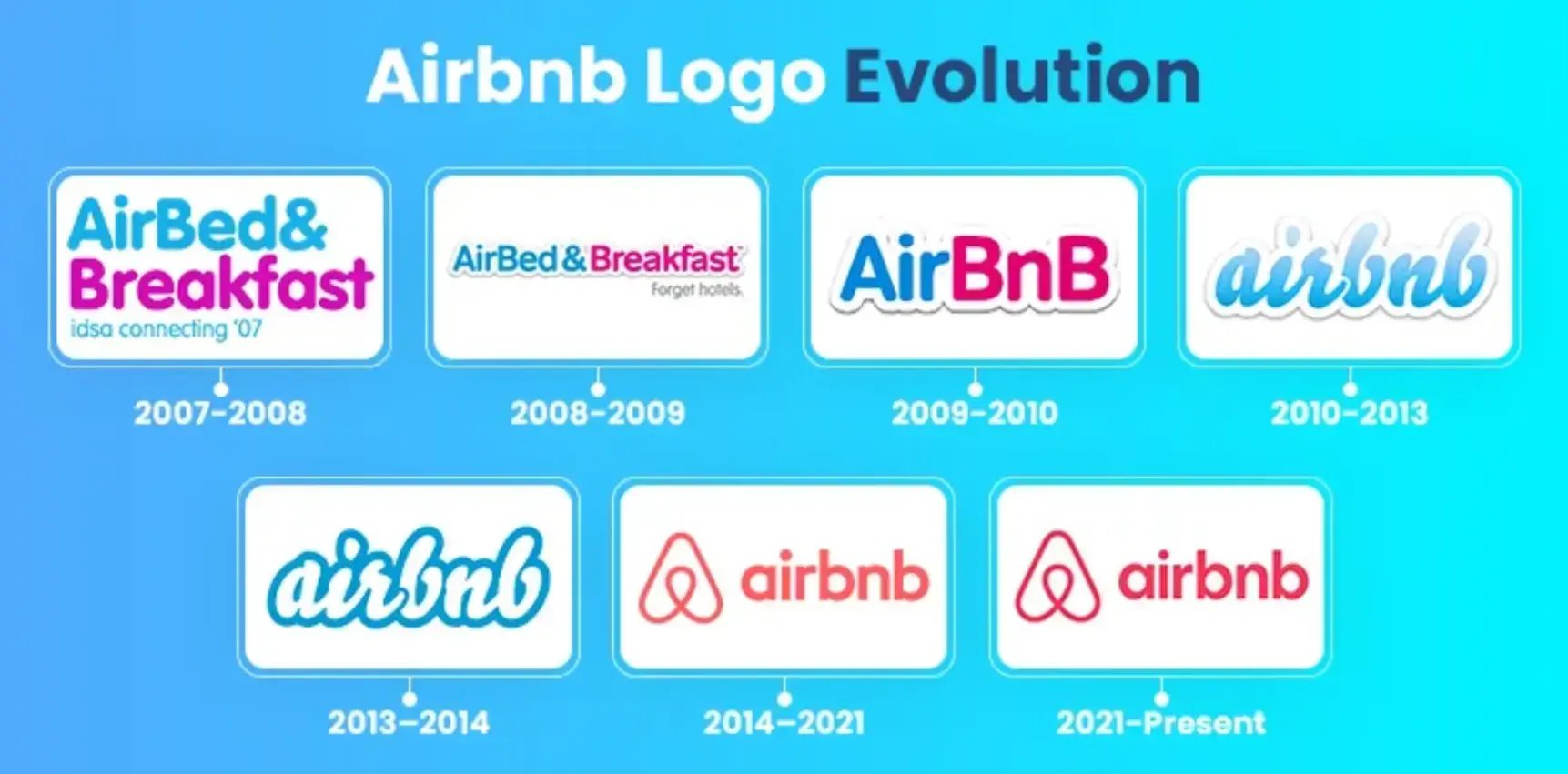
Take Airbnb, for example. The founders began with a basic web page, offering air mattresses from their own homes. No app, no automated payments, no filters. It wasn’t even scalable, but it worked as a proof of concept. It validated one key thing: people were willing to pay to stay in someone’s home.
To build a website like Airbnb, make sure you design an MVP to validate a hypothesis, rather than to impress investors or replicate the final application. If you're not validating a real user need, you’re just shipping code into the void.
Step 2 – Launch Early to Learn Faster
Perfectionism kills MVP momentum. Many developers delay until the product looks perfect, is bug-free, or has “just one more feature.” But by then, they’ve often lost their early momentum, and even worse? The chance to learn!
What does MVP mean in terms of launch? It’s not about being flawless; it’s about being testable. Define your riskiest assumption and launch a stripped-down version that tests your core idea.
Get it in front of real users early and use feedback to steer your next development phase. Focus on learning, not polishing. It is much better to have early feedback rather than a late launch.
In contrast, Dropbox tested its idea with a simple explainer video. No working software. Just a well-made clip describing what they were going to build.
The video earned them over 75,000 email signups. That demand validated their hypothesis and gave them confidence and capital to build the actual product.
Step 3 – Build a Feedback Loop Into Every Iteration
You launched your MVP. You get some user activity. What you do next determines whether your MVP becomes a scalable product or just a side project.
This is where many devs go wrong. They make changes based on intuition, not insight. A new button here, a different color scheme there – without clear goals or metrics.
Source: net solutions
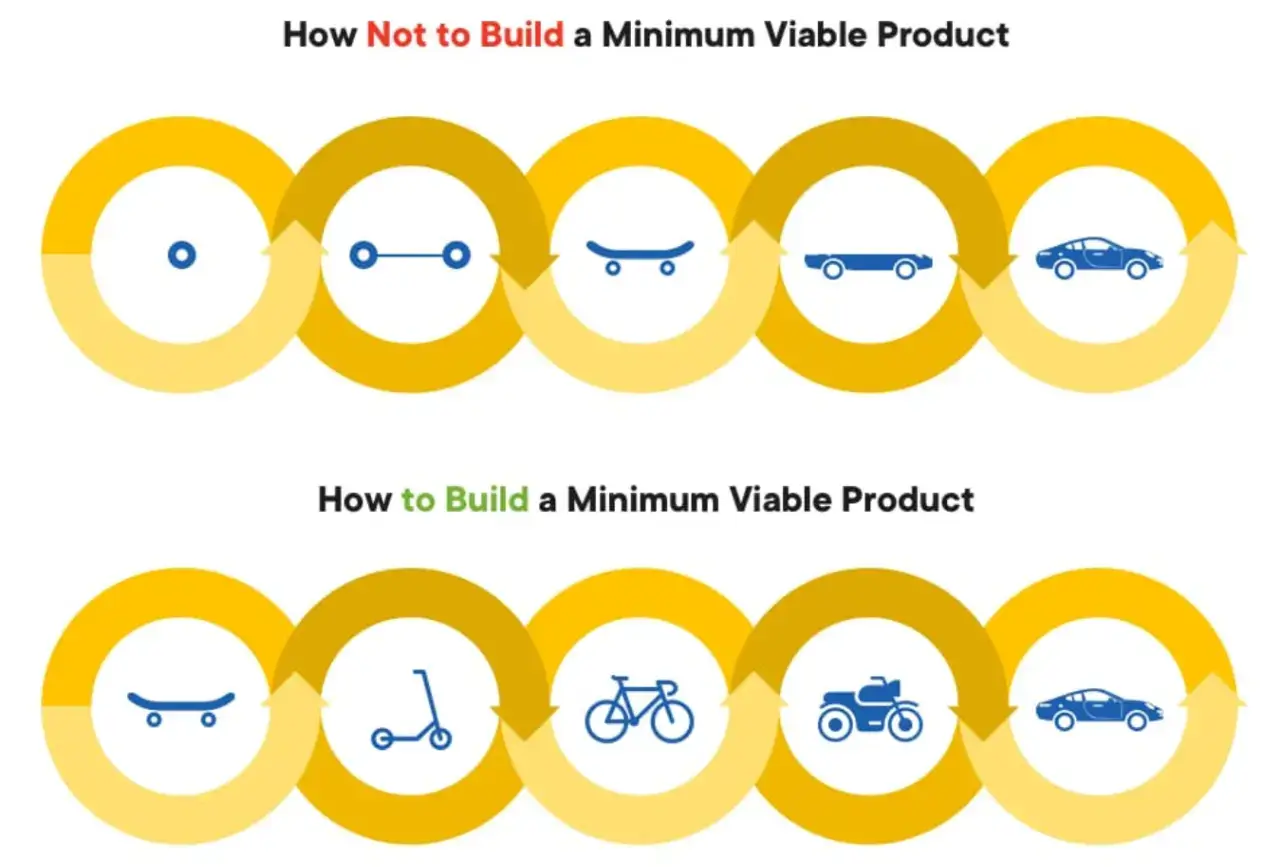
What does MVP mean during iteration? It’s a structured process of learning through feedback, not gut instinct. Iteration without structure is just noise.
To iterate meaningfully, your MVP needs a feedback loop:
- What are you testing this time?
- What metric will define success?
- What insight will help you improve?
Before every change, define what you’re trying to learn. Monitor one or two critical metrics related to user actions. Let the data inform your next steps, rather than relying on assumptions.
The best iterations are intentional, not accidental. For budget-smart iteration tips, see this POWR startup guide.
Step 4 – Plan for Financial and Strategic Risk
Developers rarely speak about failing to manage the non-technical risks in MVP development. You might build a clean, functional MVP. But:
- Can you afford to maintain it while collecting feedback?
- Do you have the capacity to pivot based on what you learn?
- Is there any funding or support to help take it to the pilot stage?
In reality, your MVP doesn’t just need code; it requires a runway. Without a financial strategy, most MVPs become stalled ideas rather than scalable businesses.
Explore non-dilutive funding options, such as innovation grants. Build a financial buffer or partnership strategy. Consider programs like TVSF, SBIR, or EPIC that support early MVPs.
Source: Evaluator Report
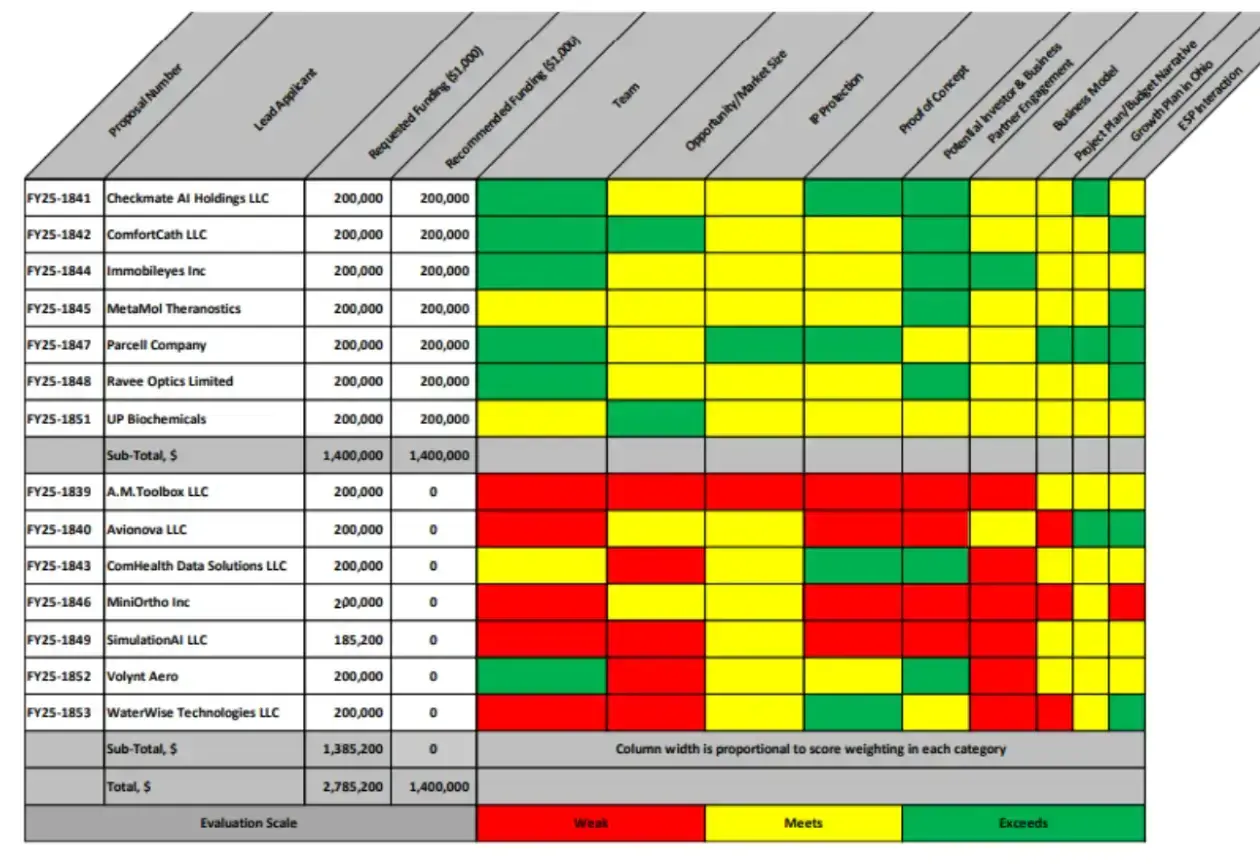
Real-world Wins: In Round 39 of Ohio’s TVSF, 14 grant applications were reviewed. Seven were funded – each with clear, testable MVP roadmaps. In just one phase alone, more than $1.4 million was distributed.
Step 5 – Distribute Your MVP From Day One
Many developers assume a good MVP will market itself. It won’t. Even excellent products are invisible without an outreach strategy.
What does MVP mean when it comes to distribution? It means getting your product in front of the right people, not just “launching and hoping.” Launching in silence means missing out on real feedback and traction.

Source: Pexels
You can start small, but strategically. Share your MVP in niche communities, relevant forums, or early-access platforms.
Formulate a single value proposition and evaluate your product and messaging. Focus on engaged users - better 10 active users than 1,000 silent users.
For example, Superhuman launched its MVP through a highly selective, manual onboarding process. By personally guiding early users, they gathered focused feedback and validated product-market fit before scaling. This targeted distribution was key to their early success.
Using Grants to Fund and De-Risk Your MVP
For early-stage founders, funding is often a bottleneck between idea and execution. But one tool remains surprisingly underused: grants.
Unlike equity-based funding, grants are non-dilutive, meaning you don’t give up ownership.
Whether you're making medtech, cleantech, edtech, or social innovation, there are likely grant programs for your industry. These programs let you build and validate your MVP with defined milestones, external accountability, and lower personal risk.
What does MVP mean when building with the help of grants? For developers building MVPs, grants are more than a backup plan! They’re a smart, strategic launchpad.
How to Align MVP Development with Grant Criteria
Here’s how grant support fits seamlessly into the MVP development and testing process:
- Start with a clear hypothesis: What is the primary element you are testing? This becomes your grant “problem statement.”
- Set clear metrics of concrete success: Whether 100 users, 10 paid conversions, or initial partner interest, metrics provide evidence of traction for award committees.
- Identify the appropriate program: Sites like US Grants categorize funding programs by industry, eligibility, and stage. It makes it easier to align your MVP milestones with potential grants.
- Apply with intent: A grant proposal isn’t just paperwork, it’s your roadmap. Show how funds will go toward testing, feedback, iteration, and reporting. Many programs, such as TVSF or SBIR, appreciate founders who possess clarity and focus.
- Use grant deadlines as discipline: Having official deadlines (e.g., Phase 1 and Phase 2 grants) helps teams avoid delays and stay lean.
Using grants during the MVP stage saves your money and helps you build better. You’re more likely to define user value, collect early feedback, and avoid waste.
Final Takeaways: Learn Fast, Fund Smart, Scale Wisely
Your MVP should not be your final product. It’s not your pitch deck either. It’s a tool and a data-gathering machine. Its purpose is to validate one thing: Do people care enough about this solution to use it?
But learning takes time, money, and effort. The majority of MVPs with no plan or cash burnout are not due to a lack of capability, but to a lack of runway.
By leveraging grant programs, in this case, non-dilutive ones like TVSF, DOE EPIC, or the assorted curated US Grants, you give your MVP the framework and sustainability it needs to scale.
You build faster, iterate smarter, and reduce risk – for yourself, for future investors, co-founders, and users.
You just need to know where to look and how to build an MVP with purpose. And that’s what separates a functional MVP from a funded, scalable business.
FAQs: MVP Basics Every Developer Should Know
1. What does MVP mean in product development?
MVP refers to Minimum Viable Product. This version includes just enough features to assess your primary hypothesis and gather insights from real users.
2. Are an MVP and a prototype two different things?
MVPs are operational products utilized by real users to confirm essential assumptions, whereas prototypes are typically internal, focus on aesthetics, and serve as mockups.
3. Why is speed significant when launching an MVP?
MVP's main goal is to verify your highest-risk assumption as soon as possible. Delaying the launch increases the likelihood of developing unnecessary features.
4. Who should use an MVP first?
The initial testing of your MVP should be conducted by early adopters – users who are eager for innovation and willing to explore unfinished products. They test bugs and provide valuable feedback to determine if your product effectively addresses a problem.
5. How do grants support MVP development?
Grants aid MVP development by providing funding that doesn't dilute equity, allowing startups to maintain financial support as they build, test, and refine their validated learning.

Author Bio
Renu Sharma is the Co-Founder of Tanot Solutions and helps businesses 5X their organic traffic by building high-quality backlinks. When not working, she loves to polish her marketing knowledge and skills and watch interesting web series. You can follow her on LinkedIn.