

Jim Metcalf once said, “If you’re a good marketing person, you have to be a little crazy!”
After reading this article, you would boldly add: …and never overlook UGC or user-generated content in your marketing plans.
Here’s why:
- 79% of consumers confess that UGC prompts them to buy. For comparison, this number grew from 60% in 2017.
- 86% of retailers believe authentic user-generated content will help boost ad and content performance.
- 60% of CMOs plan to embrace authenticity with brand-approved UGC by 2026.
Looking ahead, we’ve prepared this article as a reference with suggestions and tips to help you reshape your marketing strategy using user-generated content.
Shortcuts:

User-Generated Content Ideas for Marketers
UGC is any textual, visual, or audio content created organically by customers or users who share their opinions or experiences about companies, products, or services.
UGC creation often reflects genuine perspectives, making it a valuable way to understand how products or services are perceived in real-world use.
It can take virtually any form:
- Social media posts (e.g., product photos or unboxing videos)
- Reviews and testimonials
- Forum messages (e.g., in Reddit communities)
- Blog articles
- Podcast or videocast episodes
- Content in AR or VR (e.g., Snapchat’s AR content)
- Star ratings and scores from Google Review, Yelp, Facebook, TripAdvisor, etc.
All of these form a “toolbox” for marketers to promote brands, products, or services.
Today, marketers implement UGC interactively and engagingly across websites, emails, and social networks.
On websites
The most common approach among brands is using a review or testimonial slider.
For example, Falcon Pools created a dedicated page with clients’ reviews that users can slide through.

In emails
In modern email marketing, more brands are switching to animated UGC to add motion and energy to their emails.
For instance, Biossance shares GIF reviews of its best-selling moisturizer via email.

Via social channels
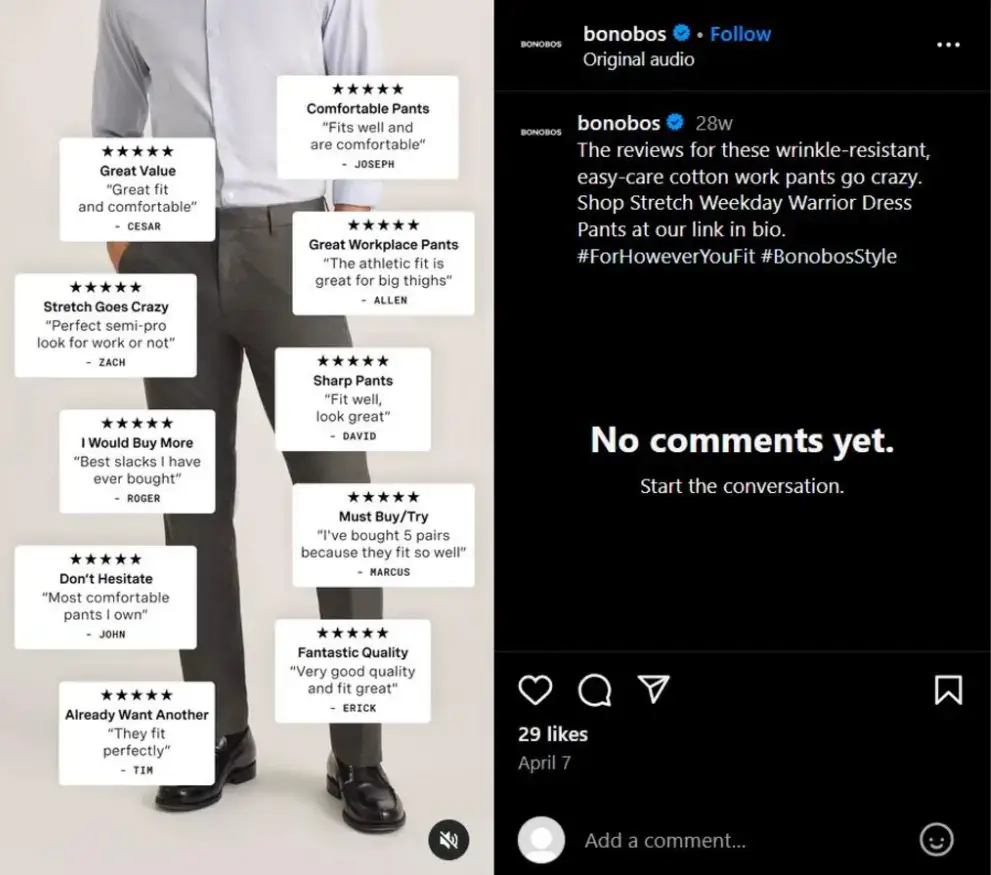
UGC in GIFs and short videos continues to dominate social media content strategies in 2025 and beyond.
Bonobos, for example, includes animated product reviews in Instagram posts.
Source: Instagram
How to Supercharge Your Marketing Strategy with UGC
Prioritize UGC-rich channels
These differ by niche and business model. For instance, a B2B SaaS brand may find LinkedIn most effective for UGC.
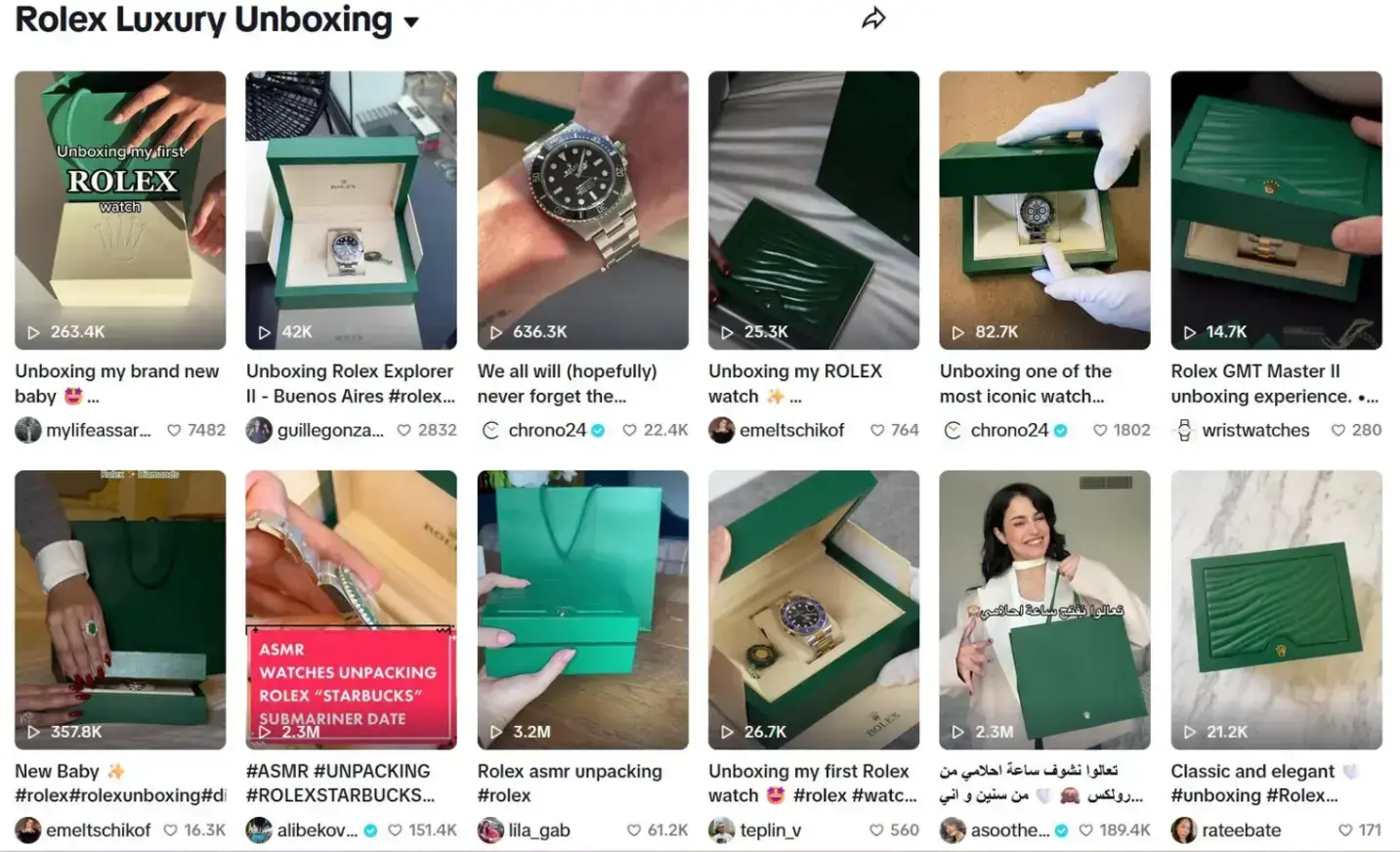
Channels like YouTube and TikTok are treasure troves for customer unboxing videos.
Use tools to capture and manage user-generated content
The UGC software market is projected to grow rapidly — from $5.72B in 2023 to $35.89B by 2030.
AI-powered tools help brands collect UGC and moderate it automatically:
- Tagshop.ai
- Emplifi.io
- TagEmbed
- Skeepers.io
- Flowbox
- RaveCapture
Helix Sleep, for example, features testimonials from doctors in Sleep Medicine and Neurobiology on its website.

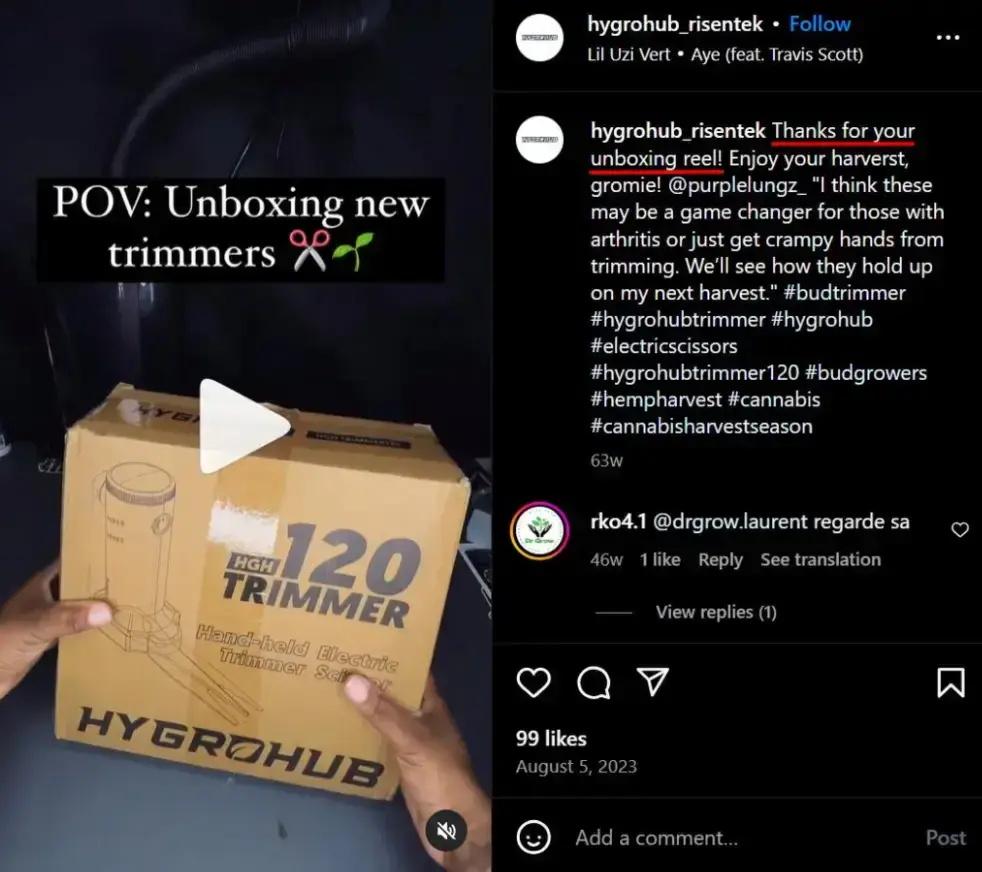
Thank customers for UGC
This is part of mindful customer service: acknowledging and appreciating customer effort.
ABC Finance does this on Twitter, sharing client reviews with gratitude.

Example thank-you messages:
- "Thanks for sharing your story, [CustomerName]!"
- "We love seeing our product in action — thank you for the fantastic post!"
- "Thanks a million for sharing your amazing experience with us!"
- "We’re thrilled you took the time to share this with us — customers like you make our day!"
- "[CustomerName], thanks for your unboxing video!"
You can also inspire other customers to create UGC through these interactions.
Make social proof easy to see
Collecting user-generated content is one thing. Showcasing it clearly is another.
A simple testimonial slider helps surface real customer feedback in a way that feels organic, not promotional — keeping trust visible without disrupting the browsing experience.
Tools like the POWR Testimonial Slider let you display reviews and quotes in a clean, scrollable format that fits seamlessly into any site.
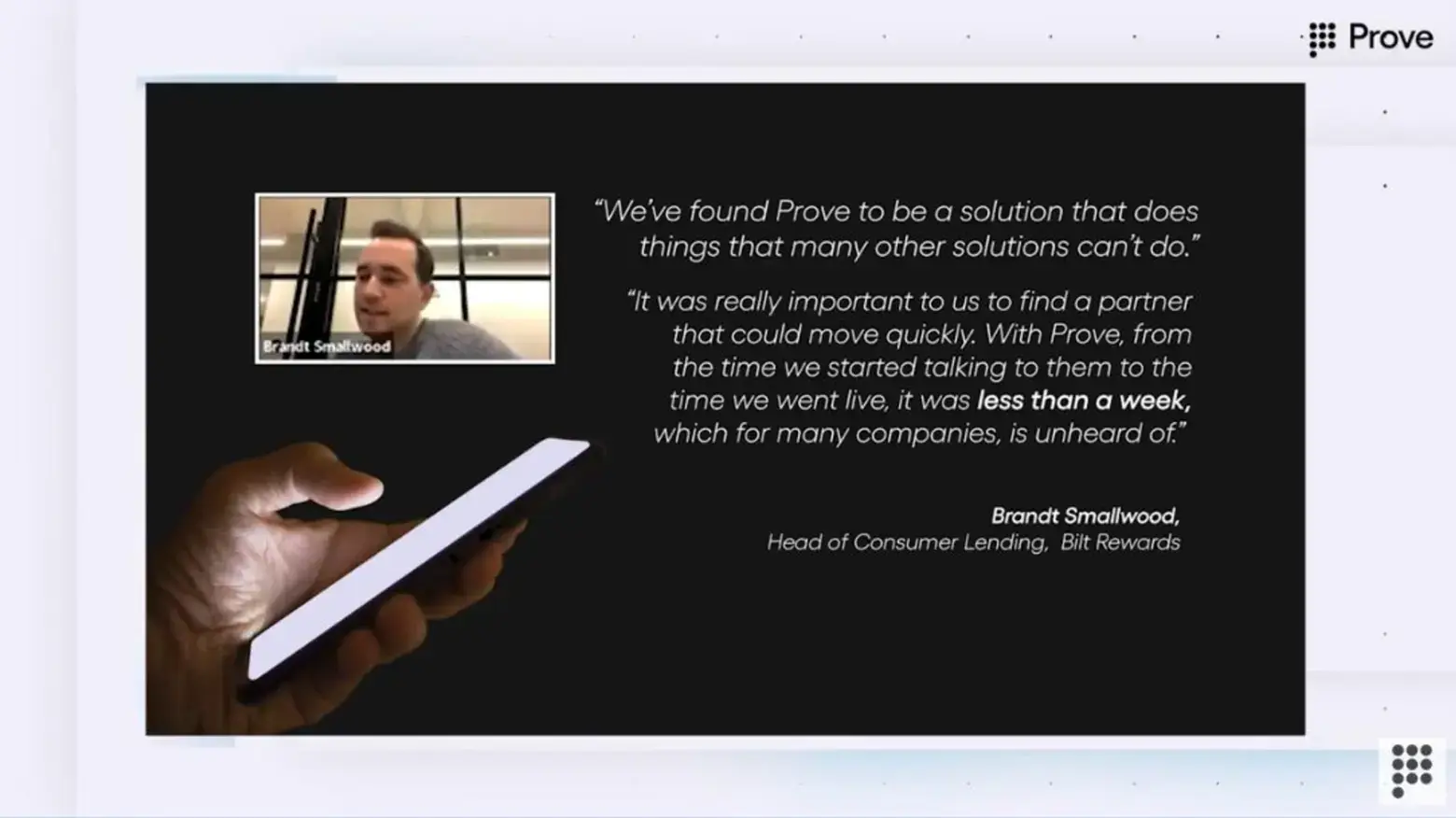
Bank on a video format
When brands choose UGC, they often focus on video content—and for good reason. Videos engage and convert better than static content.
For instance, brands embed clients’ video testimonials using Vimeo galleries.

You can also make testimonials more effective with video.
Encourage your audience to interact with UGC posts
Don’t just drop user-generated content on social media and walk away.
Example CTAs:
- "Click to read more"
- "Check out these photos"
- "Read the full story"
- "Watch this video"
- "Join our hashtag challenge"
You can even launch a hashtag campaign like #MyCalvins or #MyParachuteHome to gather UGC.
KFC did so with the #KFCCrunchyJingle challenge across Instagram and Facebook.

Source: Facebook
Partner with influential figures
Influencer marketing is one of the strongest ways to amplify UGC.
Partner with nano- (100–10k followers) and micro-influencers (10k–100k followers) who align with your niche.
For B2C:
On social media, search by hashtags like:
- #MomBlogger → parenting
- #StreamerLife → gaming
- #MakeupArtist → beauty marketing
- #TravelVlog → travel
- #SustainableInfluencer → eco-friendly living
- #FoodBlogger → restaurant influencer marketing
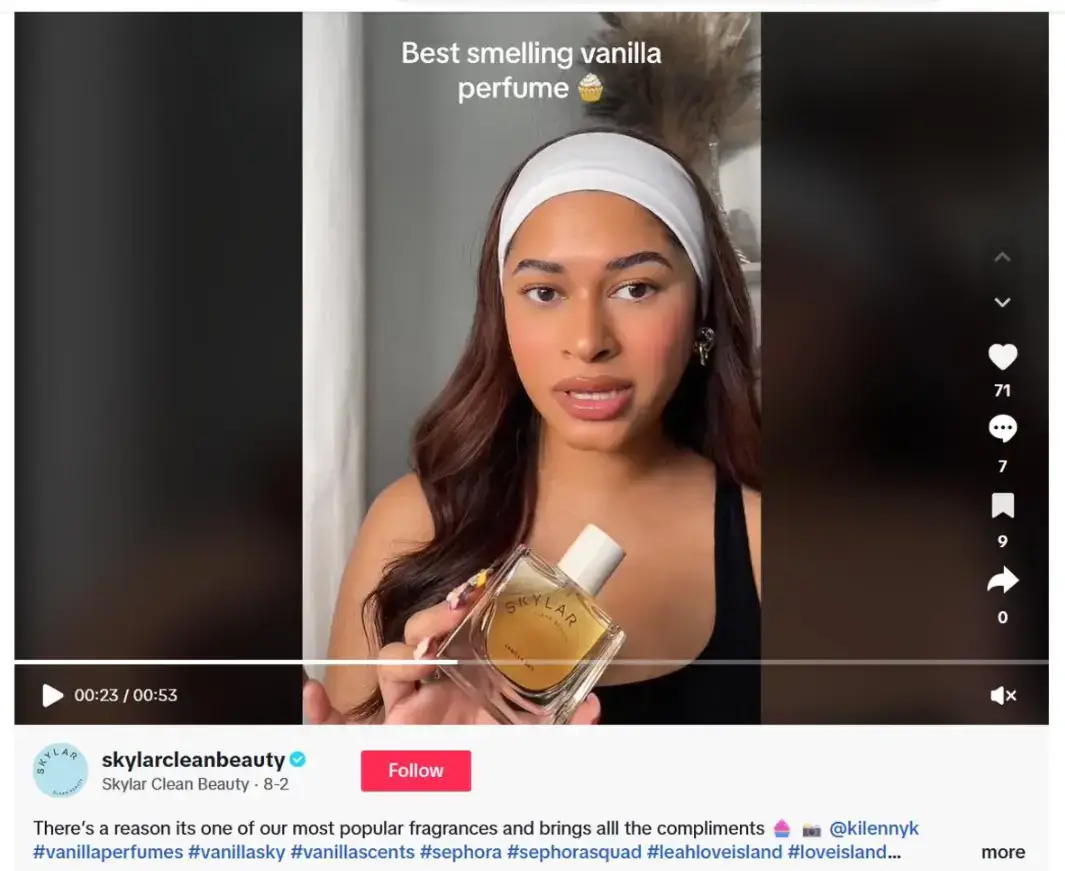
Skylar Clean Beauty partnered with @kilennyk, a fashion micro-influencer (6,150 followers), to promote its vanilla perfume.
For B2B:
Reach out to industry thought leaders on LinkedIn to request a review of your product or service and generate UGC for your brand. Note: Thought leadership posts reign supreme for LinkedIn B2B engagement.
For example, suppose you’d like to collect user-generated content about your inventory management software for the metal industry.
You can search for influential B2B brands using hashtags #steelmanufacturing or #metalindustry, and contact those who are ready to try it and share their opinions.

Update your digital spaces with new user-generated content
Look at your digital pages. How old is the latest UGC piece posted on them? Isn’t it time to refresh it?
In the words of Jeffrey Zhou, CEO and Founder of Fig Loans,
You might want to refresh and optimize your website with new user-generated content pieces.
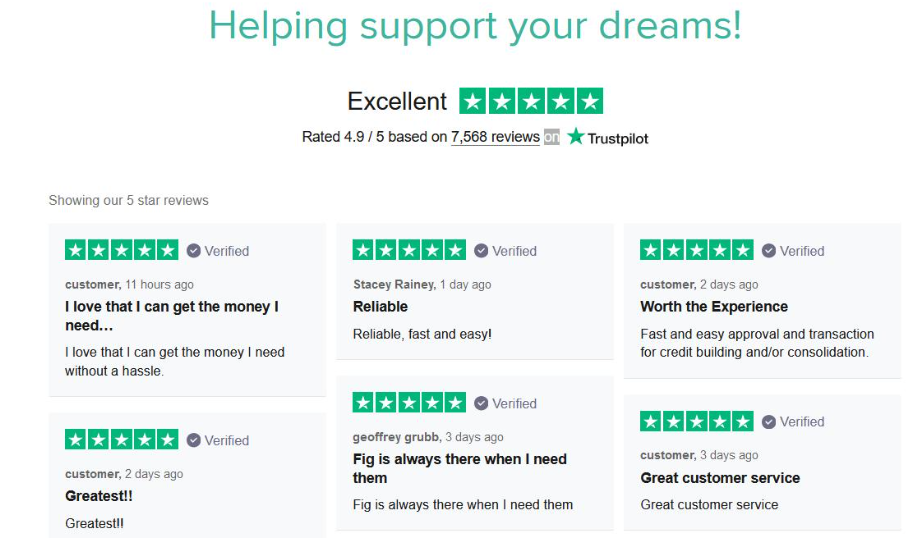
For example, at Fig Loans, site visitors can read the freshest Trustpilot reviews, updated daily: 11 hours ago, 1 day ago, 2 days ago, etc.
Source: TrustPilot
Also, don’t forget to update your social media content with the newest user-generated photos or videos to keep it ever-fresh.
FAQ: User-Generated Content in Marketing Strategies
What is a user-generated content strategy in marketing?
A UGC strategy is a set of tactics, methods, and tools marketers rely on to encourage customers to produce authentic content about their brand, product, or service so that they can leverage it later for promotional purposes.
Why is UGC marketing important for brands?
User-generated content marketing is primarily about building trust. People view content from fellow customers as more authentic and genuine than brands themselves. So, UGC positions a brand as more credible and reliable. Besides, similar to any other content, it also drives interactions and engagement.
How can I collect user-generated content?
Here are the best ways to capture UGC for marketing:
- Review submission forms
- Follow-up emails
- Post-purchase surveys
- Branded hashtag challenges
- Photo/video contests
- Brand ambassadorship programs
On what marketing channels should I share UGC?
The top three channels to spread user-generated content in marketing are:
- Social media (Facebook, TikTok, Instagram, etc.)
- Website
However, UGC is likewise extremely influential in lead magnets and display ads.
Can UGC help with SEO?
Yes. User-generated content, mainly reviews and testimonials, is a powerful SEO booster for both on-page and off-page optimization. For one thing, UGC can nourish a page with short- and long-tail keywords. For another, UGC keeps it lively with fresh content updates prioritized by search engine algorithms, which eventually give it higher rankings.
Why is UGC so effective?
Because it builds authenticity and social proof—customers trust peer voices more than ads.
How often should I refresh UGC?
Ideally, monthly. New content signals active engagement and builds brand trust.
