

E-commerce platforms are a driving force for businesses, providing capabilities such as increased sales, brand outreach, user convenience, and access to tools that drive revenue and brand value.
In 2025, retail e-commerce sales are estimated to exceed 4.3 trillion US dollars worldwide. With a large number of online buyers, choosing a relevant e-commerce platform is an important step brands should take to ensure consistent growth.
Shopify and WooCommerce are the e-commerce platforms most brands prefer while establishing their online business presence.
With distinct features, similarities, unique strengths and limitations, these cater to your business requirements differently.
In this article:
- Shopify vs WooCommerce: Feature-by-Feature Comparison
- Ease of Use
- Store Customization & Design Flexibility
- Pricing & Transaction Fees
- Scalability, Security & Performance
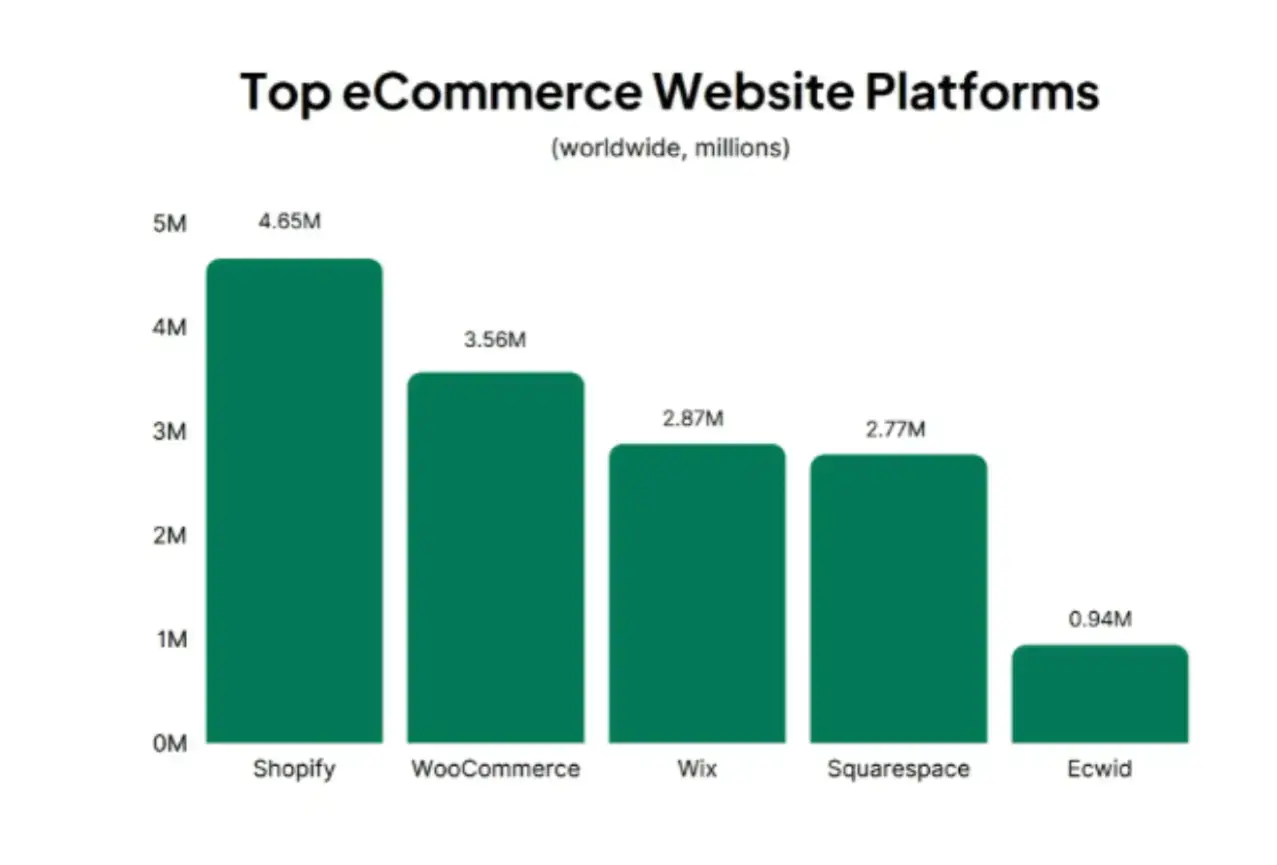
Source: MobiLoud
WooCommerce holds a 20.1% market share among eCommerce websites, powering more than 3.5 million online stores worldwide.
When comparing Shopify vs WooCommerce, consider the factors that set them apart to decide which e-commerce solution best suits your business. WooCommerce and Shopify are versatile and worthwhile e-commerce solutions.
If you are weighing long-term scalability or replatforming, teams exploring woocommerce to shopify migration services often do so to reduce maintenance overhead while keeping their storefront flexible as operations grow.
However, choosing a solution for your online store requires a deeper understanding of what each provides to your specific project needs.
There are many factors you should consider, specifically when you think about choosing Shopify or WooCommerce, both of which provide a multitude of offers to grow your business.
In this blog post, let's discuss Shopify and WooCommerce and discuss the key features. We shall also compare the platforms with the important factors that let you understand and decide what each offers for your project.
With careful consideration of the aspects discussed in the blog post comparing WooCommerce vs Shopify, you can decide on the most appropriate solution for your needs.
What is WooCommerce?
WooCommerce is an open-source plugin built specifically for WordPress that turns a standard website into a fully functional store. It’s actually fascinating how seamlessly it integrates content management with e-commerce capabilities.
Have you ever wondered why millions of entrepreneurs choose this path over hosted platforms? The answer usually comes down to ownership.
Unlike Shopify, where you are essentially renting space, WooCommerce lets you keep full control of your data and store files. It is free to download, of course. However, running it requires paid hosting and a domain name, so it's not entirely free.
What is Shopify?
At its core, Shopify acts as a comprehensive command center for anyone wanting to sell products online without needing a degree in computer engineering.
It is a subscription-based software service that unifies the messy, complicated parts of e-commerce into a single streamlined dashboard.
Have you ever wondered how small local businesses manage to launch such slick websites so quickly? Usually, the answer is this platform.
I’ve noticed that what really sets it apart is the hosted nature of the solution, meaning you don't have to worry about buying web hosting or maintaining servers yourself. It takes the technical weight off your shoulders.
Think of it like renting a fully furnished shop in a busy mall instead of trying to build a brick-and-mortar store from the ground up on an empty lot.
Shopify vs WooCommerce: Feature-by-Feature Comparison
Ease of Use
Shopify Ease of Use
Shopify functions essentially as a polished all-in-one ecosystem where the technical heavy lifting is managed entirely by the platform itself.
Have you ever tried to configure an SSL certificate manually?
On Shopify, it is just a matter of clicking a few buttons, which saves hours of potential frustration.
The recent addition of "Shopify Magic" AI tools helps generate product descriptions instantly, meaning you aren't staring at a blank page, wondering what to write.
While the drag-and-drop interface is intuitive, the real beauty lies in how the backend handles complex tasks like payment processing without you ever touching a line of code. Occasionally, a user might find the lack of deep customization annoying, but for getting started fast, it is unbeatable.
WooCommerce Ease of Use
On the other hand, WooCommerce sits inside the WordPress environment, which means you are responsible for the entire infrastructure stack from top to bottom. It gives you absolute freedom.
However, setting up hosting, installing the plugin, and configuring the domain require steps that a novice might find intimidating. You have to keep an eye on updates for both the core software and your various extensions to prevent security vulnerabilities.
Recently, they introduced High-Performance Order Storage (HPOS) to speed things up, but ensuring your plugins are compatible with this new system adds another layer of management.
Is it powerful? Absolutely! But for average user the dashboard can feel cluttered with options that are not immediately relevant to selling products.
You are basically building with digital Lego blocks where the instructions are sometimes missing.
Verdict: When strictly evaluating how fast one can go from zero to launch, Shopify emerges as the clear winner.
The cohesive ecosystem prevents the disjointed experience often felt when juggling multiple plugins on WooCommerce.
It's just easier. Unless you have a specific need for open-source control, the friction involved with self-hosting isn't worth it for beginners.
Store Customization & Design Flexibility

Source: Shopify
Shopify Customization
When you look at Shopify from a purely structural perspective, it is essentially a beautifully manicured walled garden that prioritizes stability over absolute freedom.
You might find that the recent Online Store 2.0 update has genuinely revolutionized how merchants handle visual layouts by introducing "sections everywhere," which finally allows non-coders to drag and drop elements on pages beyond the homepage!
However, is this enough for the power user? While the proprietary Liquid templating language is efficient and secure, it keeps you at arm's length from the backend logic, so you can never truly pop the hood to tinker with the core database behavior.
It is a fantastic experience if you want things to work right out of the box without worrying about crashing your server. Shopify developers often feel a bit restricted, though, because when you hit a hard limit in Shopify’s ecosystem, you really hit a wall that no amount of code can bypass.
WooCommerce Customization
In stark contrast, WooCommerce offers an experience akin to being handed the keys to a messy but limitless workshop, with the only boundary set by your own technical ability.
Because it is built on open-source WordPress software, you have direct access to the PHP source code, giving you the power to rewrite crucial functions or hook into filters that alter how the checkout flow behaves down to the pixel.
The sheer volume of plugins over 60,000 in the WordPress repository means that if you can imagine a feature, someone has probably already coded a version of it for you to install.
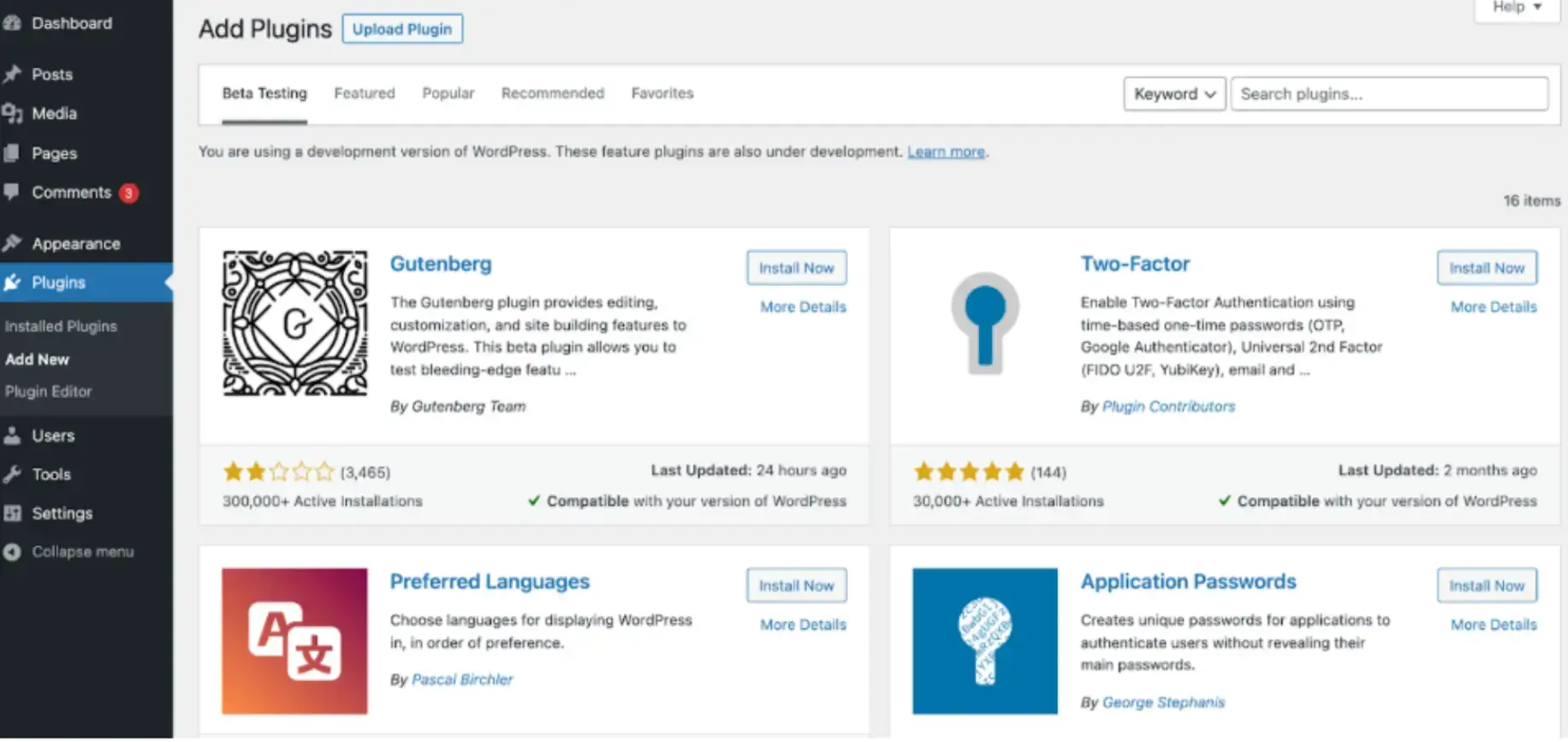
Of course, this absolute freedom is a double-edged sword, as one wrong line of code or a conflicting plugin update can bring your entire site crashing down in seconds. It’s wild, unpredictable, and incredibly powerful.
Verdict: If we are judging strictly on the definition of "customization," the ability to alter, extend, and reshape a store into anything you desire, WooCommerce is the undisputed winner.
While Shopify offers a polished, safer version of customization that covers 90% of user needs, it simply cannot compete with the open-source nature of WooCommerce, where every file, database entry, and line of code is available for modification.
Pricing & Transaction Fees
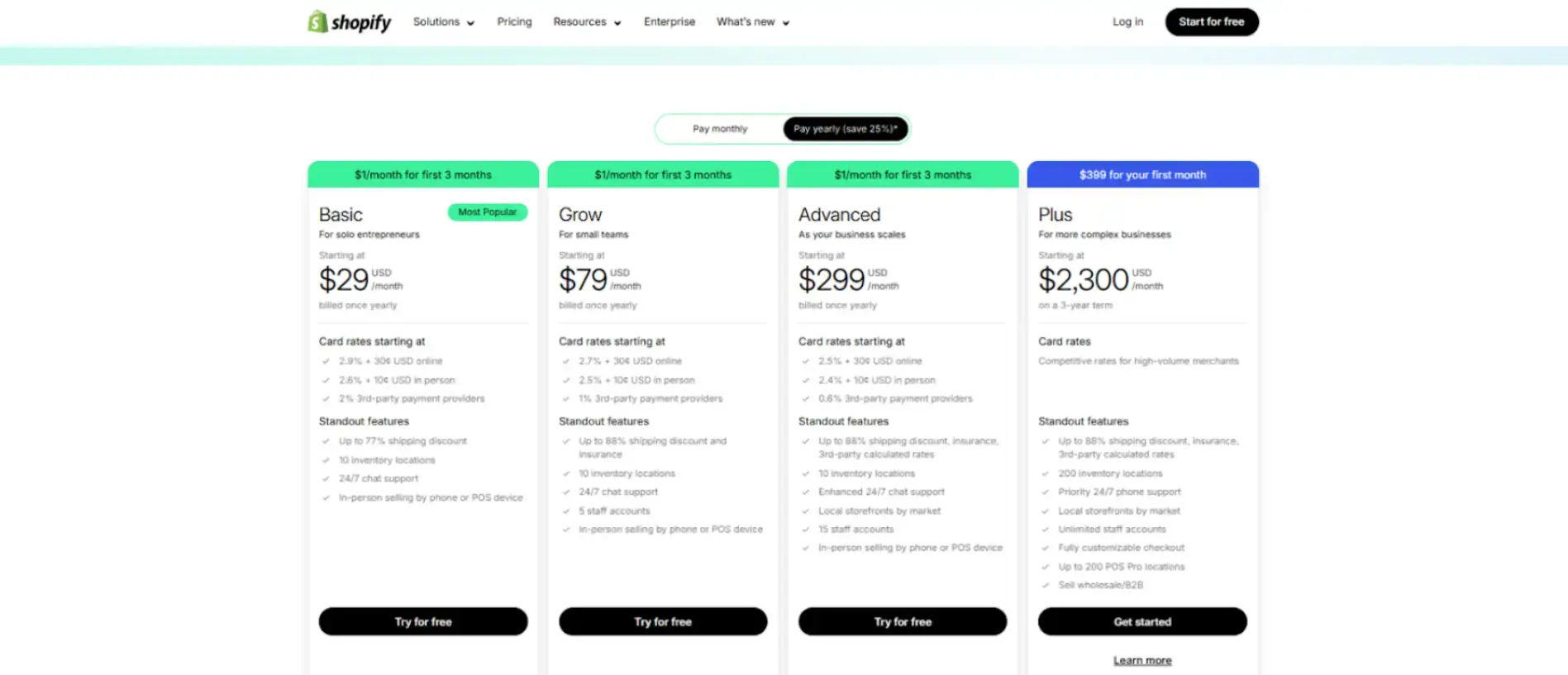
Shopify Pricing
When analyzing the financial commitment required for Shopify, it is important to look beyond just the monthly subscription price.
The platform offers a tiered structure that ranges from basic plans for startups to advanced options for scaling enterprises.
However, is it really as transparent as it seems on the surface? A significant downside for many users is the additional transaction fee applied if you do not use their proprietary Shopify Payments system.
It feels a bit like you are being penalized for choosing your own bank or gateway. (And for businesses in regions where Shopify Payments isn't available, this is a major pain point).
You also have to factor in the recurring costs of third-party apps, which are often needed to add specific features. So while the entry barrier looks low, the cumulative expense can grow unexpectedly large by the end of the month.
WooCommerce Pricing
Looking at WooCommerce, the landscape shifts dramatically because the core software is open-source and free to download. You don't pay a company a fixed salary just to have the store exist.
But let's be real, you cannot host a website on thin air. The expenses here are variable and depend entirely on your choice of web hosting, domain name, and security certificates.
This approach gives you total control over the budget and lets you shop around for the best service deals. It is a more "build it yourself" model where you save on fees but might spend more time on setup.
Verdict: Who actually wins when it comes to keeping costs down?
The clear winner for Pricing & Transaction Fees is WooCommerce. It avoids the rigid monthly subscriptions and does not force you into a specific payment ecosystem to avoid penalties.
While Shopify offers convenience, it comes at a premium that can eat into thin margins.
Scalability, Security & Performance
Shopify Scalability & Security
When you look at Shopify, it’s basically like renting a penthouse where the landlord handles all the messy maintenance for you, isn’t it?
This managed platform shines brightest when traffic spikes, as its infrastructure automatically adjusts server resources to handle the load without you ever needing to lift a finger or panic about a crash.
Security is another massive perk here since they include Level 1 PCI compliance and SSL certificates right out of the box to keep customer data locked down tight.
I’ve noticed that for business owners who just want to sell products rather than fiddle with server configurations, this peace of mind is absolutely priceless.
However, you do lose a bit of control over the nitty-gritty optimization tweaks that some tech-savvy folks might crave. It’s a closed ecosystem, so you are trusting their engineers to keep the engine running smoothly.
Honestly, for 90% of merchants, that trade-off is completely worth it to avoid the headache of a 3 AM server outage.
WooCommerce Scalability & Security
On the flip side, WooCommerce is a beast that lets you build whatever castle you want, provided you’re willing to lay every single brick yourself.
Scalability here is theoretically limitless, but it depends entirely on your hosting provider and how well you have optimized your database to handle thousands of requests.
If you are on a cheap shared hosting plan, your site might crawl to a halt the moment a marketing email goes out! Security is a bit of a double-edged sword because while the core software is secure, you are responsible for updating every single plugin and patching vulnerabilities before hackers find them.
I recall a client who once ignored updates for months and woke up to a malware nightmare that took weeks to clean up.
Performance can be blazing fast—potentially faster than Shopify—if you know how to configure caching mechanisms and minimize code bloat effectively.
You have the freedom to choose your own stack, which is amazing for WooCommerce developers who love to tinker under the hood.
But let’s be real, it requires a significant investment of time or money to reach the same baseline stability that the other guy offers by default.
Verdict: Shopify Wins. While WooCommerce offers a technically higher ceiling for those with deep pockets and greater technical skills, Shopify takes the crown because it democratizes enterprise-grade performance for everyone else.
Conclusion
Choosing the right platform often feels like picking a favorite child because both have undeniable strengths that make them lovable in their own way.
If you value sleeping soundly at night without worrying about server updates or security patches, Shopify is probably your best bet for a peaceful life. It just works.
On the other hand, maybe you are the tinkering type? The kind of person who needs to pop the hood and rearrange the engine parts until they scream efficiency.
For you, WooCommerce offers a level of freedom that is frankly intoxicating (and occasionally overwhelming). It is not just about features but rather about how much control you are willing to sacrifice for convenience.
Honestly, I have seen too many business owners get stuck in the "grass is greener" trap. They start on one platform only to realize six months later that they hate the transaction fees or the lack of customization. Isn't that always the way?
You think you want a simple solution until you need a specific feature that requires a monthly app subscription. Suddenly, that free open-source flexibility of WordPress looks pretty attractive despite the learning curve.
My advice is to look at your five-year plan rather than just your launch-day needs. Will you have the budget for a developer down the road, or do you need to remain the jack-of-all-trades forever?
Ultimately, there is no magic bullet here. If your goal is to get products up by Friday and start selling over the weekend, go with Shopify and do not look back. It is a solid choice that millions of people rely on for good reason.
But if you have a vision that requires bending the internet to your will, give WooCommerce a shot. Just remember that with great power comes the great responsibility of managing your own backups!
Whichever route you choose, the most important step is actually starting. Good luck out there.
FAQs
Which is better for beginners, Shopify or WooCommerce?
For absolute beginners who want to sell products immediately, Shopify is often the safer bet. It handles all the messy technical stuff like hosting and security in the background, so you don't have to worry about your site crashing.
Can I migrate from WooCommerce to Shopify (or vice versa)?
Yes, you absolutely can migrate from WooCommerce to Shopify, or vice versa, though I must warn you that it is rarely a walk in the park! The process itself basically involves moving your core data, like products, customers, and order history, from one platform's architecture to the other.
Which platform offers better customization?
WooCommerce generally holds the upper hand simply because it is built on open-source software. Developers really appreciate having full access to the backend code, which allows for essentially limitless modifications. On the other hand, Shopify offers a more curated experience that locks down certain core features for security reasons, which is understandable.

Author Bio
Ravi Nair is a dynamic communications professional skilled in developing and executing strategies that shape compelling brand stories for clients, partners, investors, and employees. With extensive experience in strategic planning, corporate communications, and employee engagement, Ravi has helped numerous startups establish strong brand foundations built on creativity, clarity, and innovation.