
Exit intent popups fail because most of them are lazy.
You’ve seen it: generic “join our newsletter” overlays that show up before you’ve even read a line. But when they’re done properly, they show something useful at the exact moment someone is already leaning in.
And that’s where they start working.
What Are Popups? How They Drive Lead Generation
At a basic level, pop-ups are just triggers tied to behavior.
When someone is already doing something, reading, comparing, evaluating, and you can step in with something that actually helps that moment.
Scroll halfway down a page. Spend 30 seconds. Move toward the back button. That’s your window.
Source: wisepops
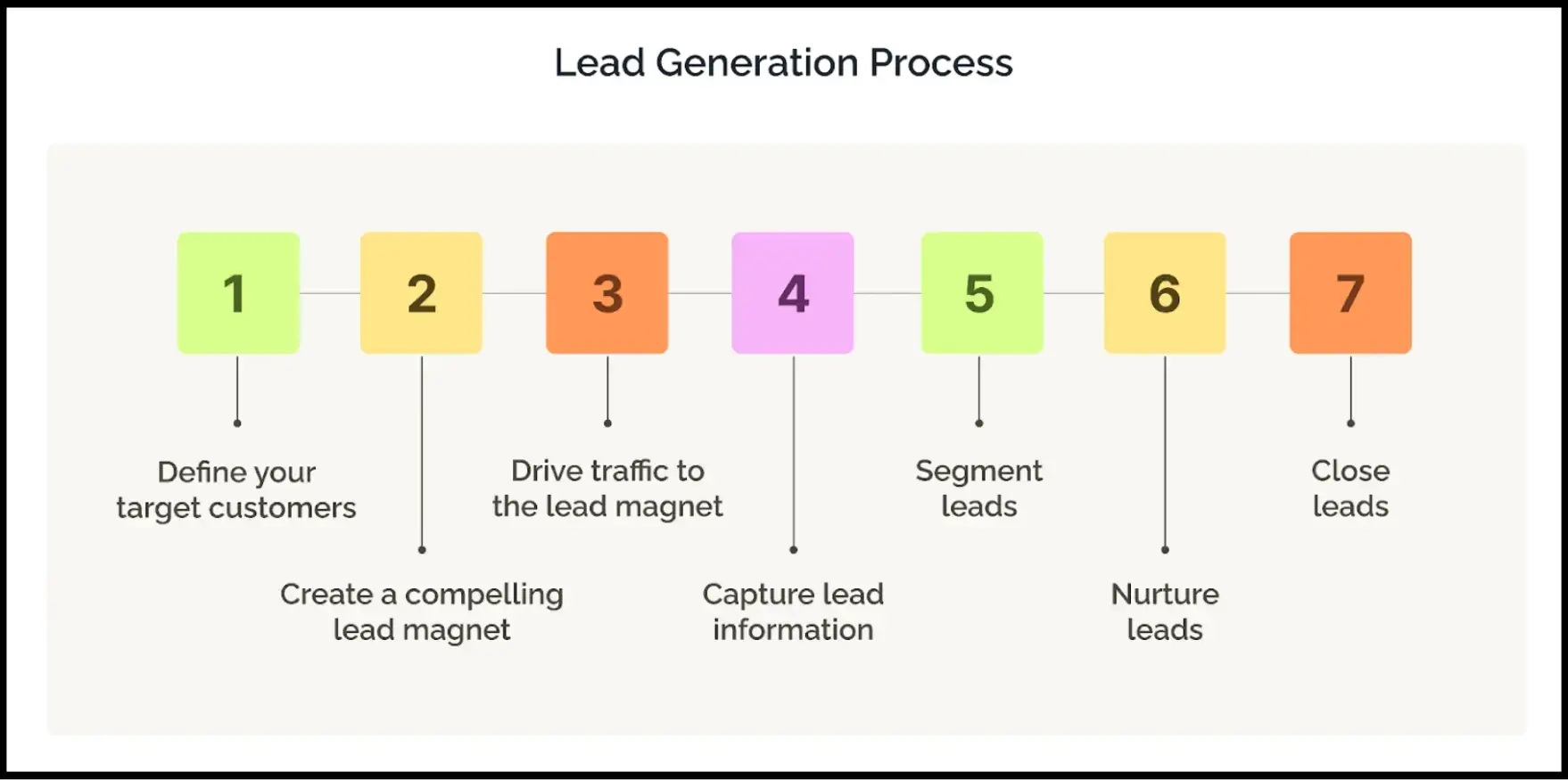
The average pop-up campaign has a conversion rate of 3.49%. High-performing ones can reach 10-15%. Here are 15 proven ways to go from average to high-performing exit intent pop-ups.
15 Proven Ways to Increase Popup Conversion Rates
1. Offer Real Value with a Strong Lead Magnet
This is where most setups break. If the offer is weak, nothing else matters.
You can test colors, triggers, and copy, but none of it will move if the underlying value isn’t there. A vague “subscribe” is a request with no reason, not an exchange of value.
The ones that work solve something immediately:
- A checklist that removes friction
- A template they can actually use
- A discount that makes the next step easier
And it has to match the page.
Someone reading about onboarding doesn’t want a generic ebook. They want something that helps with onboarding. Right now.
Samuel Charmetant, Founder of ArtMajeur, focuses on attracting artists who are evaluating platforms, not casually browsing.
When lead magnets are in place, conversions jump. When it doesn’t, people close it without thinking.
2. Use Simple, High-Impact Popup Design
Most exit intent pop-ups fail because they make people think. Too many elements. No clear focal point. Weak contrast.
The ones that convert are simple:
- One idea
- One action
- No distractions
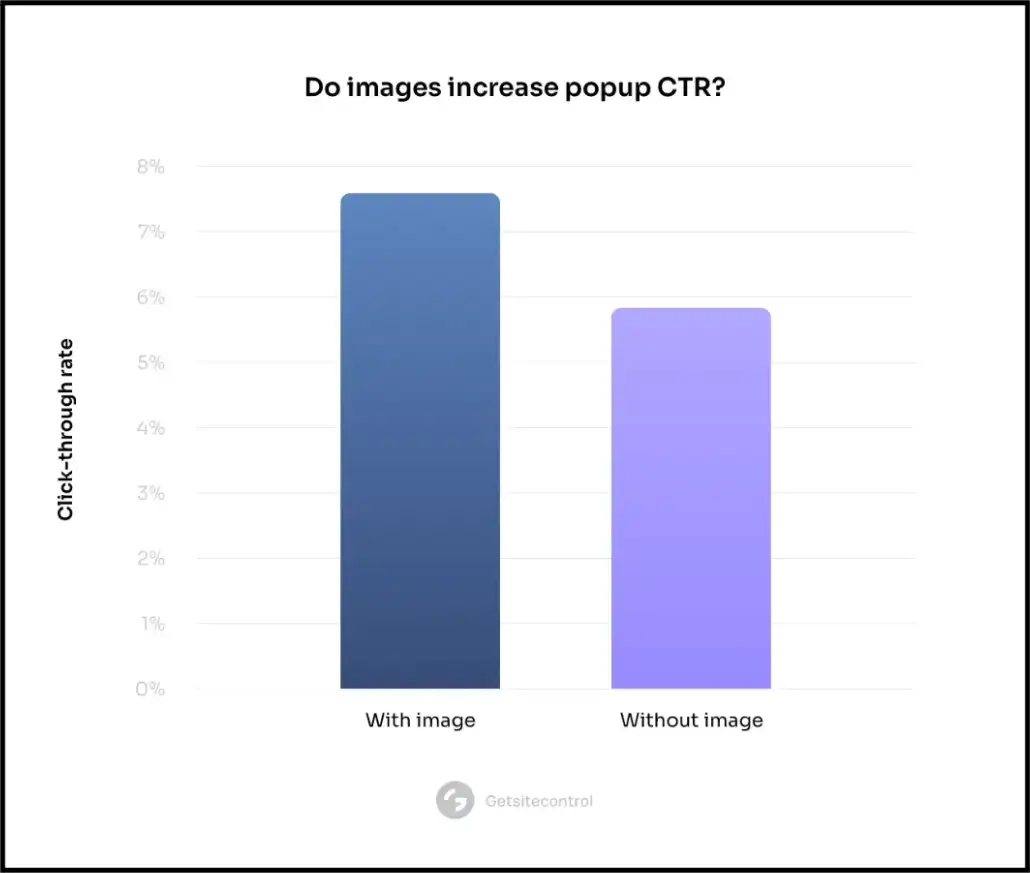
Your eye should land on the headline, move to the offer, and then to the button. That’s it. A well-designed image works very well here, as we can interpret images faster than text.
Source: Getsitecontrol
If someone has to scan to figure out what to do, you’ve already lost them.
3. Optimize Popups for Mobile Users
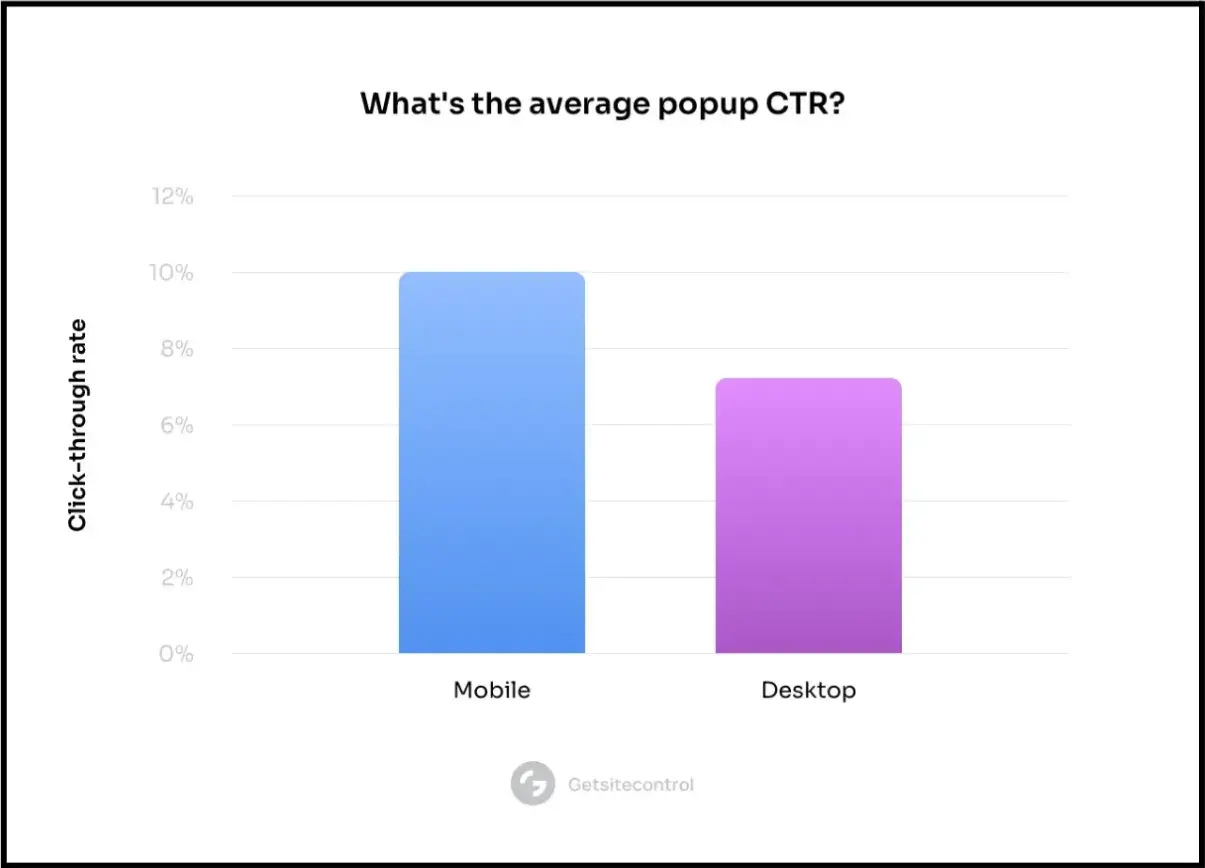
Studies show mobile‑focused popups can outperform desktop ones, with email CTAs converting up to 6.5% on mobile.
Source: Getsitecontrol
What works on a desktop falls apart on a smaller screen. You need to strip it down to:
- Fewer fields
- Bigger tap targets
- No scrolling inside the exit intent pop-up
A good test: can someone understand the offer and act on it in a few seconds, with one hand?
If not, it’s not ready.
4. Write Clear, Benefit-Focused Copy
Most people spend too long trying to sound different and end up sounding vague. The better approach is simple: say exactly what they get and why it helps.
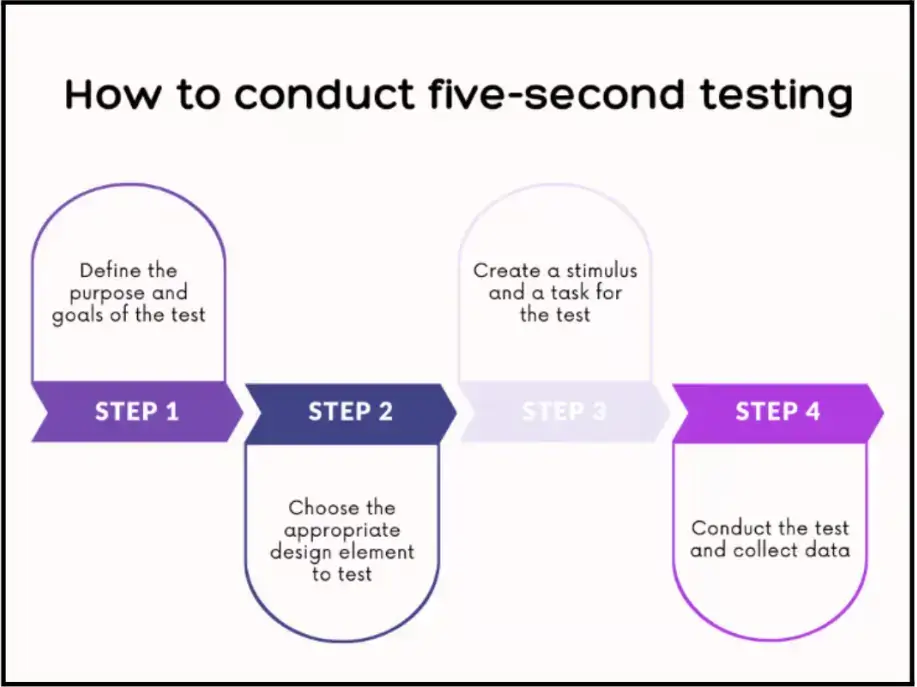
Your pop-up copy should pass the five-second test. If someone can't understand your offer and why they should care within five seconds, you've already lost them.
Source: Getsitecontrol
Example:
- Headline: “Get the Onboarding Checklist”
- Subtext: “Cut ramp time with a 7-step guide.”
- CTA: “Send it to me.”
Nothing fancy. It works.
5. Get Popup Timing Right
Timing does more work than design.
Data shows exit‑intent popups average over 11% conversion, much higher than generic popups, because they only fire when visitors are actually about to leave.
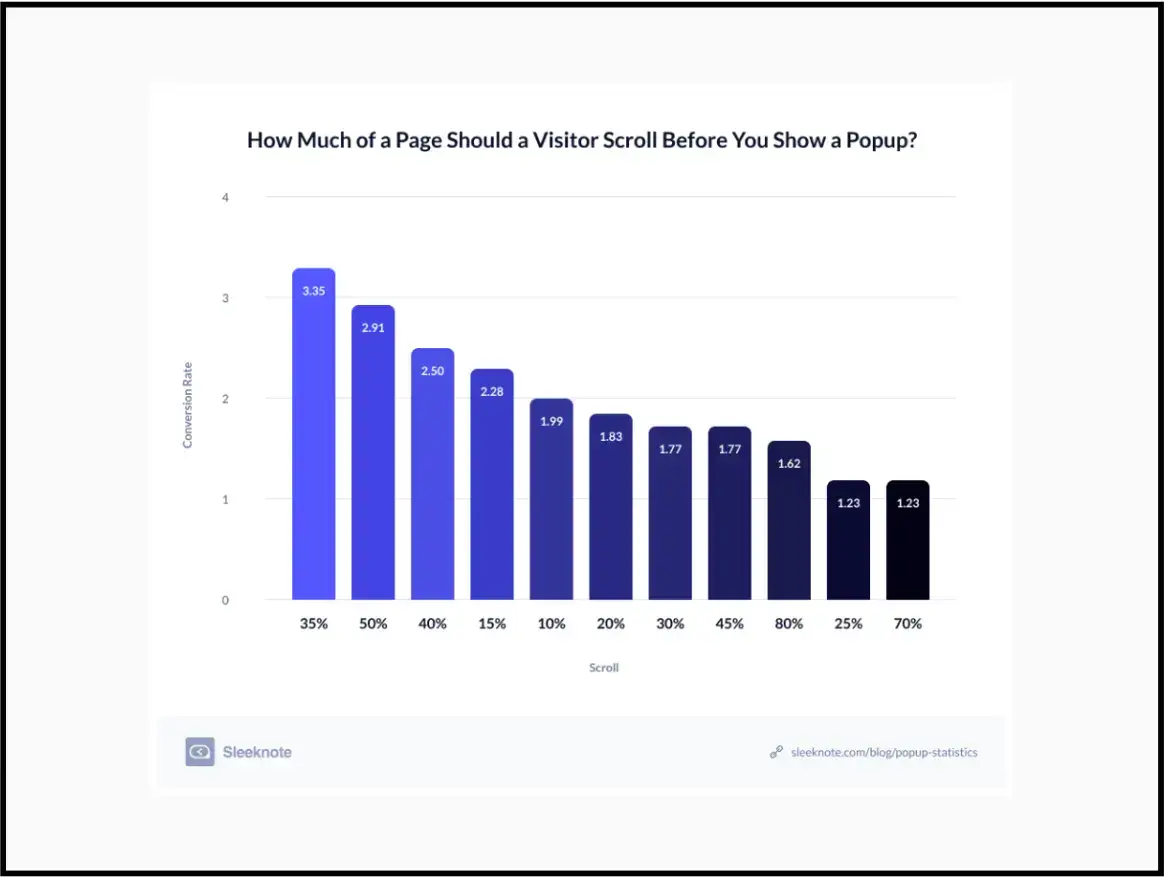
Show an exit intent pop-up immediately, and you interrupt. Wait until there’s some engagement and it feels earned.
Source: Getsitecontrol
In practice:
- 30–45 seconds works well for content pages
- Scroll-based triggers work better than time in some cases
- Exit-intent catches the ones you were about to lose anyway
And if they closed it once, don’t hammer them again on the same session.
This is where a lot of setups get aggressive, and conversion drops because of it.
Ryan Beattie, Director of Business Development at UK SARMs, has spent a lot of time dialing in conversion flow on high-intent product pages, where timing mistakes show up immediately in lost revenue.
6. Target Popups to the Right Audience
Generic popups leave easy wins on the table.
Research shows that personalized, segmented popups can outperform generic ones by more than 2× in conversion, which is why matching the offer to the page and visitor type matters so much.
Returning visitors might prefer a webinar or a discount. Someone coming from an ad behaves differently from someone browsing organically.
You don’t need anything complex to start:
- New vs returning visitors
- Blog vs product pages
- Desktop vs mobile
Even basic segmentation lifts performance because the message feels more relevant.
Andrew Bates, COO of Bates Electric, runs campaigns in a space where intent varies a lot depending on the situation, emergency repairs versus planned projects.
7. A/B Test What Actually Matters
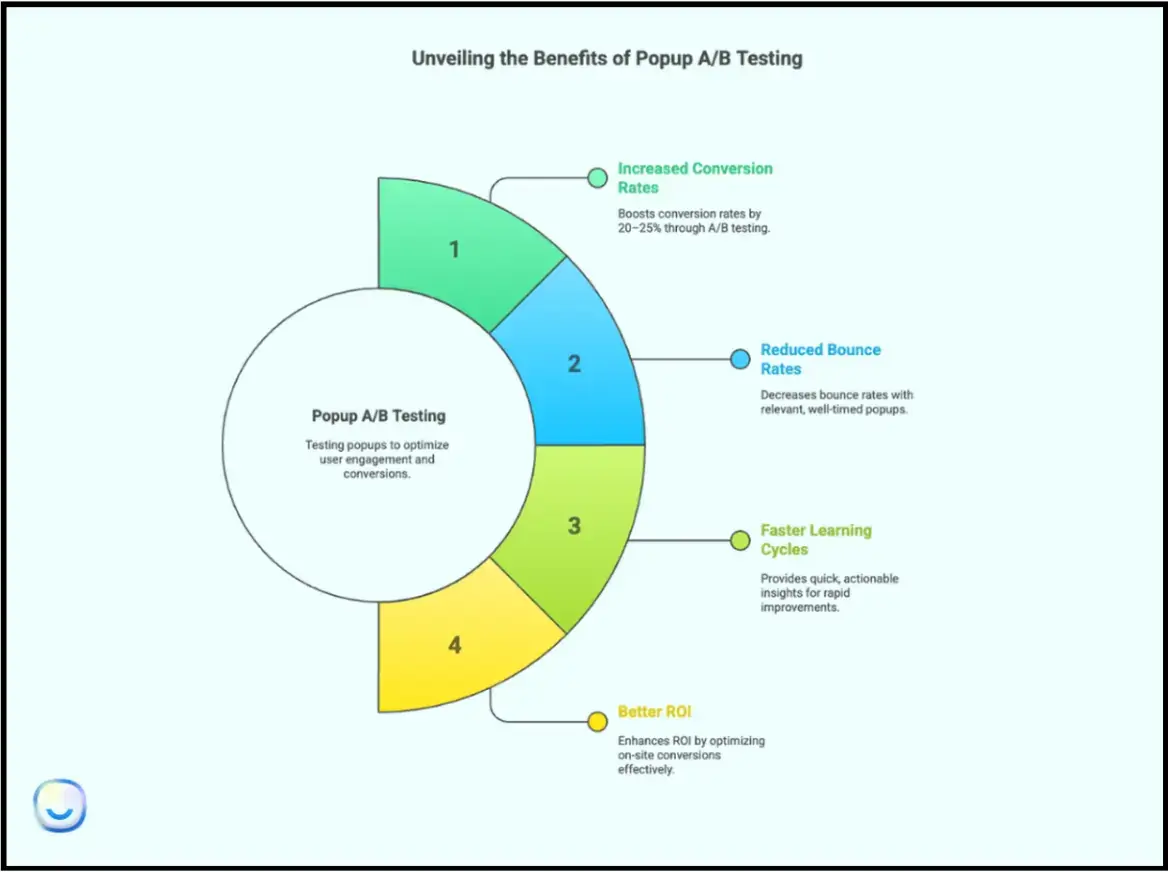
This is where most of the real gains come from. But only if you do it properly. Make one change at a time, and let it run long enough. Don’t jump to conclusions after a day.
Source: popupsmart
You can start with your headline variations, then test your offers, then your timing. Small improvements stack. Over time, those small lifts turn into meaningful gains.
8. Use Exit-Intent Triggers Strategically
Exit-intent is your safety net. It catches people right before they leave and gives you one last shot
This is where you can be more direct:
- “Before you go…”
- “Want this instead?”
Stanislav Khilobochenko, VP of Customer Services at Clario, has worked on improving conversion points in flows where users are already close to leaving.
9. Keep the User Experience Frictionless
This part is easy to overlook. If the pop-up is annoying, nothing else matters.
If they try to close it, and your UI is so clunky that that doesn’t work, they’ll close the tab completely, and you’ve lost them indefinitely.
Here are some basic rules:
- Make it easy to close
- Don’t stack multiple popups
- Don’t reload it repeatedly
And keep it light.
If it slows down the page, you’re trading conversions for frustration.
10. Track Lead Quality, Not Just Conversion Rate
Conversion rate alone is misleading.
You need to know what those leads actually do after they sign up. Do they open emails? Click? Buy?
Adrian Iorga, Founder and President of Stairhopper Movers, looks at conversions through the lens of actual booked jobs, not just form fills.
Some exit intent pop-ups convert well but bring in low-quality leads. Others convert less but drive real revenue.
11. Add Specific, Credible Social Proof
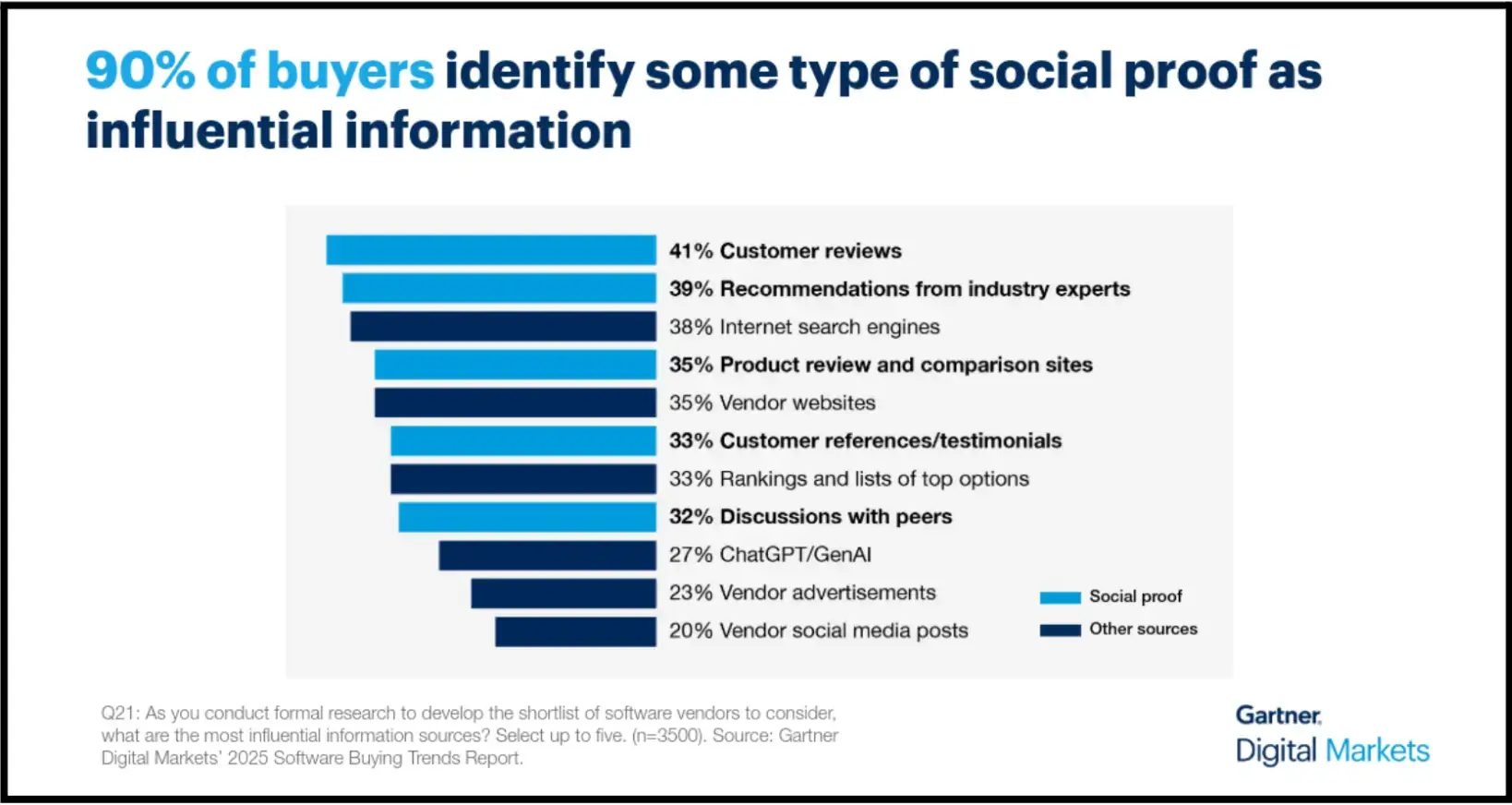
Social proof works best when it’s specific. A star rating, a short testimonial, or a simple "Join 12,000+ subscribers" can calm hesitation. The key is to keep it honest and specific.
Source: Gartner
A short, believable testimonial is better than something hard to read.
12. Use Real Scarcity and Urgency
This works, but only if it’s real. Fake urgency gets ignored quickly. Worse, people can feel manipulated.
If something ends, say it clearly. If there’s a limit, display that scarcity honestly.
When it’s credible, it nudges people who were already considering it.
13. Experiment with Multi-Step Popups
This is underrated. Instead of asking for an email immediately, start with a small interaction:
- A question
- A choice
- A quick step
Again, you have to A/B test this. This may not work at all for you, or work very well. If this is a B2B product, more details are needed. In that case, a multi-stage pop-up may work well.
14. Reduce Commitment Friction
There’s a flipside to the previous point. A lot of popups fail because they ask for too much, too soon.
If there are too many fields in your pop-up, remove one.
What works better is making the first step feel easy to say yes to:
- Ask for just an email instead of full details
- Swap heavy CTAs for lighter ones (“Get it” vs “Start my free trial”)
- Remove anything that feels like work
People aren’t rejecting the offer. They’re hesitating on the effort. Reduce that, and more of them follow through.
15. Refresh Popups Regularly
What worked a few months ago will stop working. People get used to it. Offers lose appeal. Context changes.
You don’t need constant redesigns. Small updates are enough:
- New headline angle
- Different offer
- Updated timing
Review your top exit intent pop-ups regularly. Otherwise, performance just slowly drops, and you don’t notice.
How to Build a High-Converting Popup Strategy
Start with the offer. Everything else depends on that. Then fix timing, copy, and design.
Test consistently, but don’t overcomplicate it. And pay attention to what happens after the signup, not just before.
That’s where you see if it’s actually working.
If you want to test this properly, you need tools that let you control timing, targeting, and behavior without slowing the site down. POWR.io gives you that flexibility without overcomplicating it.
Start simple. Build one pop-up that actually matches intent, then iterate from there.
Popup Optimization FAQs
1. What is a good conversion rate for exit intent pop-ups?
It depends on traffic quality and the offer, but most sites land somewhere between 2% and 8%. If you’re below that, the issue is often the offer or timing, not just design. When both are aligned with what the visitor is already doing, rates tend to improve quickly.
2. When should an exit intent pop-up appear?
Not immediately. If someone hasn’t engaged yet, showing anything feels premature. Exit intent works best after there’s been some interaction—scrolling, reading, or time on page. That way, it feels like a last useful touchpoint, not an interruption.
3. Do exit intent pop-ups work on mobile?
Not in the same way. There’s no true exit intent signal on mobile, so you have to rely on alternatives like scroll depth or time on page. And you have less room for error—anything clunky gets closed instantly.
4. What offers work best in pop-ups?
The ones that solve something immediately. Checklists, templates, discounts, quick wins—things that remove friction right now. Generic offers like “join our newsletter” usually underperform unless the brand already has strong demand.
5. How often should you update your pop-ups?
More often than most teams do. If performance starts dropping, it’s rarely random. People have seen the same message too many times, or the offer isn’t as relevant anymore. Small changes, headline, angle, or timing, are usually enough to reset performance.

Author Bio
Jesse is a professional writer whose aim is to make complex concepts easy to understand. He strives to provide quality content that assists people in everyday life.