

If you use LLM models like ChatGPT, Gemini, Claude, or any other model for learning or research, you must have seen website links displayed under the results.
That is what optimizing your website for LLMs looks like. If your website content is getting noticed by the LLM models, that content of yours is optimized for LLM models.
One of the best things about LLM optimization is that it helps you gain traffic that would otherwise be lost due to zero-click searches. Currently, brands are losing 15% to 25% of their organic traffic due to zero-click searches. With LLM optimization, it can be gained.
Let’s read ahead and learn how to optimize your website and its contents for LLMs.
How LLMs Affect Search Results
Instead of matching exact keywords, LLMs use NLP to analyze conversational queries, interpreting their intent and context. That enables LLMs to provide a direct answer to the user's query. On the other hand, the user would have to navigate several search results to find the answer.
Unlike Google, which may use a single source to provide an answer, an LLM like ChatGPT utilizes multiple sources to achieve the same goal. That provides a faster and more precise answer to the user.
The faster availability of answers from LLMs reduces reliance on traditional website content, thereby decreasing traffic and revenue.
“Large Language Models (LLMs) offer a new way to automate tasks such as reviewing documents, conducting legal research, and ensuring compliance. However, there are still issues related to intellectual property, data privacy, and bias,” said Attorney Brian White. “Legal experts who address these concerns can improve their workflows, increase accuracy, and save time on routine tasks.”
Why LLM Optimization Should Be Part of Your SEO Strategy
If you examine it closely, no matter how sophisticated LLM models are, they will always rely on search engine data to provide results.
That means if you are working on optimizing your SEO strategy, you are already there. You just have to make some minor tweaks to optimize for LLM.
- Aligns your content with how large language models interpret queries.
- It helps future-proof your brand visibility as AI search evolves.
- Ensure technical accessibility for LLMs.
- It establishes authority through original, structured, trustworthy content.
The CAPE Framework for LLM Optimization
The CAPE framework is not a recognized framework; rather, it is a simpler one that any brand can follow for LLM optimization. It expands as Content, Authority, Performance, and Entity. Here is what it means.
Content | For LLM optimization
|
Authority | The content must establish authority in the niche. For example,
|
Performance | P as in performance suggests that the content should be high-performing. High-performing content should have the following.
|
Entity | The last one is the entity. In this, businesses must ensure that.
|
8 Best Ways to Optimize Your Website for LLMs
If your business website is experiencing significant traffic drops, loss of organic visibility, brand dilution, or all of these, you likely need to implement strategies to optimize for LMMs. Here are some of those ways.
1. Answer Questions Users are Asking
You know that LLMs work on conversational queries. Therefore, the first thing businesses must do is to include users' questions in the content.
For example, instead of optimizing for the “bitcoin” keyword, you must optimize for “what is Bitcoin.”
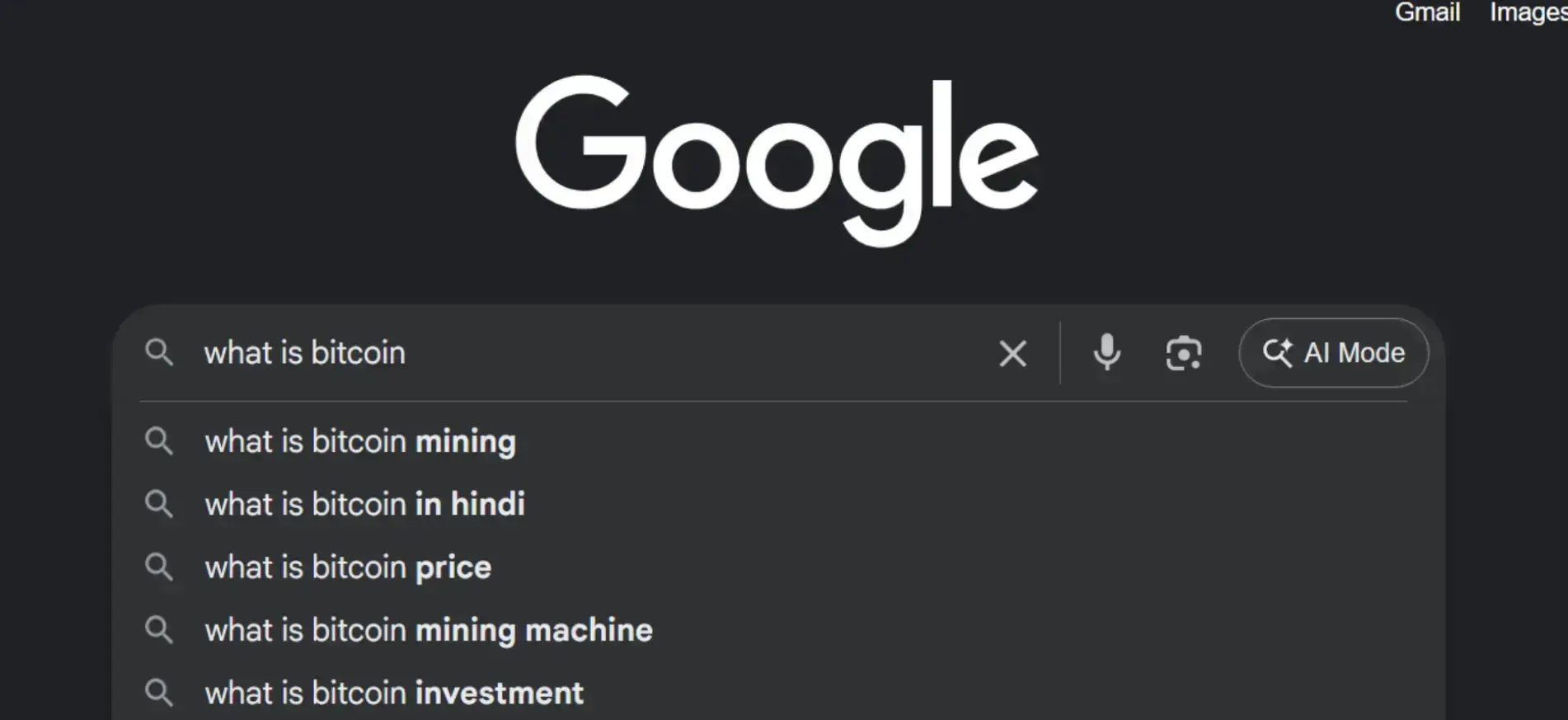
As it is a conversational query, it is more likely to be picked up by LLMs. To increase this probability, you can implement some methods.
- Use Google search and the “People Also Asked” section to look for query inspiration.
- Use the seed keyword on AlsoAsked and AnswerThePublic to find plenty of question-based queries.
- You can also use ChatGPT to look for real question queries that users punch into LLMs.
LLMO is a new approach for digital marketers.
There are tools available to help you monitor your website and competitors in AI responses. One option is SE Ranking, which lets you track mentions of any AI brand and measure your online visibility in AI search.
Monitoring is essential, but achieving long-term visibility often requires expert AI development services to refine how your data is indexed by LLMs.

2. Encourage User-Generated Content (UGC)
If you research on the web regularly, you might know that Reddit is frequently cited as a source of information on Google.
Now, what does this mean for you? If your customers post a review about your products on Reddit, it is likely to improve your brand visibility and trust (if the reviews are positive). Encouraging customers to share their reviews on community forums like Quora and Reddit optimizes your website for LLMs.
3. Expand into Digital PR
To appear in the LLM results, ensure that your brand content is frequently indexed. While SEO can help you a lot in this, extending efforts into digital PR can help boost brand mentions that directly boost LLM visibility.
There are several content pieces that you can use to expand your digital PR, such as
- Original internal studies or research
- Thought leadership pieces
- Industry reports
- White papers and e-books
If you want to build your brand, consider sharing your knowledge through HARO. Here is an example of how I did it for LawRank in the GetResponse publication:
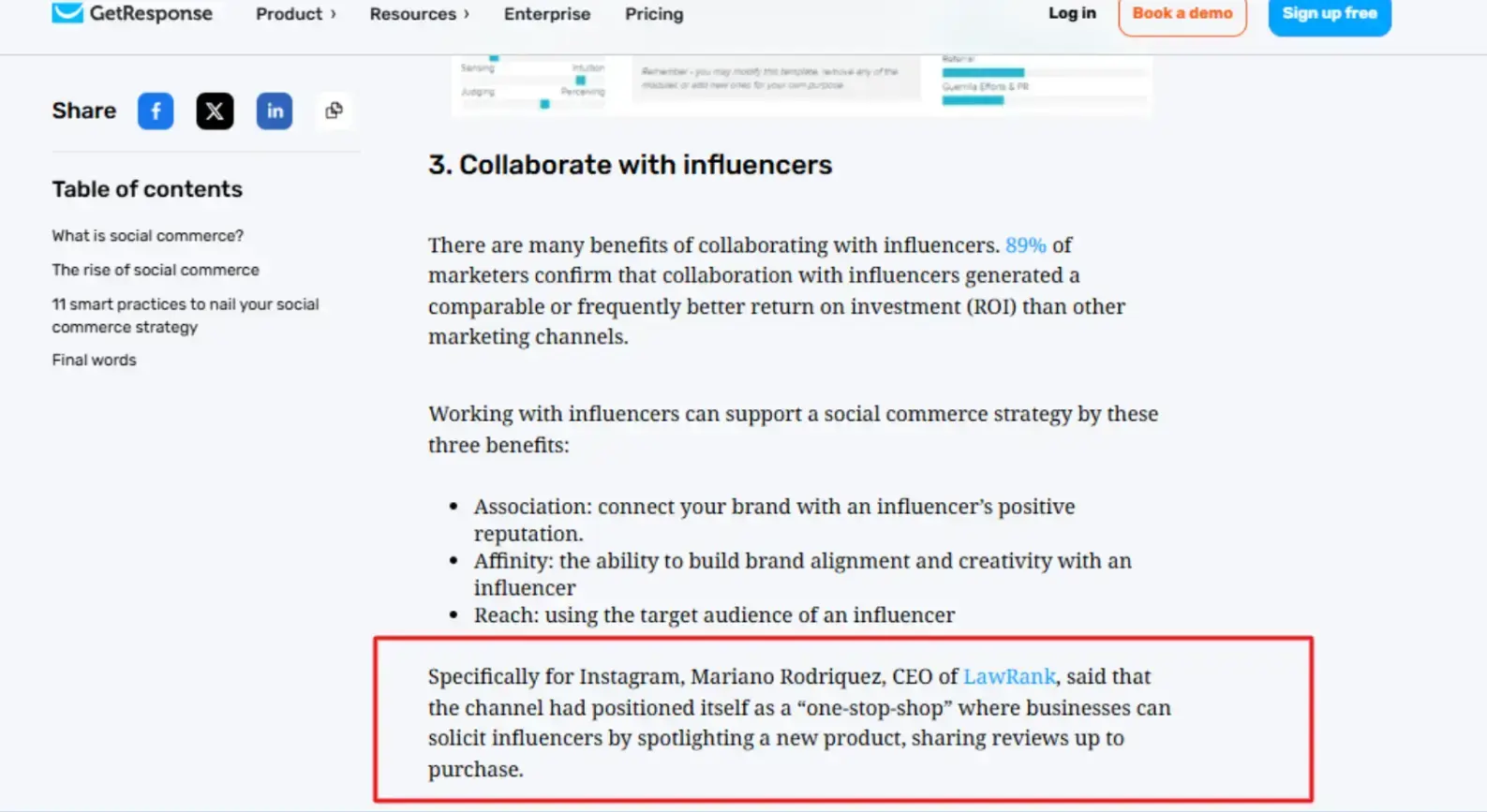
Source: GetResponse
These content pieces are most likely to be picked up by brands like McKinsey, TechCrunch, Wired, or other popular businesses in your niche.
Moreover, as these pieces satisfy the Google E.E.A.T. guidelines, they are sure to rank well. An example of this can be SE Ranking’s study on Google AI Overviews. This study fetched several backlinks and citations.
4. Avoid Excessively Long Continuous Text
The Google AI overviews are clear proof that websites that provide quick answers tend to rank higher.
The same applies to LLM models. LLMs scan for well-formatted content, and if it is long and consists of continuous paragraphs, it may not be recognized. Here are some optimization tips.
- Use proper subheadings across the content piece.
- If the text is long and continuous, include a brief summary of it.
- Include quick answers under every header.
- Use bullets and numbers wherever possible.
- Include FAQs
5. Incorporate Expert Quotations
Suppose you include expert quotes or citations in your content, such as those from recognized industry leaders. In that case, it can elevate your content’s credibility and signal real-world authority to both readers and LLMs.
According to Yoast, naming your sources and showcasing expertise (E-E-A-T) helps LLMs trust and quote your material more confidently. Quotes act as “fact nuggets” that LLMs can directly extract and reuse.
6. Optimize for Voice & Visual Search
Optimize for conversational and visual input by anticipating natural language queries.
For example, question-style headings and descriptive alt text for images. LLMs and voice assistants favor content that reflects how users speak and search by voice.
Using structured, semantically rich visuals with clear labeling also helps AI extract key information.
7. Use Entities and Knowledge Graphs
The last one on the list is to use entities and knowledge graphs.
These entities help LLMs and search engines understand contextual relationships and identity. This entity-aware design improves topical accuracy, clarifies ambiguity, and enhances AI-powered visibility, such as Knowledge Panels and rich snippets.
8. Build Conversational Content
The optimization of language models (LLMs) greatly relies on developing content that mimics conversational writing rather than solely focusing on search engine rankings.
This approach enhances engagement and improves the overall effectiveness of the content. Here are some steps that we have used for our law firm client, Benton Accident & Injury Lawyers, that you should consider:
- Create comprehensive pillar pages that serve as the central hub for key topics, and systematically organize related content into topic clusters. Ensure interlinking between core pages and their supporting articles, enhancing both navigation and SEO effectiveness.
- Incorporate TL;DR or content summaries at the beginning of the page to enhance clarity and help users quickly grasp the main points.
- Incorporate an FAQ page into your website, as large language models (LLMs) often prioritize such references in their search results. Implement relevant structured data markup on your FAQ pages to help users find the answers they need efficiently.
- Use content recaps at the beginning or end of articles to align with users' natural information-seeking behaviors.
Structured formats are favored for AI responses and summaries because they are easy to quote and extract.
Creating content that answers natural language questions and offers conversational prompts is essential for effective communication.
Conclusion
While you can use these methods to ensure LLM optimization, the more important thing is to continually optimize.
As AI continues to mature and approaches singularity, businesses must keep a close eye on advancements and adjust their content accordingly to reflect the latest changes.
Moreover, it is also essential to keep the website content optimized for SEO. As LLM models depend significantly on search engine data, SEO optimization is the silver bullet to be found on the web and in the LLM results.
Frequently Asked Questions
1. What is LLM optimization (LLMO)?
LLMO is the process of adapting your website content so large language models (LLMs) like ChatGPT or Gemini can easily interpret, cite, and display it in AI-generated answers.
2. How do LLMs affect website traffic?
LLMs provide direct answers, which reduces reliance on traditional search results. Without LLM optimization, businesses risk losing visibility and traffic to zero-click searches.
3. Why should LLMO be part of my SEO strategy?
LLMO aligns your content with AI-driven search, future-proofs your brand visibility, and builds authority through structured, trustworthy information.
4. What is the CAPE framework for LLM optimization?
The CAPE framework stands for Content, Authority, Performance, and Entity—four pillars that ensure your site is accessible, authoritative, and AI-friendly.
5. What are the best ways to optimize for LLMs?
Focus on answering real user questions, encouraging user-generated content, investing in digital PR, using entities and schema, and formatting content for quick, AI-friendly extraction.

Author Bio
Irina Weber is a freelance writer and content strategist. She loves helping brands create, publish, repurpose, and distribute content through marketing channels. She regularly contributes to media outlets like SEW, Adweek, SME, SMT, and CMI. Follow her on Twitter @irinaweber048.