

Ideally, you’d develop products and easily connect with your target audience. They see what you offer solves their problems, and that’s the end of the sales process.
In reality, a lot usually needs to happen before a prospect is ready to buy.
Understanding the difference between direct and indirect competitors helps businesses refine their positioning, identify market opportunities, and develop more effective marketing strategies.
A recent Google survey found that 60% of consumers take six or more actions before deciding to buy a new product or from a new brand.
Running an ecommerce company, it’s difficult enough to keep up with changing consumer expectations. How can you make sure you come out on top?
We have a simple hack for standing out in your respective markets: know the competition.
In this article:
- What are Direct Competitors?
- What are Indirect Competitors?
- Why Understanding Competitors Matters
- How to Identify Direct and Indirect Competitors
- What are The Differences Between Indirect and Direct Competitors?
- The Advantages and Disadvantages of Indirect vs Direct Competition
- Examples of Direct vs Indirect Competitors
- How to Get Ahead of Your Competitors
- Identify competitors
- Analyze market trends
- Use competitive intelligence tools
- Identify gaps in the market
- Monitor and adjust
This article will explain the differences between indirect and direct competitors. We also explain how to use knowledge about the competition to stay one step ahead.

What are Direct Competitors?
Direct competitors are businesses that offer similar products or services to the same target audience. They work in the same geographic areas you do and likely compete around the same price points. Competing brands fulfill the same needs.

Source: Unsplash
These companies solve the same customer problem using similar solutions and often compete directly on:
- pricing
- features
- quality
- brand positioning
For example, two ecommerce platforms offering website builders for small businesses would be considered direct competitors.
Because direct competitors target the same customers, they are often the primary focus of competitive analysis and marketing strategy.
No matter how many businesses enter the race, only one wins the customer. However, you all offer similar options. You can easily steal competitors’ unhappy customers by providing a better deal.
Examples of direct competition
A classic example of two direct competitors would be McDonald’s and Burger King.
Both sell fast-food burgers and fries. They typically operate in the same cities all over the US. When someone chooses a Big Mac, that’s a no to a Whopper, and vice versa.
Another way to think of it is in terms of sports teams. In the NBA, only one team can win the game (and the championship). Each team is in direct competition with the other teams.
Here are some other examples of direct competitors:
- Prime Video and Netflix
- Starbucks and Dunkin Donuts
- Uber and Lyft
- Holiday Inn and Best Western
- Delta Airlines and United Airlines
What are Indirect Competitors?
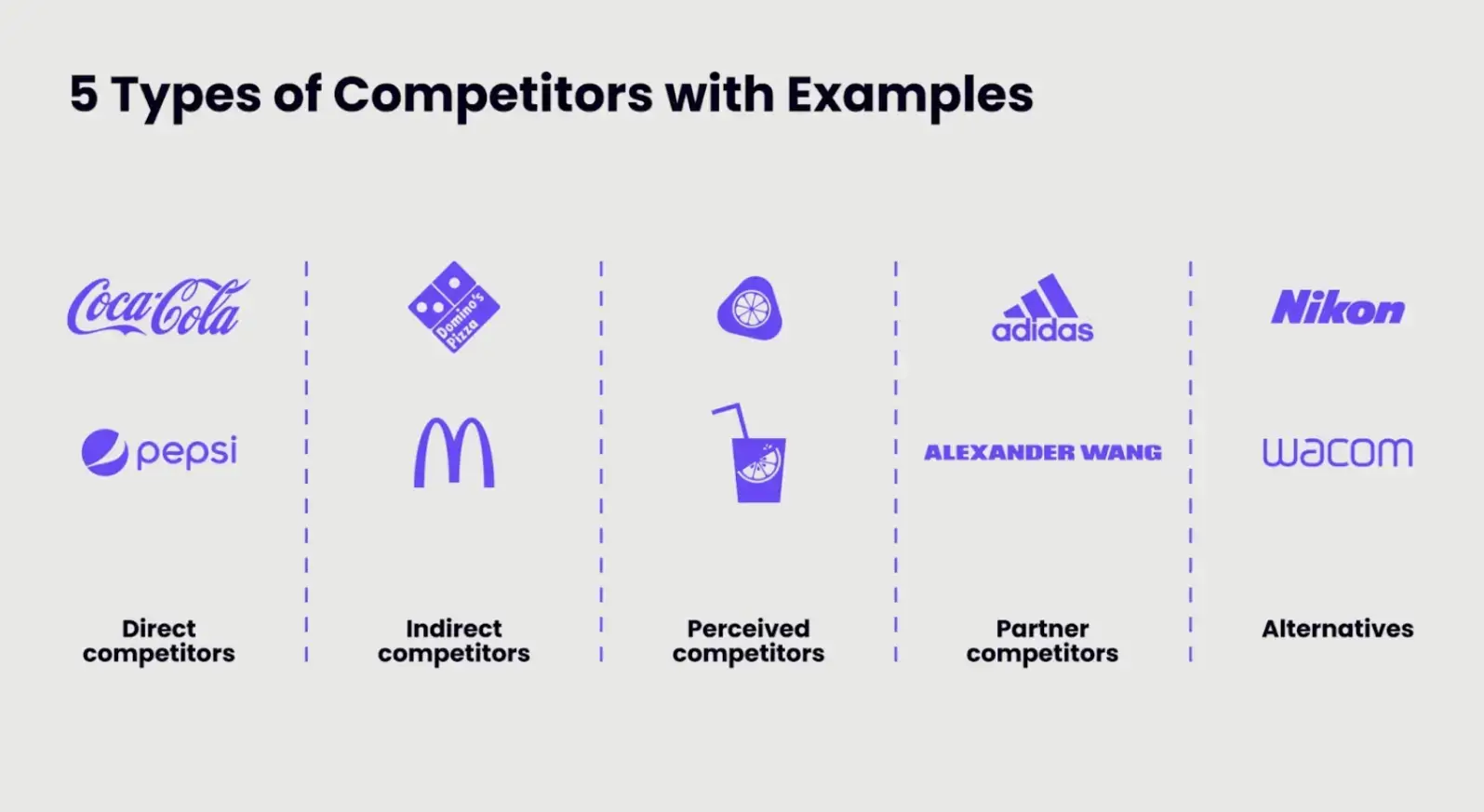
Indirect competitors are businesses that offer different products or services but solve the same underlying customer need. In other words, they take away a sales opportunity indirectly by eliminating the need for your product.
Source: Windmill
Instead of competing with identical solutions, indirect competitors provide alternative ways for customers to achieve the same goal.
Indirect competitors are important because they influence customer decision-making and market demand.
Examples of indirect competitors
An example of indirect competition would be if the Book of Mormon Musical and The Rolling Stones were playing in the same city on the same night.
One is a musical production, while the other is a live rock band.
They aren’t really close to the same thing. However, both events aim to entertain and amuse people. By attending one event, the customer is satisfied and either uninterested in or unable to participate in the other event.
Another example would be Netflix vs Putlocker (or other Putlocker alternatives). Putlocker offers premium subscription-based series for free, which leads many users to choose it and skip taking a Netflix subscription.
Other examples of indirect competition include:
- Coursera and your local university or college
- Starbucks and Red Bull Energy Drinks
- Disney+ and DirecTV
- Uber and public buses, trams, or a subway
Why Understanding Competitors Matters
Analyzing both direct and indirect competitors helps businesses make better strategic decisions.
Improve positioning
Businesses can differentiate themselves by identifying gaps in the market.
Identify opportunities
Indirect competitors often reveal alternative customer needs that businesses can address.
Refine marketing strategies
Understanding competitors helps businesses craft messaging that highlights unique value.
Stay ahead of trends
Monitoring indirect competitors can help businesses anticipate shifts in customer behavior.
How to Identify Direct and Indirect Competitors
Businesses can identify competitors using several methods.
Analyze search results
Search for your product or service online to see which companies appear in search engine results.
Review customer alternatives
Consider what other solutions customers might use instead of your product.
Use competitive analysis tools
Tools such as market research platforms and analytics tools can help identify competitors.
Study industry trends
Understanding industry developments can reveal emerging indirect competitors.
What are The Differences Between Indirect and Direct Competitors?
Understanding these differences helps businesses identify both obvious competitors and hidden threats.
Both direct and indirect competitors take away business opportunities. While the result may be the same for you, it’s important to understand their differences.
Once you can identify direct and indirect competitors, leverage the competition to your advantage.
1. Customer relationship
Businesses with similar products are directly competing for the exact same customer segments as you.
Any changes to your product can prompt consumers to flock to your competitors. Indirect competitors, however, offer something somewhat unrelated.
While there’s an overlap, some customers will only be interested in your product or the other.
2. Competition and differentiation
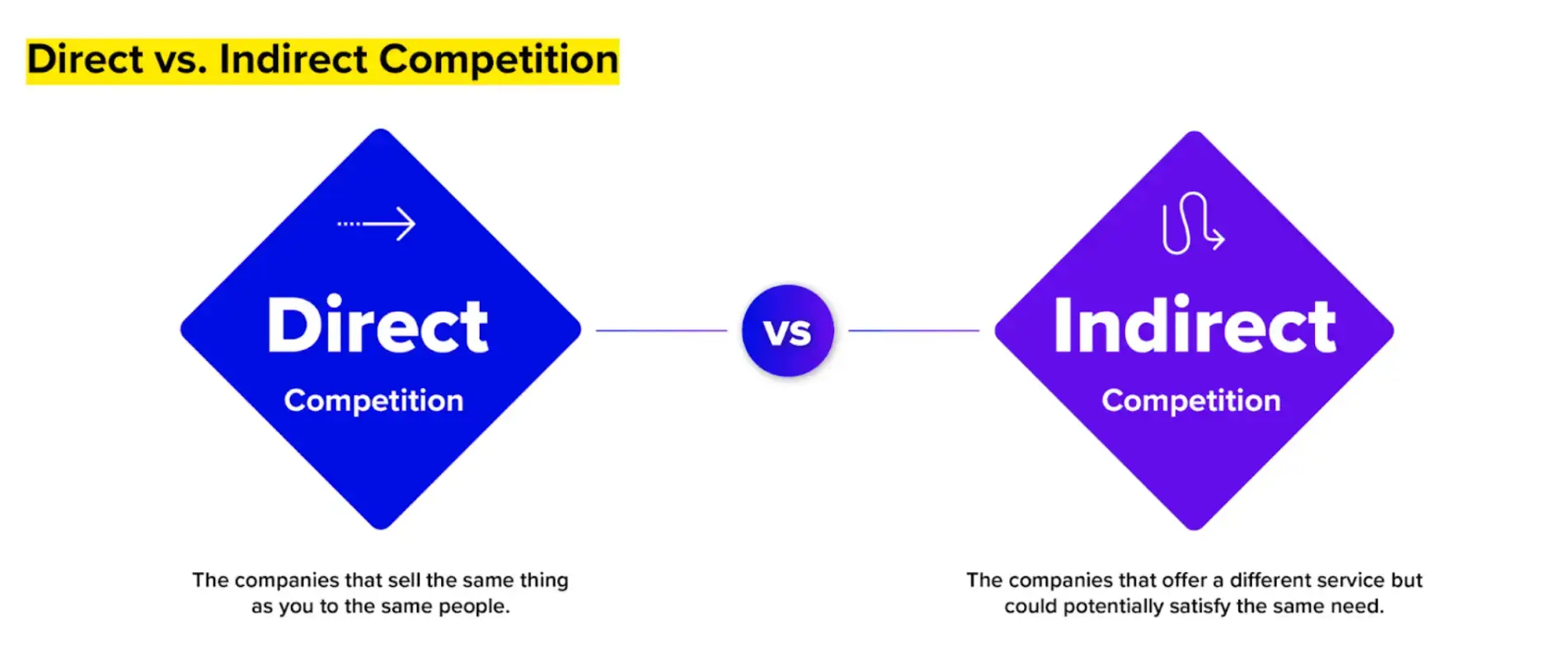
Direct competition battles for customers on things like price, quality, and customer service.
As an example, customers may choose one business over another based on the availability of a 24/7 inbound call centre.
You compete on loyalty, personalization, convenience, and preferences.
3. Target audience
You and your direct competitors are trying to connect with the same audiences. Your indirect competition overlaps, but you aren’t competing for every person.
For example, let’s say you offer a service to create a digital business card. Some people interested in your service may consider an online portfolio instead.
4. Product differentiation
Offering a unique selling proposition is critical to rise above direct competition.
Source: Klue
Differentiation is less important in indirect competition, since products differ but address the same need.
5. Price correlation
Pricing among direct competitors seriously impacts sales. Price points from indirect competitors have less of an impact.
The Advantages and Disadvantages of Indirect vs Direct Competitors
Indirect and direct competition affect your business differently. Each has pros and cons.
Indirect competition
Advantages
- Expanded opportunities — exploit crossover audiences.
- Price isn’t always king — less pressure to cut prices.
- Greater flexibility — try more marketing tactics.
- Less ruthless — indirect relations can be amicable.
- Partnerships — indirect competitors can complement your product.

Source: Nestle
Disadvantages
- Difficult to identify — takes time and resources.
- Slow market feedback — niche audiences respond slowly.
- Difficult to assess — many variables and diverse businesses.
- Unpredictable markets — new entrants can take share unexpectedly.
Direct competition
Advantages
- Loads of data — clear market insight.
- Easy to identify — straightforward competitive set.
- Focused differentiation — clear opportunities to stand out.
- Rapid customer feedback — instant signals.
- Clear benchmarking — compare performance easily.
Disadvantages
- Market saturation — crowded spaces.
- Brand confusion — too many similar options.
- Fickle customers — easy switching.
- Price wars — lead to lower profitability.
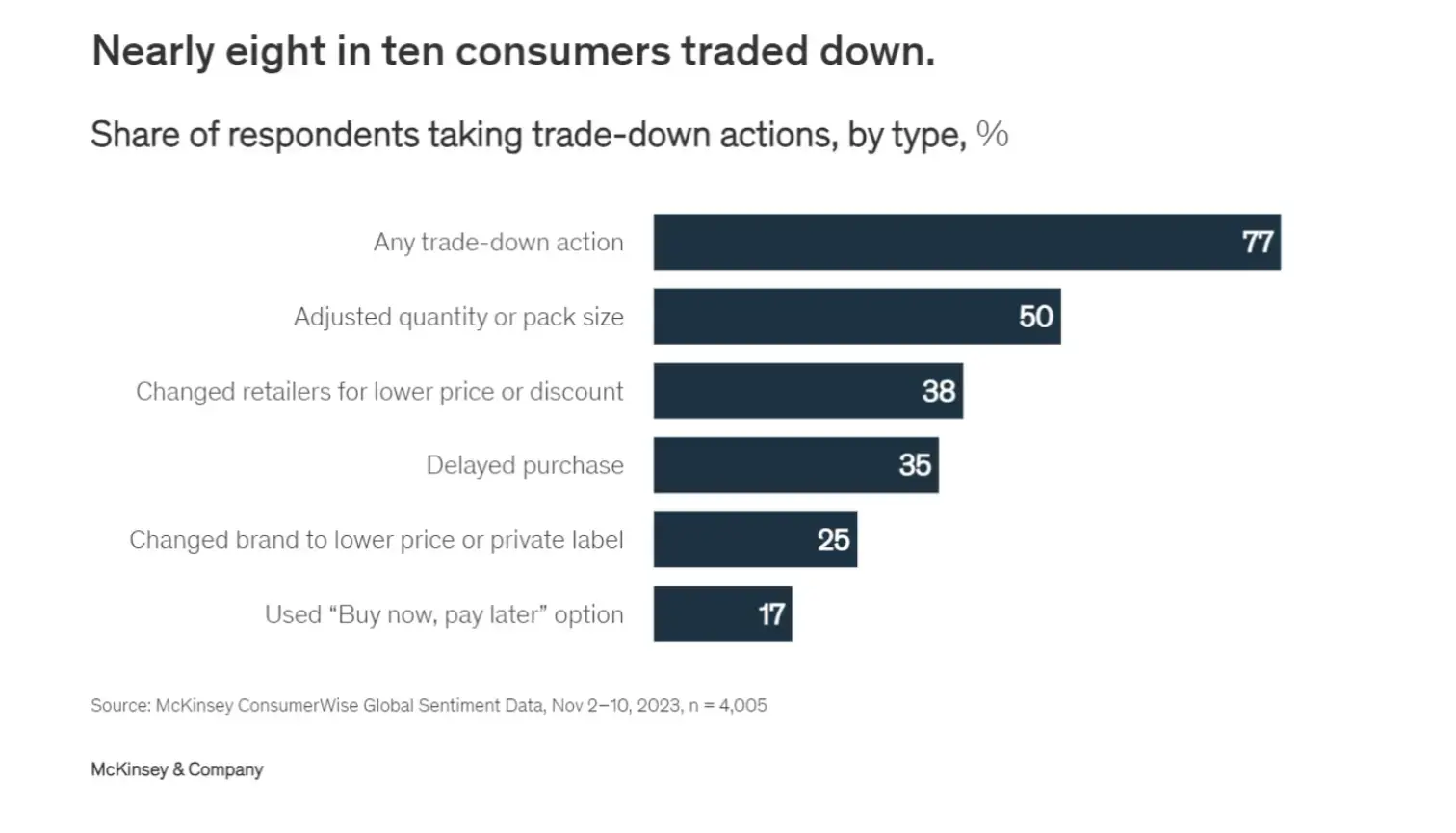
- McKinsey reports 77% of customers are trading down.
Source: McKinsey
Examples of Direct vs Indirect Competitors
Example 1: Ecommerce Platforms
- Direct competitors: Shopify vs WooCommerce
- Indirect competitors: Shopify vs Etsy
Example 2: Marketing Tools
- Direct competitors: Email marketing platforms competing with each other
- Indirect competitors: Email marketing vs social media marketing tools
Example 3: Food Industry
- Direct competitors: Two fast-food chains
- Indirect competitors: Restaurants vs meal delivery services
These examples help clarify how competition can exist in different forms.
How to Get Ahead of Your Competitors
All right, so you understand the difference between indirect and direct competition. Now, how do you use this?
Follow these steps.
1. Identify competitors
Use:
- Keywords — search SERPs
- Social media — track mentions, see conversations (especially LinkedIn)
- Customer surveys
Identifying indirect competition is trickier. Broader keyword research helps, such as “caffeine beverages.”
You can also search for “RingCentral alternatives” to find both direct and indirect competitors.
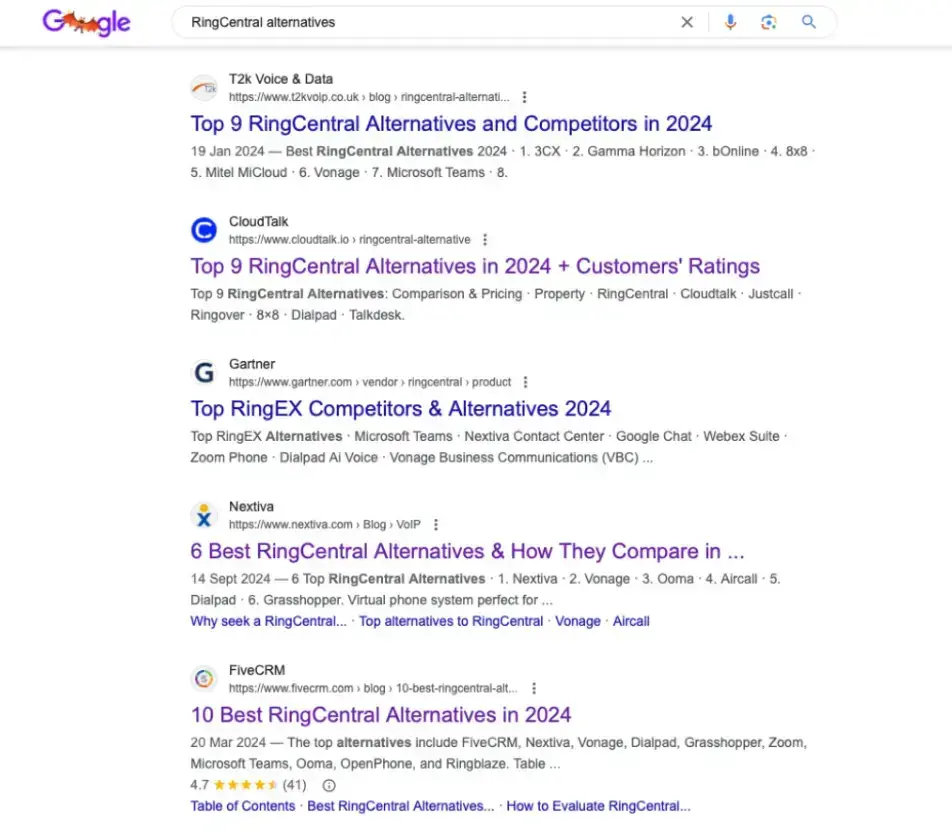
You can apply this to social media or feedback forms.
2. Analyze market trends
Use industry reports. Example: If people eat out less, restaurants face indirect competition from meal kits.
Conduct a SWOT analysis
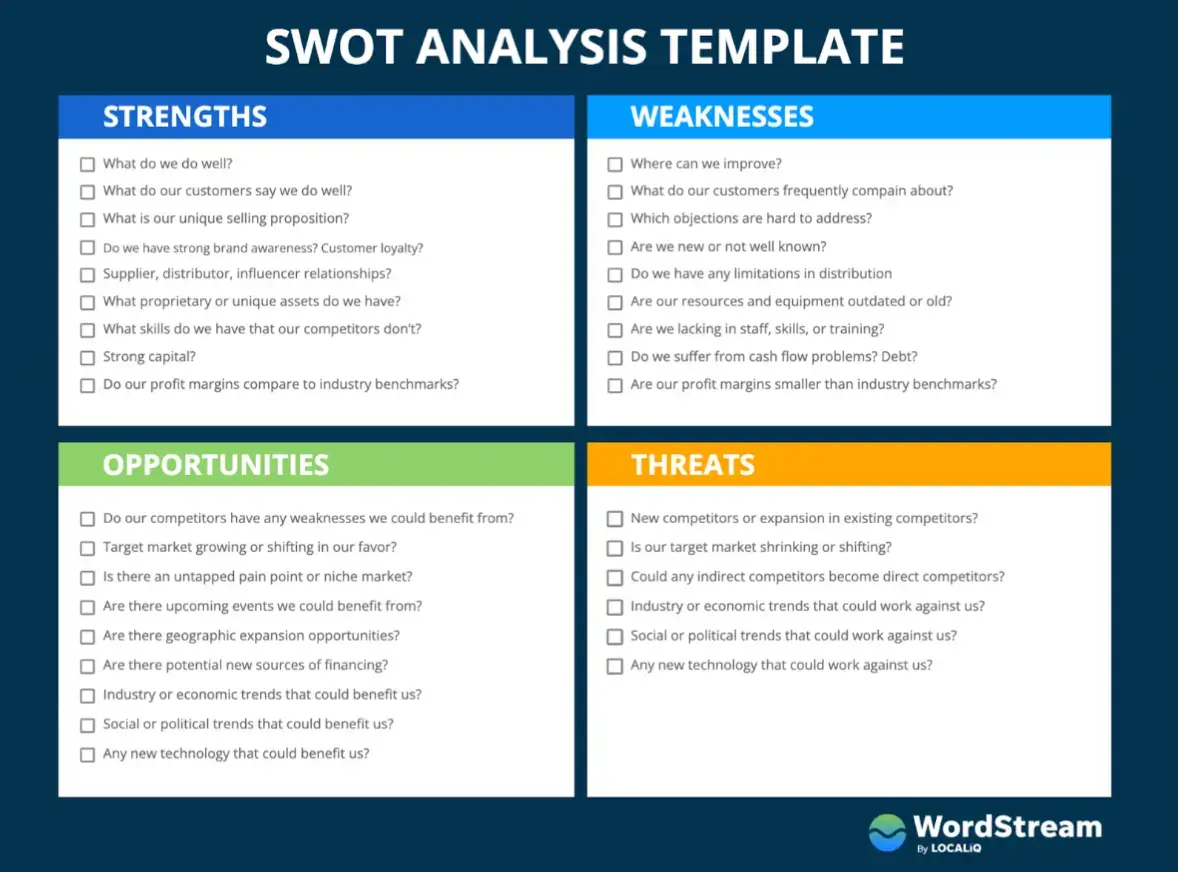
Source: WordStream
Set benchmarks
Choose baselines for price, value, quality, customer satisfaction, loyalty, and related metrics.
3. Use competitive intelligence tools
Tools such as Semrush and Similarweb help track competitor performance.
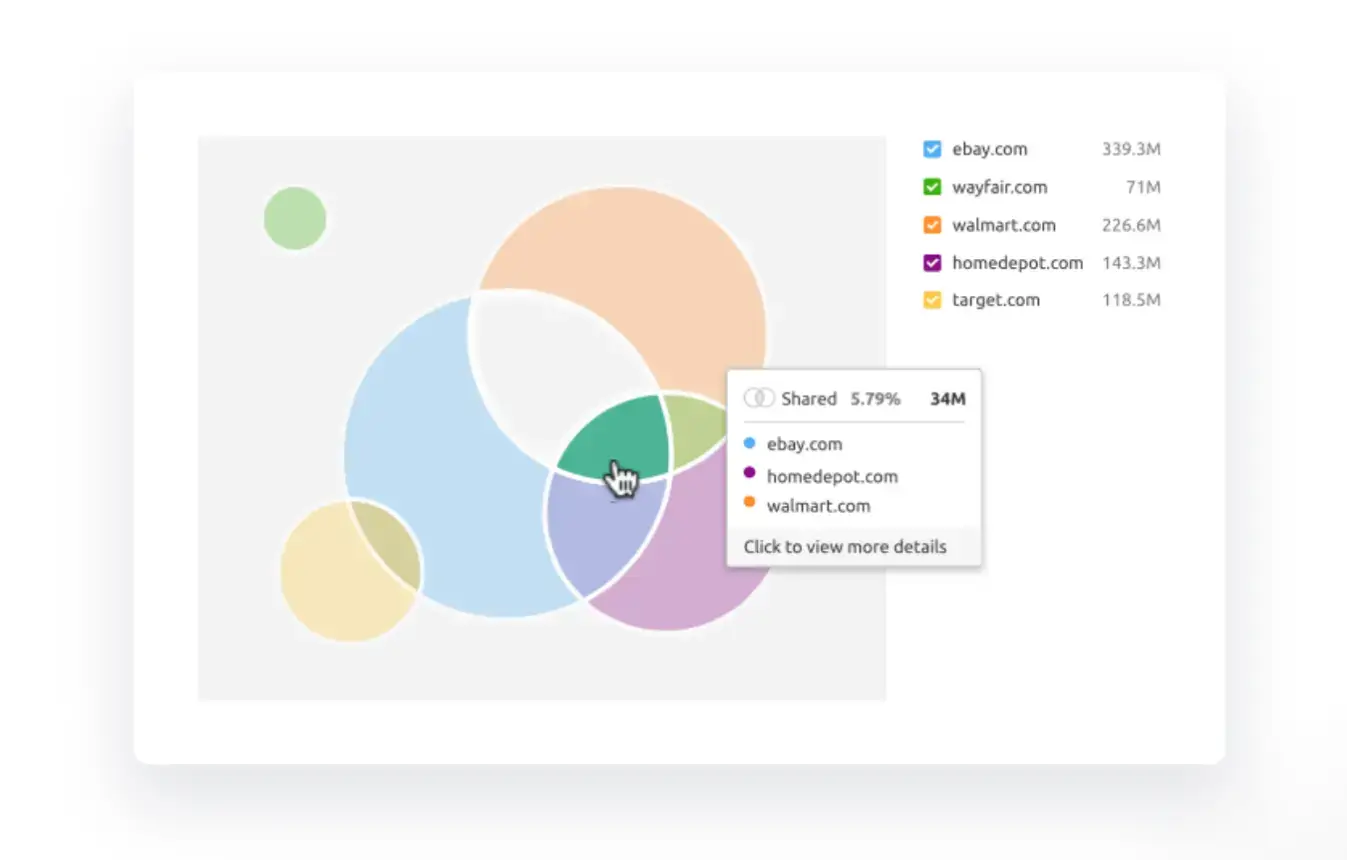
Source: Semrush
4. Identify gaps in the market
Look where needs aren’t being met. Calculate TAM and market share.
Example: If businesses buying virtual assistants also seek enterprise architecture management, you could partner with these providers.
5. Monitor and adjust
Keep a feedback loop:
- Track competitors
- Monitor price and demand trends
- Watch consumer behavior
- Use tools such as:
- Visitor tracking
- Mobile user analytics
- SEO platforms
- Social media monitoring
Conclusion
Both direct and indirect competitors shape how customers perceive your brand and decide where to spend their money. Understanding the differences—and how each type impacts your business—gives you a strategic advantage.
Direct competitors push you to improve your product, pricing, and customer experience. Indirect competitors challenge you to think more broadly about the needs you serve and how consumer behavior is shifting.
When you keep a close eye on both categories, analyze trends, use the right tools, and continually refine your strategy, you give your business the best chance to stand out in a competitive market.
Stay curious, monitor the landscape regularly, and use these insights to drive smarter, more proactive decisions that strengthen your position and fuel long-term growth.
FAQs
1. Why is it important to know your direct and indirect competitors?
Understanding both types of competitors helps you position your brand more effectively. Direct competitors influence pricing and product features, while indirect competitors reveal emerging threats and alternative solutions your customers might choose instead.
2. How do I identify indirect competitors if they aren’t obvious?
Start by thinking about the core need your product satisfies. Then explore all the alternative ways customers could solve that same problem. Broader keyword research, customer feedback, and industry reports also help uncover indirect competitors.
3. Which type of competitor is more dangerous to my business?
It depends on your market. Direct competitors fight for the same customers right now, while indirect competitors can disrupt your market over time. Ignoring either type puts your business at risk.
4. How often should I perform competitor analysis?
A quarterly review works for most small businesses, but fast-moving markets benefit from monthly tracking—especially if consumer behavior changes quickly.
5. How can I use this information to grow my business?
Use your competitor insights to refine your product, build a stronger value proposition, adjust pricing, and strengthen customer relationships. Spotting market gaps early can also uncover new revenue opportunities.
