
Your domain name is your digital handshake – it's the first thing people see, the last thing they remember, and everything in between.
Get it right, and you've got a powerful brand asset that works 24/7. Get it wrong, and you're fighting an uphill battle from day one.
Here's the thing: choosing a domain name isn't just about finding something that sounds cool. It's about creating a digital address that builds trust, boosts your SEO, and sticks in people's minds like that song you can't shake.
With over 368.4 million domain registrations worldwide and the market growing to $2.35 billion in 2025, the stakes have never been higher.
But don't sweat it. Whether you're launching a tech startup or opening a local bakery, this guide will help you navigate the domain name maze like a pro.
We'll cover everything from psychological triggers to SEO secrets, plus how to spot a Premium Domain that's worth the investment.

Source: Pexels
The Psychology Behind Great Domain Names
As renowned branding pioneer Walter Landor once said, "Products are made in a factory, but brands are created in the mind."
This perfectly captures why your domain name matters so much – it's not just a web address, it's the foundation of how your brand lives in your customers' minds.
Think about it – when you see "Apple.com," your brain immediately connects with innovation, simplicity, and premium quality. That's not an accident.
Great domain names work on multiple levels: they're memorable, they hint at what you do, and they feel right for your brand personality.
Research shows that using the same name across your domain and social handles strengthens recognition and recall, which is crucial for building a unified brand identity.
It's like having matching business cards and storefronts – everything reinforces everything else. As marketing expert Seth Godin reminds us, "Every interaction, in any form, is branding."
The Current Domain Landscape: What's Hot and What's Not
Source: Freepik
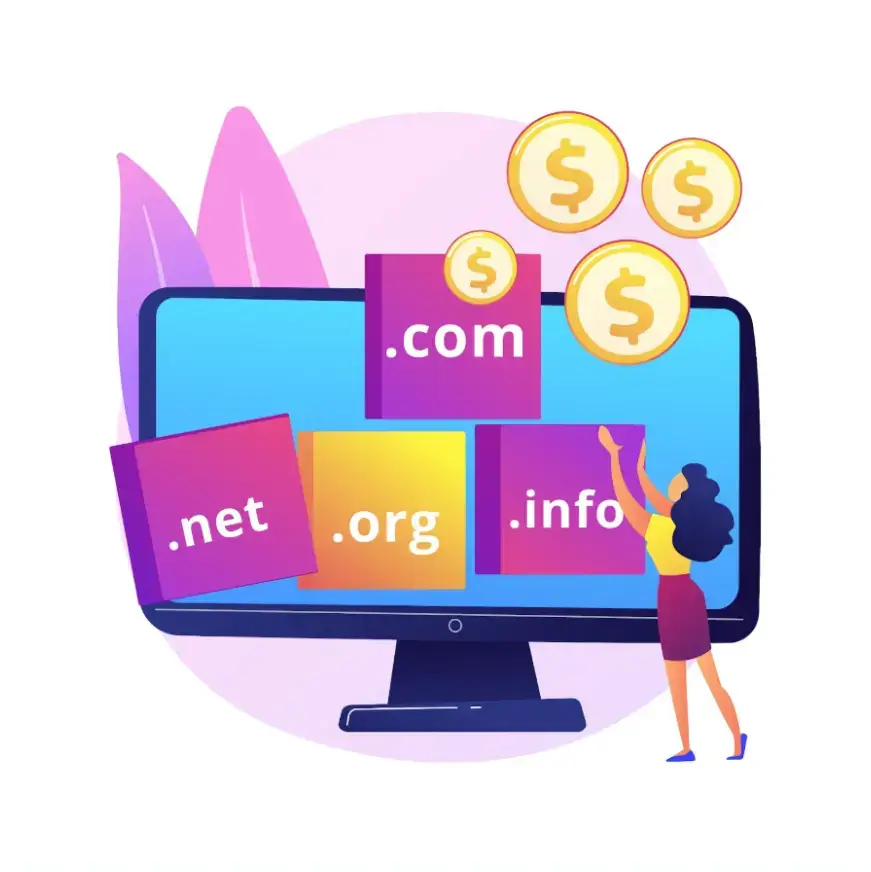
The domain game has evolved big time. While .com remains the most recognized and trusted extension, its dominance is eroding due to saturation and rising costs.
We're talking about a 28% price increase from 2021 to 2024, and the scarcity of memorable names is pushing smart brands toward alternatives.
New generic TLDs now account for nearly 20% of all registered domains, with strong growth in extensions like .xyz, .online, .health, .finance, and .ai.
These aren't just backup options anymore – they're strategic choices that help brands stand out and communicate their focus instantly.
Here's what's trending right now:
Industry-Specific Extensions: Tech startups are crushing it with .io and .ai domains. Health companies are grabbing .health extensions. E-commerce brands are loving .shop and .store.
Geographic Targeting: Local businesses use ccTLDs such as .de, .jp, and .ca to target specific regions and improve local search performance.
Short and Sweet: There's a premium on concise, brandable domains. Single-word and short names are commanding high prices and improving memorability and conversions.
The Perfect Domain Name Formula
Philip Kotler, often called the "father of modern marketing," wisely noted that "The art of marketing is the art of brand building. If you are not a brand, you are a commodity." Your domain name is the first step in building that brand distinction.
Great domain names share certain DNA. Here's the blueprint:
Keep It Short and Sweet
Your domain should roll off the tongue and fit on a business card without squinting.
Aim for 6-14 characters if possible. Short domains minimize typing errors, support word-of-mouth referrals, and increase conversion rates by reducing friction.
Make It Memorable
If people can't remember your domain, they can't find you. Avoid hyphens, numbers, and weird spellings. Your domain should be something people can tell their friends without having to spell it out.
Align With Your Brand
Your domain should feel like a natural extension of your brand personality. A law firm needs something professional and trustworthy. A creative agency can get away with something more playful and unexpected.
Consider Your Audience
Think about who you're trying to reach. Are you targeting tech-savvy millennials who'll appreciate a clever .io domain? Or are you going after traditional businesses that still expect .com?
SEO and Your Domain Name: The Real Story

Source: Unsplash
As Jason Calcanis from Defining.com says, “If you have to spell it over the phone, you’ve lost.”
Let's bust some myths. While keyword-stuffed domains have lost their SEO superpowers, clear, relevant, and memorable names still aid discoverability and click-through rates.
Search engines have gotten smarter – they're prioritizing context and brand relevance over keyword stuffing. Your domain name impacts SEO in these ways:
Click-Through Rates: A relevant domain name in search results gets more clicks than a generic or confusing one.
Brand Queries: When people search for your brand name, having a matching domain makes it easier for search engines to connect the dots.
Trust Signals: Established, professional-looking domains tend to rank better than sketchy alternatives.
Local SEO: Geographic extensions can boost local search performance when targeting specific regions.
Common Domain Name Mistakes (And How to Avoid Them)
As branding expert David Brier warns, "If you don't give the market the story to talk about, they'll define your brand's story for you." Don't let a poorly chosen domain tell the wrong story about your business.
The Trademark Trap
Before you fall in love with a domain, check whether it infringes on someone else's trademark. A quick search can save you from legal headaches and forced domain changes later.
The Spelling Disaster
Avoid domains that require explanation. If you have to spell it out every time you mention it, pick something else. Your domain should be intuitive to spell and easy to remember.
The Extension Confusion
Don't get cute with extensions unless there's a strategic reason. A .biz domain might save you money, but it could cost you credibility with certain audiences.
The Hyphen Habit
Hyphens are the enemy of memorable domains. They're hard to communicate verbally and easy to forget. Skip them unless you absolutely have no choice.
Premium Domains: When to Splurge
Steve Forbes, Chairman and Editor-in-Chief of Forbes Media, emphasizes that "Your brand is the single most important investment you can make in your business." Sometimes that investment includes paying premium prices for the perfect domain.
Premium Domain purchases make sense when:
- The domain perfectly matches your brand name
- It's short, memorable, and easy to spell
- It has existing SEO value or traffic
- It prevents competitors from grabbing it
- The long-term brand value outweighs the upfront cost
The premium domain market is particularly hot right now, with single-word and short names commanding high prices. But remember – a great domain is an investment in your brand's future, not just a web address.
Testing Your Domain Name Ideas

Source: Pixabay
Before you commit, put your domain candidates through these tests:
The Phone Test
Call a friend and tell them your domain name. Can they repeat it back correctly? Can they spell it without asking for clarification? If not, keep looking.
The Radio Test
Imagine your domain being announced on the radio. Would listeners be able to find your website based on what they heard? This test catches spelling issues and pronunciation problems.
The Business Card Test
Print your domain on a business card mock-up. Does it look professional? Is it easy to read? Does it feel right for your brand?
The Social Media Test
Check if the matching social media handles are available. Brand consistency across platforms is crucial for building recognition.
Industry-Specific Domain Strategies
Different industries have different domain name expectations and opportunities:
Tech and Startups
Go bold with .io, .ai, or .tech extensions. These audiences expect innovation and aren't afraid of newer extensions. Focus on brandability over exact keyword matches.
Local Businesses
Consider geographic extensions such as .nyc and .london, or country-specific ccTLDs. These help with local SEO and immediately communicate your location.
E-commerce
.shop and .store domains clarify your business purpose and can enhance brand recall. They're particularly effective for online-only retailers.
Professional Services
Stick with .com for credibility, but consider .law, .consulting, or other professional extensions if they fit your niche.
The Future of Domain Names
The domain landscape keeps evolving. AI-powered name generators are helping users find relevant, brandable domains faster, often leading them to new extensions.
Voice search is also changing the game. With the rise of voice assistants, easy-to-pronounce domains are becoming even more valuable. If people can't say your domain name clearly, they might struggle to find you through voice search.
Security features are becoming standard expectations. Enhanced privacy features, SSL certificates, and compliance with global privacy laws are now baseline requirements for professional domains.
Wrapping It All Up: Making the Final Decision
Amazon founder Jeff Bezos reminds us that "A brand for a company is like a reputation for a person. You earn reputation by trying to do hard things well." Choosing the right domain name is one of those hard things that's worth doing well.
Here's your action plan:
- Brainstorm broadly – Generate 20-30 domain ideas without filtering
- Check availability – See what's actually available in your preferred extensions
- Test your top 5 – Put them through the phone, radio, and business card tests
- Check social media – Make sure matching handles are available
- Sleep on it – Great domain names still feel right after a few days
Remember: your domain name is a long-term commitment. Choose something that'll still make sense as your business grows and evolves. It should work for both your startup and enterprise phases.
The perfect domain name doesn't just describe what you do – it captures who you are as a brand. It's memorable without being gimmicky, professional without being boring, and distinctive without being confusing.
Your domain name is the foundation of your digital presence. Choose wisely, and it'll be working for your brand for years to come.
FAQs
1. Should I always choose a .com domain?
Not necessarily. While .com remains the most trusted extension, industry-specific extensions like .ai for tech companies or .shop for e-commerce can be more memorable and relevant. Choose based on your audience and brand strategy.
2. How important is having an exact match domain for SEO?
Exact match domains have lost much of their SEO advantage. Focus on brandability, memorability, and user experience over keyword stuffing. A strong brand domain often performs better in the long term.
3. What if my ideal domain name is already taken?
You have several options: try different extensions, add a relevant word (like "get" or "try"), contact the current owner about purchasing, or brainstorm alternatives that capture the same brand essence.
4. Are premium domains worth the investment?
It depends. Premium domains can be valuable if they perfectly match your brand, are short and memorable, or have existing SEO value. Consider the long-term brand value versus the upfront cost.
5. How do I know if a domain name will work internationally?
Research how your domain name translates or sounds in your target markets. Avoid names that might have negative connotations in other languages or cultures.
6. Should I buy multiple domain extensions?
Yes, if the budget allows. Buying key extensions (.com, .net, .org) and relevant industry extensions protects your brand and prevents competitors from confusing your customers.
7. What's the best length for a domain name?
Aim for 6-14 characters. Shorter is generally better for memorability and typing ease, but don't sacrifice clarity for brevity. The most important thing is that it's easy to remember and spell.
8. Can I change my domain name later?
Yes, but it's complicated and can hurt your SEO and brand recognition. It's much better to choose carefully from the start. Domain changes require careful planning and can take months to fully implement.

Author Bio
Kean Ong is a blog writer and digital marketing specialist at Dynadot.com, where he focuses on domain strategy, SEO, and online branding. With deep domain expertise, he creates content that helps businesses and individuals grow their digital presence. Kean is passionate about making complex web topics accessible and actionable for all.