

Healthcare consumers make important decisions before any in-person appointment. Patients do their own research, understand symptoms, compare doctors digitally, read reviews, expect reliable information, and then visit clinics.
Your website often becomes the initial consultation, building trust before any face-to-face interaction.
In this article:
- What Is a Healthcare Marketing Strategy?
- Step 1: Define Your Healthcare Brand Positioning
- Step 2: Build a Patient-Centric Website Foundation
- Examples of Healthcare Websites With Strong Patient-Centric Marketing
- Step 3: Develop a Healthcare SEO Strategy
- Step 4: Earn Authority With Educational Content Marketing
- Step 5: Use Paid Media Strategically
- Step 6: Patient Retention and Referral Strategies
- Step 7: Performance Tracking and Optimization
- Common Healthcare Marketing Mistakes (And How to Avoid Them)
Patients now expect transparency, clear information, digital convenience, and empathy at the very first click.
Healthcare organizations that fail to comply with these standards may lose visibility and credibility in today’s competitive environment.
Healthcare marketing is no longer one-size-fits-all. It works on the boundary of compliance, credibility, and compassion. It should balance patient attraction, HIPAA laws, ethical norms, and the emotional aspect of medical decision-making.
Quick Answer
A healthcare marketing strategy is a structured, patient-centered plan that helps medical organizations attract, educate, and retain patients while maintaining compliance and trust.
It combines branding, SEO, website optimization, educational content, paid campaigns, and performance tracking to drive sustainable growth.
Key Takeaways
- Trust and transparency outweigh promotional messaging.
- Compliance defines campaign structure and communication.
- Educational content drives long-term patient acquisition.
- Your website is the core marketing asset.
- SEO and data tracking enable sustainable growth.
What Is a Healthcare Marketing Strategy?
A healthcare marketing strategy is an articulate, systematic plan that helps medical organisations attract, educate, and retain patients through patient-centred communication.
It unites branding, SEO, website optimization, content development, paid campaigns, and performance tracking to support growth without breaching trust or compliance standards.
Step 1: Determine Your Healthcare Brand Positioning
Clarity must come before campaigns or content. Positioning ensures that messaging, service pages, and advertisements speak directly to the patients you can best serve.
Identify Your Target Patient Audience
Start with specificity:
- Demographics: Age, gender, family status, income level
- Target Conditions: Oncology patients, chronic illness patients, orthopaedic patients, and rare disease patients
- Geographic Focus: Local practice, regional provider, or national treatment resource
- Pain Points: Diagnosis fear, wait times, financial concerns, lack of information, second opinions
Clarify Your Unique Value Proposition (UVP)
Differentiation is essential in saturated healthcare markets. According to the American Medical Association, private practices that clearly define their specialty and patient focus are better positioned to stand out in competitive local markets.
Ask:
- What is different about your practice?
- Do you specialize in a specific treatment?
- Is patient experience central to your model?
- Can you demonstrate measurable outcomes?
The UVP must answer one fundamental patient question: “Why should I place my health in your hands?”
Strong healthcare brands communicate competence without exaggeration. They serve patient needs first and allow authority to follow naturally.
Align With Healthcare Compliance Requirements
Healthcare marketing must be ethically and legally responsible.
Key considerations:
- HIPAA compliance: Never publish protected health information without authorization, as required under the regulations defined by the U.S. Department of Health and Human Services under the Health Insurance Portability and Accountability Act (HIPAA).
- Ethical advertising: Avoid guaranteeing outcomes.
- Clear disclaimers: Distinguish educational content from medical advice.
Compliance is not a limitation — it is a visible signal of trust.
Step 2: Build a Patient-Centric Website Foundation
In healthcare, trust is built or broken online. Your website must prioritize readability, usability, reassurance, and accessibility.
Why Your Website Is Your Most Important Marketing Asset
Your website functions as a 24/7 digital front desk. Patients often arrive anxious or overwhelmed. Design, copy, navigation, and structure should reduce friction and encourage the next step.
Core Elements Every Healthcare Website Needs
- Clearly structured service or condition landing pages
- An organized educational content hub
- Visible and accessible CTAs for contact and appointments
- Testimonials and credibility indicators
- Fast loading speed and mobile optimization
- ADA-compliant accessibility standards
Healthcare websites must be inclusive and accessible, particularly for individuals already experiencing physical or cognitive challenges.
Create Educational Content That Builds Patient Trust
In healthcare, education drives conversion. Strong websites clearly explain:
- Treatment options: Outline benefits, risks, and alternatives
- Frequently asked questions: Address common concerns in advance
- Risk factors: Clarify when medical attention is necessary
- Early symptoms: Encourage timely diagnosis by helping patients recognize warning signs outlined by organizations such as the Centers for Disease Control and Prevention
- Recovery expectations: Set realistic outcomes and timelines
Brands that prioritize organized, humane education consistently earn stronger engagement and trust.
The following healthcare organizations demonstrate how strategic positioning, education, and structure translate into real-world execution.
Examples of Healthcare Websites With Strong Patient-Centric Marketing
Studying established healthcare brands highlights effective structure and communication.
1. Mayo Clinic
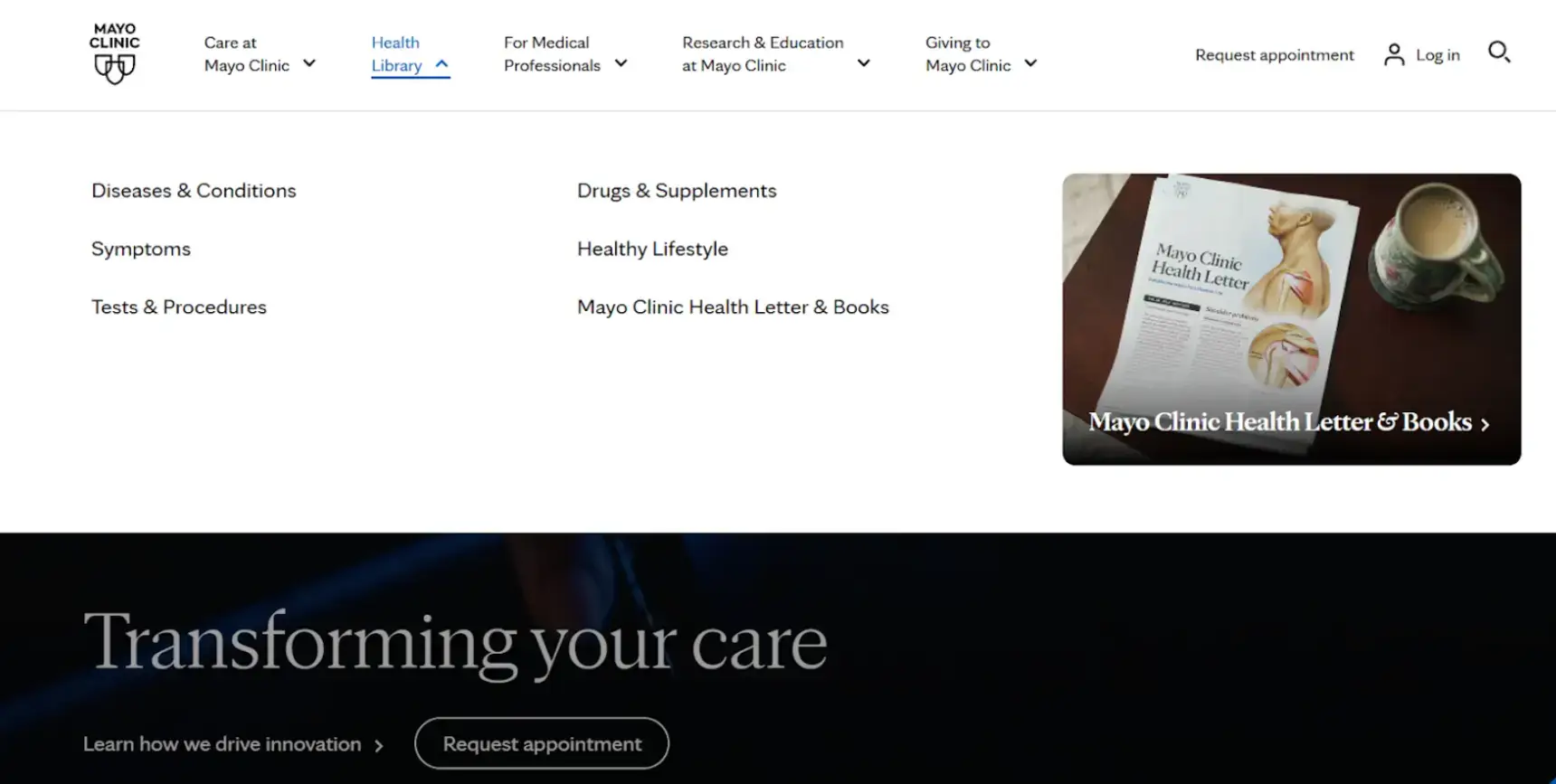
The Mayo Clinic website provides evidence-based, in-depth medical information that supports patients at every stage of care.
Key strengths:
- Extensive condition-specific content
- Clear explanations of treatment pathways
- Transparent authorship and review process
- Structured disease and symptom categorization
Why it works:
Its authority, depth, and medical transparency help patients navigate complex conditions with confidence.
2. Mesothelioma Hope
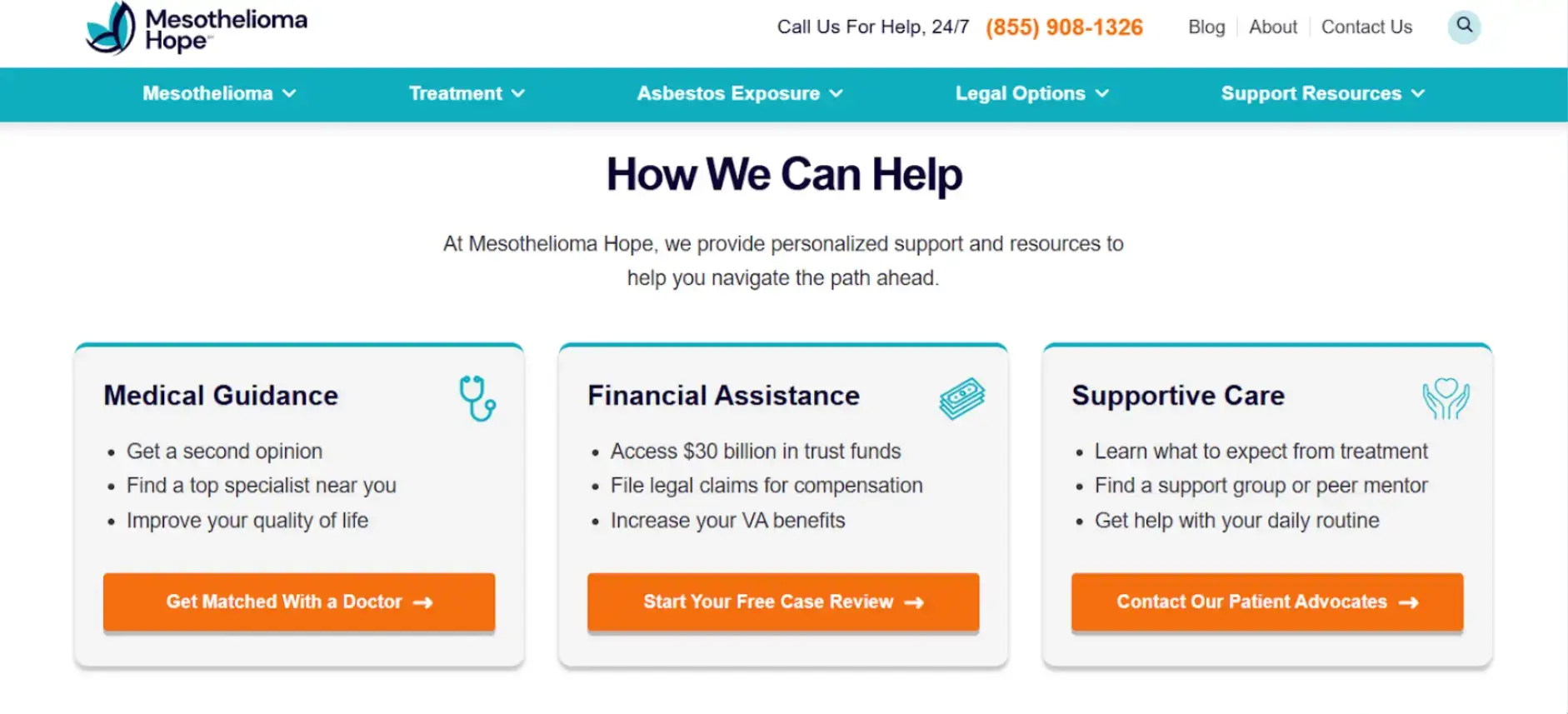
MesotheliomaHope.com focuses exclusively on mesothelioma education and support resources for patients and families.
Key strengths:
- Clear pathways for newly diagnosed patients
- Financial assistance and legal resource guidance
- Compassionate, patient-first language
- Step-by-step educational structure
Why it works: By focusing on a single condition, the platform serves a highly specific, often-overwhelmed audience. The depth of disease-focused content, clarity of language, and practical support resources reduce uncertainty at a critical stage of decision-making.
3. Cleveland Clinic
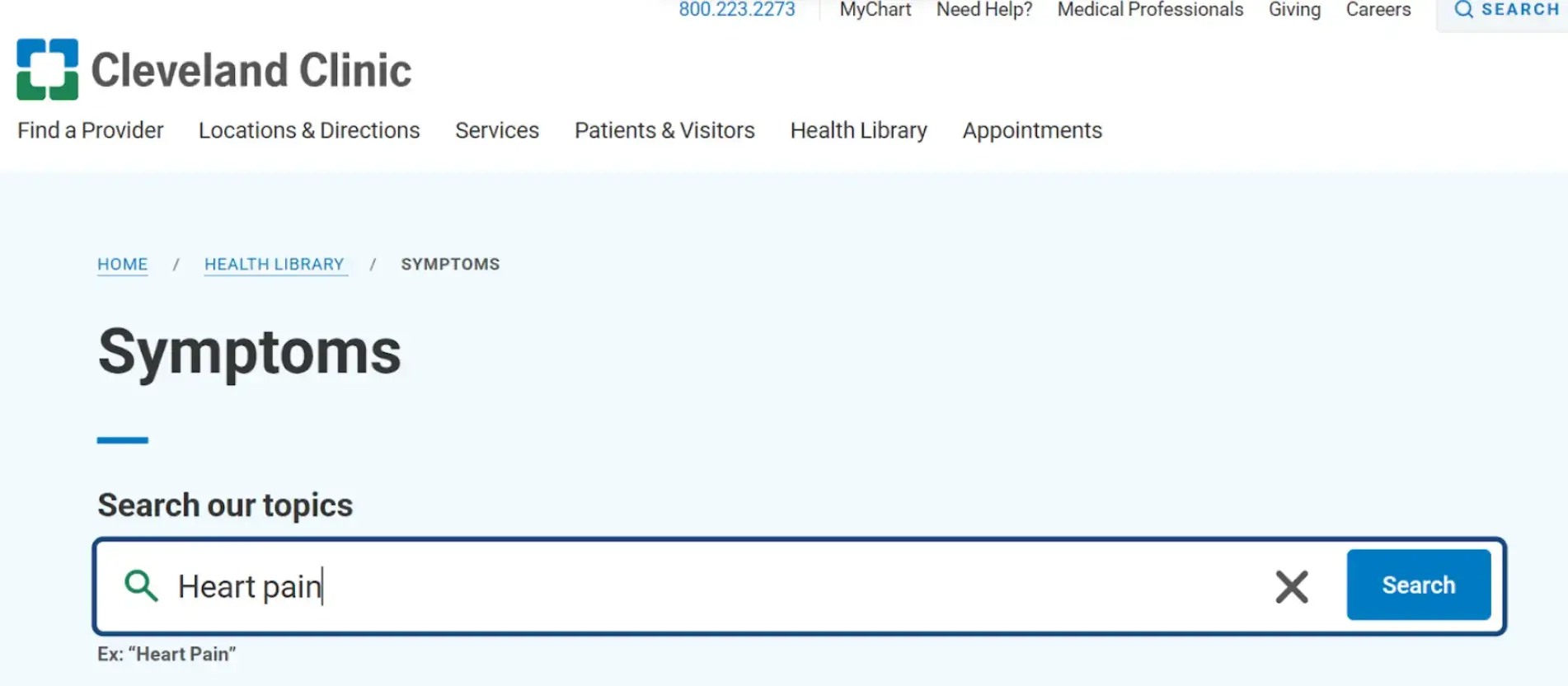
Cleveland Clinic integrates clinical authority with patient-friendly explanations.
Key strengths:
- Specialized health libraries
- Symptom-based search navigation
- Strong internal linking between related conditions
- Clear appointment prompts
Why it works: It simplifies medical complexity without sacrificing accuracy, guiding patients from symptom discovery to specialist consultation.
4. Johns Hopkins Medicine
Johns Hopkins Medicine blends academic research with clarity for patients.

Key strengths:
- Evidence-based medical research
- Detailed procedural explanations
- Specialized service directories
- Strong academic credibility signals
Why it works: Its academic foundation enhances perceived expertise, while structured content supports informed patient decision-making.
Step 3: Develop a Healthcare SEO Strategy
Healthcare SEO aligns with patient intent rather than algorithm manipulation, reflecting Google's quality guidelines outlined for health-related search results.
Healthcare Keyword Research
Patients search with specificity. Common categories include:
- Condition-based searches: “type 2 diabetes management plan”
- Symptom searches: “early signs of lymphoma”
- Local intent: “private cardiologist CA”
- Near-me searches: “orthopaedic surgeon near me”
Content should reflect real patient language and search behavior.
On-Page SEO for Healthcare Websites
Effective on-page SEO includes:
- Proper H1 and H2 structure
- Optimized meta titles and descriptions
- Schema markup
- Image alt text
- Internal linking
- Medical author bios
- Strong page experience signals
Local SEO for Medical Practices
Tebra's research confirms that independent practices that focus on niche positioning, local SEO, and reputation management consistently outperform broader, unfocused marketing efforts.
For local providers:
- Optimize Google Business Profile
- Maintain consistent NAP (Name, Address, Phone) information
- Actively manage patient reviews
Step 4: Earn Authority With Educational Content Marketing
Healthcare content marketing succeeds through clarity, depth, consistency, and evidence-based information.
Content Types That Perform Best in Healthcare
- Long-form medical guides
- Treatment comparison articles
- Patient narratives
- FAQ resources
- Preventative care materials
Educational platforms in other industries follow a similar model—for example, consumer platforms like GrabOn publish savings guides and shopping insights that help users make informed decisions, demonstrating how useful, research-driven content can build trust and long-term engagement with audiences.
Why E-E-A-T Matters in Healthcare SEO
Search engines evaluate healthcare websites under stricter quality standards due to the potential impact on health decisions.
Healthcare is a high-trust category.
E-E-A-T stands for:
- Experience
- Expertise
- Authoritativeness
- Trustworthiness
How to Strengthen E-E-A-T Signals
Strengthen E-E-A-T by:
- Publishing medical review processes
- Citing credible sources
- Including author credentials
- Updating timestamps regularly
Step 5: Use Paid Media Strategically
Paid campaigns support, not replace, organic strategy.
Google Ads for Healthcare Providers
Paid search performs well in competitive service lines and high-value procedures where immediate visibility is necessary.
Social Media Advertising in Healthcare
Healthcare brands use social media for:
- Awareness campaigns
- Retargeting
- Promotion of educational resources
Compliance Considerations for Paid Campaigns
Paid messaging must remain sensitive and compliant:
- HIPAA-conscious targeting
- Transparent language
- Clear disclaimers
Step 6: Patient Retention and Referral Strategies
Email Marketing for Patient Retention
When used responsibly, email supports long-term engagement.
- Appointment reminders
- Preventative care follow-ups
- Educational newsletters
Healthcare Reputation Management
Patient decisions are strongly influenced by online reviews.
- Showcase verified positive feedback
- Respond professionally to all reviews
- Monitor brand mentions
Referral Programs for Medical Practices
- Build physician partnerships
- Participate in community outreach
- Collaborate with advocacy and support groups
Step 7: Performance Tracking and Optimization
Healthcare marketing must be measurable.
Key Healthcare Marketing KPIs
- Organic traffic growth
- Conversion rate
- Cost per lead
- Appointment bookings
- Patient lifetime value
Analytics and Tracking Tools
- Google Analytics
- Google Search Console
- CRM systems
- Call tracking platforms
Modern healthcare marketers are also beginning to use AI tools to analyze patient search behavior, identify emerging health topics, and optimize content marketing strategies more efficiently.
Common Healthcare Marketing Mistakes (And How to Avoid Them)
- Prioritizing traffic over conversions
- Ignoring compliance requirements
- Overlooking mobile optimization
- Publishing thin or generic content
- Failing to track ROI
Final Thoughts: Building a Sustainable Healthcare Marketing Strategy
A sustainable healthcare marketing strategy prioritizes trust, compliance, education, and measurable growth.
Rather than chasing trends, develop a structured system: define positioning, educate consistently, optimize regularly, and refine based on data.
Marketing in healthcare is not about aggressive promotion. It is about helping patients make informed, confident decisions.
When patients feel informed and respected, growth follows naturally.
Healthcare Marketing FAQs
1. What is the regulatory environment of healthcare marketing?
Healthcare marketing must comply with privacy laws, advertising standards, and ethical guidelines, including HIPAA regulations governing patient information.
2. Which channels are most effective for patient acquisition?
SEO, patient-centered websites, local search optimization, and carefully structured paid campaigns typically produce the strongest long-term results.
3. Why is educational content important in healthcare marketing?
Clear, research-based content builds trust, reduces anxiety, and supports informed medical decisions.
4. How do small medical practices compete with large hospital systems online?
By specializing in niche services, focusing on local SEO, delivering personalized messaging, and maintaining a strong online reputation.
5. How often should a healthcare marketing strategy be reviewed?
Core performance metrics should be reviewed monthly, with comprehensive strategy evaluations conducted quarterly.

Author Bio
Renu Sharma is the Co-Founder of Tanot Solutions, and she helps businesses to 5X their organic traffic by building high-quality backlinks. When not working, she loves polishing her marketing knowledge and skills and watching interesting web series. You can follow her on LinkedIn.