

For all startups, operational speed is no longer a mere advantage but a necessity for survival.
The market where rivals can sprout out of nowhere overnight and clients demand perfect digital interactions has made speed crucial to survival.
Late launching does not mean being behind in the race anymore; it can mean being out of the race. Startups are required to run concept validations quickly, secure initial support, and accurately convert visitors into buyers, all while operating in a small team and on a strict budget.
No-code and AI website builders are the main tools for startups in the fast-paced world. They eliminate the traditional barriers of development by automating everything from layout designing to content writing and optimization.
The process that used to consume entire teams of developers and designers is now handled by user-friendly, automated systems that learn and adjust based on user behavior.
In this article:
- Why Traditional Web Development No Longer Works for Startups
- What Are No-Code Website Builders?
- What Are AI Website Builders — and Why They’re Different
- How AI Website Builders Help Startups Launch Faster
- More Startup Examples: Real-World Use Cases
- Where AI Website Builders Fall Short
- Why AI Website Builders Excel at Conversion Optimization
- The Hybrid Model: AI Website Builders + Outsourced Development
- Best Practices for Startups Using AI Website Builders
This article will explore an extensive, detailed study of the role of no-code and AI website builders in startups' faster launches and higher conversion rates, with a special focus on AI-driven platforms.
It will further discuss the strengths and weaknesses of these tools and the outsourcing strategies that startups can adopt to ensure long-term scalability.
Why Traditional Web Development No Longer Works for Startups
The fast pace of today's startups doesn't match that of traditional web development. In an era where being agile can make the difference between life and death, the old ways only slow down the process.
Common Challenges with Traditional Development Models
- Limited or no access to skilled developers
- High upfront costs for design and development
- Long, slow development cycles that delay launch
- Constant pivots requiring rapid website updates
- Investor pressure to show traction quickly
A website for startups is an engine of growth rather than a digital storefront. It drives:
- Lead generation
- User onboarding
- Sales conversions
- Market validation
If launch timelines extend over weeks or months, startups are bound to miss opportunities, burn through their learning cycle, and eventually fall behind the competition.
This is where no-code and AI website builders facilitate a remarkable shift by eliminating bottlenecks, reducing costs, and allowing startups to build and iterate at the speed of their ideas.
Expert Insight:
Build high-converting forms in minutes — no code required
Launching fast is only half the battle. To actually convert visitors into leads, subscribers, and customers, you need forms that are easy to build and optimized to perform.
POWR Form Builder lets you create fully customizable, conversion-focused forms in minutes — no developers, no design tools, no complexity.
✅ AI-ready layouts
✅ Drag-and-drop form fields
✅ Email & CRM integrations
✅ Works seamlessly with no-code and AI website builders
👉 Start your free POWR Form Builder trial and turn your startup website into a lead-generation machine today.
What Are No-Code Website Builders?
No-code website builders enable non-programmers to create functional websites through visual interfaces.
- Core Characteristics of No-Code Builders
- Drag-and-drop UI components
- Pre-built responsive layouts
- Simplify Data Collection
- Visual workflows instead of backend code
- Built-in CMS and integrations
- Template-driven customization
For startups, no-code platforms not only reduce dependence on the engineering team in the early stages but also encourage founders to take charge of their online presence.
What Are AI Website Builders — and Why They’re Different
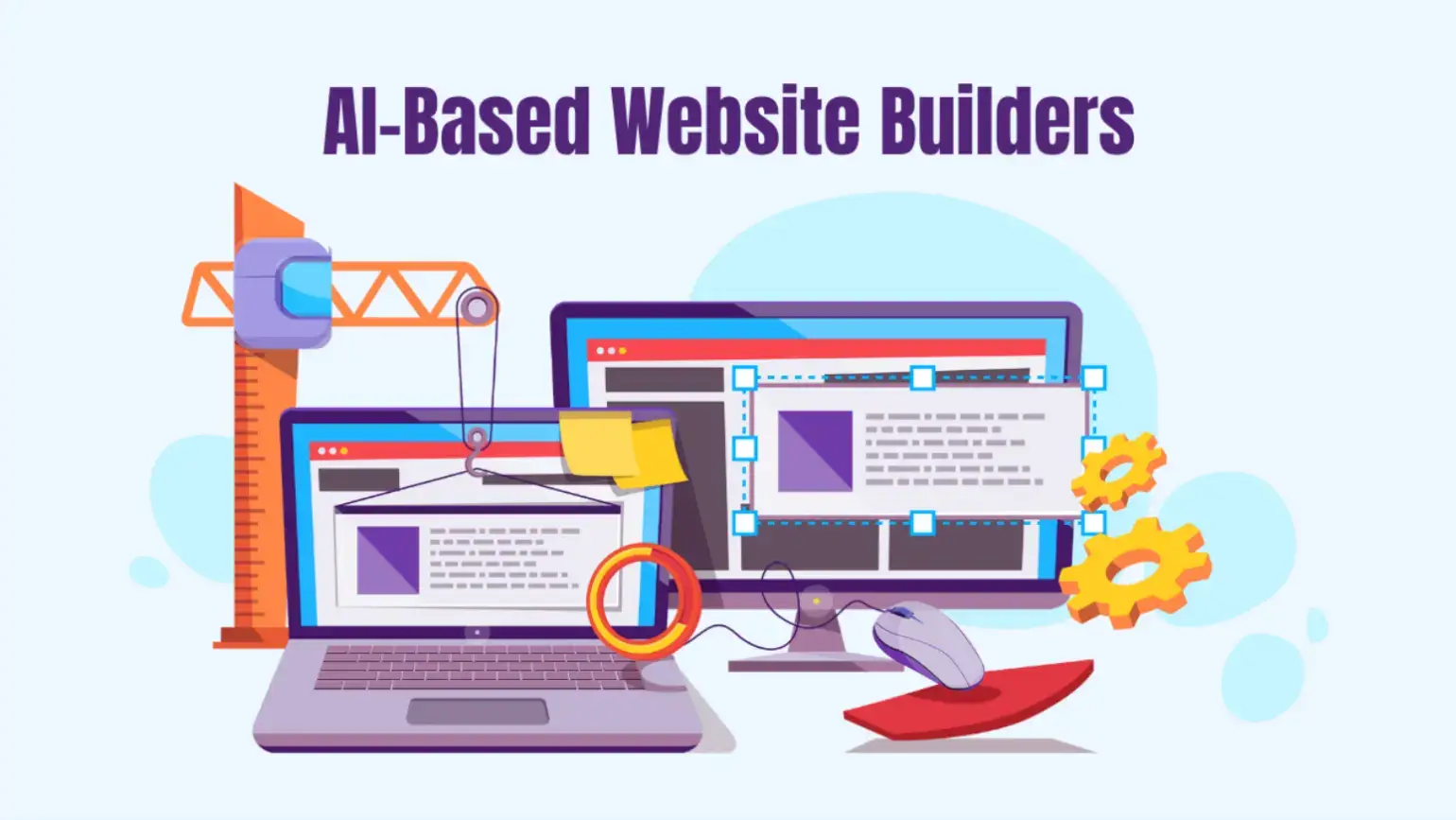
AI website builders represent a major change in the web creation process, where one hand-off is done from manual work to smart algorithm-based operations.
Rather than merely a source of help in the traditional sense of using tools, they play an active role, determining even design and content through methods such as machine learning, natural language processing, and behavioral analytics.
As Jakob Nielsen, a leading authority in user experience research, explains:
The distinguishing features of AI website builders:
- Produce entire websites from minimal explanations
- Create copy with high conversion potential that is appropriate for specific audiences
- Choose layouts based on reliable standards from the industry
- Improve CTAs through predictive modeling
This implies that the startups are fully relieved from the worry about the web development process. They need to outline the goals; it could be conversions, leads, sign-ups, or even sales.
AI takes care of the whole process, consisting of the design, content, and optimization, and so on, which allows the startups to be quicker in launching, smarter in iterating, and more significantly in scaling with unrivaled efficiency.
How AI Website Builders Help Startups Launch Faster

To modern startups, speed is more than just a competitive advantage; it is a factor that determines their existence.
The competition is losing ground and gaining ground every day, the customers demand more and more each time, and investors want to see validation and traction in a short time.
In such a setting, AI Website Builders have come to the forefront as a crucial tool, replacing the slow, traditional development cycles with instant, intelligent digital creation.
1. Instant Website Creation from Intent
One of the major benefits of AI website creators is the ability to convert plain input into a well-structured website. New business ventures need merely to submit the following basic information:
- Sector
- Audience group
- Objective of business
- Tone or style of brand
With minimal information, the Artificial Intelligence creates a complete website, including architecture, landing pages, service pages, sections, and messaging.
What used to take several planning sessions, wireframes, and design mockups is now completed in a few minutes.
By converting intent into structure, AI not only saves countless hours of manual planning but also eliminates the usual back-and-forth among designers, founders, and developers.
This instant creation dramatically speeds up the first stage of the launch process, coming very close to giving startups an immediate foundation to build on.
2. Automated, Conversion-Ready Content Generation
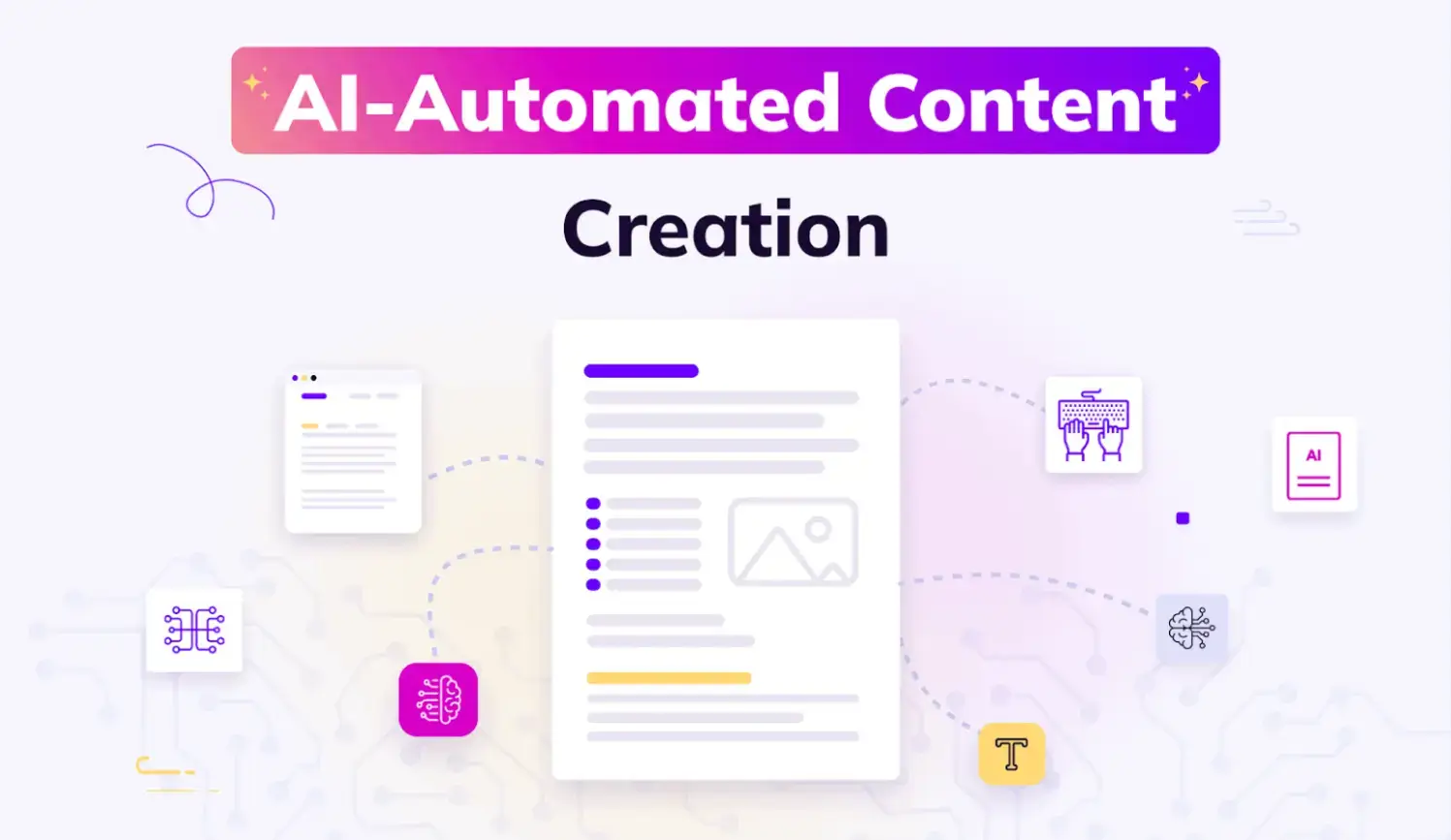
Content generation is the main reason for the delay for early-stage startups. It takes time, skill, and several rounds of editing to write effective copy, all of which a new company might not be able to afford. Using AI website builders solves the problem by generating polished, conversion-focused content in no time.
The AI systems can:
- Create attractive headlines and value propositions
- Compose descriptions of products and services
- Draft SEO-friendly text for the entire site
- Adjust a company's voice for various audiences and brand personalities
- Write blog posts and FAQs to enhance visibility
- MetaData Management in a Multi-Cloud World
Expert Insight:
AI helps startups bypass one of the slowest parts of site launch by freeing the validation phase from reliance on dedicated copywriters. The delivered site has a clear, convincing, and uniform message and is ready in a few minutes instead of weeks.
The text that is created is not just any; it is derived from industrial knowledge and made conversion-friendly.
The companies just starting up get the same quality of service as a well-established company would get in terms of copy, but at less time and cost.
3. Pre-Optimized Design Systems That Build Trust Fast
The creation of designs is another domain where startups often struggle to make headway. Credibility and sales get affected by common problems like poor UX, unbalanced layouts, inconsistent spacing, and weak visual hierarchies.
The AI-powered website builders eliminate these issues by leveraging knowledge from massive datasets of high-performing websites.
They automatically:
- Use the well-known design patterns and layout types
- Make sure the visual flow and reading order are the best
- Select the color combinations according to the design thinking
- Provide designs that are responsive and mobile-first
- Follow UI spacing and modern alignment rules
Startups do not have to guess what looks good or rely on expensive designers; instead, they get a professional, ready-to-convert website right away.
The system, being trained on numerous successful websites, produces best practices right from the start.
This not only saves time but also prevents redesign cycles and ensures that the startup always looks professional, thereby building trust.
More Startup Examples: Real-World Use Cases
Startups across industries are already putting no-code and AI website builders to work — not just to launch quickly, but to convert better and validate faster.
Example: Niche e-Commerce MVP in Days
A fashion accessories startup used an AI web builder to create its initial e-commerce site in under 48 hours.
Rather than contracting a developer or designer, the founders described their brand and target audience to the AI, which generated homepage layouts, product pages, SEO-optimized copy, and even integrated checkout features automatically.
Within the first week of launch, they had live tracking installed and started optimizing merchandising placements based on visitor engagement.
This approach eliminated weeks of development cycles and allowed them to test real sales demand before making larger technical investments.
Example: Service Startup Validates Offers With Data
A consulting startup needed to test two different positioning strategies — “Fractional CTO Services” and “Startup Technical Roadmapping.”
Using a no-code builder with built-in variant testing (A/B testing) and analytics, they spun up two landing pages targeting each offer in under a day. AI-generated variations of headings and CTAs further accelerated testing.
Within 10 days, analytics showed a 35% higher conversion rate for the “Roadmapping” page, directly informing their go-to-market strategy without manual split-testing setup.
Example: Event-Driven Launch with Lead Capture
A health-tech startup was preparing to speak at an industry conference. With only a weekend to go, they built an event-centric splash page to collect sign-ups and book demos.
AI tools handled layout, mobile optimization, and conversion-focused form copy automatically — including an embedded email capture with GDPR-friendly consent fields.
By launch day, they had a fully operational lead funnel integrated with their CRM and automated follow-ups, turning booth traffic into booked meetings.
Example: SaaS Beta Signup Landing Page
A bootstrapped SaaS team built its beta signup page using a no-code AI website builder integrated with payment and email list tools.
Within hours, the site was live, complete with AI-written onboarding copy and a priority feature requests survey embedded directly in the page. As a result, they moved from concept to collecting paying early adopters in less than a week.
Where AI Website Builders Fall Short
Rapid and cost-effective launches are the main advantages of AI website builders, but they are still not very useful for complex customizations or scalability.
By partnering with a software outsourcing company, startups will get:
- Entry to specialized engineering know-how
- Custom development of unique functionalities
- Well-organized processes and project management
This is a compromise of agility and long-term growth potential, and thus a chance for startups to evolve their platforms from the MVP stage and be ready for the increase in business demands.
Why AI Website Builders Excel at Conversion Optimization
For conventional websites, the content remains unchanged until the teams manually analyze data and push updates.
AI-produced websites entirely overcome this restraint. Such websites are, in fact, smart and ever-evolving systems that are always learning from the users' interactions.
AI observes and analyzes visitors' activities, including where they click, where they spend time, and where they leave the site. It spots friction points at once and even recommends changes to be made immediately.
This means startups receive content marketing tips via AI tools, enabling them to increase conversion rates without extra resources or the tedious process of manual review.
AI-Driven Conversion Mechanisms Include:
- Monitoring of user behavior and recognition of patterns
- Placement of smart CTAs along with messaging that adapts
- A/B testing suggestions are done automatically
- Personalization of the website according to user segments dynamically
- Insights along with actions from funnel drop-off analysis
All these functions convert websites into systems that improve over time.
For example, if people consistently leave a form incomplete, AI could either reduce the number of fields or move the CTA. If some areas receive more attention, the layout will automatically adjust to bring them to the forefront.
In the end, what you get is a website that goes beyond merely presenting information; it learns, changes, and continually produces better results, thus providing startups with a compound gain from their initial launch.
The Hybrid Model: AI Website Builders + Outsourced Development
Most startups find the best option is to avoid choosing between AI website builders and outsourcing, but instead combine both through a flexible hybrid approach.
How the Hybrid Model Functions:
- Step 1: Fast Launching: Utilize AI website builders to generate MVPs, landing pages, and rapid tests.
- Step 2: Quick Validation: Evaluate the message, UX models, and conversion rate with little investment.
- Step 3: Intelligent Scaling: Collaborate with a software outsourcing firm to create custom features and strong backend systems.
- Step 4: Incremental Expansion: Shift from AI-created designs to large-scale, business-level infrastructure.
This approach is advantageous to the startup in terms of reduced risk, an accelerated learning process, and the maintenance of agile startup teams.
Best Practices for Startups Using AI Website Builders
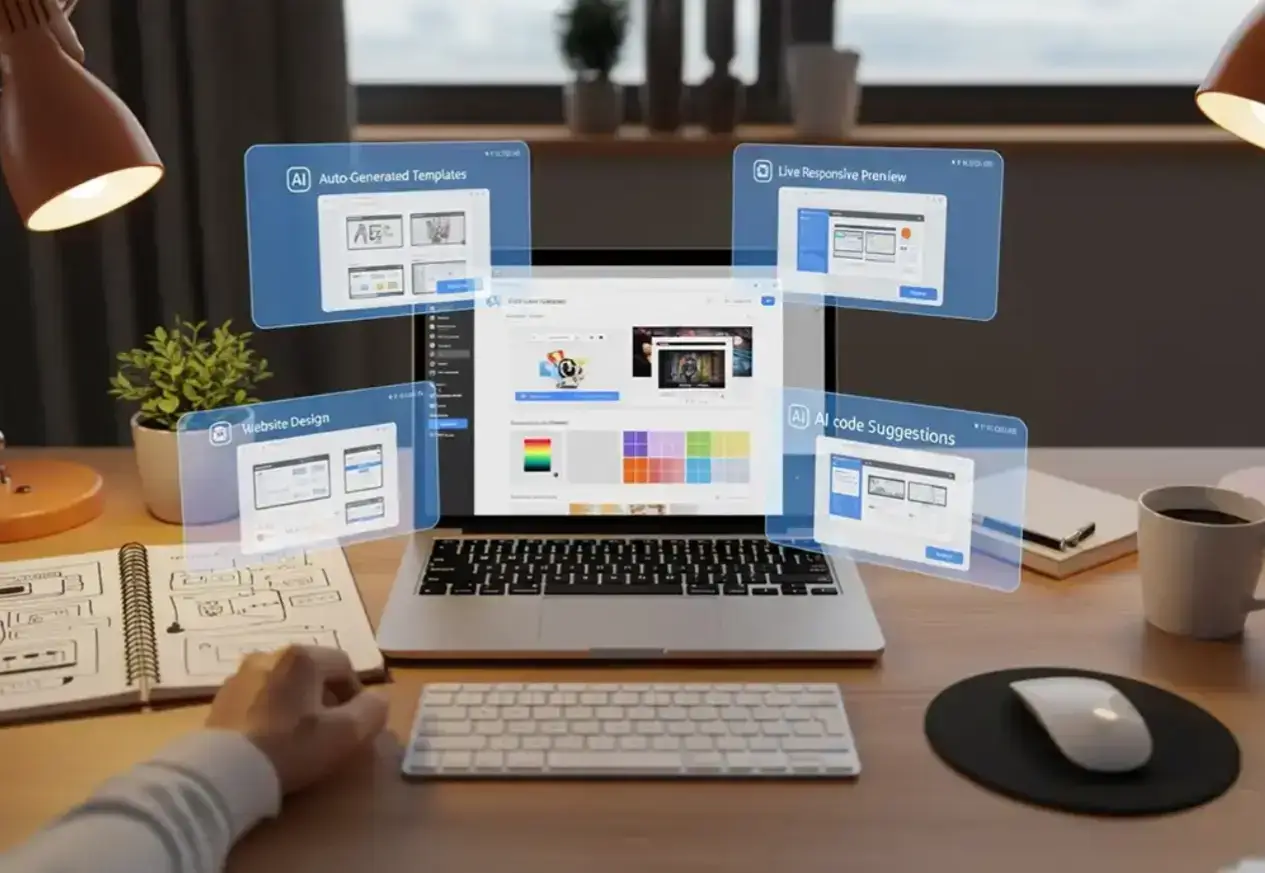
Strategic Best Practices for Faster Validation
Start by setting up one clear conversion goal to direct your energies. Take your website as an ongoing experiment, A/B testing to know the choice among AI insights, but always keeping human judgment in the style.
Design and UX Best Practices for Higher Conversions
Keep navigation straightforward to minimize user friction and avoid heavy customization in the initial stages. Give priority to mobile-first design to ensure a seamless experience for most users.
Conclusion: AI Website Builders as a Startup Growth Advantage
No-code and AI website builders have completely changed how startups build their online presence.
By eliminating traditional technical barriers, these tools not only dramatically speed up the launch process but also enable founders to test their concepts and get users engaged in days rather than months.
Besides speed, AI integrates conversion intelligence into websites, making it easier for startups to be smart through continuous optimization and real-time insights.
In the fast-paced world of market changes, agility is the most crucial competitive edge, and that is why the use of AI website builders is not just a shortcut; it is the very basis of growth and the ability to outpace competitors for a startup.
Frequently Asked Questions
Are AI website builders suitable for non-technical founders?
Yes. AI website builders cater to non-technical users while also taking over the creation, writing, and even the performance-tuning decisions.
Do AI website builders replace developers entirely?
Not at all! The developers' initial dependency is reduced, but there is still a significant scenario in which custom engineering will be required as a supplement.
Can AI website builders improve conversion rates?
Yes. They are equipped with CRO methods like behavioral tracking, automated testing, and layout optimization.
What are the risks of relying only on AI website builders?
Probably the major ones are platform lock-in, limited access to the backend, and limited scope to alter complex systems.
When should startups move to outsourced development?
If the product becomes extremely complex, demand is so high, or integration of different systems exceeds the capabilities of AI website builders.

Author Bio
Syed Zain Nasir is a Mechatronics and Control Engineer and a part-time hobbyist, who believes that only research & technology can make this world a better place.