

Digital change is no longer something small businesses can put off until “the right time.” Customers expect faster service, more convenience, and a seamless experience—no matter the size of the company they’re dealing with.
For many small businesses, the challenge is figuring out how to compete with larger organizations that have deeper pockets and bigger IT teams.
That’s where cloud technology and DevOps practices come in. Together, they act as a growth multiplier, helping small businesses move faster, reduce costs, and stay ahead of customer needs without needing an army of developers, an endless IT budget or needing to hire a dedicated software development team just to keep up.
Let’s break down how cloud and DevOps work, why they matter, and how small businesses can start using them right away.
Cloud: Leveling the Playing Field

Source: Freepik
Think about the technology behind the apps you use daily—email, file storage, online banking, food delivery. Almost all of it runs on the cloud.
The cloud simply means your business is using computing resources (servers, storage, applications) over the internet instead of buying and managing them in-house.
For small businesses, the benefits are game-changing:
- Lower upfront costs. No need to buy expensive servers or hire a full IT staff. You pay only for what you use.
- Scalability on demand. Whether it’s handling seasonal traffic spikes or adding new users as your team grows, scaling is as simple as adjusting your plan.
- Access anywhere. Remote teams can collaborate without being tied to a physical office or local network.
- Enterprise-level security. Cloud providers invest heavily in cybersecurity, offering small businesses protection that would be impossible to afford independently.
In short, the cloud puts powerful tools that once only big corporations could afford into the hands of small business owners.
“Cloud computing is really a no-brainer for any start-up because it allows you to test your business plan very quickly for little money. Every start-up, or even a division within a company that has an idea for something new, should be figuring out how to use cloud computing in its plan.” – Brad Jefferson, Animoto CEO
DevOps: Turning Speed into Strategy
Source: Freepik
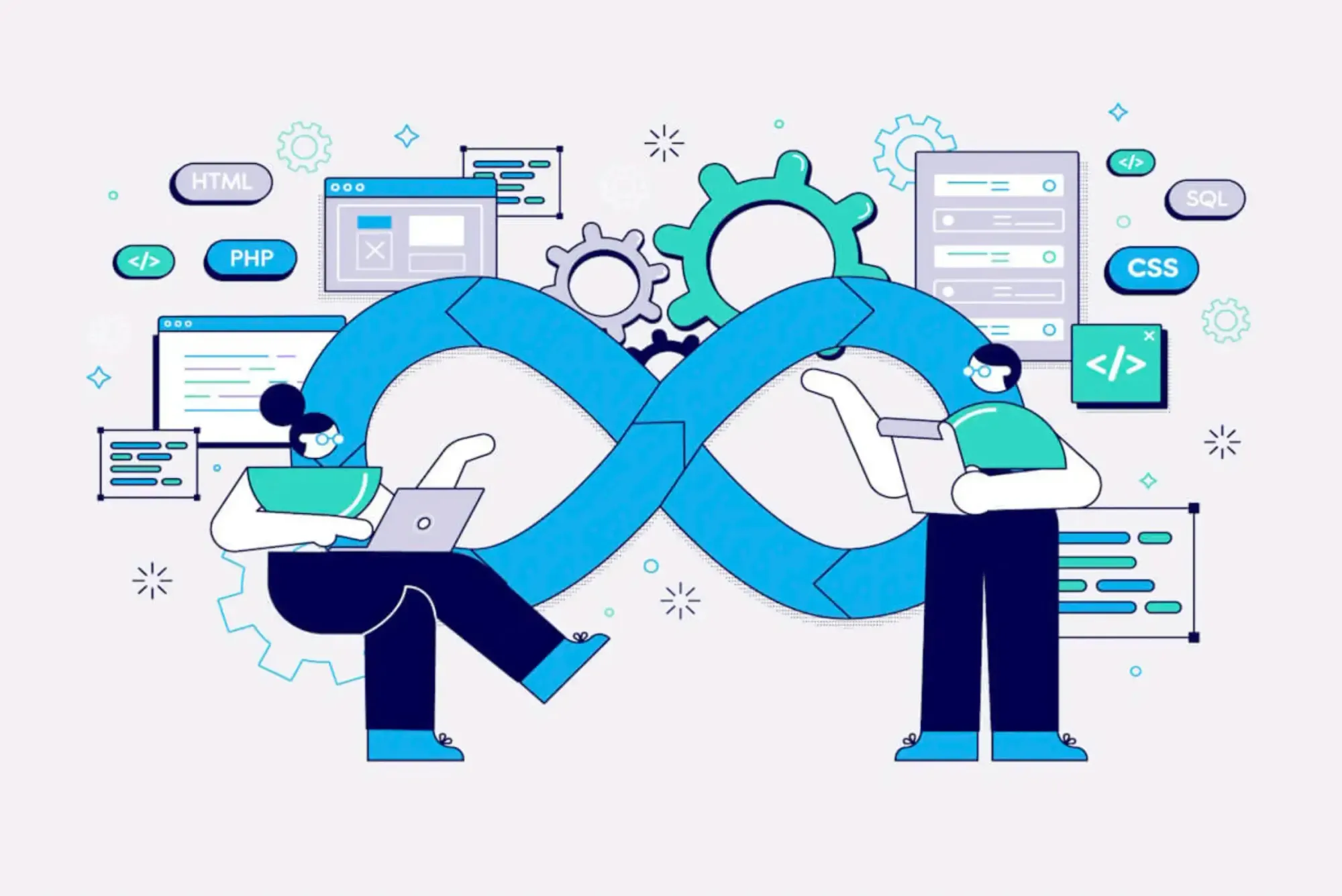
If the cloud is the platform, DevOps is the mindset that helps businesses get the most from it. DevOps is short for “Development + Operations,” and it’s all about breaking down the walls between the teams that build software and the teams that run it.
Traditionally, software development worked like a relay race: developers built code, then handed it off to operations to deploy and maintain.
This process was slow, error-prone, and frustrating. DevOps changes the game by encouraging continuous collaboration, automation, and rapid feedback loops.
Here’s what that looks like in practice for small businesses:
- Faster updates. Instead of waiting weeks or months for new features, DevOps makes it possible to push improvements continuously.
- Early bug detection. Automated testing means issues get caught before they reach customers.
- Resilience. Continuous monitoring ensures apps and websites recover quickly from problems.
- Efficiency. Automating repetitive tasks saves time and reduces human error.
For small businesses, DevOps translates into agility—the ability to respond to customer needs quickly, roll out new ideas, and stay competitive.
“You can’t just buy DevOps in a box. DevOps is not a product, it’s a culture.” – Damon Edwards
Why Cloud and DevOps Belong Together
Source: Freepik
Cloud technology and DevOps aren’t just complementary—they’re made for each other. The cloud provides the flexibility and scalability needed for modern applications, while DevOps ensures those applications evolve smoothly.
Together, they create a cycle of continuous improvement:
- Build faster. Cloud platforms integrate seamlessly with development tools, allowing teams to experiment quickly.
- Test smarter. Automated pipelines in DevOps ensure quality, while cloud resources handle the load.
- Deploy seamlessly. Updates can be rolled out with little downtime, keeping customers happy.
- Scale easily. As demand grows, businesses can add capacity without major investments.
This combination turns technology into a growth driver instead of a cost burden.
Real-World Examples
- A local retailer: By moving their website hosting to the cloud and adopting DevOps practices, they reduced page-load times and increased sales during holiday traffic spikes.
- A small healthcare provider: Cloud-based systems allowed them to manage patient records securely and support Telemedicine App solutions, while DevOps ensured their platform stayed reliable during sudden demand surges.
- A digital marketing agency: Automation and cloud collaboration tools meant campaigns could launch faster, with fewer technical hiccups and better client satisfaction.
These examples show how businesses of any size can strategically harness technology, not just operate it.
Getting Started Without Overwhelm
For small businesses, adopting cloud and DevOps can feel intimidating.
The good news? You don’t need to overhaul everything overnight. Start small, learn as you go, and scale gradually.
Here are practical steps to begin:
- Identify one use case. Move a single tool, like file storage or customer data, to a cloud platform.
- Automate one process. Set up automated backups or basic deployment pipelines.
- Adopt collaboration tools. Use cloud-based project management or communication apps to break down silos.
- Measure and learn. Track cost savings, time saved, and customer feedback to see the impact.
- Expand step by step. Once the basics are working, build out more advanced automation and cloud integrations.
This incremental approach helps reduce risk while building internal confidence and skills.
Challenges to Watch Out For
Like any transformation, adopting cloud and DevOps comes with challenges. Small businesses should be mindful of:
- Cost creep. Cloud services are affordable, but poor planning can lead to surprise bills.
- Skill gaps. DevOps requires new tools and mindsets, which may mean training or hiring.
- Change management. Employees may resist new workflows at first; communication is key.
- Security compliance. Even with strong cloud protections, businesses must still follow best practices for data privacy.
By anticipating these hurdles, businesses can develop strategies to address them proactively.
The Long-Term Payoff

Source: Freepik
The real advantage of combining cloud and DevOps is long-term adaptability. Markets, customer expectations, and technologies will continue to change.
Small businesses that embrace flexible platforms and agile practices now will be better equipped to handle what comes next.
It’s not just about keeping up—it’s about positioning for growth, resilience, and innovation.
FAQs
1. What is digital transformation for small businesses?
Digital transformation means adopting modern technologies like cloud computing and DevOps to improve efficiency, customer experience, and competitiveness.
2. How can cloud computing help small businesses grow?
The cloud lowers IT costs, offers scalability on demand, provides enterprise-level security, and allows remote teams to collaborate seamlessly.
3. Why is DevOps important for small businesses?
DevOps speeds up software updates, reduces downtime, improves quality through automation, and helps small businesses respond quickly to customer needs.
4. How do cloud and DevOps work together?
Cloud provides scalable infrastructure, while DevOps ensures rapid, reliable deployment. Together, they enable continuous improvement and business agility.
5. What challenges do small businesses face when adopting cloud and DevOps?
Common challenges include cost management, skill gaps, change resistance, and ensuring compliance with data security and privacy standards.
Final Thoughts
Cloud technology and DevOps are no longer reserved for tech giants. They are practical, accessible, and essential tools for small businesses looking to thrive in today’s digital economy.
By starting with clear goals, experimenting in small steps, and focusing on collaboration, any business can unlock new levels of efficiency and customer satisfaction.
For those wondering how to embark on the journey of small business digital transformation, the answer often starts with the right mix of cloud and DevOps. Together, they create the foundation for growth, flexibility, and long-term success.

Author Bio
Arjun S is a Business Growth Strategist at a Leading Software Development Company. Apart from working on a long-lasting relationship with customers and boosting business revenue, I am also interested in sharing my knowledge on various technologies through successful blog posts and article writing.