

Growing a business while managing customer relationships requires precise and effective tools. With evolving customer expectations and multiple communication channels, companies must efficiently organize customer data and coordinate teams across sales, marketing, and support.
Customer relationship management, or CRM, software centralizes this information, automates key processes, and provides actionable insights. These capabilities enable businesses to improve customer engagement, increase sales, and operate more smoothly.
Read this article to understand how the right CRM tools can help companies grow and strengthen their customer relationships.
In this article:
- Key Features to Look for in CRM Tools
- How CRM Tools Transform Business Strategies
- Selecting the Right CRM for Your Business
- Real-World Examples of CRM Driving Success

Source: Freepik
The Role of CRM Tools in Accelerating Growth
Businesses use CRM tools to collect and organize all customer information in one place. This creates a shared understanding across teams and reduces errors caused by disorganized data.
Modern CRM systems also automate routine tasks, freeing staff to focus on meaningful interactions.
Real-time analytics provide business leaders with the data needed to make informed decisions quickly.
Together, these features help companies improve customer satisfaction, increase sales efficiency, and scale operations with confidence.
Key Features to Look for in CRM Tools
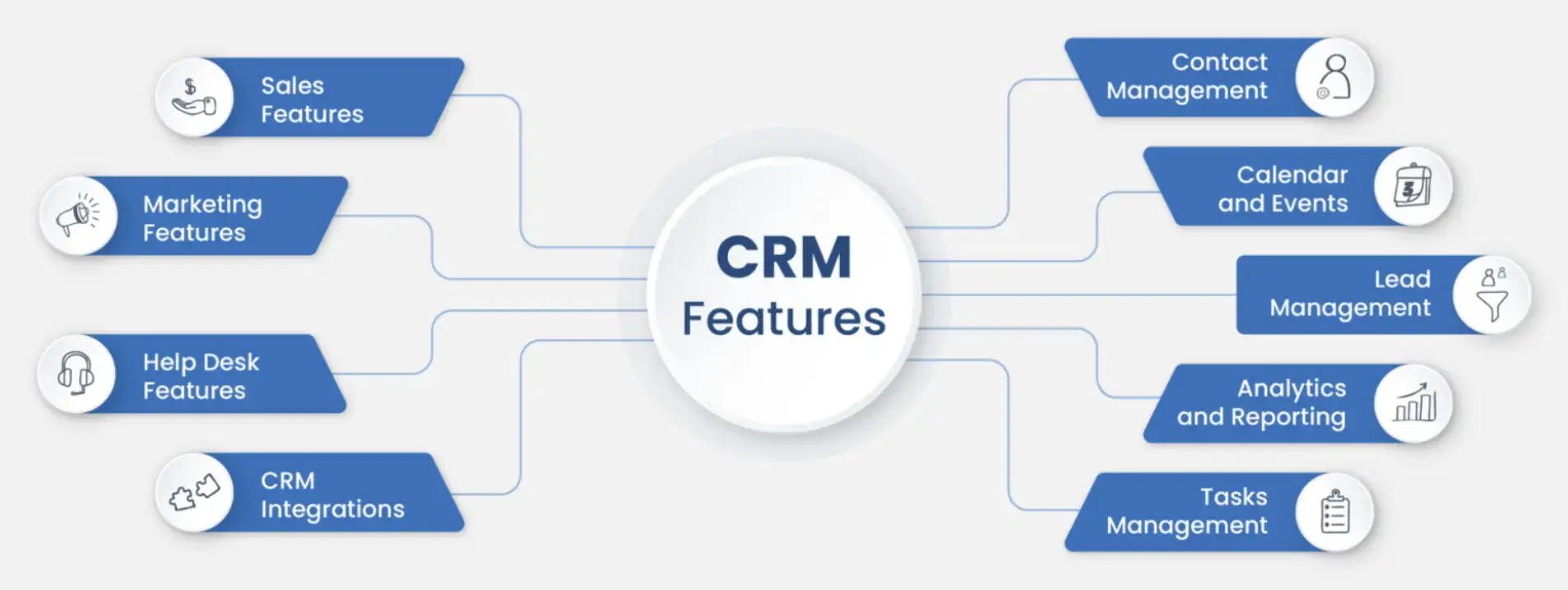
Choosing the right CRM platform requires attention to features that support the full customer lifecycle. Here are essential capabilities that can make a difference:
Unified Platform Across Departments
A good CRM integrates marketing, sales, and customer service into a single system. This ensures seamless communication and prevents data silos that slow down customer interactions.
Workflow Automation
Automation helps eliminate manual work by handling routine tasks such as sending follow-up emails, assigning leads, and updating records. Customizable workflows enable businesses to tailor processes to their specific needs.
Flexible Integrations
Most companies rely on multiple software tools. CRM systems must integrate seamlessly with existing platforms such as email marketing software, accounting tools, and help desks to avoid inefficient switching between apps.
Security and Compliance
With growing privacy regulations worldwide, CRM platforms must offer strong data protection features. These include secure user access, encryption, and GDPR to maintain customer trust.
Source: Vtiger
How CRM Tools Transform Business Strategies
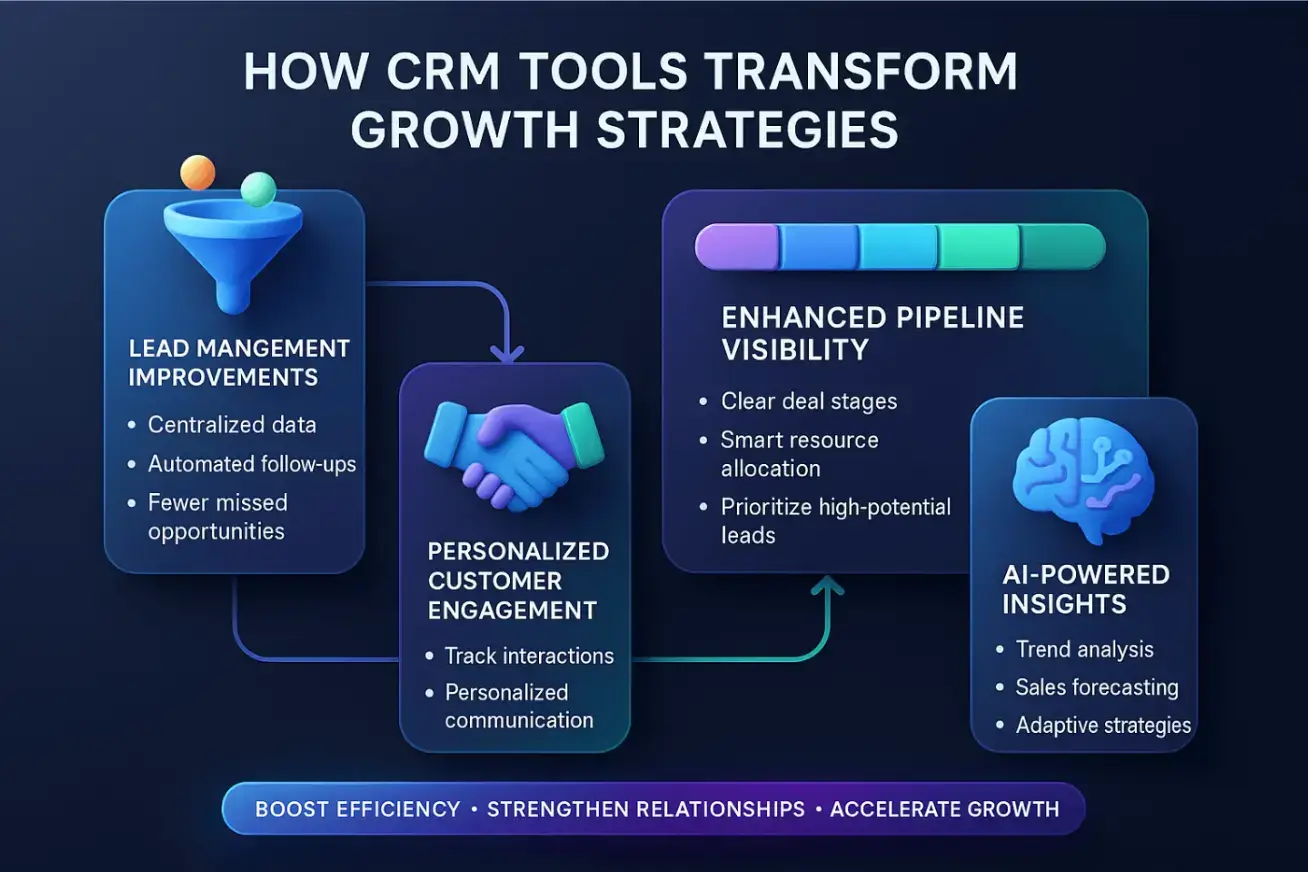
The right CRM tools change how businesses approach growth by improving lead management, pipeline visibility, and customer retention.
Stronger Lead Management
CRMs centralize lead information and automate reminders for timely follow-ups. This reduces missed opportunities and helps sales teams focus on the most promising prospects.
Enhanced Pipeline Visibility
Sales managers gain a clear picture of where each deal stands at every stage. This enables smarter resource allocation and prioritization of high-potential leads.
Personalized Customer Engagement
By tracking all interactions, CRM systems allow sales and service teams to tailor their communications, building stronger relationships that improve loyalty and revenue.
AI-Powered Insights
Advanced CRMs use AI to analyze data trends and forecast sales outcomes. These insights help businesses optimize strategies and quickly adjust to market changes.
Selecting the Right CRM for Your Business
Choosing the right CRM involves more than picking popular features. It requires understanding how the system will support your company’s unique needs now and as you grow.
Scalability and Flexibility
Your CRM should expand alongside your business without causing interruptions. This includes the ability to add users, enable new features, and integrate seamlessly with other software.
Strong integration ensures that your CRM fits naturally within your current technology stack, preserving smooth workflows and data consistency as your processes evolve.
Ease of Use
A CRM’s value depends heavily on how easily your team can navigate and use it daily.
Systems with clear, straightforward interfaces reduce the learning curve, encourage regular use, and minimize data-entry errors.
When employees spend less time troubleshooting software, they can devote more effort to engaging customers and driving results.
Vendor Support and Community
Access to dependable vendor support ensures that any technical roadblocks are addressed promptly, keeping your CRM aligned with your business needs.
In addition, an engaged user community is a valuable resource, offering practical guidance, shared experiences, and prebuilt tools that help you get the most out of your system without incurring additional costs.
Cost Management
It is essential to evaluate the entire cost spectrum beyond the initial investment. Setup fees, customization, training, and maintenance all contribute to the total expense.
Open source CRM software eliminates licensing fees, allowing you to better control your spending and invest selectively in features and integrations that deliver the greatest business impact.
Focusing on these key considerations will help you select a CRM platform that meets your current needs while supporting growth with confidence.
Companies refine their CRM strategies, comparisons like monday CRM and Salesforce help teams evaluate which platform better supports their sales processes and long-term growth.

Real-World Examples of CRM Driving Success
Many businesses across different industries have experienced significant growth and improved customer relationships by using CRM tools effectively. Here are some detailed examples:
Retail Business Case Study
A mid-sized retail company was struggling with inconsistent customer service and lost repeat sales opportunities.
This allowed representatives to offer highly personalized product recommendations tailored to each shopper’s preferences and buying patterns.
The result was faster issue resolution and increased customer loyalty, which translated directly into higher repeat purchase rates and overall revenue growth.
Technology Startup Case Study
A fast-growing technology startup faced challenges managing a rapidly expanding lead pipeline.
By integrating CRM automation, the company set up targeted email campaigns that nurtured prospects through the sales funnel with personalized messages and timely follow-up reminders. This consistent engagement helped sales teams focus their efforts on warm leads and avoid missed opportunities.
Consequently, the startup saw faster lead-to-customer conversion rates and a noticeable increase in monthly recurring revenue, enabling them to scale more confidently.
Professional Services Case Study
A professional services company providing consulting and project management solutions struggled to maintain clarity over multiple active client projects and communications.
Implementing a CRM platform brought transparency by centralizing client interactions, project timelines, and sales pipelines in one accessible dashboard. This improved collaboration among sales, service, and project teams, allowing them to proactively address client needs and deadlines.
Enhanced visibility strengthened client relationships, reduced delays, and improved overall satisfaction, leading to increased contract renewals and referrals.
These stories highlight how CRMs help turn everyday customer interactions into growth opportunities.
Conclusion: Why the Right CRM is Essential for Growth
Effective CRM tools are essential for businesses seeking growth, as they streamline customer information management, automate routine processes, and deliver insights that drive better decision-making.
These capabilities boost team productivity and help create more meaningful, personalized customer experiences, which are crucial in today’s competitive environment.
Specifically, CRM software provides unique advantages for businesses seeking to reduce costs without sacrificing flexibility. It eliminates costly licensing fees and enables full customization, allowing companies to adapt the software precisely to their unique workflows.
This freedom accelerates innovation and simplifies integration with existing tools. For businesses ready to scale thoughtfully, open-source CRM delivers the adaptability and control needed to support long-term success.
FAQs About CRM and Business Growth
1. How does a CRM tool actually help a business grow?
A CRM isn’t just about storing customer data—it’s about building stronger relationships. With the right CRM, businesses can track every customer interaction, personalize communication, and streamline sales processes. This leads to happier customers, higher retention, and ultimately, business growth.
2. Is a CRM tool only useful for big companies?
Not at all! Small and mid-sized businesses can benefit the most because CRMs help them stay organized, automate repetitive tasks, and compete with larger players. It’s like having a digital assistant that ensures no lead slips through the cracks.
3. What features should I look for in a CRM if I want to grow my business?
Look for features that align with your goals. Some essentials include contact management, sales pipeline tracking, marketing automation, analytics, and integrations with tools you already use (like email or social media). The “right” CRM is the one that makes your daily work easier, not more complicated.
4. How quickly can a business see results after adopting a CRM?
Results vary depending on how well the CRM is implemented and adopted by the team. Some businesses notice better lead management and improved sales within weeks, while others see more long-term benefits, such as customer loyalty and higher lifetime value, over months. Consistency and training make a huge difference.
5. Isn’t CRM software too expensive for small businesses?
Many people think that, but today’s CRM tools come in flexible pricing models—even free or low-cost versions for small businesses. The investment usually pays off quickly because the tool helps capture more sales opportunities and improves efficiency, often outweighing the initial cost.

Author Bio
Megha Adityan is an experienced B2B Content Writer specializing in CRM, AI, and data-driven technologies. With a strong focus on SEO and strategic storytelling, she creates clear, engaging, and technically accurate content for SaaS platforms. Her expertise lies in simplifying complex enterprise workflows—such as sales automation, customer lifecycle management, and integrated business operations—into compelling narratives that resonate with tech leaders and growing businesses. Adept at crafting blogs, web content, and email campaigns, she ensures content aligns with real-world business goals to drive engagement, adoption, and growth.