

AI technologies are no longer used only by large tech companies. It's already changing how small businesses run online stores.
If you've ever wished your store could recommend the right product, respond instantly to questions, or make sense of customer comments without taking up hours of legwork, AI might already be the tool you're looking for.
The success of e-commerce today depends on fast decisions, smart automation, and understanding what your customers want, no matter where that data comes from - from a spreadsheet or a product review.
This article breaks down how artificial intelligence is reshaping e-commerce technology by turning both structured and unstructured data into actions that save time, improve customer experience, and help you sell more.
How AI is Transforming E-Commerce Operations
For many online store owners, time is the one thing they never have enough of.
Between managing inventory, answering questions, processing orders, and running marketing campaigns, there's not much room left for strategy.
In situations like this, AI can step in with practical help that lightens the daily load.
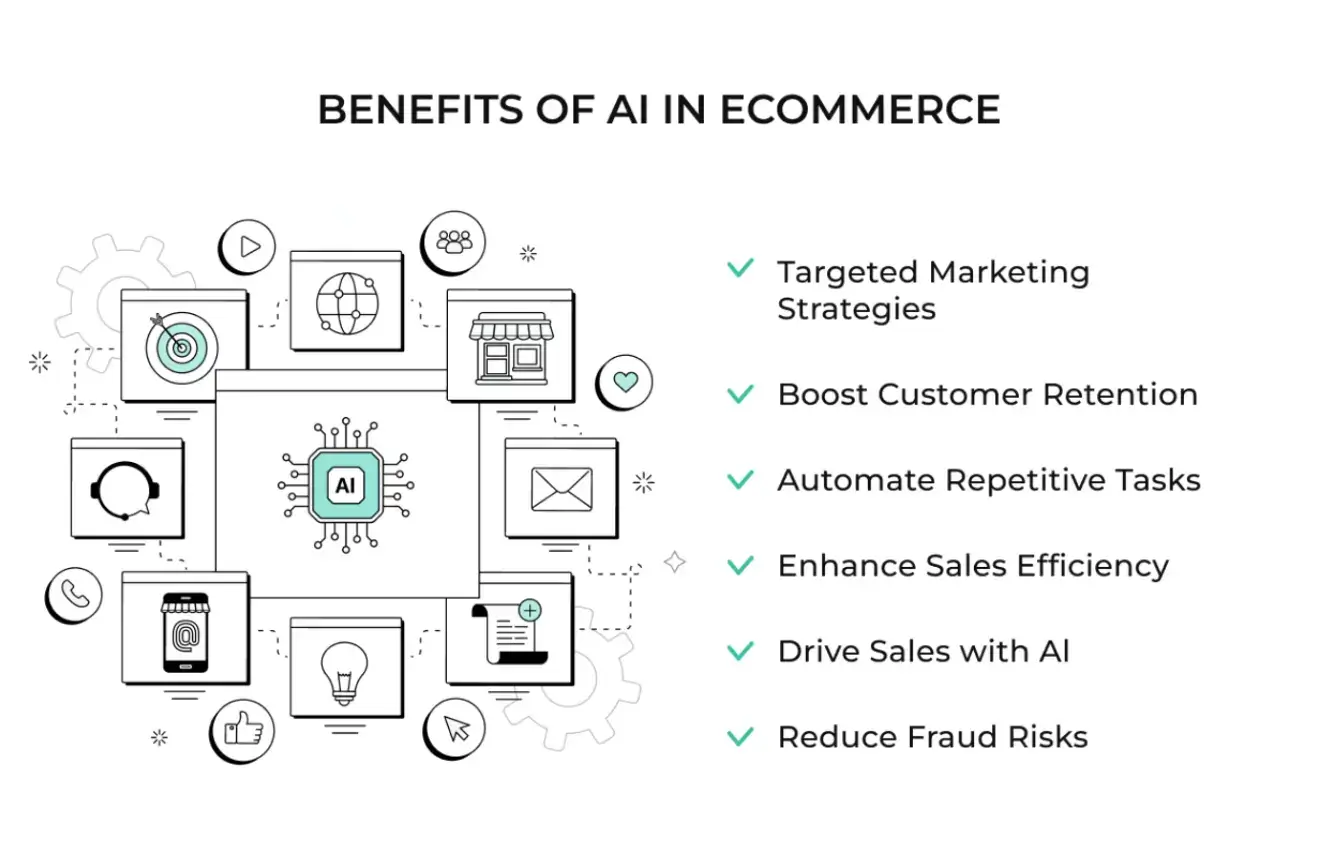
AI in e-commerce now powers everything from personalized product recommendations to fraud detection and more.
It helps predict what a customer might want next, shows them the right product faster, and even updates pricing based on real-time trends.
For example, an AI system might identify that a specific item sells faster in the morning and automatically adjust its visibility or pricing during peak hours.
Behind the scenes, AI can improve warehouse and supply chain operations. Tools that use machine learning in e-commerce track sales patterns and automatically reorder stock before you run out.
Whether you're a one-person business or running a team, AI solutions for e-commerce help reduce busywork and keep your operations sharp.
More and more platforms offer built-in AI e-commerce tools, from personalized recommendations to AI voice agents, and you need to know what problem you're trying to solve and which tool will be the best to help you solve it.
Understanding the Data: Structured vs. Unstructured
Running an online store generates a lot of data — some clean and neatly organized, some not.
Sales numbers, shipping details, and customer info are examples of structured data. They live in spreadsheets, databases, and dashboards. Here are some examples of unstructured data:
- Product photos;
- Customer reviews;
- Chat transcripts;
- Voice notes;
- PDFs.
This data often provides the clearest picture of your customers' needs, but it's harder to interpret without support.
AI makes sense of both. Structured data feeds your e-commerce analytics tools to track conversions, spot bestsellers, or measure campaign performance.
It's AI-driven unstructured data analytics that opens new doors, helping you improve product discovery, identify quality issues, and even respond to customer feedback more quickly.
Leveraging AI for Image Recognition & Automation
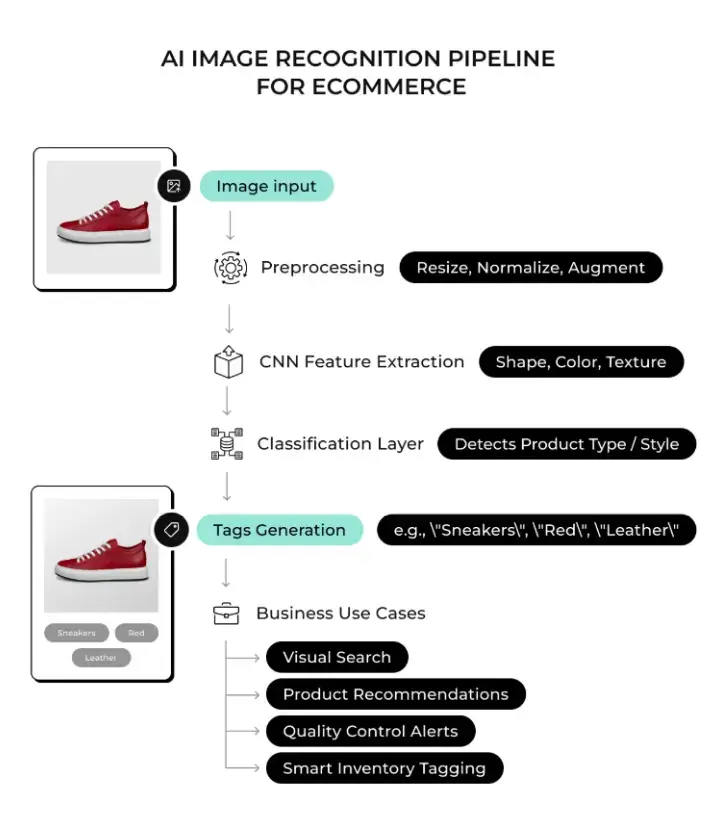
Every product photo, as a common example of unstructured data, is an opportunity to improve search, reduce returns, or catch quality issues early if you can analyze it quickly enough. That's where AI image recognition comes in.
AI-powered e-commerce tools now automatically tag products in photos with attributes such as color, shape, material, and style. This tagging makes visual search possible.
Shoppers can now upload an image and find similar items without typing a word. Tools such as Google Cloud Vision and Amazon Rekognition are already helping stores implement this feature.
AI can also scan images for issues like missing labels or product damage before listings go live.
For store owners who manage many SKUs or dropship from multiple sources, this kind of automation saves significant time and headaches.
Voice Automation and Conversational AI in E-Commerce
Today's shoppers expect answers fast.
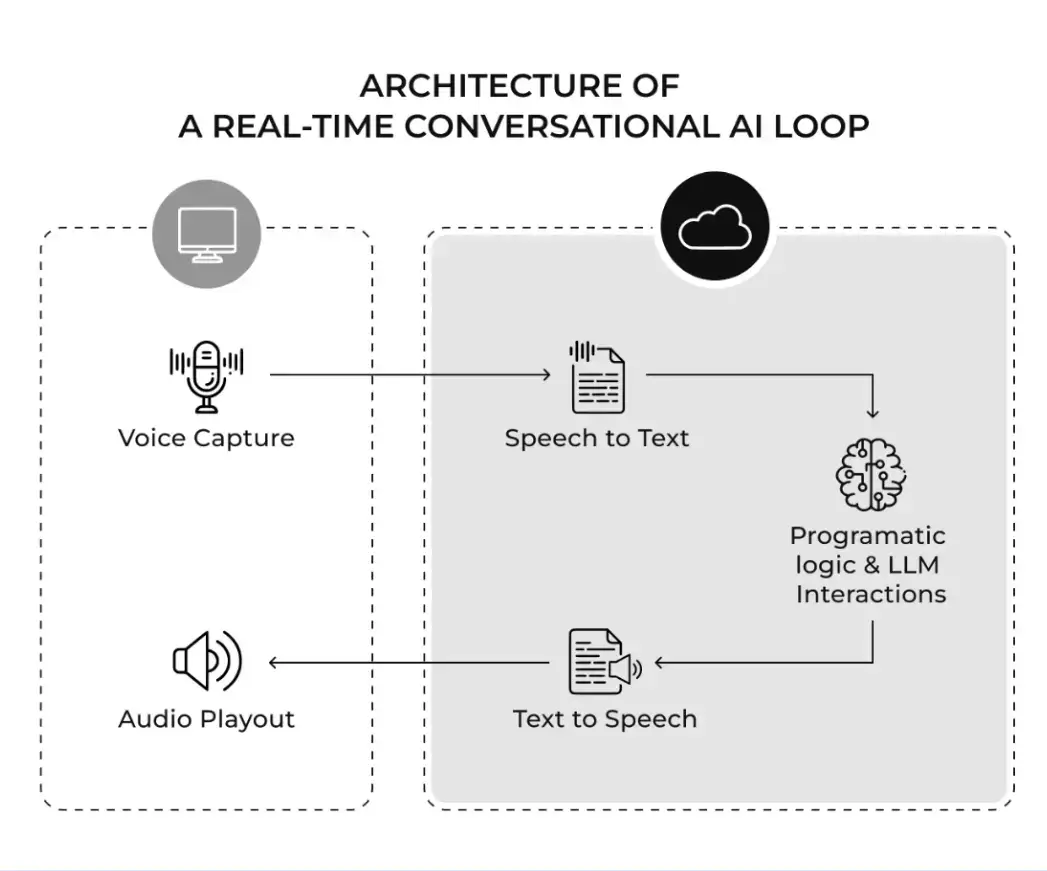
Conversational AI meets that demand by powering live chat widgets, voice search, and even phone support with tools that understand natural language. Chatbots are one of the top AI use cases in e-commerce.
These AI systems can read tone, understand intent, and direct shoppers to the right product, size, or shipping info. If a customer asks, "Do you have this in red in medium?" - a well-trained chatbot can answer instantly.
Many e-commerce businesses already use conversational AI platforms such as Tidio, Chatfuel, or Synthflow to respond to questions, confirm orders, and gather post-purchase feedback without needing a full-time support team.
Document and Text Automation: Turning Messy Data into Insights
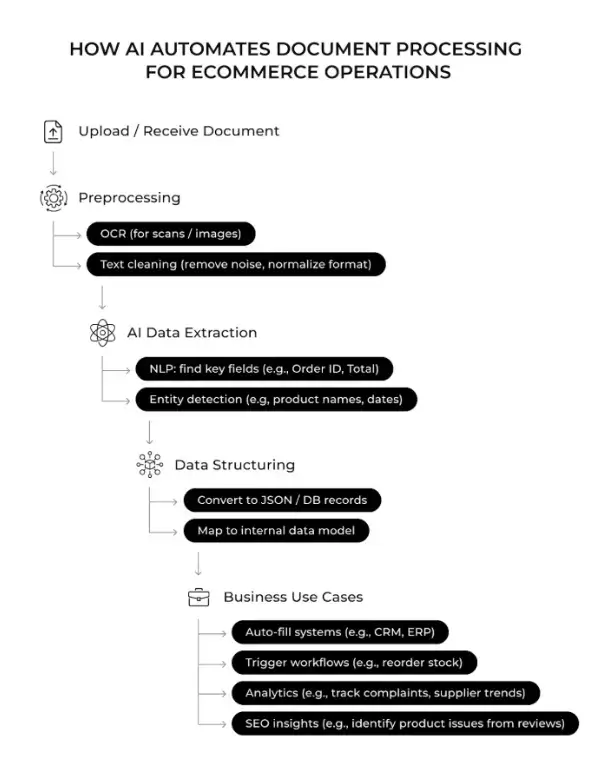
Unstructured documents, such as invoices, supplier forms, or customer reviews, typically require manual review and hours to sort. But AI changes that.
Natural language processing (NLP) and optical character recognition (OCR) tools automatically read and organize this type of content.
For example, they can pull order numbers and totals from a scanned receipt, extract key complaints from long product reviews, or flag unusual requests in support emails.
For small business owners, this technology means faster processing, more thoughtful decisions, and less time copying and pasting.
Whether you need to analyze review sentiment, manage supplier documents, or summarize customer feedback, AI turns messy content into usable e-commerce data.
With the right mix of structured and unstructured data analysis tools, even solo store owners can tap into e-commerce intelligence that enterprise-level brands once reserved for themselves.
Integrating AI into Your Existing E-Commerce Ecosystem
Adding AI to your e-commerce store doesn't mean tearing everything down and starting over.
Many small businesses are already using AI without realizing it through e-commerce analytics platforms, automated emails, or smart product recommendations.
Most modern AI e-commerce platforms, such as Shopify, WooCommerce, and BigCommerce, now support apps and integrations that bring AI features into your workflow.
These outlets usually include tools for personalized product recommendations, predictive search, or e-commerce marketing analytics that suggest the best time to send a promotion.
You don't need to hire a data scientist or build custom code to get started.
Artificial intelligence shopping tools often integrate directly with your existing stack. For example, adding an AI-powered chatbot can take minutes, and it'll begin answering questions while you focus on orders.
The key is to choose tools that work with your current setup and address the problems you face daily, such as abandoned carts, slow customer responses, or hard-to-track sales trends.
AI in B2B e-commerce is saving time and making smarter decisions using what you already have.
“The real impact of AI in e-commerce comes from solving specific, high-friction problems — not from flashy demos,” notes Roberto Álvarez Ceballos, Director at UST España & Latam.
Real-Time Analytics for Better Decision-Making
Knowing what's happening in your store right now, not last week, is a huge advantage.
Real-time analytics in e-commerce helps you spot trends, resolve issues quickly, and respond to customer behavior in real time. With AI, this e-commerce analysis goes far beyond tracking page views.
Modern tools can pull together data from multiple sources at once:
- Your website;
- Payment platform;
- Inventory system;
- Social channels;
- Customer messages.
AI then scans that structured and unstructured data to spot patterns you'd miss on your own.
For example, AI can link a spike in product returns to a specific size or material mentioned in customer reviews and catch that early.
Or if more shoppers from a particular region are viewing your items but not buying, it can flag that in real time, giving you a chance to adjust pricing, availability, or marketing before sales slip.
Whether you want to track which campaign is driving the most checkouts or monitor inventory risk across suppliers, AI-powered e-commerce analytics tools help you act faster and smarter.
Even better, many of these platforms are well-suited for small businesses.
You don't need to be a data expert to read the signals. Tools like Glew, Triple Whale, and Google Analytics 4 with AI support can surface insights in plain language and help you make calls that move your store forward.
Challenges & Considerations When Using AI in E-Commerce
Artificial intelligence in e-commerce can save time and boost sales, but it's not a magic switch. Like any tool, it works best when you know its limits and set it up right.
For small businesses, it's especially wise to go in with clear goals and a few things in mind.
1. Data Quality Matters for Effective AI Analytics
If your product descriptions are inconsistent, your reviews are unorganized, or you have missing inventory fields, AI may struggle to make sense of this information. Garbage in, garbage out.
Before using any AI e-commerce business platform or analytics tool, take time to clean up your data. Even small changes, such as standardizing how sizes or colors are labeled, can improve your results.
2. Compatibility Issues: Not All AI Tools Work Well Together
Many platforms offer AI features, but not every tool connects smoothly with your existing systems. Before choosing e-commerce AI solutions, check which platforms they support. You'll save yourself hours of setup and troubleshooting later.
3. Limitations of AI: Ensuring Human Oversight
Machine learning in e-commerce learns from patterns, but it can be confused by outliers, sarcasm in reviews, or sudden shifts such as a viral product.
Always keep a human eye on the output, especially if it affects pricing, customer communication, or inventory decisions.
4. Managing Unstructured Data Takes Time & Patience
Analyzing product images, voice notes, or chat logs is powerful, but unstructured AI data-discovery tools may require training to be accurate. Look for platforms with unstructured data management tools and feedback loops that enable the AI to improve over time.
5. Ensuring Privacy & Trust with AI Tools
If you're collecting and analyzing customer data, ensure your tools comply with privacy laws such as GDPR and CCPA. Be clear with your shoppers about what data you collect and how it helps improve their experience.
AI applications in e-commerce grow deeper and broader, but this technology doesn't replace people. It helps them do more with less effort.
When used thoughtfully, it can give small e-commerce stores the kind of edge that once required a large team and a large budget. But to get real value, you'll want to pick tools that solve problems you actually face and fit into your daily workflow.
Ginni Rometty, former CEO of IBM, has said: “AI will not replace humans, but those who use AI will replace those who don’t.”
Conclusion: Harnessing AI to Boost E-Commerce Efficiency
You no longer need to be a large retailer with deep pockets to use AI in your online shopping operations.
From smart chatbots to real-time e-commerce data analytics, AI enables small business owners to run faster, respond more quickly, and sell more without increasing their workload.
Even if your data is mostly unstructured, including content such as reviews and photos, AI can help turn that information into actionable insights that improve your e-commerce web analytics and, ultimately, your store.
You can offer personalized shopping, spot product issues early, or understand customer behavior as it changes, not after it's too late.
As with any new technology, the key is to start small with tools that make sense for your current setup.
Whether that's adding a product recommendation engine, automating email replies, or tracking live inventory performance, you don't have to do everything at once to see results.
If you don't know how to use AI in e-commerce, or if you're not sure where to start, or if the tech side feels overwhelming, there are AI development teams that can help small business owners build practical e-commerce AI tools without needing to be tech experts.
Whatever your needs, the right support can make AI much more accessible.
FAQs
1. How can AI improve my online store’s operations?
AI can automate a variety of tasks, including inventory management, customer service, product recommendations, and pricing adjustments.
AI-powered tools can also analyze real-time customer data to identify trends, optimize product visibility, and quickly detect potential issues.
2. What types of data does AI in e-commerce work with?
AI in e-commerce can process both structured data (like spreadsheets with sales and inventory details) and unstructured data (such as product images, customer reviews, and chat transcripts).
AI helps turn both types of data into valuable insights that can enhance your business strategy.
3. Is AI in e-commerce affordable for small businesses?
Yes, AI technology has become increasingly accessible for small businesses. Many AI tools are available as plug-ins or apps for popular e-commerce platforms.

Author Bio
Nataliia Shpitula is a marketing expert who currently leads the marketing team at SapientPro and is actively exploring the AI industry.