

Search is evolving rapidly. We're quickly entering the era of Generative Engine Optimization (GEO), a new generation of SEO specifically designed for the AI-first search engines powered by large language models (LLMs).
The common experience of asking Google or ChatGPT a question and receiving a concise, AI-driven summary, often without needing to open a single link, is transforming the search landscape and the very foundations of conventional SEO.
As Larry Page, Co-founder of Google, once said:
By March 2025, an incredible 58–60% of U.S. and EU searches will end as zero-click moments, where users get their information directly from the search results without visiting an external website. Globally, the figure will be as much as 65%.
Meanwhile, a staggering 80% of consumers reportedly utilize zero-click results for 40% or more of their searches, a trend which has already reduced organic visits to sites by 15–25%.
These foundational changes are not fad trends; they are the future. GEO isn't about ranking in the top ten of the traditional "blue links" anymore; it's about having your content linked, summarized, and featured by AI.
What is Generative Engine Optimization?
Generative Engine Optimization (GEO) is the process of strategically fine-tuning web content to appeal predominantly to AI engines—such as Google’s Gemini, ChatGPT, Anthropic’s Claude, and Perplexity—rather than focusing solely on human visitors.
Partnering with the Best SEO Outsourcing Company can ensure your GEO strategy maximizes visibility in AI-driven search results.
The key building blocks of a good GEO strategy are:
- Machine-Readable Structure: Using readable HTML markup, schemas, and structured data to facilitate AI comprehension.
- Concise, Semantically Rich Answers: Producing direct and precise answers to common queries.
- Citation-Friendly Content: Producing well-sourced and trusted sources that AI models can safely cite.
- Quick Load Times and Clean User Experience: Critical for effective AI crawling as well as optimal human user experience. Then create a banner through AI to generate clean, fast-loading visuals that enhance UX and appeal to AI systems.
- Conversational Tone: Writing well-crafted, human-sounding text that can scale well across varying contexts, a quality highly desired by AI.
Thanks to GEO, websites aren't just ranking competitors anymore, but valuable knowledge hubs that LLMs build upon and readily quote, moving beyond the classic dream of ranking number one in Google.
Implementing AI SEO services can help optimize your site structure, content, and metadata in ways that both search engines and AI models understand, ensuring greater visibility and stronger citation potential.
Combining these optimizations with effective Search Engine Positioning strategies ensures your website ranks higher for targeted queries, attracting more qualified traffic and improving overall online authority.
Why GEO Matters—The Data Speaks
The necessity of embracing GEO is cogently supported by persuasive data:
1. Zero-Click Takes Over
- In the U.S., an incredible 58.5% of searches no longer result in any clicks.
- Globally, 65% of Google searches generate no clicks, with this figure hitting up to 75% on mobile.
- These shifts in search patterns strongly suggest that the majority of users prefer receiving direct answers over manually entering external web addresses.
2. AI Search Capture
- Approximately 80% of consumers now use zero-click answers for a minimum of 40% of queries, resulting in a 15–25% drop in organic website traffic.
- Overviews created by Google's own AI indicated an extreme top-result Click-Through Rate (CTR) drop from 7.3% to a mere 2.6% within one year.
3. Enterprise & Marketer Adoption
- A staggering 78% of businesses are now utilizing AI in at least one aspect of business, a critical increase from 55% in 2023.
- Generative AI software has become central to operations, with 63% focused on text generation, 34% on code, and over 33% on image generation.
- In the marketing industry alone, 74% of professionals use AI, with many automating outreach as part of their GEO strategy.
GEO isn't just a concept; it's a real reaction to actual, observable changes in user behavior and strategic investment across industries.
How LLMs View and Utilize Content
Successful GEO requires understanding the processes by which LLMs and AI search engines process and utilize content:
- Structured Snippets: To correctly represent common query patterns, LLMs have increasingly relied on structured snippets, such as FAQs, How-To instructions, and Schema.org markup.
- Contextual AI Summary Extraction: The reliance on contextual AI summary extraction is demonstrated by updates like Google's AI Mode and Overviews, introduced in 2024–2025.
- Citation Integrity: Users' trust in AI-generated content is naturally linked to citable sources. However, studies indicate that only 51.5% of constructed sentences are fully supported by their corresponding citations.
- Conversational Tone: As seen in Gemini, ChatGPT, and Perplexity, AI models demonstrate a clear preference for human-like phrasing and natural dialogue.
- Relevance to AI-Driven Domains: Industries integrating AI-driven methodologies like AI Driven Test Automation in software development are already seeing performance benefits by aligning content with AI-friendly formats.
Learning these mechanics is key to creating content that AI will readily pick, summarize, and quote.
GEO vs. Classic SEO

Although GEO includes much of classic SEO, it fundamentally reverses priorities:
| Feature | Classic SEO | GEO |
| Objective | Ranking in Top 10 | Topical relevance & citations |
| Focus on users | Human readers | AI summarizers & LLMs |
| Form | Keyword-dense pages | Structured Q&A blocks, JSON-LD |
| Tone | SEO-optimized writing | Clarity in dialogue |
| Performance | Keyword use, backlinks | Crawlability, speed, accuracy |
GEO effectively turns the priority around: by providing AI with first priority, you thereby serve human readers in the new search environment.
GEO Best Practices
To implement a solid GEO strategy, use the following foundational best practices:
1. Implement Rich Markup
- Utilize FAQ, HowTo, and QAPage schema types for direct AI extraction.
- Ensure product information and ratings are easily labeled for AI readability.
2. Develop Topic Authority
- Treat topics in-depth with definitions, comparisons, and case studies.
- Strategically link related content to reinforce overall authority.
3. Optimize Snippets
- Create concise answers, ideally 40–60 words long.
- Use subheadings that mirror common AI queries.
4. Speed Matters
- GEO crawlers reward fast load times; quick pages earn more attention.
5. Trust & Verifiability
- Always reference credible, verifiable sources to earn AI trust.
6. Write Conversationally
- Adopt a casual, natural tone with rhetorical questions when appropriate.
- Avoid robotic or keyword-stuffed “SEO-speak.”
GEO in Action: Case Studies
The impact of GEO is already evident in real-life cases:
News Sites Under Pressure
Following the introduction of AI Overviews by Google in May 2024, 37 of the top 50 news sites experienced traffic declines of 17–40%, with Forbes and HuffPost losing around 40% of their traffic.
Brands Betting on GEO
Retail and service brands are leveraging tools like Brandtech's "Share of Model" to optimize their presence in AI summaries. Back Market reported a 470-fold increase in AI search traffic since summer 2024, directly from GEO-optimized conversational copy.
GEO’s Barriers & Opportunities
1. Challenges in GEO
- LLM Hallucination Risk: Highlight uncertainty where necessary to avoid misinformation.
- Citability Depends on Scholarly Trust: Only ~50% of AI citations are accurate.
- Shifting Search Metrics: CTR and position lose relevance; new metrics are needed.
2. Opportunities in GEO
- Zero-Click Visibility: Reach users where engagement truly happens.
- Trusted Information: Build brand credibility as an authoritative AI-cited source with the help of generative engine optimization services that ensure your content aligns with AI trust signals.
- Structured Data for Prompt Engineering: Use structured data to fuel context engineering and AI-driven interfaces.
What the Future Holds for GEO
- AI Summaries Replace Search Results: By 2025, AI summaries will dominate user behavior.
- AI-Accessible Knowledge Graphs: Structured graphs will feed LLMs directly.
- Commercial Integration: Sponsored prompts and AI-embedded shopping will rise.
- New SEO Metrics: “Share of Model” will become the new visibility measure.
- Ethical & Regulatory Shifts: Expect mandated disclosure of AI citations.
GEO Implementation Plan (90-Day Guide)
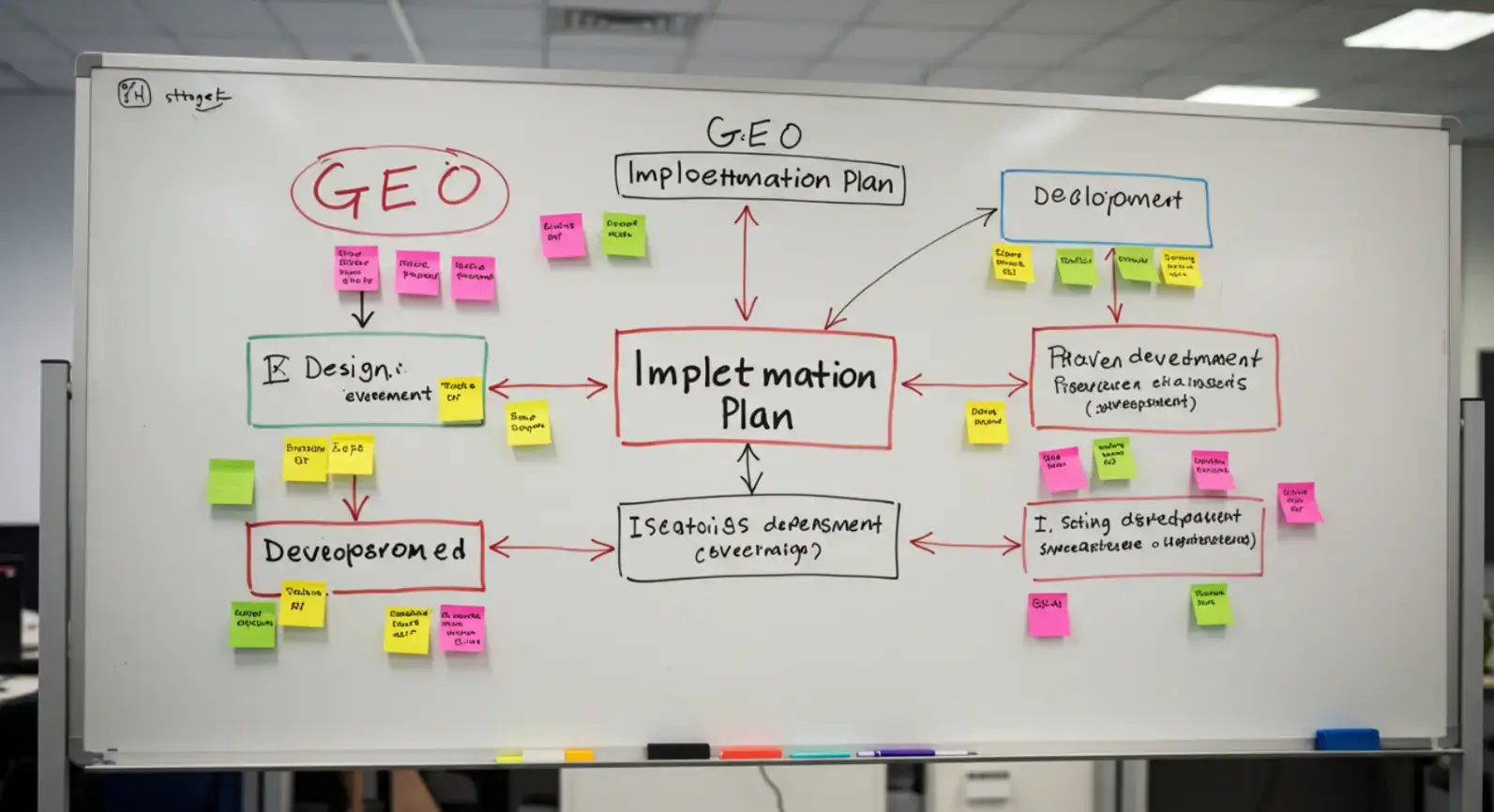
Month 1: Audit & Structure
- Identify high-traffic zero-click queries.
- Spot content gaps and add structured markup to FAQs.
Month 2: Optimization & Authority
- Expand topical authority and create Q&A-style sections.
- Prioritize page speed and mobile usability.
Month 3: Monitor & Iterate
- Track AI citations using Ahrefs Brand Radar, Brandtech, or Profound.
- Monitor AI and SERP visibility for mentions.
- Continuously optimize for accuracy and clarity.
With over 60% of searches now being zero-click, brands must optimize for LLM consumption to stay visible.
By aggressively adopting GEO, you'll keep your brand top of mind and future-ready in the AI-first search era.
Conclusion: Embracing GEO for the Future of SEO
Generative Engine Optimization (GEO) is not just an evolution—it’s a revolution. As AI-driven summaries and zero-click results dominate, GEO helps brands adapt by creating structured, conversational, and authoritative content.
By embracing GEO, you're positioning your brand at the forefront of search's future—where visibility is defined by AI recognition, not clicks.
With structured data, strong topical authority, and a clear tone, your brand can thrive in this AI-driven search landscape.
