

A recent report published on Gitnux highlighted a startling fact - the average First Response Time (FRT) for customer support across all industries is about 12 hours.
In other words, it takes businesses nearly half a day to respond to customer questions.
This is inexcusable if you operate a digital business, especially an e-commerce business.
In this article:
- How E-commerce Customer Support Has Evolved (2020-2026)
- 5 Best Practices for E-commerce Customer Support in 2026
- Best E-commerce Customer Support Tools in 2026
The wide range of tools and services available today enables online stores to run efficient customer support programs that build customer trust and loyalty while ensuring high satisfaction.
E-commerce customer support has come a long way in the past ten years, and in this article, let’s look at how you should operate this part of your business in 2026.
Why Customer Support Is a Competitive Advantage in E-commerce
Delivering support that customers enjoy and value is one of the key ways small eCommerce stores can differentiate themselves from larger competitors.
In its absence, customers don’t have many incentives to move away from their trusted ecosystems, such as Amazon or Walmart.
The average eCommerce store makes less than a million dollars in revenue. These are businesses that compete with the likes of Amazon and Walmart, which clock several billion dollars in revenue each year.
Prolific customer support is one of the key levers that small eCommerce stores have against their larger competitors.
E-commerce behemoths like Amazon have “systems” and “processes” that help when running such large enterprises. However, these systems are optimized for scale and inevitably contribute to bottlenecks and inefficiencies.
Small eCommerce stores have none of these constraints. These businesses can service customers on the platform of their choosing. They can go the extra mile to ensure customers are happy.
For these businesses, individual customers are more than merely data points contributing to the overall NPS or CSAT scores.
How E-commerce Customer Support Has Evolved (2020-2026)
The past few years have seen the rise of automation, Gen AI, and agentic AI tools. This has completely overhauled the way customer support operates.
Your buyers no longer have to waste time on hold with customer service because they can choose to get their questions answered with a chatbot instead.
Agentic AI tools in the backend could check on customer history and answer questions without human intervention.
These factors make customer support extremely efficient and cost-effective, driving many eCommerce businesses to adopt an AI-first customer support strategy.
Many eCommerce brands are also extending AI into their marketing workflows using tools like Predis.AI to quickly create and test ad creatives while their support teams focus on improving the customer experience.
But an AI-first customer support strategy isn't always a good idea, especially in e-commerce.
While it is true that AI can perform many customer support tasks as efficiently as a human agent, numerous studies have shown that customers prefer speaking with humans over machines when seeking support.
A true balance between AI and human agents is thus necessary to deliver exceptional eCommerce customer support.
5 Best Practices for E-commerce Customer Support in 2026
1. Use AI as an Assistant, Not a Replacement
The use of agentic AI and Generative AI can be good or bad, depending on how you incorporate them into your eCommerce customer support strategy.
An effective alternative would be to let AI complement your human agents in areas where they lack. For instance, you could deploy AI customer support selectively during holidays and off-business hours when human agents are unavailable.
Or, you could segment incoming requests by category (order status, onboarding questions, etc.) and use AI selectively for categories where it performs faster than humans.
2. Build a True Omnichannel Support System
Your customers are not all the same.
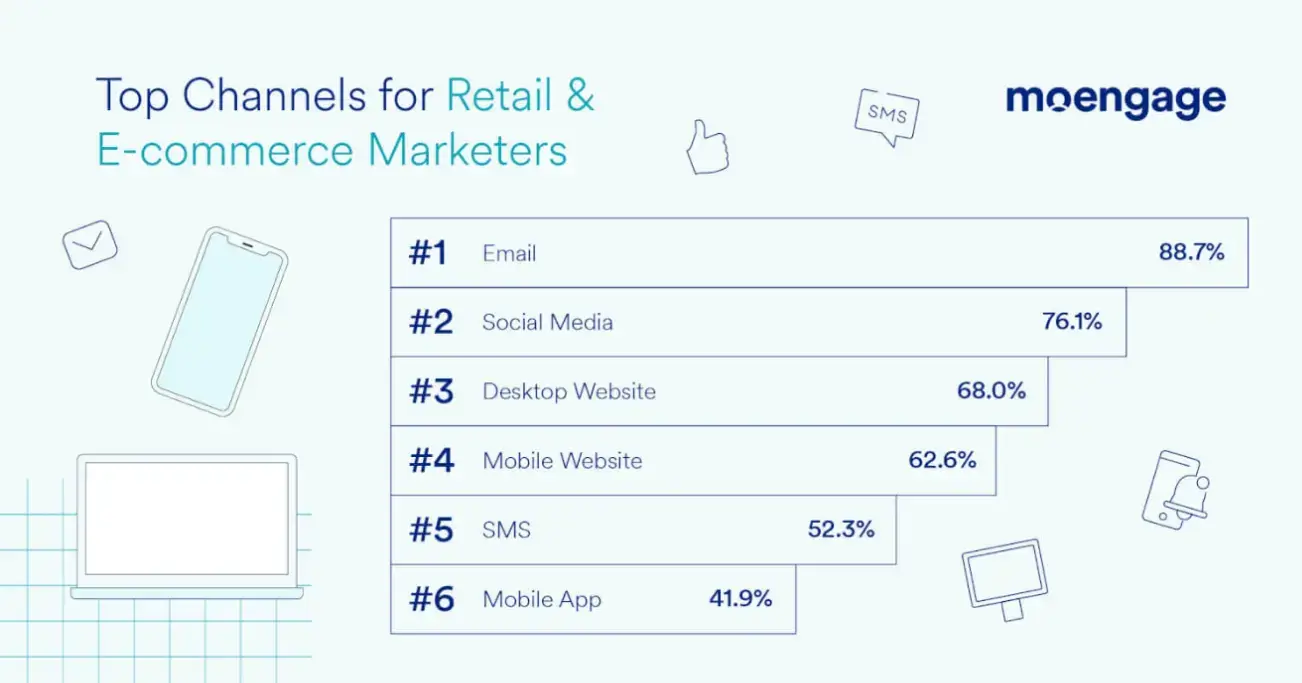
Some prefer shopping on their mobile devices, while others prefer desktops. Some prefer WhatsApp, while others prefer email. Some like to talk while others prefer to type.
Source: MoEngage
There is no single channel that works for all your customers. A truly omnichannel support experience is not just about opening up multiple channels of communication with your customer.
It’s about synchronizing these conversations and bringing them under one umbrella so customers can seamlessly interact with the support team across multiple channels based on their preferences.
3. Offer Instant Self-Service (FAQs, Chatbots, Portals)
Speaking to a human agent is nice, but it is not always necessary. Even before the proliferation of AI tools, customer support agents have used features like canned responses, knowledge bases, and forums to help customers get faster responses.
In e-commerce, a large share of customer support questions come from buyers who want to track their order, submit a replacement request, or ask product-related questions.
Such questions can also be handled by AI agents that access relevant databases to retrieve the correct answer.
4. Implement Smart Ticket Routing & Automation
One of the key drivers to building a happy customer base for your eCommerce business is the response time.
Several studies have shown in the past that quick response and resolution times help build credibility and turn one-time shoppers into your online store's loyalists.
Smart automation and routing systems can help you achieve this. These tools can route each new ticket automatically to the right decision maker. Tickets that can be answered with AI are routed to your AI agents.
These systems can also flag high-priority tickets smartly without waiting for a human interceptor. These applications analyze each ticket's content and assign a hierarchical tag based on its criticality.
A fraudulent order, for example, would rank above a replacement request, for example, which would in turn rank above generic product queries.
5. Reduce Support Volume With Better UX & Site Design
Many customer support tickets are actually caused by poor website design rather than product issues.
Confusing navigation, unclear product pages, or complicated checkout processes often leave customers with questions that could have been avoided with better user experience design.
Clear product descriptions, intuitive menus, and transparent checkout steps can significantly reduce the volume of incoming support requests.
When customers can easily navigate a store and find the information they need, support teams can focus on resolving complex issues instead of answering basic queries.
Ultimately, combining strong customer support systems with an intuitive website experience creates a smoother shopping journey and improves long-term customer loyalty.
Best E-commerce Customer Support Tools in 2026
Jitbit
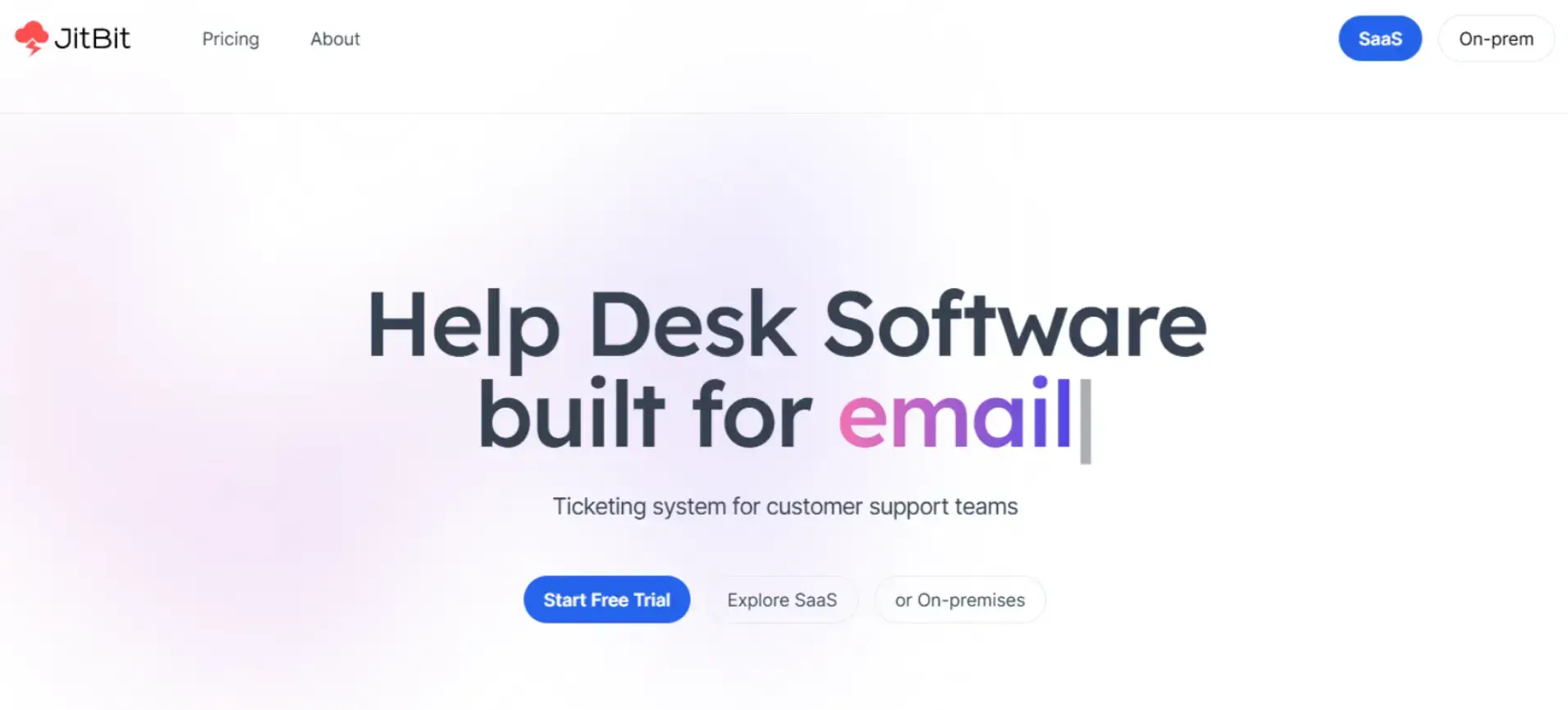
Jitbit is an email-focused ticketing system that also supports multiple support channels, including live chat, support widgets, WhatsApp, a knowledge base, and forums.
Source: Jitbit
Key features:
- Powerful “If this, then that” type automation engine.
- ChatGPT and AI integration to summarize tickets, suggest personalized responses, automate routing, etc.
- Role-based user permissions and access control
- Integration with tools like Slack, Jira, Zapier, and Google Drive for true omnichannel support
- Multiple-language support for eCommerce stores across the world
- Live dashboard and advanced reporting tools
G2 rating: 4.3/5
SparrowDesk
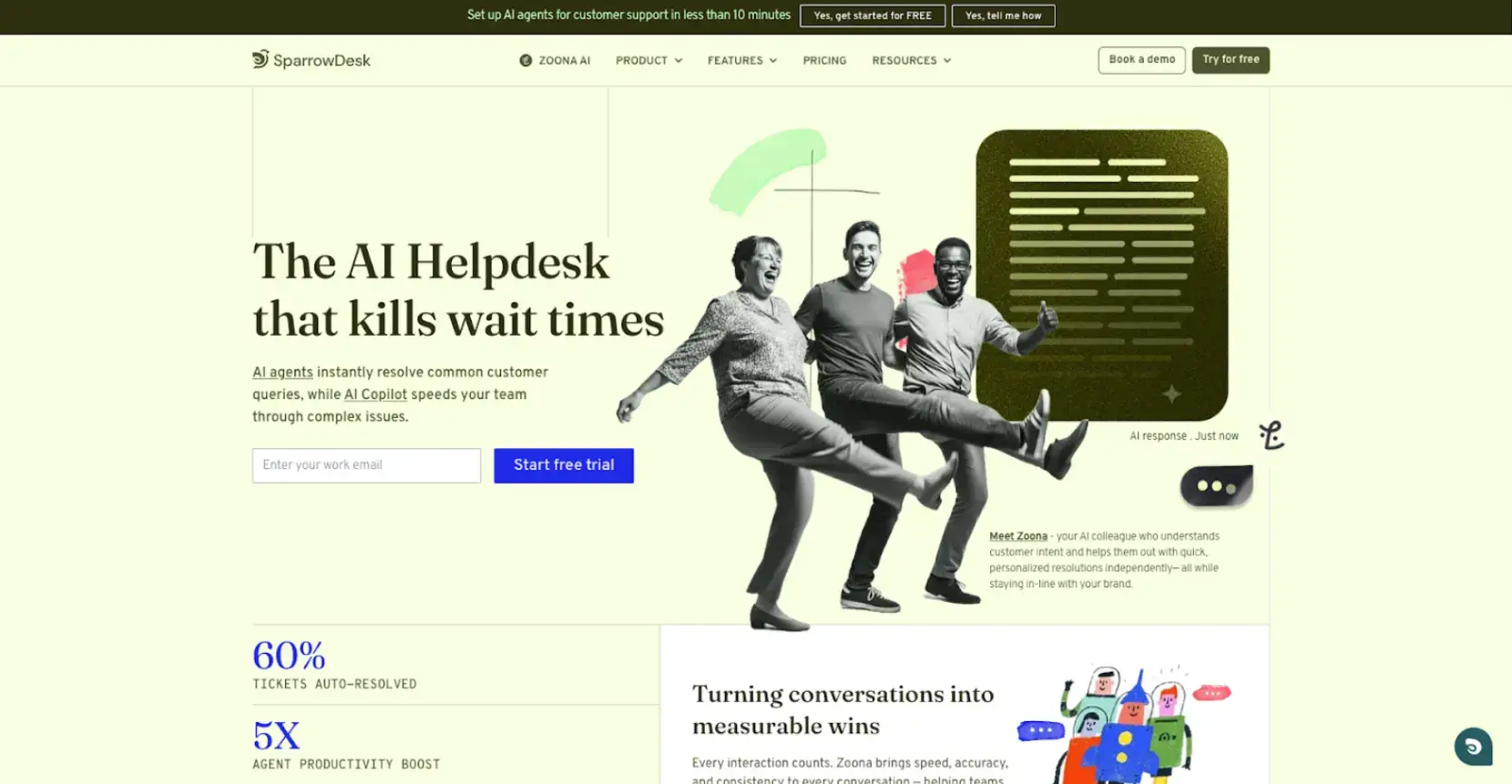
SparrowDesk is an AI-first help desk and ticketing platform that centralizes customer emails, live chat, and other channels into a single shared inbox, so support teams never miss a conversation.
It’s built for modern teams that want automation and AI assistance without adding complexity to their day-to-day workflows.
Key features:
- Unified ticketing inbox for email and live chat with clear ownership, internal notes, and collaboration tools
- AI agents that auto-resolve common questions, plus an AI Copilot that summarizes conversations and suggests on-brand replies
- Powerful rule-based automation for routing, SLAs, business hours, tagging, and escalations
- Built-in knowledge base and customer portal for self-service and ticket deflection
- Role-based access control, custom views, and multi-brand support for growing teams
- Real-time dashboards and reporting on response times, resolution rates, and agent performance
G2 rating: 4.4/5
FlippingBook
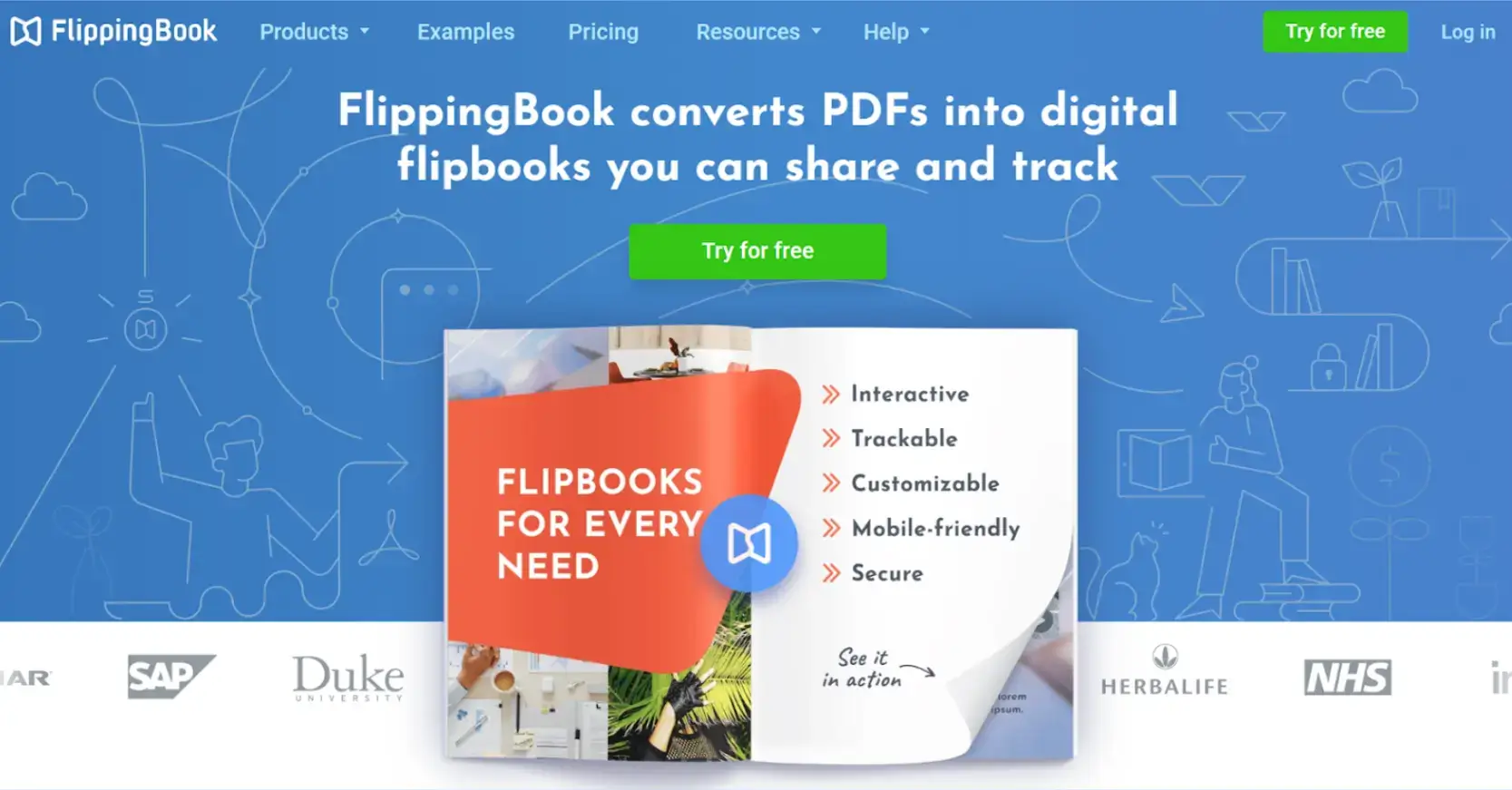
FlippingBook is an online tool that converts PDFs into digital flipbooks that you can share and track. It’s very useful in eCommerce customer support, especially for sales inquiries.
With FlippingBook, customer support teams can share a curated product catalog that meets specific requirements.
Key features:
- Interactive catalog maker with videos, clickable links, and detailed pop-up images
- Trackable links to measure customer engagement
- Zapier-based integration with all major support platforms, including Jitbit, Zendesk, Freshdesk, Intercom, Zoho, etc.
- Mobile-friendly catalog generation
G2 rating: 4.7/5
Conclusion: The Future of E-commerce Support Is Hybrid
The customer support function has typically been reactive. But with modern automation and AI-based tools, this has transformed into a more proactive and personalized experience.
While AI and automation have definitely helped scale up customer support in eCommerce, it is still important to combine them with human agents who can handle complex emotional customer interactions.
Modern eCommerce customer support is not about replacing human agents with bots. Instead, it is about empowering teams with the right tools to deliver more meaningful customer interactions and resolutions.
FAQ: E-commerce Customer Support in 2026
1. Why is customer support important for e-commerce in 2026?
Large eCommerce businesses like Amazon rely on systems and processes. For smaller online stores, customer support is a key differentiator, enabling them to provide personalized, flexible support to their customers.
2. What is the best way to use AI in customer support?
AI should be used selectively to improve the efficiency of certain processes. They need to complement human support staff by handling inquiries during off-hours or by processing repetitive tasks such as order handling or ticket categorization.
3. How can businesses reduce the number of customer support tickets?
Top user experience, including a well-designed website, can ease navigation across your eCommerce store and help customers get most of their questions answered without reaching out to the support team. Self-service tools such as chatbots and knowledge bases can also help reduce the workload on customer support staff.
4. What is omnichannel customer support?
Omnichannel customer support refers to a multi-channel system that delivers support across multiple channels, including email, telephone, live chat, WhatsApp, and other platforms, while keeping conversations synchronized across them.

Author Bio
Anand Srinivasan is the founder of LeadJoint, a cold email outreach agency that has worked with hundreds of small and medium-sized businesses to generate leads.