

Black Friday Cyber Monday (BFCM) has evolved into the most anticipated shopping event globally, presenting a golden opportunity for eCommerce businesses to boost sales and expand their customer base.
BFCM (Black Friday Cyber Monday) is one of the biggest ecommerce sales periods of the year, when businesses offer promotions and discounts to drive traffic, conversions, and revenue.
Understanding what BFCM means and how to prepare effectively for the Black Friday weekend can be the key to your business's success during this critical holiday shopping season.
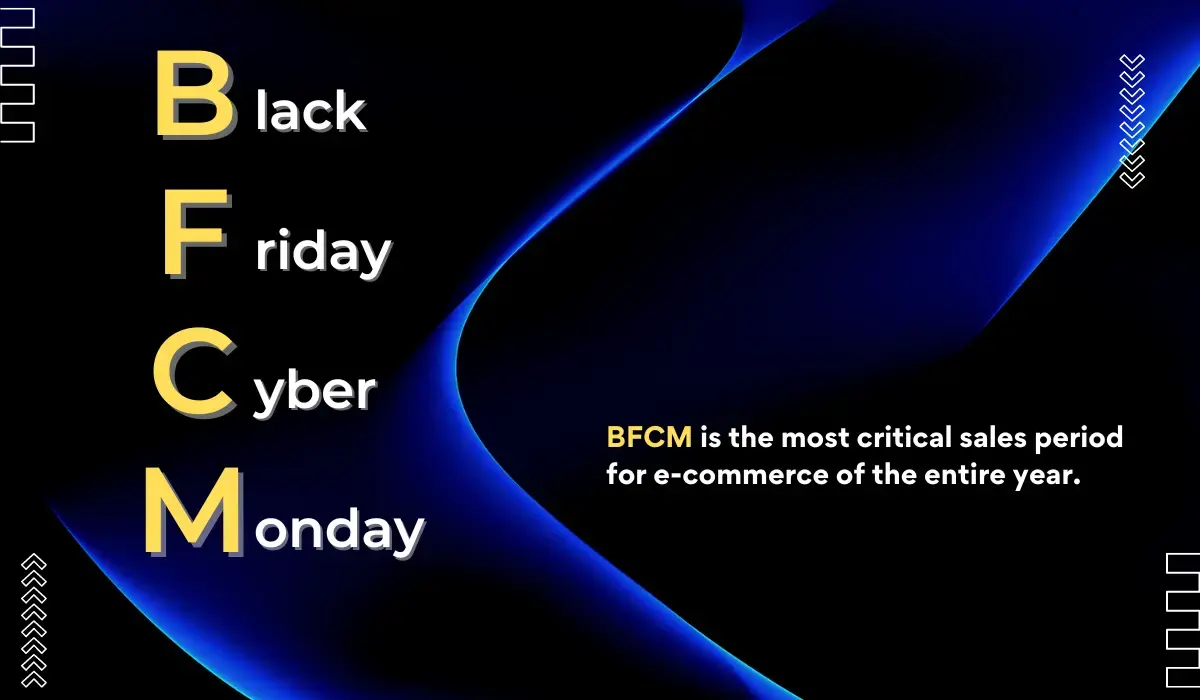
What is BFCM?
Black Friday Cyber Monday (BFCM) refers to the shopping period that begins the Friday after U.S. Thanksgiving and extends through Cyber Monday.
Many brands now run Early Black Friday and Cyber Week promotions, making the event a 10–14-day revenue window for most ecommerce stores.
BFCM 2025 Dates
Friday, November 28 – Monday, December 1, 2025
With early discounting trends, many retailers start promotions as early as mid-November.
During this period, businesses offer:
- discounts and promotions
- limited-time deals
- exclusive product launches
- bundled offers
For many ecommerce businesses, BFCM represents one of the highest revenue-generating periods of the year.
A Brief History: How BFCM Became a Global Shopping Event
Black Friday Origins
Black Friday began as an in-store retail surge in the U.S., historically associated with holiday shopping and steep, doorbuster-style discounts.
Cyber Monday Emerges
As ecommerce took hold, Cyber Monday appeared in 2005 as a way for online stores to compete with brick-and-mortar retailers.
The Merge Into BFCM
By the mid-2010s, the two events converged into a single extended shopping season, fueled by:
- Global ecommerce adoption
- Mobile-first shopping
- Faster shipping and fulfillment
- Increased competition on digital channels
Today, BFCM is a worldwide phenomenon — even in countries that do not celebrate Thanksgiving.
What is the BFCM Meaning?
BFCM stands for Black Friday Cyber Monday, a major shopping event from the Friday after Thanksgiving through the following Monday.
For eCommerce businesses, BFCM represents the most crucial period for driving significant sales and reaching new customers.
The event is synonymous with deep discounts, exclusive BFCM deals, and increased online and in-store traffic.
What BFCM Teaches Us About Urgency-Driven Marketing
Black Friday and Cyber Monday are not successful solely because of discounts. They work because they compress decision-making into a short window and remove the comfort of “I’ll think about it later.”
Urgency-driven marketing succeeds when three psychological triggers align:
1. Time pressure
A clearly defined end date forces action. When shoppers know an offer is about to expire, the cost of waiting becomes tangible.
2. Perceived scarcity
Limited stock, limited bonuses, or limited availability increases perceived value. Even when inventory is not truly scarce, signaling limits help buyers prioritize.
3. Reduced decision friction
During BFCM, brands simplify choices. Fewer product variations, clearer bundles, and stronger recommendations make it easier to say yes quickly.
Businesses that rely only on deep discounts often train customers to wait. Businesses that understand urgency use it to guide behavior, clarify value, and shorten the buying cycle — with or without a holiday attached.
Why BFCM Matters for Your Business
BFCM is more than just a sales event—it is a critical opportunity for growth.
BFCM 2025 is set to be bigger than ever, with consumers increasingly turning to online platforms for deals and holiday shopping.
Here are 3 reasons why BFCM should be a top priority:
Increased sales
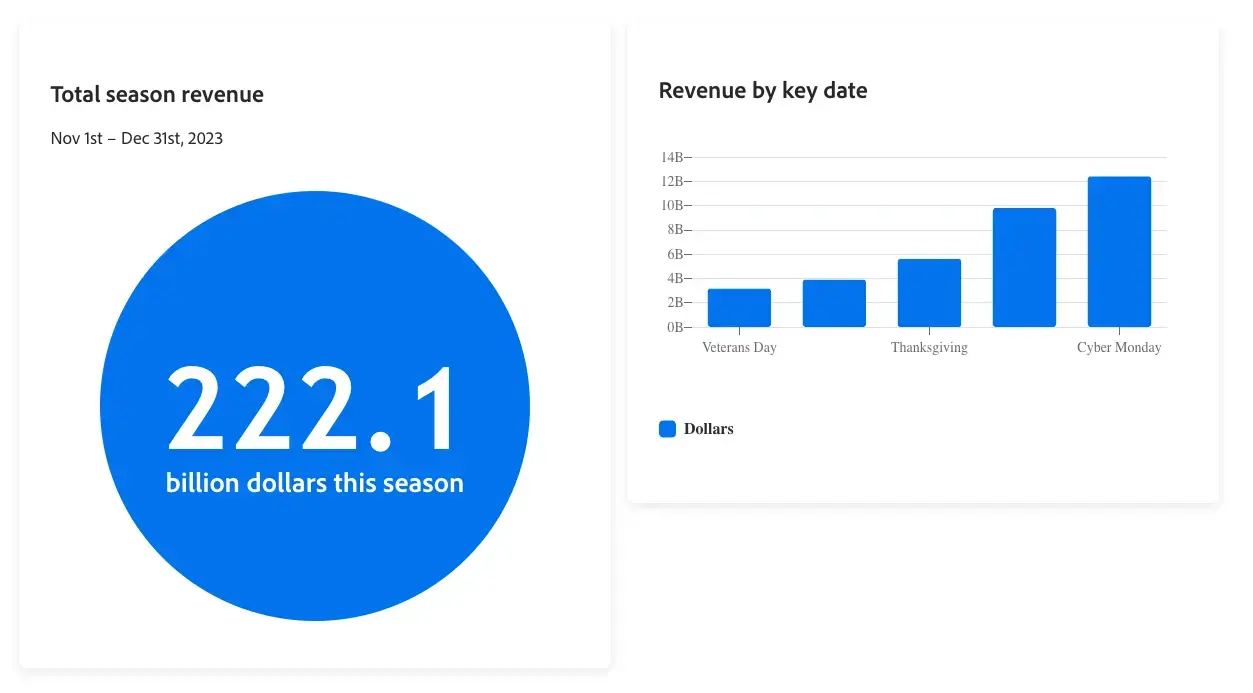
Consumer spending skyrockets during this period, substantially boosting revenue. According to Adobe's 2025 Holiday Shopping Report, total seasonal spending this year is forecast to reach $253.4 billion, with mobile spending accounting for over 56% at $142.7 billion.
Customer acquisition
BFCM provides an excellent opportunity to attract new customers who might not otherwise discover your brand. For example, last year Shopify merchants collected over $11 billion during BFCM last year, up 24% from 2023.
Brand visibility
The high traffic during BFCM can significantly increase your brand's exposure if you implement effective retail marketing strategies.
Inventory movement
BFCM is an opportunity to clear inventory and launch new products.
What Customers Expect During BFCM
Shoppers behave differently during BFCM than at any other time of the year. They move quickly, compare brands side by side, and want reassurance that your business is prepared for the rush.
Here’s what most customers expect to see:
- Clear prices and discounts right on the product page
- Fast checkout that works smoothly on mobile
- Trust signals, like reviews, badges, or guarantees
- Simple return and shipping information
- Easy ways to sign up for VIP deals or early access
Meeting these expectations helps increase conversions and builds trust—especially for customers discovering your brand for the first time.
E-Commerce in BFCM
The rise of eCommerce has transformed Black Friday/Cyber Monday into a digital shopping phenomenon.
While traditional in-store Black Friday crowds remain strong, more shoppers are turning to online channels for BFCM deals.
This shift is driven by convenience, access to a wider variety of products, and the ability to compare prices instantly.
Having an optimized online store is now essential for maximizing BFCM sales.
As BFCM 2025 approaches, every eCommerce store must prioritize strategy and performance to compete effectively.
How to Prepare for BFCM (Simple Step-by-Step Checklist)
To ensure your eCommerce store is ready for BFCM, focus on these essentials:
Optimize your website
Ensure your site can handle increased traffic, load quickly, and provide a seamless checkout process.
Create irresistible deals
Plan your discounts and offers in advance. Exclusive BFCM deals encourage loyalty and conversions.
Develop a strong marketing plan
Build urgency with Black Friday countdown timers, flash sales, and targeted campaigns.
Be active on social media
Use visuals and high-engagement platforms like Instagram. Buy Instagram followers to expand reach and visibility.

Examples of Simple, High-Converting BFCM Campaigns
If you’re not sure what your BFCM promotion should look like, here are a few examples small businesses use successfully every year:
Early Access VIP Sale
Offer your email subscribers 24-hour early access to your BFCM deals. It makes your audience feel valued and helps you grow your list quickly.
Countdown-Powered Flash Deals
Add a countdown timer for daily or weekend-long specials. Customers act faster when they can see the deadline approaching.
Free Gift With Purchase
A bonus item for orders over a certain amount helps boost your average order value without heavily discounting your main products.
Bundle-and-Save Offer
Package best-selling items into a discounted bundle. It’s simple for customers and increases the size of every sale.
These types of campaigns are easy to run and work well even if you only have a few products or a small marketing budget.
BFCM Strategies for Small Businesses
Small businesses can compete effectively during BFCM by offering unique products and personalized services.
Start promotions early
Build anticipation with pre-BFCM deals.
Use retargeting ads
Keep potential customers engaged with follow-up promotions.
Create an email campaign
Send personalized emails featuring your best offers as part of a Cyber Monday marketing strategy.
BFCM Marketing: Beyond Sales
While sales are the primary focus, don’t overlook the long-term benefits of a well-designed Black Friday marketing strategy:
Customer insights
Gather valuable data for future campaigns.
Personalization
Use BFCM data to create more targeted, engaging messages year-round.
Why BFCM 2025 Will Break Records
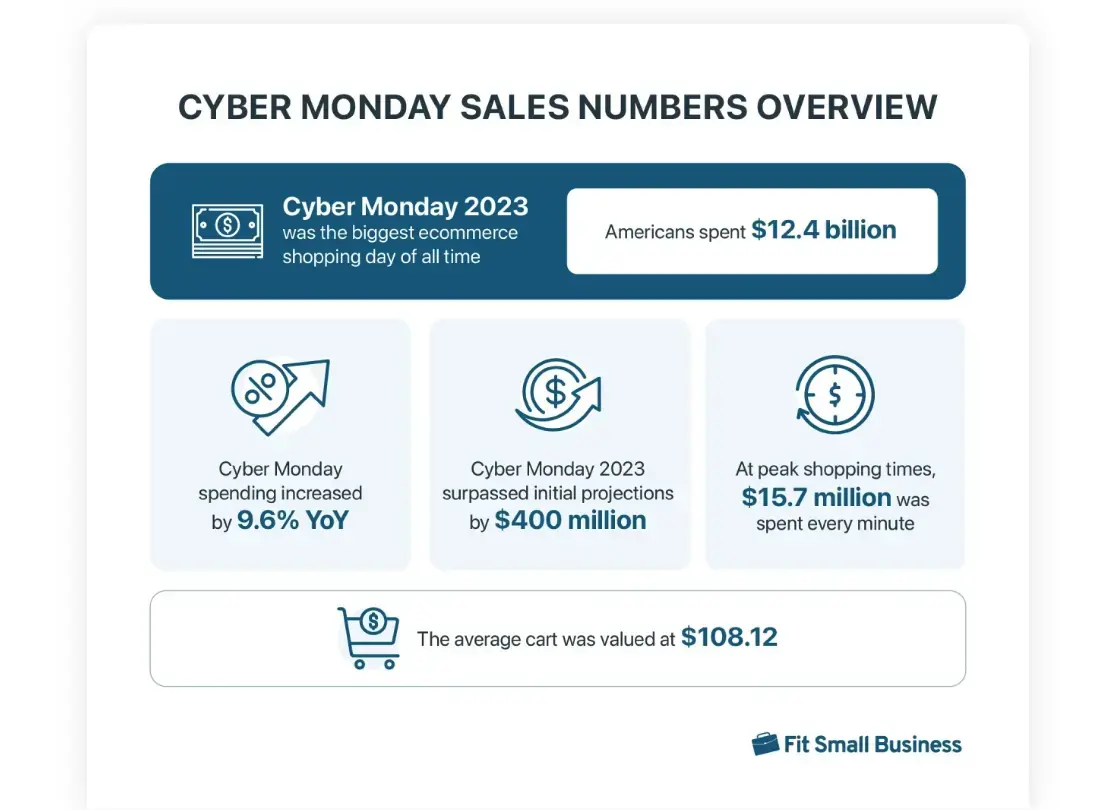
Source: Fit Small Business
BFCM 2025 is expected to surpass previous years in both in-store and online sales.
- In 2024, 81.7 million people shopped in-store, and a record 87.3 million shopped online.
- The total BFCM period last year exceeded expectations and expert forecasting by 5.5%, and this year is poised for another 10.2% jump.
BFCM Preparation Checklist
Before BFCM
- plan promotions and discounts
- prepare marketing campaigns
- test website performance
- set up email sequences
During BFCM
- monitor sales and traffic
- adjust campaigns in real time
- respond to customer inquiries
After BFCM
- follow up with customers
- analyze performance
- optimize future campaigns
Common BFCM Mistakes to Avoid
Many stores damage their profitability by planning poorly. Watch out for:
Over-discounting
Protect margins by calculating minimum viable pricing.
Inventory Mismanagement
Running out of stock early or overselling creates support load and negative reviews.
Website Crashes
Prepare hosting and test capacity.
Poor Fulfillment Planning
Shipping delays can destroy post-BFCM customer satisfaction.
Ignoring Post-Purchase Upsells
A huge amount of revenue potential is lost without:
- Thank-you page offers
- Email upsells
- Replenishment reminders
Global BFCM Considerations
If you sell outside the U.S., consider:
Local Payment Methods
European and LATAM shoppers often use region-specific payment solutions.
Shipping & Tax
Set earlier cutoff dates for international deliveries.
Multi-Currency Pricing
Use rounded, localized pricing to increase trust.
Time Zone Scheduling
Launch campaigns in regional waves, not only in U.S. time.
Using BFCM Tactics Outside November
Urgency is not exclusive to Black Friday. The same mechanics can be applied throughout the year when they are tied to meaningful moments.
Here are common ways businesses successfully use BFCM-style tactics year-round:
Product launches
New products naturally create urgency. Early-access pricing, launch bonuses, or limited first-run inventory give customers a reason to act now instead of later.
Seasonal transitions
End-of-season sales, service renewals, or upcoming schedule changes (pricing updates, feature changes, availability windows) create legitimate deadlines.
Milestone-based offers
Anniversaries, customer milestones, or usage thresholds allow urgency without discounts. Examples include:
- “48 hours to upgrade before your plan resets.”
- “Bonus expires after your first 100 signups.”
Behavior-based urgency
Instead of fixed dates, trigger urgency based on actions:
- Cart abandonment
- Returning visitors
- High-intent page views
This approach keeps urgency relevant and personal, rather than calendar-driven.
When urgency is contextual, it feels helpful — not pushy.
How POWR Tools Support a High-Converting BFCM
POWR apps can help merchants convert more traffic during peak shopping periods.
Use POWR to:
- Capture leads (Forms, Popups)
- Build urgency (Countdown Timer)
- Increase AOV (Product Add-Ons, Upsells)
- Improve trust (Reviews, Comment)
- Reduce abandonment (Exit-Intent Popups)
Add these to your store at least 2–4 weeks before BFCM.
BFCM vs. Cyber Monday: What’s the Difference?
Black Friday and Cyber Monday are often discussed together, but shoppers behave a little differently on each day. Understanding the difference helps you plan stronger, more intentional promotions.
| Category | Black Friday | Cyber Monday |
|---|---|---|
| Shopper behavior | Shops in-store + online | Mainly online |
| Typical discounts | Bigger, short-term offers | More variety, often smaller amounts |
| Best-selling items | Physical products | Digital items + services |
| Marketing style | Urgency + limited drops | Email/SMS-focused reminders |
| Best for small brands | Flash sales, bundles | Last-chance offers, exclusive discounts |
Most small businesses benefit from running simpler deals on Black Friday and email-driven offers on Cyber Monday.
Simple BFCM Glossary for Small Businesses
A few quick terms that come up often during BFCM planning:
- AOV (Average Order Value): The average amount customers spend per purchase.
- Conversion Rate: The percentage of shoppers who actually buy something.
- Early Access: Letting subscribers shop your sale before everyone else.
- Lead Capture: Collecting email addresses before BFCM so you have a list of people to market to.
- Limited-Time Offer: A short-term deal that encourages fast decisions.
Keeping these concepts in mind makes your BFCM planning much easier.
Conclusion
BFCM is no longer just a weekend — it is a global, weeks-long opportunity for small businesses and ecommerce brands to maximize revenue, bring in new customers, and strengthen long-term loyalty. With early preparation and a strong onsite experience, even small teams can compete with bigger brands.
If you'd like, I can now format this copy for Ghost, add internal link suggestions, or provide a meta title + meta description optimized for SEO.
FAQ: BFCM
1. What does BFCM stand for?
BFCM stands for Black Friday Cyber Monday — the shopping period from Black Friday (the day after Thanksgiving) through Cyber Monday.
2. When is BFCM 2025?
BFCM 2025 runs from Friday, November 28 to Monday, December 1.
3. Why is BFCM important for eCommerce businesses?
Because it provides:
- Increased sales potential
- New customer acquisition
- Greater brand visibility
- Actionable customer insights
4. How early should businesses start preparing?
Start at least 2–3 months in advance to plan strategy, optimize your website, and prepare campaigns.
5. What are effective BFCM marketing strategies?
- Early promotions
- Email campaigns
- Social media ads
- Retargeting
- Limited-time urgency offers
- Exclusive VIP deals
6. How can small businesses compete?
- Offer unique products
- Provide great service
- Run niche campaigns
- Reward loyal customers
- Launch early promotions
7. What should businesses do after BFCM?
After BFCM, businesses should:
- Analyze data and behavior
- Follow up with new customers
- Evaluate campaign performance
- Plan for next year
- Apply insights to year-round marketing

Author Bio
Mick Essex is the Head of Growth Marketing at POWR. POWR creates no-code apps and plugins for eCommerce shop owners worldwide.
Mick's career spans two decades in growth marketing and advertising, with experience in broadcast television, healthcare, and editing.
He studied at the University of Louisiana–Monroe’s College of Journalism and lives in Chattanooga, TN, with his wife, Elizabeth, son, Gavin, and dog, Jolene.