

Selling bespoke products online is fundamentally different from selling ready-made items.
When someone customizes a modular sofa, designs a kitchen, or configures a made-to-measure product, they are not just adding something to their cart — they are making layered decisions. They are also often making a significant investment.
For small, growing eCommerce brands with limited budgets, the challenge isn’t offering diversified customization options.
It lies in how they make choices accessible, clear, and suitable for the rising shopper demand, depending on the product type.
Below are the UX principles shaping high-performing experiences for bespoke items.
1. Replace Static Galleries with Interactive Product Visualization
When customers buy bespoke products, they need visual certainty. Static images and downloadable spec sheets no longer provide sufficient reassurance.
That’s why SMBs are turning to visualization software to enhance the experience.
Shoppers can:
- Rotate and zoom products
- Change materials, finishes, or dimensions
- See price updates dynamically
- View real-time configuration changes
Recently, 3D configurators for eCommerce have become a go-to solution for leading this trend, especially when selling custom, complex items such as sofas and cabinets. You can configure and visualize the design from all angles on your own, and receive prices at the same time.
More importantly, it is designed to integrate smoothly with your current website or eCommerce store via apps, plugins, and APIs.
For example, Supra Cabinets, a small B2C brand based in Sweden, decided to use a 3D garage storage configurator to simplify its sales process for the made-to-order cabinet series. It enables accurate real-time visualization, pricing, and quoting.
Moreover, built-in product logic can handle complex combinations while ensuring high accuracy. As a result, the brand effectively increases eCommerce conversions.
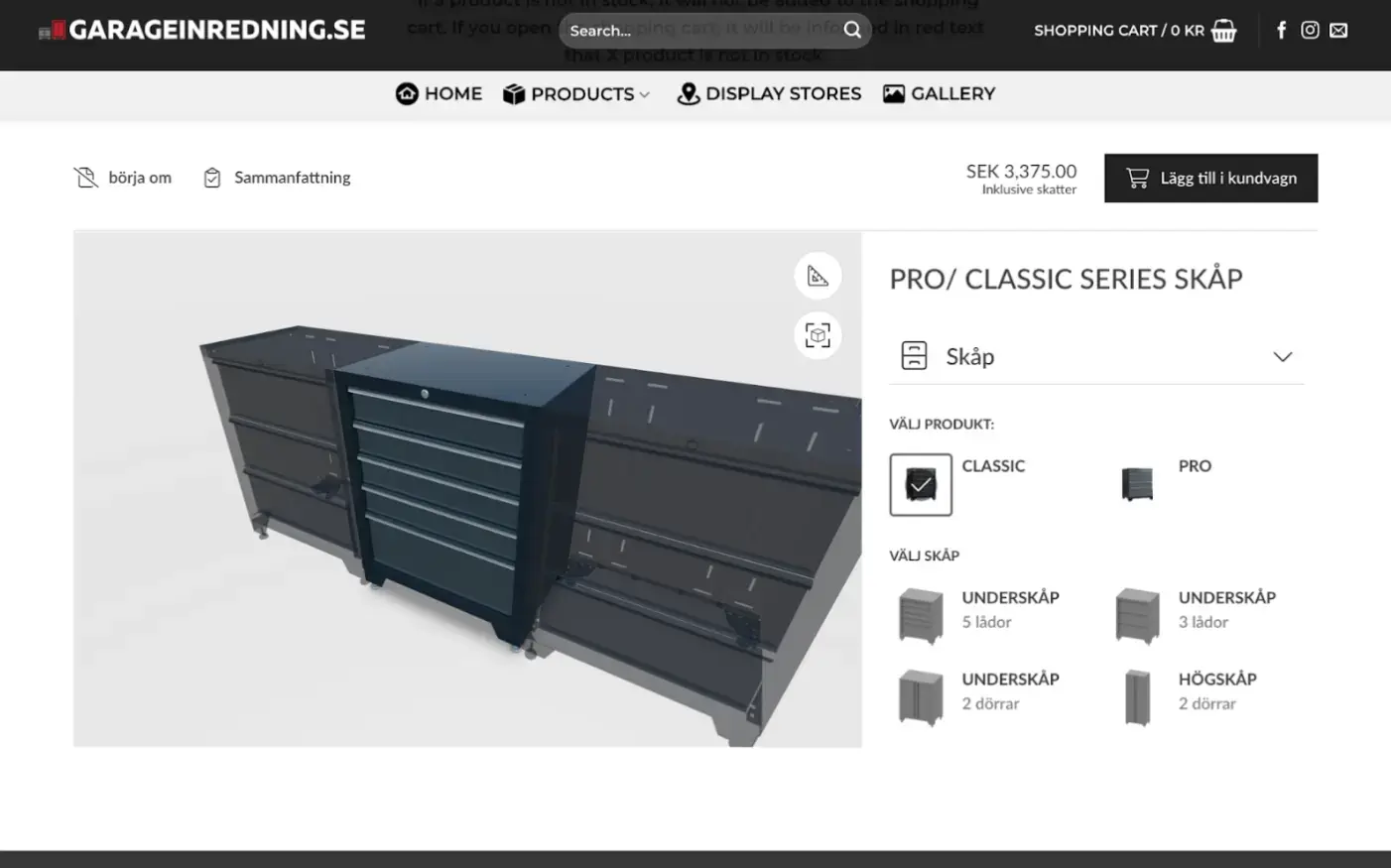
Supra Cabinets offers a 3D configurator for complex, made-to-order garage cabinets
2. Guide Customers Through Customization — Don’t Overwhelm Them
A common UX mistake is presenting every available customization option at once.
When shoppers see too many options, they may feel confused about a final decision. Strong product page optimization should focus on structuring complexity. You can:
- Break customization into clear, sequential steps
- Group related options logically
- Use concise helper text to clarify technical details
- Highlight recommended or popular selections
- Show visible progress indicators
In this way, bespoke brands effortlessly guide potential visitors to maximize sales without requiring significant effort or time-consuming back-and-forth exchanges. Apparently, a clear, structured journey is essential for a smooth shopping experience.
3. Make Pricing Transparent with Real-Time Dynamic Updates
Trust is essential in bespoke eCommerce, especially for high-value product designs, such as furniture.
Specifically, pricing should update instantly with every customer selection so they feel less surprised by unexpected prices at checkout. That’s also the core benefit of implementing dynamic pricing strategies in eCommerce.
This indicates their early awareness of dynamic pricing's role in improving conversion rates through real-time updates, thereby helping optimize revenue during peak periods.
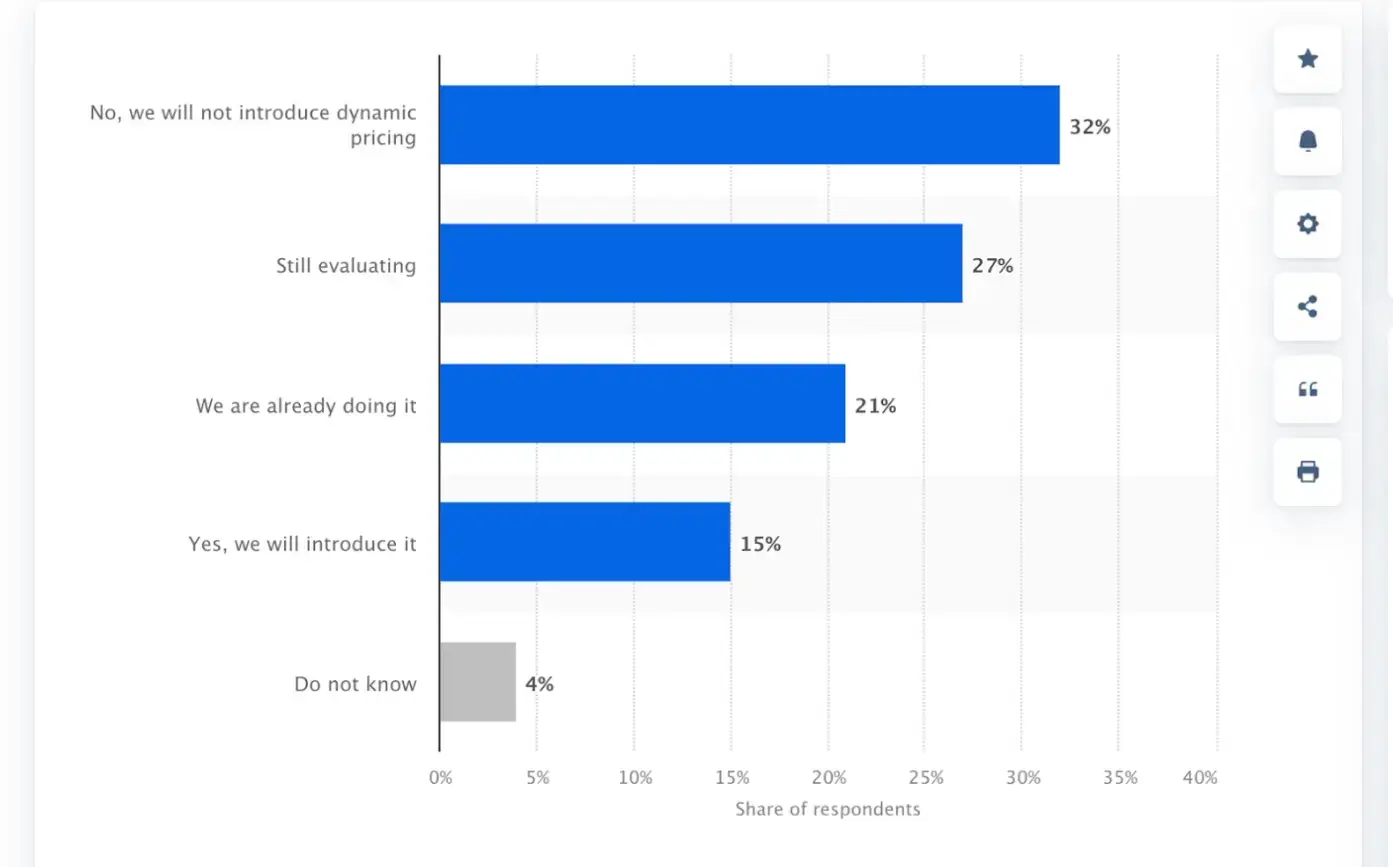
The share of eCommerce companies plans to implement dynamic pricing in Europe and North America from 2021
Furthermore, “the ability to process, monitor, and analyze information in real-time so that consumers are provided with contextualized and highly personalized pricing-based offers is a commerce imperative,” highlighted by Bill Waid, GM at data analytics firm FICO.
4. Optimize Product Information Discovery
You need to make your customers feel oriented, informed, and in control — not lost in a maze of specifications.
In the case of the furniture retailer Wakefit, it found that simple UX changes, such as organizing content with sticky bars, can make it easier to navigate and discover products.
As a result, there was a 15% increase in the rate of adding products to the cart, and the website finished with a 9% boost in closing deals compared to the original site design.
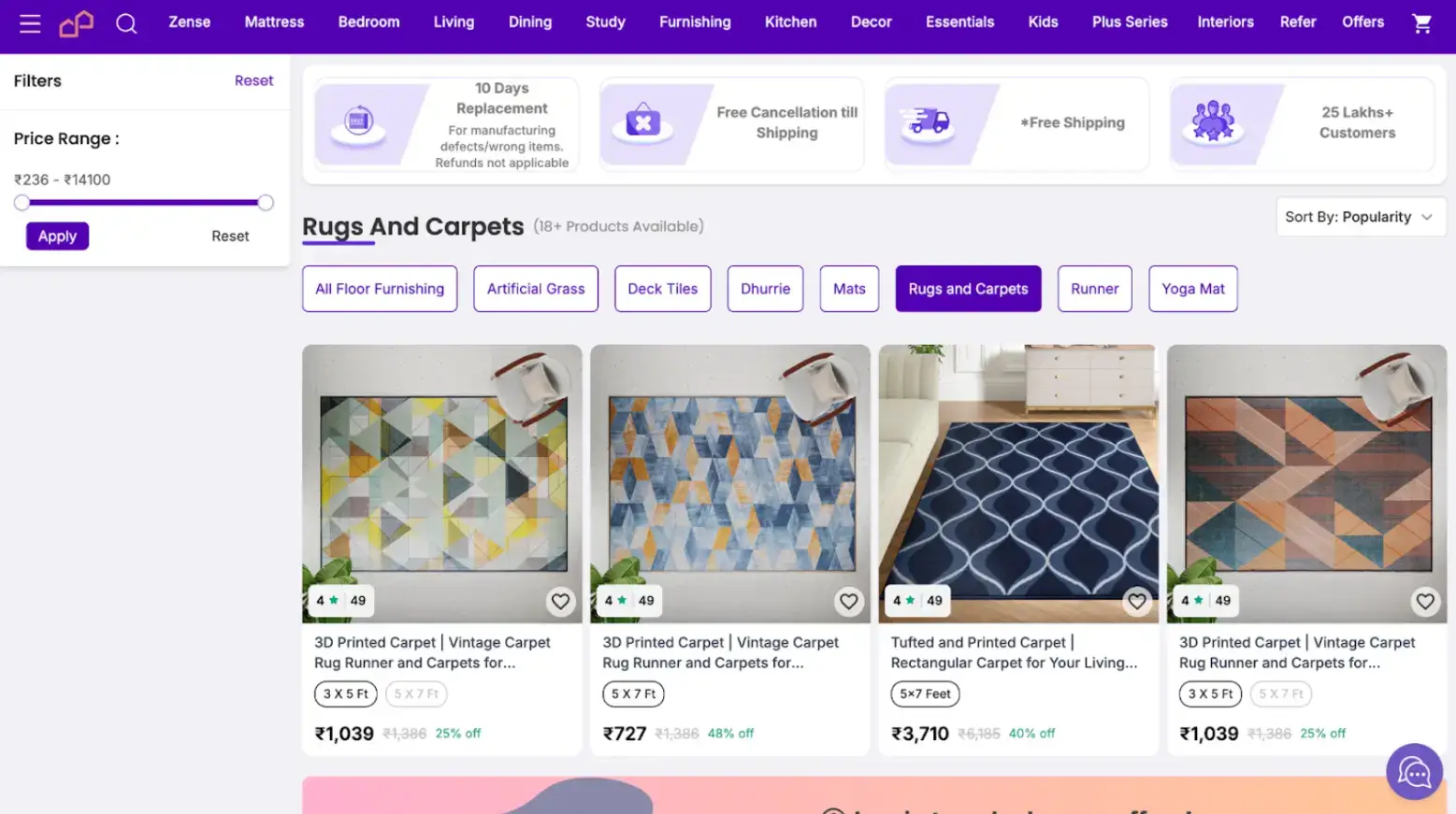
The Wakefit website offers a well-designed sticky bar design for easy discovery
In fact, this UX tip can work well for every brand, not only bespoke product businesses. Some potential tactics that you can get inspired by for your eCommerce store, such as:
- Sticky navigation bars that keep key options visible
- Anchored section menus (Overview, Specs, Delivery, Reviews)
- Expandable FAQs directly within the product page
- Clear hierarchy between essential and secondary details
- Smart search and filtering tools
- Contextual tooltips for technical terms
5. Use AR to Visualize Custom Products in Real Spaces
Bespoke purchases are rarely impulsive. Customers need context to clarify:
- Will it fit?
- Will it look right in space?
- Are the proportions correct?
This is where augmented reality (AR) becomes strategically powerful. AR overlays computer-generated 3D models onto a user’s real-world environment through a smartphone or tablet camera, allowing customers to evaluate products at true scale.
60% of customers want to use AR when shopping for furniture.
Major retailers such as IKEA and Wayfair have already integrated AR furniture visualization, allowing shoppers to place sofas, tables, and storage systems directly in their living spaces before purchase.
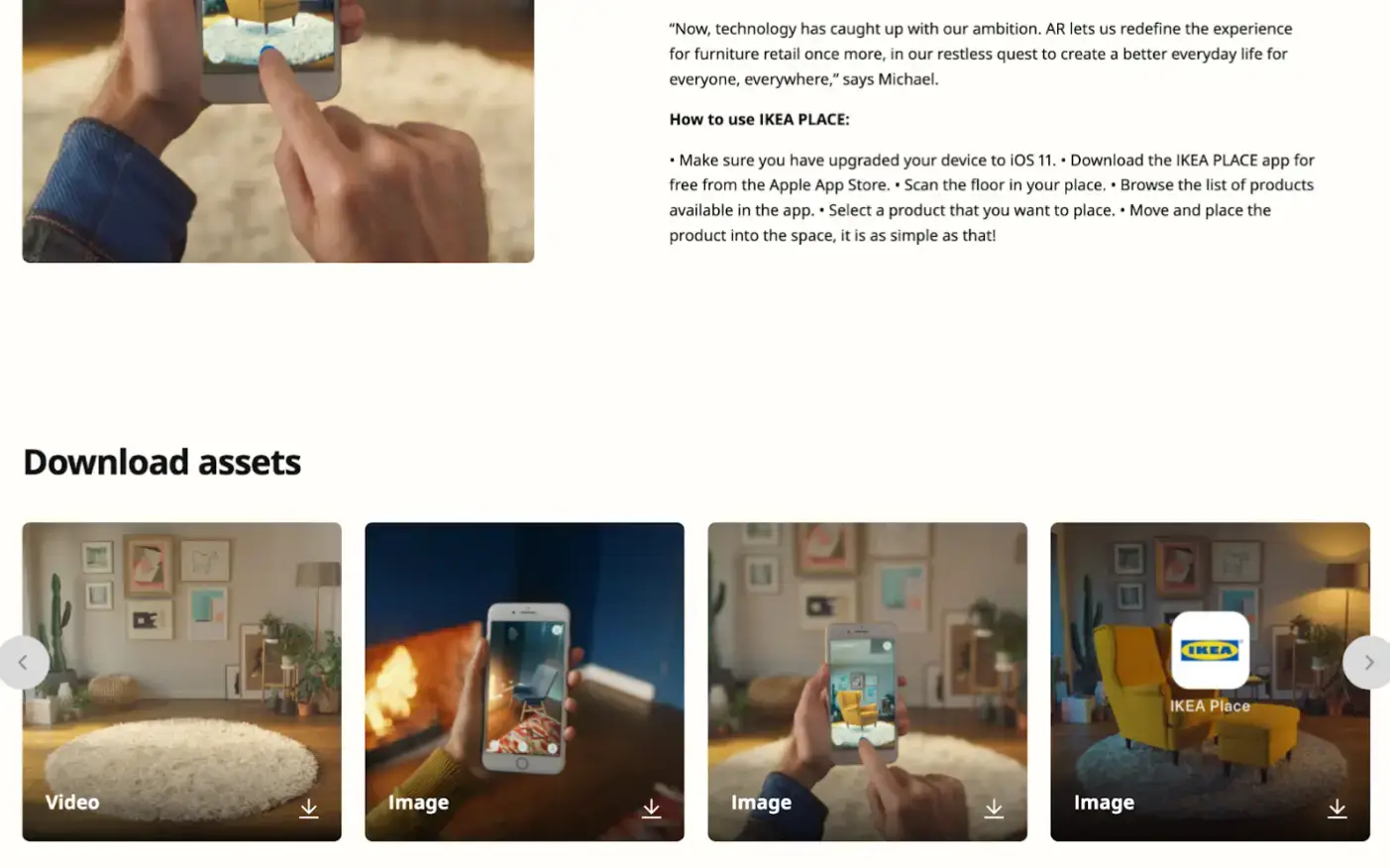
IKEA Place is a distinct app powered by IKEA to enable AR experiences
Therefore, furniture startups or SMBs can learn this tip to transform their eCommerce UX.
For example, New Works, an SMB based in Norway, enables visualization of custom shelving systems in real spaces, such as homes, stores, or offices, through a QR code. From that, both B2B and B2C customers can effortlessly evaluate the level of fitting.
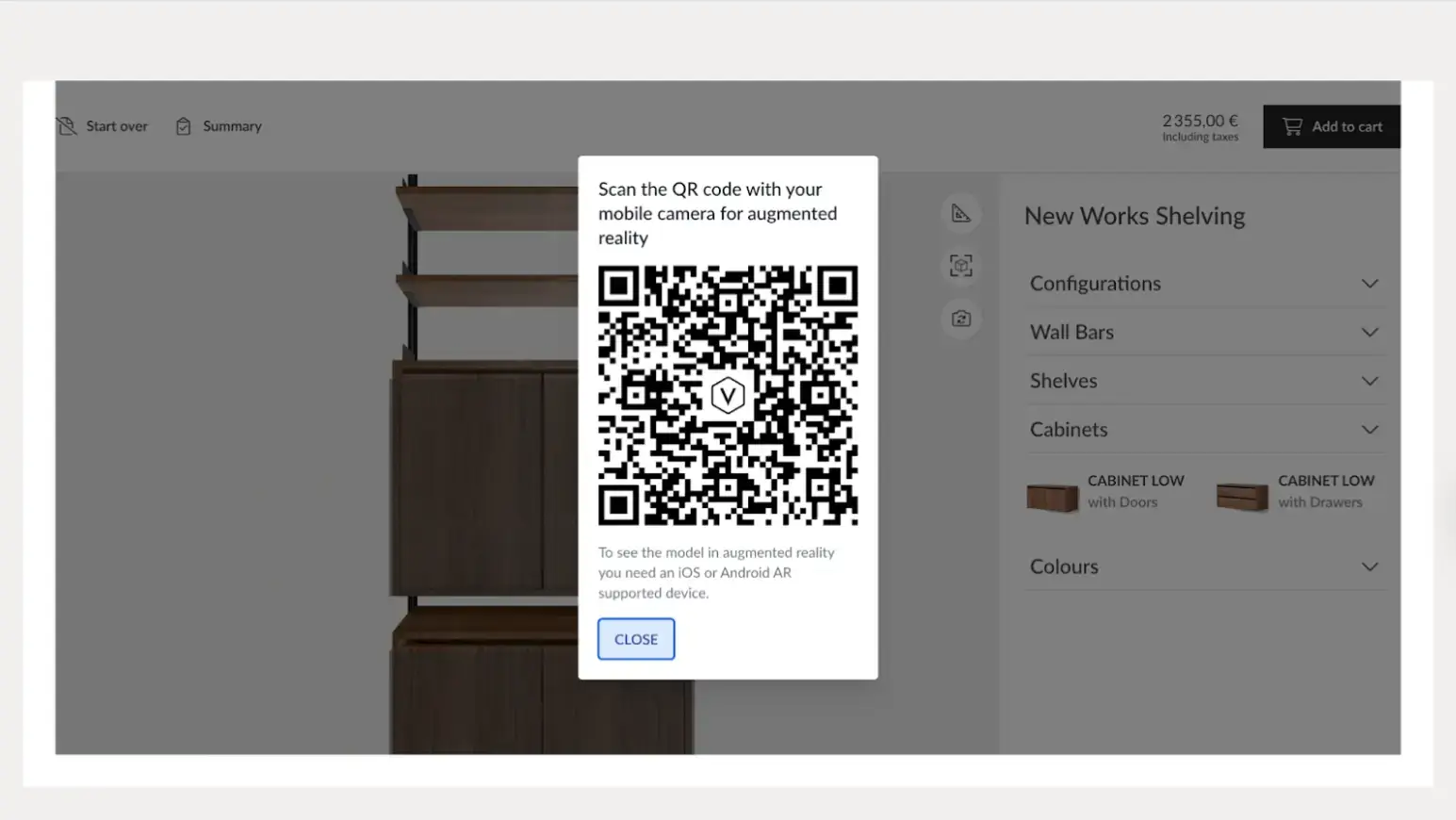
New Works adopts AR to visualize complex bespoke shelves in real spaces
However, AR is not limited to large home furnishings. Luxury resale platform WatchBox, which buys, sells, and trades high-end branded watches, adopted AR to “diminish the disconnect that often occurred between what a buyer expected to receive and the product that actually arrived,” according to Bernard Marr, strategy advisor and keynote speaker.
In short, whether applied to custom furniture, watches, clothes, or even bespoke décor, AR bridges the psychological gap between digital browsing and physical ownership. Remember that contextual visualization is no longer a novelty—it’s a competitive edge.
6. Build Trust with Micro-Interactions and Proof Signals
The next UX tip is to provide reassurance at every step. UX trust elements can include:
- Real customer photos of custom builds
- Verified reviews specific to configurations
- Material certifications and quality guarantees
- Clear production timelines
- Smooth transactions with dedicated buttons and trust badges
Micro-interactions also matter:
- Subtle animations confirming saved configurations
- Clear feedback when options are unavailable
- Error prevention rather than error correction
7. Design Mobile-First Customization Flows
Mobile is no longer a secondary channel — it is the primary touchpoint for modern eCommerce.
Global mobile commerce revenue was estimated at approximately $2.5 trillion at the end of 2025, reflecting the deeper integration of smartphones into online shopping behavior.
That’s why we come up with the following tactics to improve UX for mobile commerce:
- Large, touch-friendly option selectors
- Collapsible sections to reduce visual clutter
- Step-by-step mobile flows
- Optimized image compression for fast loading
- Sticky price summaries
- Floating “Save Design” or “Get Quote” buttons
8. Create a Frictionless Transition from Configuration to Checkout
The handoff from configuration to checkout is where many brands lose revenue. After customers invest time in customizing, any unexpected friction feels amplified.
Let’s take a look at key principles so that customers have the best experience:
- Carry configuration data seamlessly into checkout
- Clearly summarize custom selections
- Show production timelines before payment
- Offer guest checkout
- Provide installment or financing options for high-ticket items
- Reduce form fields to essentials
To further reduce abandonment, brands should actively optimize the checkout flow by leveraging design and trust signals to address buyer hesitation at the final step.
Final Thoughts: Clarity Is the New Competitive Advantage
Selling bespoke products in 2026 is no longer about offering the most customization options; it’s also about delivering the clearest experience.
Every UX tip discussed above centers on reducing online shopping uncertainty while preserving flexibility.
For eCommerce brands, thoughtful UX is a competitive advantage. When complexity feels intuitive and controlled, customers are more likely to commit. In other words, clarity doesn’t just improve usability; it directly drives conversions and brand loyalty.
FAQs About UX for Bespoke eCommerce
1. What are the key UX considerations for mobile users customizing bespoke products?
First, prioritize responsive, touch-friendly interfaces with large tappable options, simplified steps, and fast-loading visuals. Second, try to avoid overwhelming small screens with too many choices at once and ensure previews render quickly to prevent frustration and abandonment on mobile devices, where many bespoke buyers browse.
2. What is the biggest UX mistake in bespoke eCommerce?
It is often overwhelming customers with an unstructured choice. When you present too many options without guidance, validation rules, or smart defaults, users experience decision fatigue, lose confidence, and abandon the purchase before closing the deal.
3. How can SMBs reduce cart abandonment for custom products?
SMBs should simplify production timelines, display transparent pricing and quoting, offer real-time previews, simplify configuration steps, enable guest checkout, provide trust signals (reviews, guarantees), send automated reminder emails, and especially offer responsive live chat to address last-minute purchase objections.
3. How important is post-purchase UX for bespoke product sellers?
Post-purchase UX is mission-critical for bespoke product sellers because fulfillment is delayed and emotionally charged. Clear order confirmations, production timelines, progress updates, and proactive support reduce anxiety and the need for refunds.
4. How should I build trust through UX when selling high-value bespoke or custom products?
You can incorporate clear indicators, such as detailed craftsmanship descriptions, material authenticity info, secure payment badges, transparent lead times, and easy access to return policies or customization guarantees. Don’t forget to add social proof (e.g., testimonials) to reassure customers that their unique order will meet expectations.

Author Bio
Ksenia specializes in eCommerce, digital marketing, and SaaS. She creates research-driven, SEO-focused articles that help online businesses improve user experience, increase conversions, and communicate complex ideas effortlessly.