
If email is not a top marketing channel for your Shopify store, you’re leaving big money on the table.
As a Shopify store owner, you’re always looking for ways to form meaningful relationships with your customers.
You’re dying to increase the lifetime value of your customers because you know preserving current customers is up to 25 times cheaper than acquiring new ones.
You want to keep yourself top of mind so that your customers will more easily recommend you to their family and friends.
And you want all this to happen through a safe, sustainable, controllable, measurable, and widely-accessible communication channel. You need this to happen through email.
Email marketing is an owned channel, meaning you’re free to design your messages however you prefer.
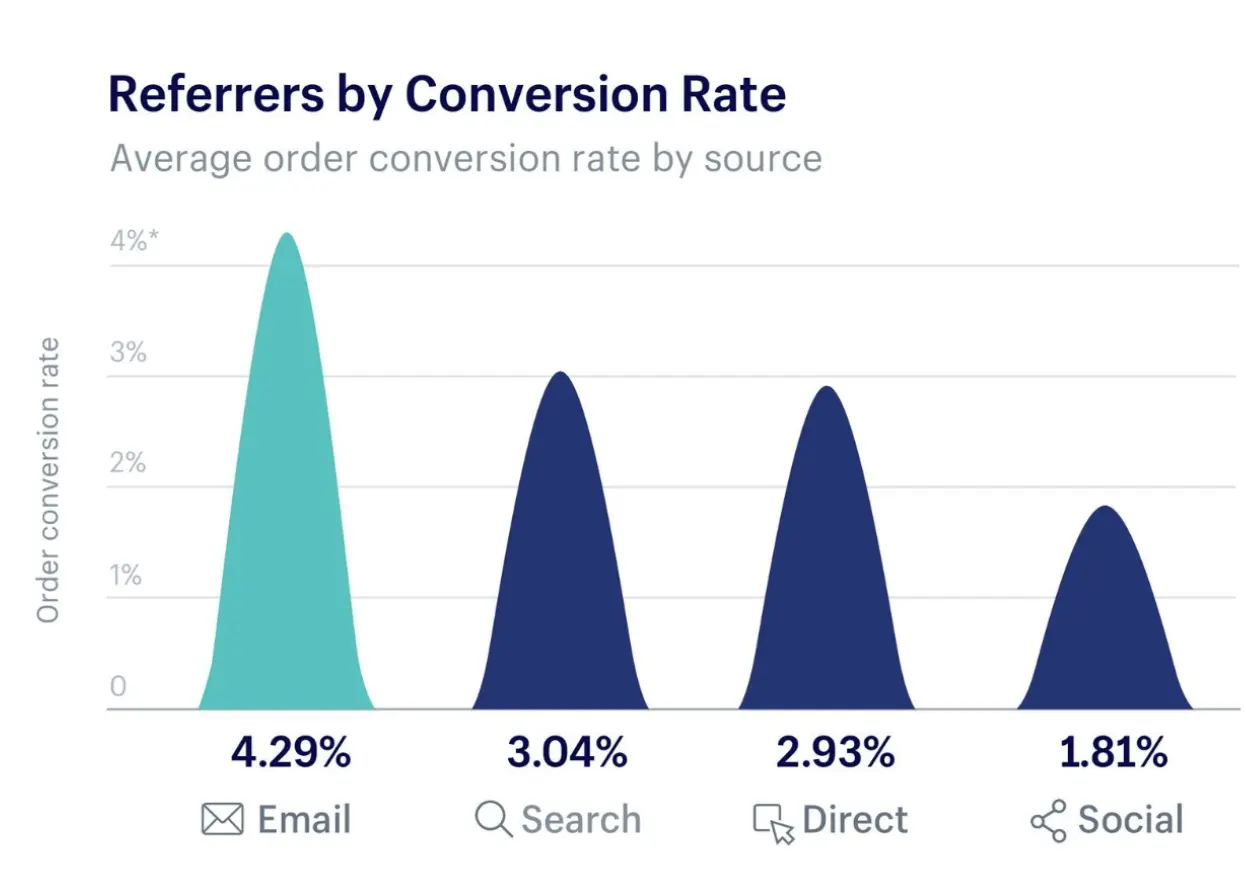
Plus, your efforts won’t be affected by a sudden change in a third-party algorithm or policy. It’s widely used by consumers and converts them better than social media.
In this article, we’re talking about 6 kinds of emails a Shopify store should send to customers to increase customer lifetime value and skyrocket sales:
- Welcome emails
- Newsletters
- Personalized product recommendations
- Abandoned cart reminders
- Re-engagement emails
- Testimonials/reviews requests
Why Email Marketing for Shopify Stores?
Among all types of digital marketing, email is the one that brings the biggest average order conversion rate, with 4.29%.
And 80% of businesses name email marketing as their main channel for customer acquisition and retention. What do you think is the reason for that?
Is this a matter of affordability and accessibility? To some extent, yes.
Basic email marketing is almost entirely cost-free, giving SMBs a chance to expand their reach under a tight budget.
But if those were the only reasons, why would the world’s largest brands still consider email as an important pillar of marketing?
The magic of email is that it creates a private space where you can communicate directly with your audience. And this helps you significantly in two ways:
- Allows you to personalize your message according to individual data – helping you create a better customer experience and meet customer expectations.
- As an owned channel that is highly controllable, it gives you a chance to show some sensitive information to those who need to see it and hide it from others (like a new product teaser that you don’t want your competitors to hear about yet)
As with all your marketing efforts, your marketing emails must serve certain business goals. Let’s look at 6 email types that you can use to achieve various goals.

6 Kinds of Emails a Shopify Store Should Send to Customers
1- Make your first touch count with a welcome email
The first impression is the last, they say. Not necessarily true in every context, but your first connection with customers is inarguably a very important one.
Remember when we first met the Beats? This new player had no visible technological advantage over other brands, yet it took the world by storm. Curious why?
At the earliest stage of Beats headphones’ product cycle, they successfully entered our lives thanks to the first impression we had of them: a part of celebrities’ lifestyles.
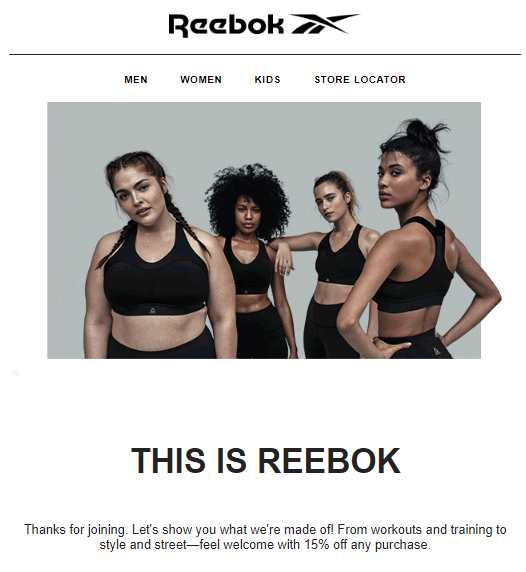
Well, in the digital environment, a successful first impression translates into a successful welcome to your community. And welcome emails are most certainly the best tool you can use to build that first touch of communication.
Since it’s your first interaction with that unique customer, their opinion about your business is quite intact. Take that chance. Based on your information about the customer, offer them just the welcome they want.
If the new customer is a female, for instance, you can customize some elements such as tone of voice, colors, the products that you list, the links to your Shopify store, etc.
2- Send segmented newsletters
Newsletters that offer genuine educational content help businesses grow their audience and strengthen their relationships with customers.
The key to successful newsletter campaigns is finding out your audience’s interests and offering them relevant content.
Segmented newsletters, rather than generic ones, are the optimal form of relevant educational content. Build several newsletter audiences and offer each audience tailored content.
For example, say your Shopify store’s newsletter audience is 1700 people.
Since this is not a large enough sample to run A/B tests or test different types of content, you can divide the group into two age-based groups.
The next step would be to find out what the two groups are interested in, then tailor your content to their expectations. Suppose you have an online fashion store.
Now, there’s a good chance that the first group, which is composed of people aged 18-35, is more interested in street style than older adults would be.
That’s why you can promote your blog about street trends in 2022 in the newsletter that’ll be sent to the younger adults.
There are numerous content marketing tools available that could help you with content personalization.
Visuals in particular are appealing to younger adults.
Using videos can drive engagement up to 80% more, according to YumYumVideos.
Combining text with images in the form of infographics or interactive flipbooks can also boost engagement, especially in the early phases of the customer journey.
Apart from that, many B2B solution providers collaborate on co-marketing campaigns, and newsletters are almost always part of them.
They not only give each other’s discount campaign announcements space, but also offer discounts or free master classes exclusive to each other’s subscribers.
Once your segmentation improves with the flow of data, you can have an educated guess about your audience’s interests and needs.
And at that point, you can look for new, better co-marketing campaigns that will take your newsletter engagements to the next level.
3- Offer your customers personalized discounts
Accenture found that 91% of customers are more likely to shop with brands that remember their preferences and provide relevant offers and recommendations.
And offering personalized discounts (by sending regular, customized emails) is a proven way to show them you care about their interests, and make the effort to provide them with discounts they would be interested in.
Well, in the online space, there are countless alternatives to your store selling identical products. Now, putting on your shoes again, what do you do with this knowledge?
First, start collecting as many data points as you can—with the consent of course—about your customer's behavior on your site:
- Products bought
- Purchase amount
- Buying frequency
- Timing of purchases
- Products in their wishlists
- Product abandoned in online carts
- Products browsed
- Amount/percentage of discounts previously used
As a second step, offer personalized discounts on products users have shown interest in.
This will drastically increase their likelihood of buying your products, maximize profits from each segment, save the money you leave on the table, and help them get to know your customers better all at once.
On top of all, they will feel more comfortable sharing personal data in the future.
Price comparison sites are very popular in every country you can imagine. This suggests that comparing prices before making a buying decision is increasingly common.
You can also use price-drop emails to lure price-sensitive customers into your store and eventually guide them to think of your Shopify store as the place to find enticing deals.
A retail ops management software tool that can help you manage product data, promotion, and pricing details is extremely useful here.
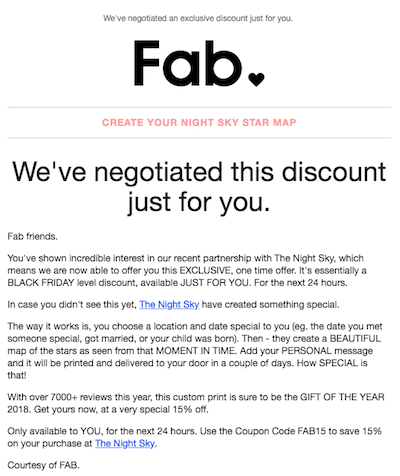
4- Use reminder emails to make them return to their abandoned carts
If you know the first thing about customer acquisition, you know the value of an existing customer.
That’s why investing some time and resources in finding ways to increase customer retention is a never-ending job for all Shopify stores.
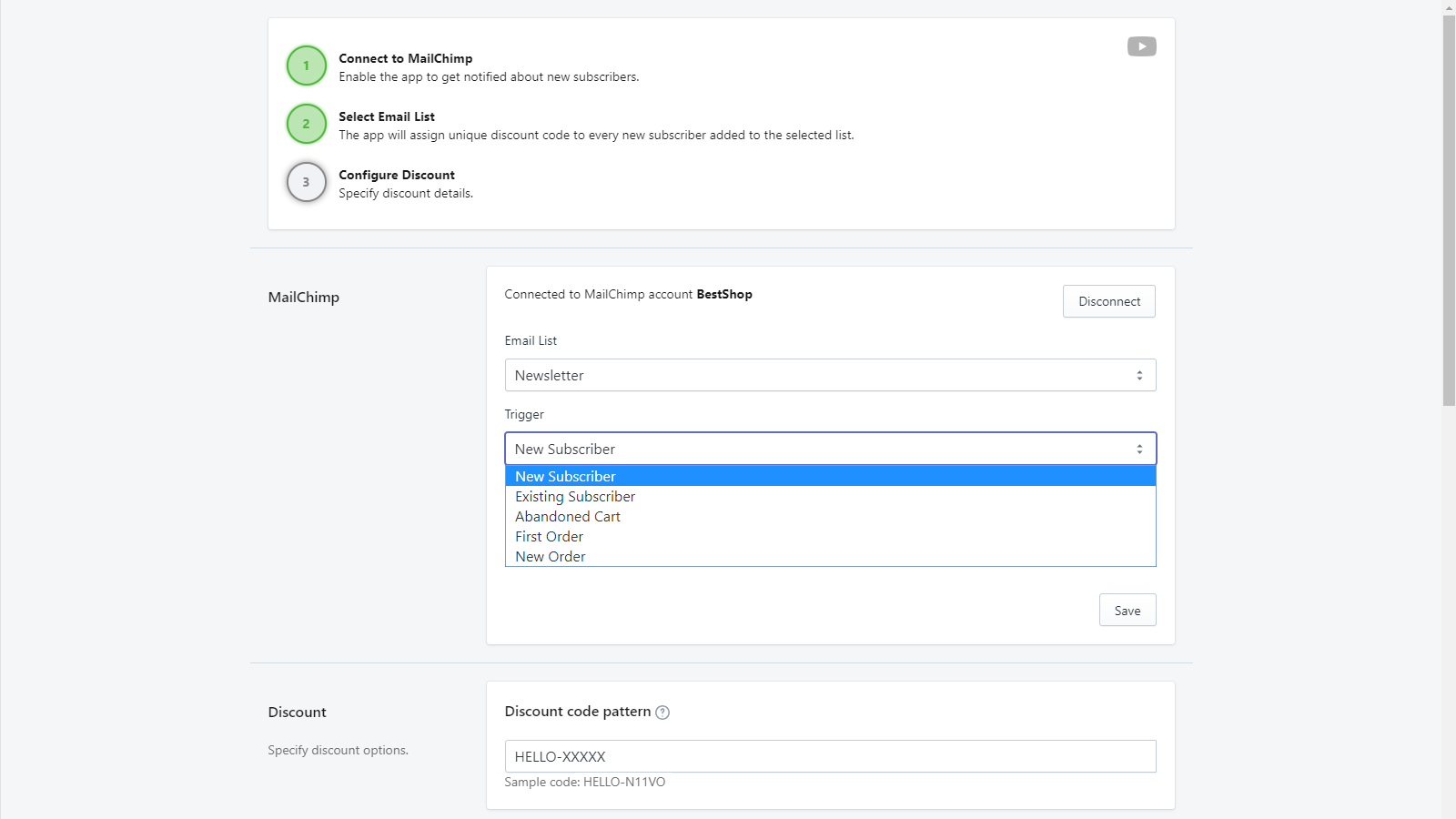
Among those who click, 50% make a purchase. This is a significant success, given that it won’t cost you much.
This will require some level of automation since you might not always be available to manually detect cart abandonments and schedule an email for every customer.
You can always have someone build a simple internal engine for you, or get help from a Shopify app.
5- Make use of gamification to increase engagement
People see an average of 5,000 ads every day, so it’s really hard to stand out from the crowd.
Brands naturally struggle to build an emotional connection and inspire a sense of belonging among their customers.
That’s why you have to think outside of traditional marketing practices.
This is where gamification comes in. Gamification is the practice of applying game design elements and principles to systems, processes, organizations, and activities to make them more engaging for users.
For instance, you can let your audience decide on various matters. This could be everything from the Christmas theme of your Shopify store to the items that will be on discount during New Year’s Sales.
You can let them vote on ‘the category winner,’ for example. You can offer discounts to those who named the category winner, free shipping for a month, or a free subscription for a month, etc.
Doing all these and the other gamification ideas that come to your mind will help you increase engagement, build a genuinely close relationship with your customers, and gradually build your Shopify store’s community.
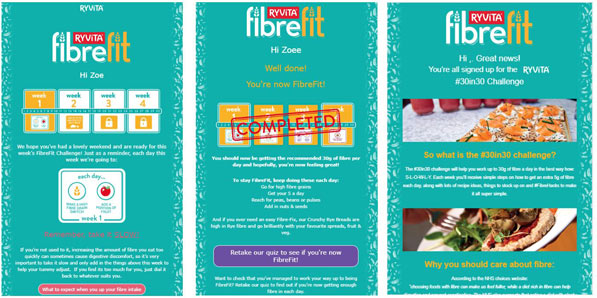
Here is an example of an engaging 30-day challenge. Once people sign up for the Fibre-fit challenge, they get tips and recipes and learn more about the “why they should care” from the brand.
Another way to increase engagement with emails is to optimize them for mobile.
Most people view emails from their mobile devices rather than their laptops. And if your emails aren't designed to be viewed properly on mobile devices, you’ll lose a lot of potential engagement.
Consider using a mobile marketing platform alongside your email marketing software to engage mobile users better.
6- Ask for testimonials and reviews once in a while
Reviews are today’s word of mouth.
Back in the day, people could only get recommendations from friends and family.
But today, we can reach out to people outside our private sphere and add to our knowledge of a product or service before making a buying decision.
Even for people with poor product research skills, the growing use of reviews makes it easier than ever to find the right product.
Try to get as many positive reviews as possible. Of course, this doesn’t mean poking your customers to leave a review after every purchase. But you can send out emails to kindly ask for a positive review and even offer a small prize in return.
This could be a branded mug, a small discount, and so on. Since this type of email demands active participation on the side of your customers, you might need to send follow-up emails to genuinely ask them for a contribution.

If you’re running a subscription Shopify store, collecting testimonials is even more important than collecting reviews. Testimonials effectively convey the value of your subscription service because they directly highlight the pain points they solved.
From a seller’s point of view, you might be focused on a different value proposition than the one that’s most striking to your audience. But testimonials speak for themselves.
Ask for testimonials from your highly-engaged clients; they will be more willing to spare the time to give you one.
You can also offer them 1 month of free access to your premium subscription or a discount on another subscription package. Or, you can give them little gifts and send out thank-you notes.
In the End, Trust Beats All
Contrary to what some people believe, the ultimate goal of email marketing is not to increase open or click-through rates. At the end of the day, what matters most in email marketing is building a meaningful relationship with customers, grounded in trust and mutual understanding.
1- You need to avoid any dishonest or shady email marketing practices. Don’t try to lure customers to click on your email or links by using clickbait, exaggerated copy, made-up reviews, wrong product images, etc.
2- Always value your customer feedback. Provide hands-on customer support. Answering your customers’ questions will increase revenue by up to 15% while also boosting customer satisfaction by around 20%.
Provide your team with suitable customer service tools and deliver faster.
3- Use an omnichannel marketing automation tool to streamline your communication with customers. You don’t want to spend a lot of time and money connecting and synchronizing tools that would eventually let you down.