

Small teams need to consistently set tangible goals. It helps them make the most of their limited resources, improve operational focus, and measure business growth effectively.
At the same time, growing brands face several problems, including vague targets, inconsistent tracking, and a lack of structured strategies. These issues can make it difficult for companies to prioritize their efforts appropriately.
Frameworks like Objectives and Key Results (OKRs) can help in this regard. Professionals can easily define what they need to achieve in terms of measurable parameters and track progress toward it by monitoring those metrics.
Additionally, the simplicity of this approach makes it great for fast-moving, agile teams. Putting it into practice requires picking the right OKR platforms and blueprint.
In this article, let’s look at the three best goal-setting software solutions and OKR templates that help small teams set and achieve their business objectives.
Top 3 OKR Software for Small Teams
1. OKRs Tool
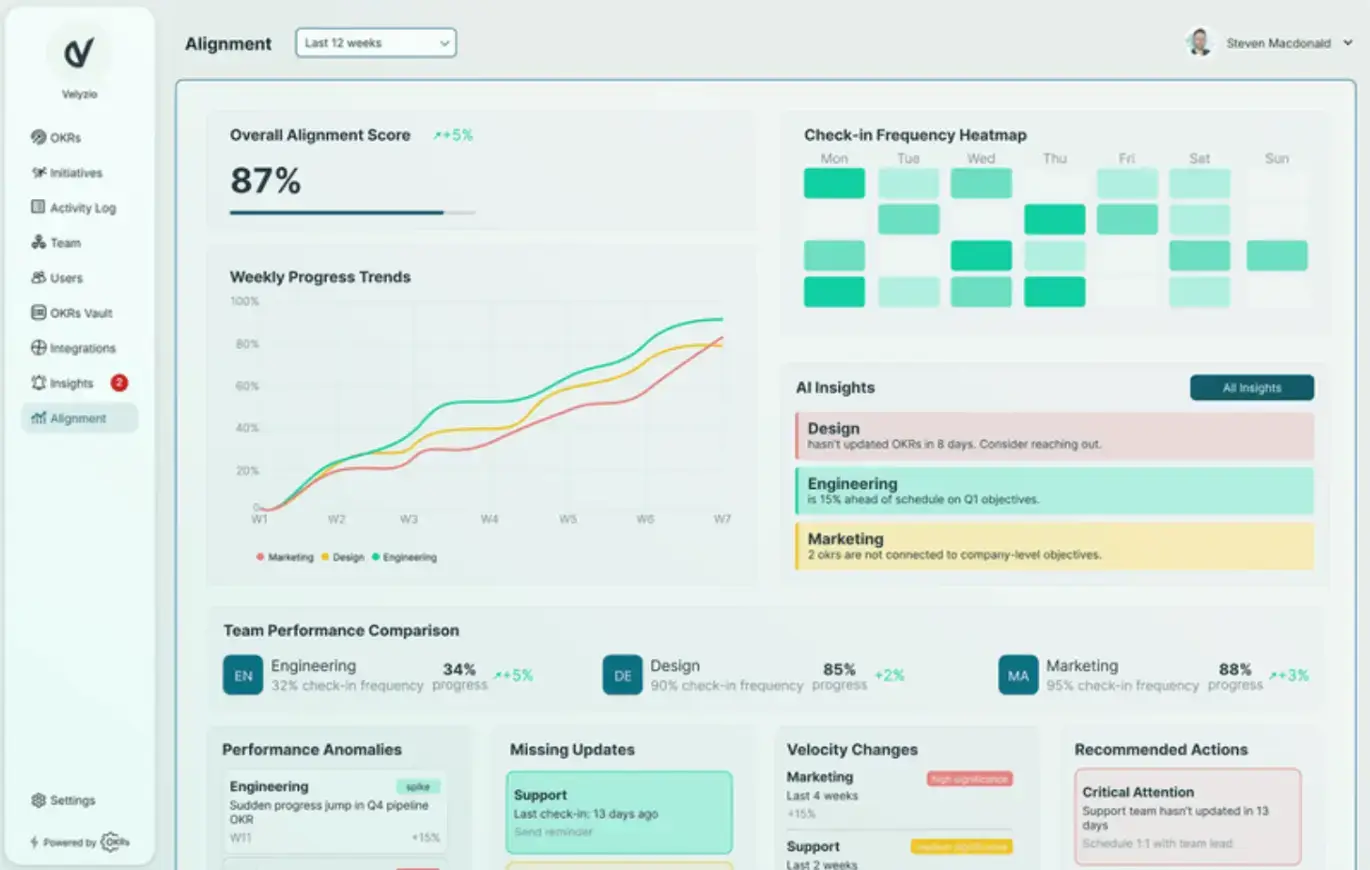
OKRs Tool is designed from the ground up with the needs of small teams in mind. It facilitates instant goal-setting through AI, accelerating the planning process.
Furthermore, onboarding takes about a minute, thanks to its intuitive interface, making it perfect for all kinds of professionals.
Source: OKRs Tool
The core functionalities of the OKRs Tool include:
- AI-generated OKRs that help teams hit the ground running in seconds
- Automated weekly check-in notifications to keep everyone aligned
- Graphical progress tracking that updates cross-functional teams at a glimpse
- Public dashboards based on customizable OKR templates to keep external stakeholders in the loop
- Integrates with Slack to streamline collaboration
- Hierarchical OKRs tracking for in-depth analytical visibility
The solution was developed with small teams in mind.
What makes this lightweight OKRs tool unique is its pricing. It is completely free for teams with fewer than ten professionals. After that, the brand must pay a flat fee of $30/month for its entire organization.
2. Weekdone
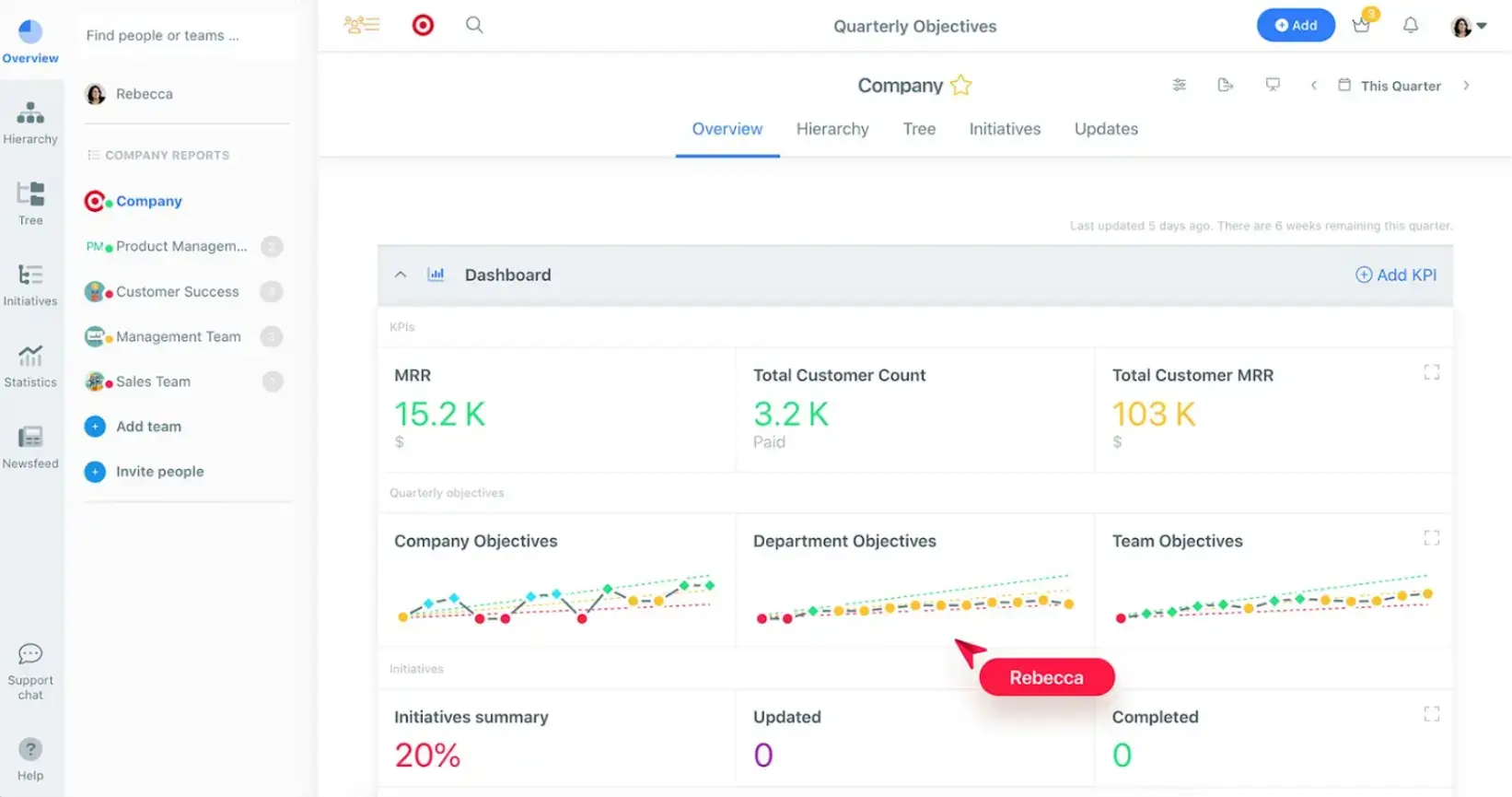
Weekdone is a comprehensive OKR and progress tracking solution for growing businesses. It helps SMBs align their strategic efforts to ensure a smooth execution of the tasks. Teams can get all the basic capabilities, such as visual dashboards and weekly reports.
Source: Weekdone
Some of its core features include:
- Hierarchical OKRs that link company, team, and individual goals for operational alignment
- Collates data from various stakeholders to display plans, progress, and problems, elevating transparency
- In-built feedback and recognition tools to credit every professional appropriately
- Robust integrations with popular SaaS tools, such as Slack, Zapier, and Jira
This OKR tracking software is free for up to three users, enabling startups and small businesses to test its capabilities. After that, pricing depends on the number of team members. For 4-10 users, Weekdone costs $10.80 per user.
The user-based pricing model can make this platform expensive for budget-constrained teams.
3. Mooncamp
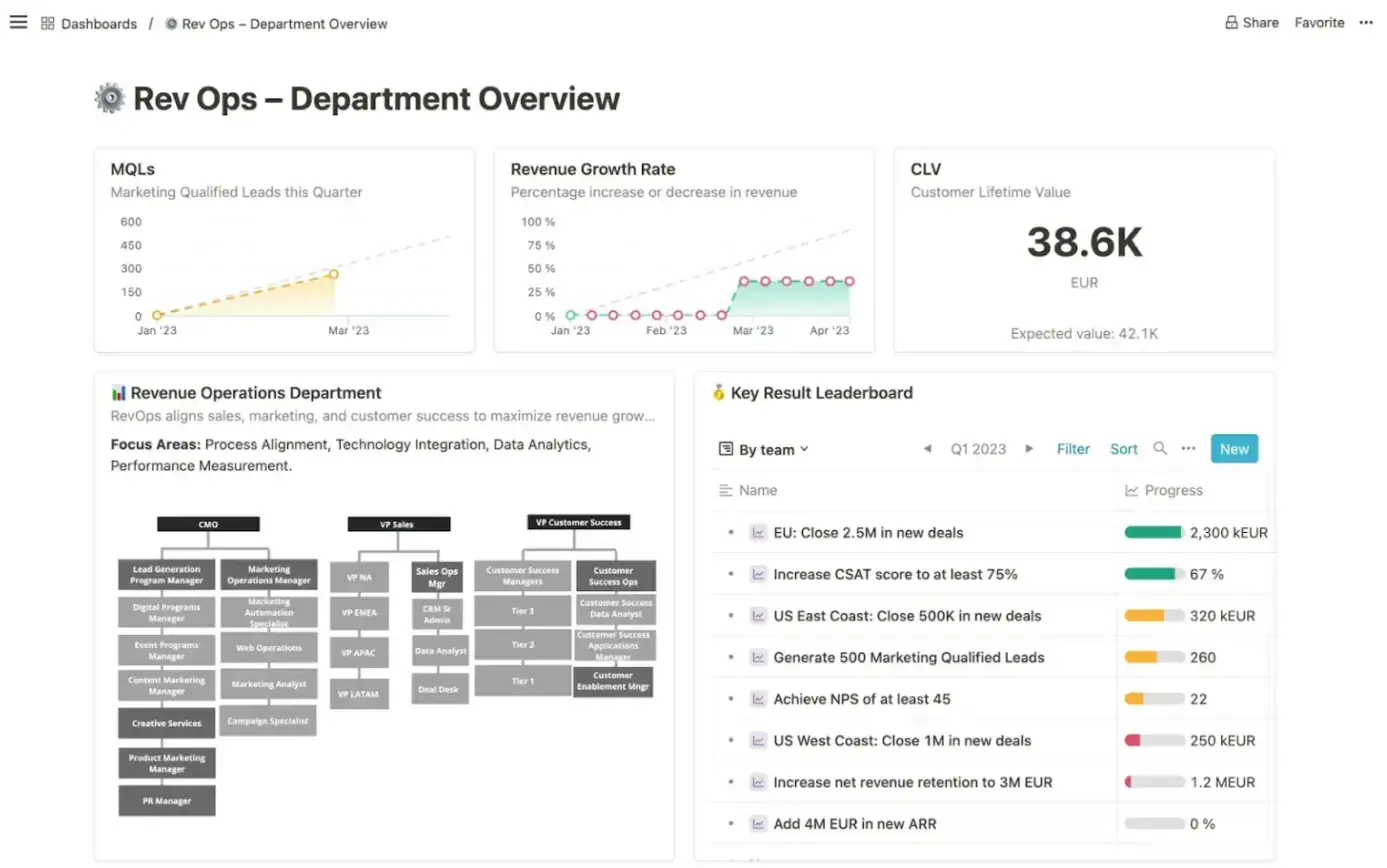
Mooncamp is a modern OKR platform known for its intuitive interface, better customization options, and real-time collaboration capabilities. The flexibility allows teams to leverage this platform for any objective-tracking application.
Source: Mooncamp
The primary functionalities of the platform are:
- Customize the OKR framework to define initiatives that suit your team’s workflow and business needs
- Automated timely check-ins and periodic reminders to enhance cross-department transparency
- Robust integrations with tools like Microsoft Teams, Slack, Jira, and more
- Real-time dashboards and strategy maps that keep all stakeholders on the same page
The solution can be a good fit for teams that are more hands-on. For instance, Mooncamp supports custom OKR templates, enabling customization from the start.
Unfortunately, this OKR tool doesn’t offer a free plan, but it does provide a 14-day trial. The subscription tiers start from €6/user per month. The pricing makes it more suited for established businesses.
Best OKR Templates for Small Teams
1. OKR Planning Cycle for Startups (OKRs Tool)
OKRs Tool’s CEO, Steven Macdonald, created this goal-focused planning cycle template for agile teams in startups and small businesses.
It has several sections, such as company-level and team-level planning templates, to align every initiative within the organization.
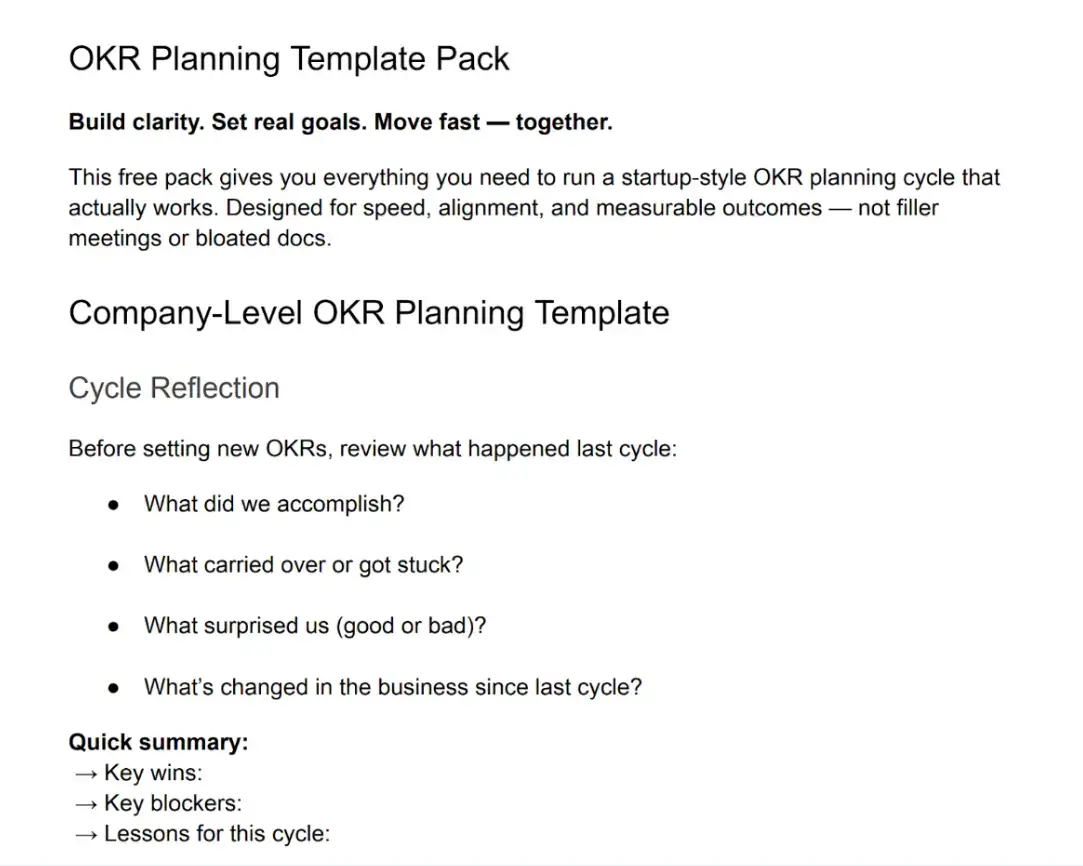
The minimalist OKR template doc also includes dummy data to guide users through their milestone-setting and strategy execution. Teams can expect to reduce filler meetings and improve speed while achieving measurable outcomes.
2. Notion OKR Tracker (desbyseb)
Desbyseb, an official Notion partner, is known for creating premium templates that facilitate personal productivity and business planning.
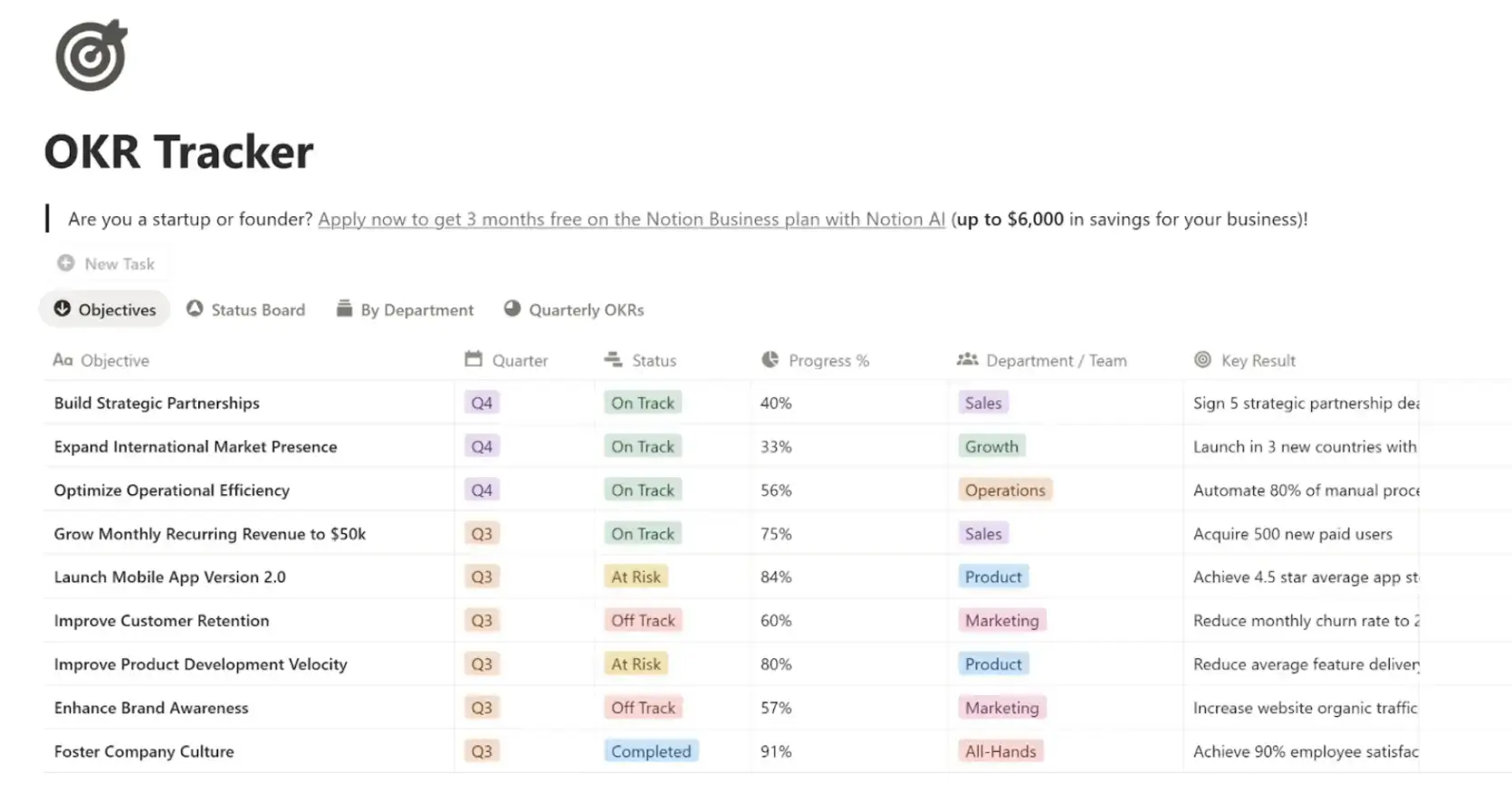
The minimalist OKR template consolidates multiple views, such as sheets, Kanban boards, and dashboards, to cater to users with different preferences.
Source: Notion
The free Notion template for small businesses connects individual tasks with the department’s objectives to ensure long-term strategic alignment. Professionals can view details such as status, progress, and key results.
3. Excel OKR Template (HubSpot)
HubSpot’s OKR-tracking template is the simplest of all. It allows small teams to tackle one objective at a time by defining the key results for it and monitoring its progress until completion.
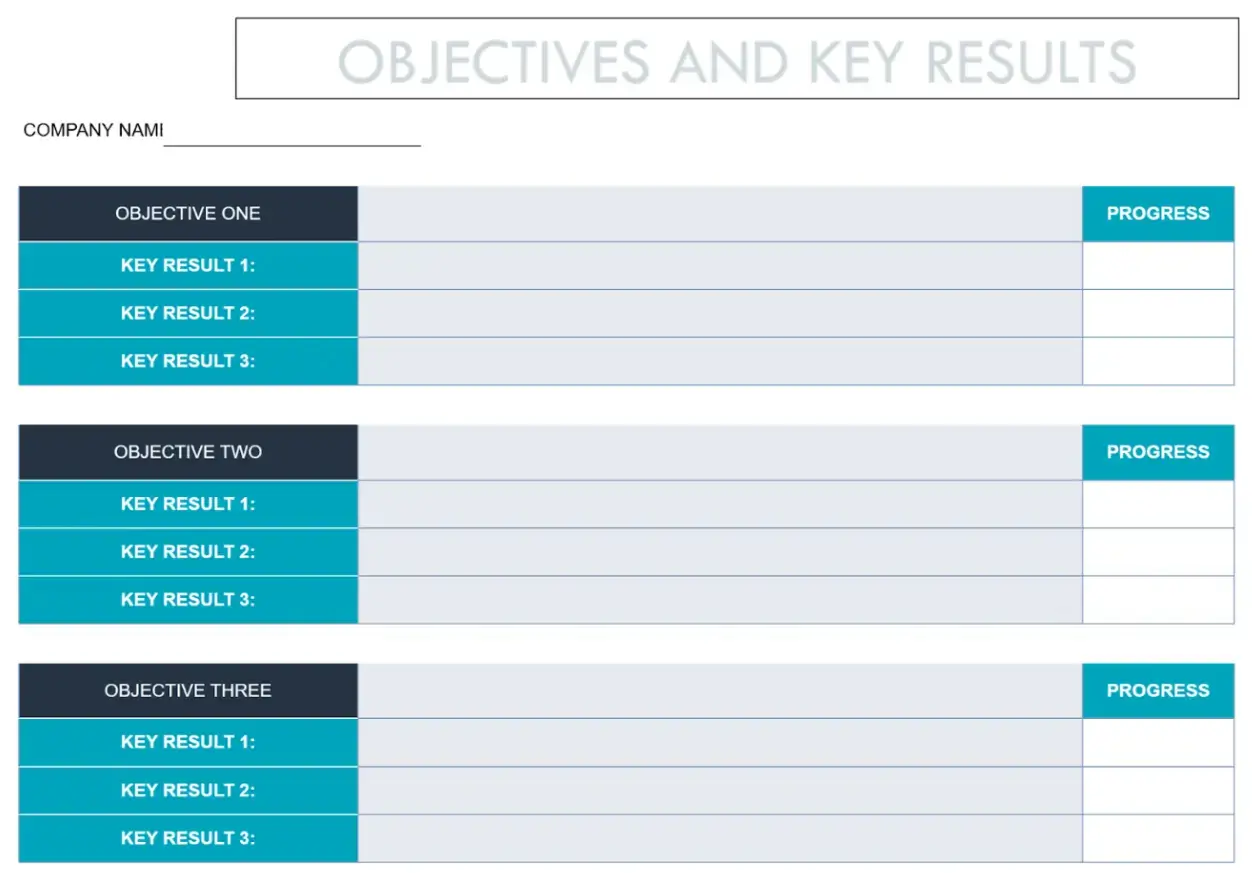
While it appears basic, the OKR template can be the fastest to implement. A professional, for instance, can start using it within minutes.
Even non-technical stakeholders can start extracting value from it instantly, boosting overall productivity for growing brands.
Wrapping Up
Small teams and growing brands need to be crystal clear about their organizational goals on a tangible level. This is pivotal for driving targeted efforts that lead to measurable outcomes.
However, it can be challenging to do so as such companies might still be in the learning phase regarding various business processes.
The OKR framework provides a structured approach to setting objectives and executing the tasks required to achieve them. Professionals in these teams can consider OKR software and planning templates to leverage this framework.
Lightweight, robust platforms like OKRs Tool, Weekdone, and Mooncamp can quickly help growing brands hit the ground running. These solutions also offer integrations to popular office tools to accelerate adoption.
Then, at a foundational level, teams and departments can use popular, free OKR templates to achieve better organizational alignment.
FAQs
1. What are the best OKR templates for small teams that are just starting out?
Free OKR templates, such as OKR Planning Cycle for Startups by OKRs Tool, Notion OKR Tracker by desbyseb, and Excel OKR by HubSpot, are best for small teams that need an easy-to-use yet effective framework for setting goals.
2. How do OKR frameworks help startups and small businesses grow?
OKR frameworks help startups and small businesses align their efforts with company objectives in tangible ways. They can set goals and measure progress toward their completion through relevant KPIs to maintain transparency, agility, and operational efficacy.
3. What should small teams look for when choosing OKR software?
Small teams move fast. Hence, when choosing OKR software, they should look for simplicity, flexibility, scalability, and collaboration. These aspects will allow them to get organized without bloating their tech stack.
4. Are there free OKR platforms or templates suitable for small teams?
Yes. OKRs Tool offers a free forever plan for teams with fewer than ten members. The professionals can leverage most of the core features, enough for budding businesses looking to establish operational stability.
5. How can small teams use OKRs without adding extra meetings or admin work?
Fast-paced, busy teams in growing companies should choose simple, minimalistic OKR software for quicker adoption. Plus, they should use the built-in collaboration features to streamline their workflows. It can also be a good idea to start with free OKR templates to master goal-setting for the organization before investing in a tool.

Author Bio
Lucy Manole is a creative content writer and strategist at Marketing Digest. She specializes in writing about digital marketing, technology, entrepreneurship, and SaaS. When she is not writing or editing, she enjoys reading books, cooking, and traveling.