

As a blogger or a business owner with a WordPress website, you know the power of comments, don't you?
Comments complement the content, grow page views, engage users in discussions, bring SEO benefits, and help convert readers into followers or customers.
One tiny problem:
If you don't customize the Comments Settings in your admin panel and don't spend time moderating and replying to reader messages, your website's performance will plunge into the SERP abyss.
Comments' quality and your reaction to them do matter for website conversion. In this article, you'll learn how to moderate and write comments in WordPress for better SEO and marketing results.
What Are Comments in WordPress?
Comments in WordPress are messages users leave at the foot of your blog content. Like this:
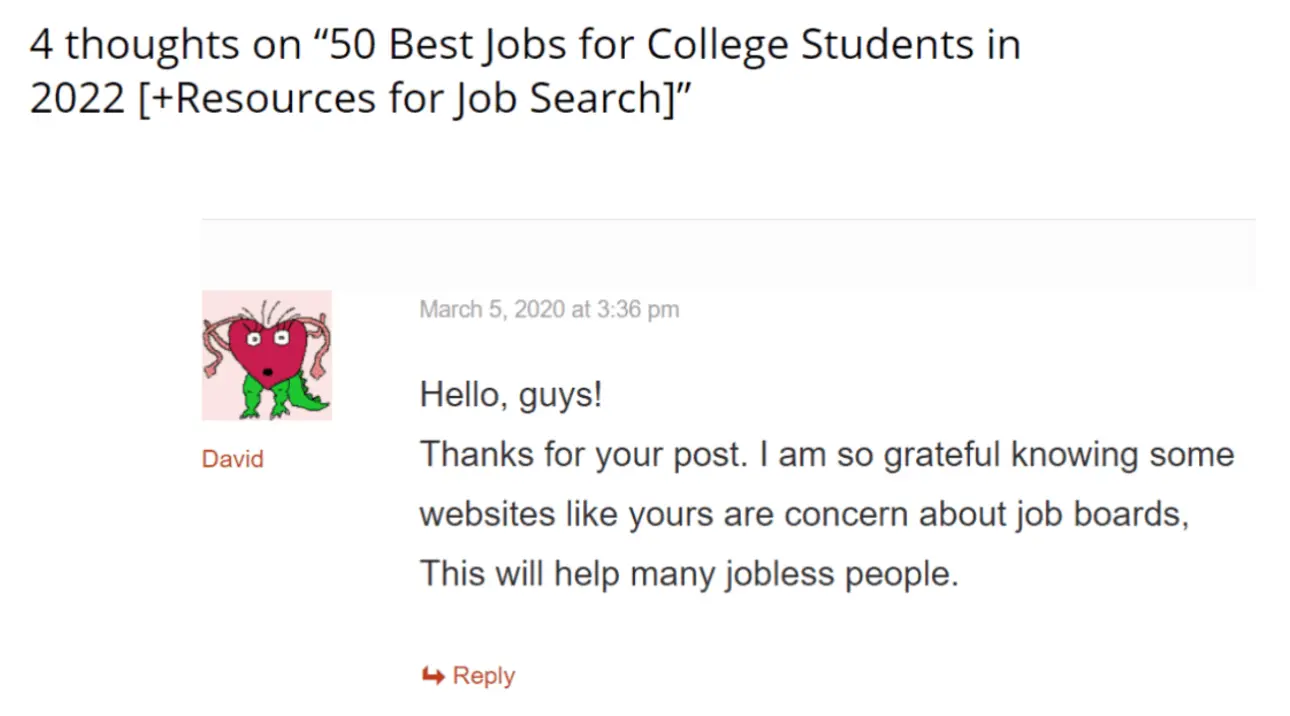
The platform introduced this feature in 2004, turning static websites into dynamic ones and enabling users to interact with content creators and one another. It was a kind of revolution as it made the internet interactive.
When you install WordPress, you get the commenting feature by default. For those willing to turn it off, it's enough to go to Settings -> Discussion and uncheck the "Allow people to submit comments on new posts" box:
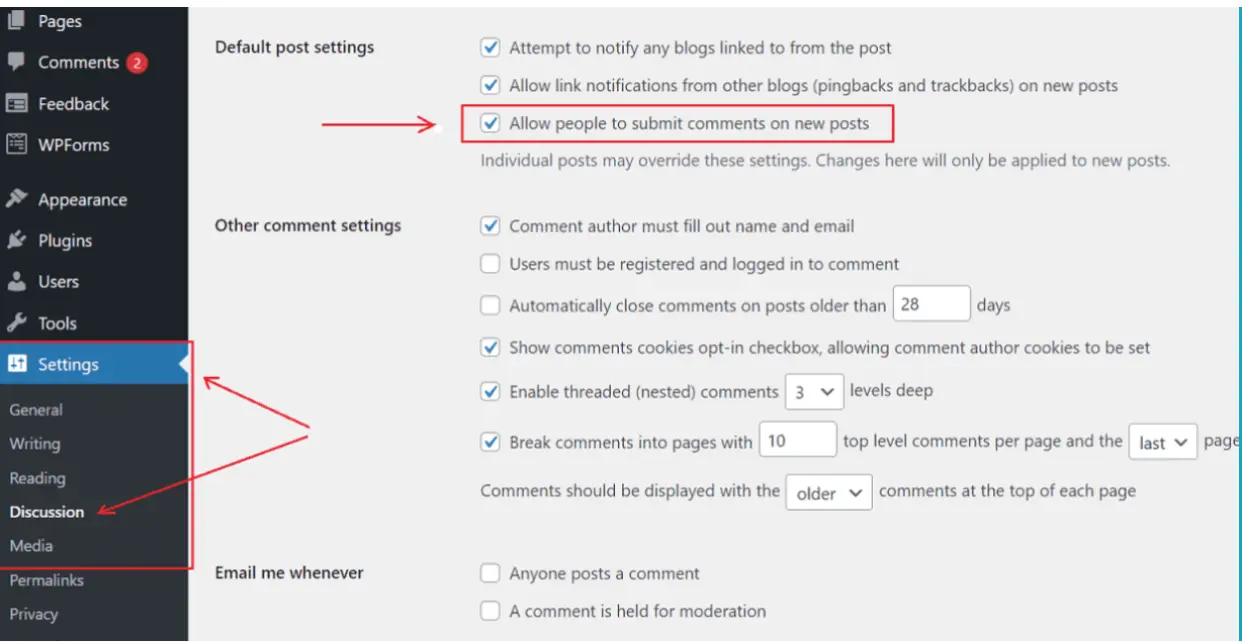
And yet, we wouldn't recommend doing so. Focus on properly customizing and moderating your WordPress comments instead. Keep on reading to find out why.
Why Bother About WordPress Blog Comments
Some webmasters are wary of blog comments because they attract spammers, which can harm SEO and overall website health. The volume of spam comments may reach a point where a blog administrator decides it's not worth the effort.
Plus, comment moderation is time-consuming:
It takes time to read, analyze, and provide detailed responses to all commentators.
Below are the particular pros and SEO benefits you can get when moderating comments in WordPress.
Pros of comments in WordPress
- They boost engagement. By allowing readers to comment on your content, you build relationships and learn your target audience's needs.
- Comments are a part of your article. If a reader doesn't find some information or doesn't understand something in your post, they go to the comments to ask questions. It's your chance to provide them with answers, thus making your content piece more informative and valuable.

More than that, if a reader has questions related to your previously published content, you can use comments to forward them to your other WordPress pages, thus influencing their performance.

- WordPress comments grow page views. The more comments, the more exposure: It signals to both users and search engines that a content piece sparks discussion, so it's worth checking.
- WordPress comments may work as a conversion tool. If your arguments in content weren't enough to persuade a reader, you can provide further explanation in the comments to address all objections.
- Comments give you new content ideas. Readers often ask what they'd like to see on your blog. If you haven't covered those topics before, consider turning those ideas into new blog posts.

P.S. The website has done it, by the way, and that post about essay conclusions remained the #1 source of organic traffic for years already.

WordPress blog comments and SEO
Long story short, blog comments in WordPress are good for SEO. Here is why:
First, Google considers comments as part of an article. This means the word count increases, and algorithms treat the page as more comprehensive to better satisfy user search intent.
Second, readers often use words in comments that are semantically related to your target keyword, thus adding to the SEO value of your content.
Finally, users spend more time on your page when reading comments, which signals user engagement with content. As we know, this is a ranking factor, so it can give your content an SEO boost.
So, here's the point:
To get the most SEO benefits from your WordPress comments, don't be afraid of spammers, but customize your settings and invest time moderating all reader reactions accordingly.
Customizing Comments Settings in WordPress
When you make a WordPress website, go to Settings -> Discussion in your WordPress admin panel and check or uncheck all the options related to comments. You can do the following:
- Disable comments for specific content pieces
- Decide on the required identification for a user to comment
- Turn on or off email notifications on new comments or those awaiting moderation
- Allow or disallow nested comments
- Set a time for how long a content piece remains open for comments
- Decide on the stop words that will automatically send a comment to Trash
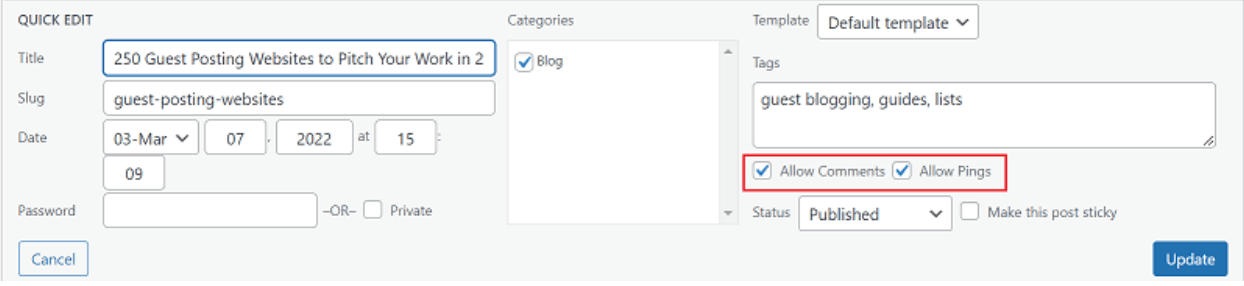
Another option to allow or disallow comments for specific posts is to go to All Posts and click on Quick Edit. Uncheck the corresponding buttons if you don't want to receive comments on your chosen blog post:
How to Moderate Comments in WordPress
And now, for practical writing tips on how to moderate WordPress comments. While many have been covered in this post already, below are a few more for you to consider:
1) Don't hurry up to delete negative comments
Negative comments aren't necessarily about spam or trash. They also don't mean your content asset is poorly-written or low-performing. If an article receives dozens of negative comments yet still generates new leads, how can it be ineffective?
According to statistics, only 1 in 10 consumers visit a website page to leave positive feedback; negative feedback is 2-3 times more likely to be shared.
If they aren't spammy with tons of irrelevant backlinks or incoherent word salad, the best practice would be to approve and leave them to increase your article's virality. After all, the more reactions it gets, the more users will see it.
If they are reasonable comments pointing out your mistakes or missteps, write a reply that helps turn the negativity into a positive experience. Check facts, apologize, and revise your content, but remember to thank a reader and say that you appreciate their help.
2) Be polite and answer questions
While it might be hard to stay calm and resist the temptation to tell negative commentators where to get off, it's not an option. Even if you are right, users will hardly accept your offensive tone.
Always be polite in the comments: Call a commentator by name, keep your reply respectful, and never belittle users for lack of knowledge.
Be encouraging: A commenter may sincerely want to understand and clarify the information.
Never ignore comments with questions. Start your response with "Thanks for your question" or "Hi," and do your best to provide a solution or share resources where a reader can find an answer.
Sincere help and a positive tone of voice are your weapons for building loyalty and turning your WordPress comments into a lead generation tool.
3) Encourage discussion and write as if you reply to everyone
To influence the virality of your content assets, you can use some writing tricks to motivate readers to comment:
The first and foremost tool is your CTA (call to action) at the end of a blog post.
You can also start a discussion by writing the first comment at the end of your blog post: Ask readers a question to encourage them to join and share their thoughts.
An effective tactic is to engage with commentators: Ask for more details, thank them for their points of view, share your stories, and draft follow-up questions to encourage further discussion. Not only will you motivate readers to continue writing, but you'll also make your comments section more informative.
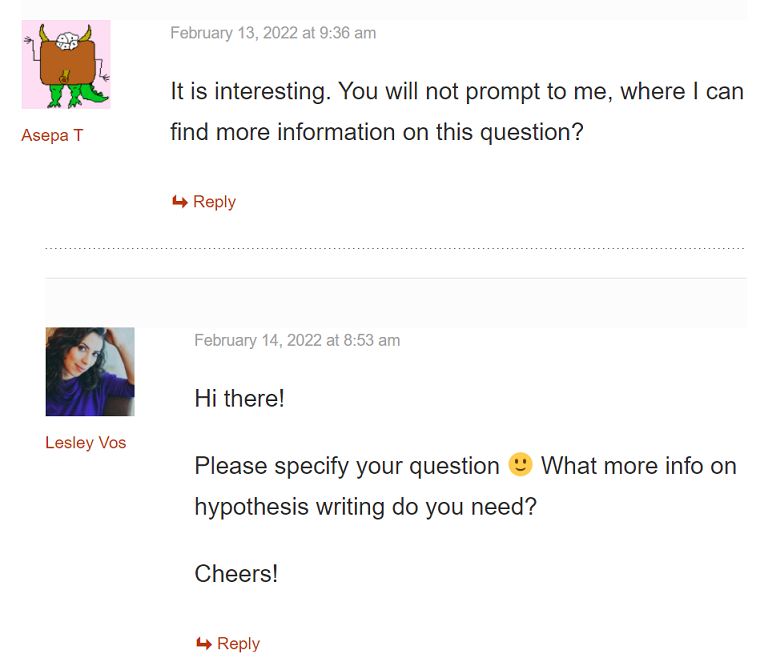
If you don't have time to reply to all comments in WordPress or can’t assign this work to your dedicated development team, please focus on the most interesting and valuable ones. Provide educational, informative responses so other readers can benefit from your messages as well.
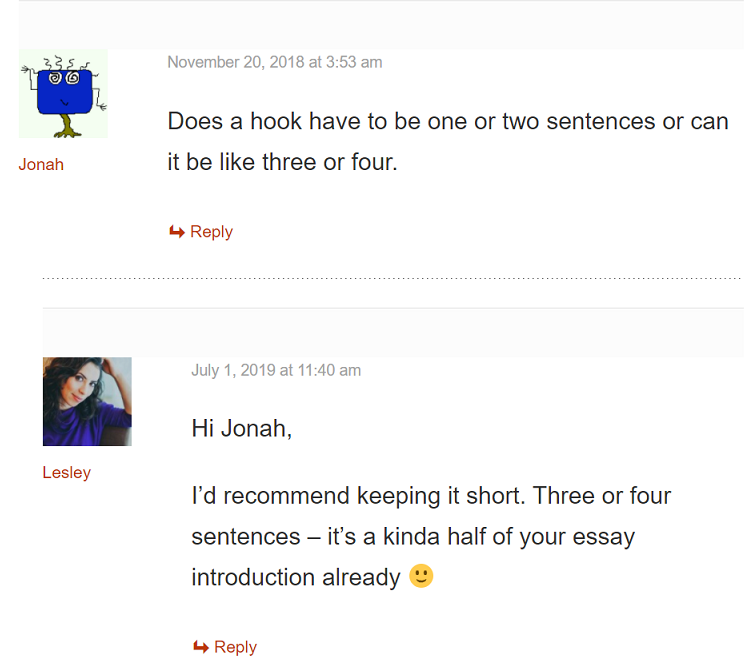
Remember that all visitors will see your reply, not only the one who asked a question:
When writing, ensure that anyone reviewing the comments can understand you. Before hitting "Publish," ask yourself, "How will this comment describe my brand in the eyes of strangers?"
Use positive language and write like a human: Say no to jargon, professional slang, and too complicated terms that average users may misunderstand. Your goal is to make comments straight and clear.
Long Story Short
Comments in WordPress have tons of benefits for your website: It's your chance to connect with readers, build trust, convert them into customers, and grow the SEO performance of your resource.
To make comments work, you need to invest time in moderating and replying to them; otherwise, they will turn into a spammers' party and destroy all your SEO endeavors.
Make the most out of negative comments, ignore haters but learn from fair criticism, reply to as many messages as you can, be polite, answer questions, help your readers, encourage discussions, and remember:
Your comments in WordPress are for communicating with the entire audience. Make them informative, straight, and fair.
And now, over to you:
How do you work with the comments in your WordPress for customer engagement and conversion? Have you already tried any form builder or other plugins to motivate customer feedback? Any specific strategy you could share with the world? Please don't hesitate to tell us in the comments below!

Author Bio
Lesley is a content writer, blogger, and contributor to online publications on education, career, and digital marketing. Current blogger at eLearning Industry, EasyEssay, AcademicHelp, and a few other edu websites. Nature lover, bookworm, and coffee addict.