

Lately, websites have been using AI tools to quickly create content.
These tools can quickly generate articles, blog posts, product descriptions, and other website text. They help sites like online stores, email newsletters, social media, and more generate lots of content.
But while AI creates a lot of content, it sounds robotic. AI writing fails to connect with readers emotionally. It can be stiff and impersonal, missing the mark for audiences.
In this article:
- Why AI-Generated Content Needs Human Editing
- Top AI Writing Tools That Will Help You In Humanizing AI Content
So, even though AI produces large quantities of text very quickly on its own, people still need to edit and improve it before posting it.
The best quality content combines AI's fast writing skills with human creativity and understanding.
This article discusses handy writing tools that let people and AI improve each other's work. Together, humans and machines can write that attracts audiences better than either alone.

AI Involvement or Advancement in Content Creation
AI writing tools have advanced rapidly, driven by the latest natural language generation models.
Where it once took human writers hours or days to research and craft articles, advanced AI tools like ChatGPT, Jasper, Ryne AI, and others can now generate hundreds or even thousands of words in seconds.
To solve this, many writers use editing techniques and tools that help convert AI text to human tone, improving clarity, flow, and overall readability.
AI tools also struggle to apply judgment, balance, or accuracy without human guidance. Names, dates, facts, and figures may be incorrectly generated or used in misleading ways without proper context.
So, while artificial intelligence has produced written content, it remains essential for human creativity. Therefore, it also helps you optimize your website and make your content rank more easily on Google.
Why AI-Generated Content Needs Human Editing
While AI tools are advanced at creating content quickly, there are still some key reasons why human editing or AI humanizers are crucial:
1. Lack of content planning
AI tools write content when you ask them to, but they don't know whether it aligns with the main goals. People need to ensure everything aligns with the big plan.
2. Might provide incorrect information
AI might provide incorrect information without someone checking. It might also use made-up data, names, or dates, which makes it less trustworthy.
3. Do not create related voice and style content
AI can copy patterns but might miss making content that fits a certain group's style. Humans are good at making content that connects with specific audiences by using the right tone and messages.
4. AI content lacks creativity and Readability
AI-generated writing can be a bit plain and less interesting. People make writing more fun by adding cool words, jokes, feelings, and cleverness. That's what keeps readers interested and involved.
5. Not able to produce new information or responses
AI can't come up with new ideas or adapt to what's new or what people say. Only humans can check and change stuff using the newest trends and feedback to keep making it better.
When people guide AI, add creativity, and check facts, AI's weaknesses aren't as noticeable. So these are the biggest reasons AI-generated content still needs an AI humanizer or human editing.
 Mick Essex
Top AI Writing Tools That Will Help You In Humanizing AI Content
Here are some top AI writing tools that will help you in humanizing AI content to bypass AI detection, so let’s take a look:
1. AnswerThis
AnswerThis is an AI writer designed for scientific precision.
Researchers and AI enthusiasts alike have been rapidly adopting the tool for its incredible accuracy, source-backed sentences, and ability to write with a draft's context in mind while adding sources and identifying gaps in the literature.
Pros
- Create entire research paper drafts with 60+ accurate citations to the sources you are looking for
- Top-rated AI writer for accuracy
- All-in-one research assistant (find research gaps, make citation maps and everything in between)
- Database of 250 million research papers, even those behind paywalls
Cons
- Takes slightly longer than other tools, but makes up for it in accuracy
- $35 / month, if you care about accuracy, it’s worth it. $144 / year
- You must keep academic integrity and use AI ethically
2. ChatGPT
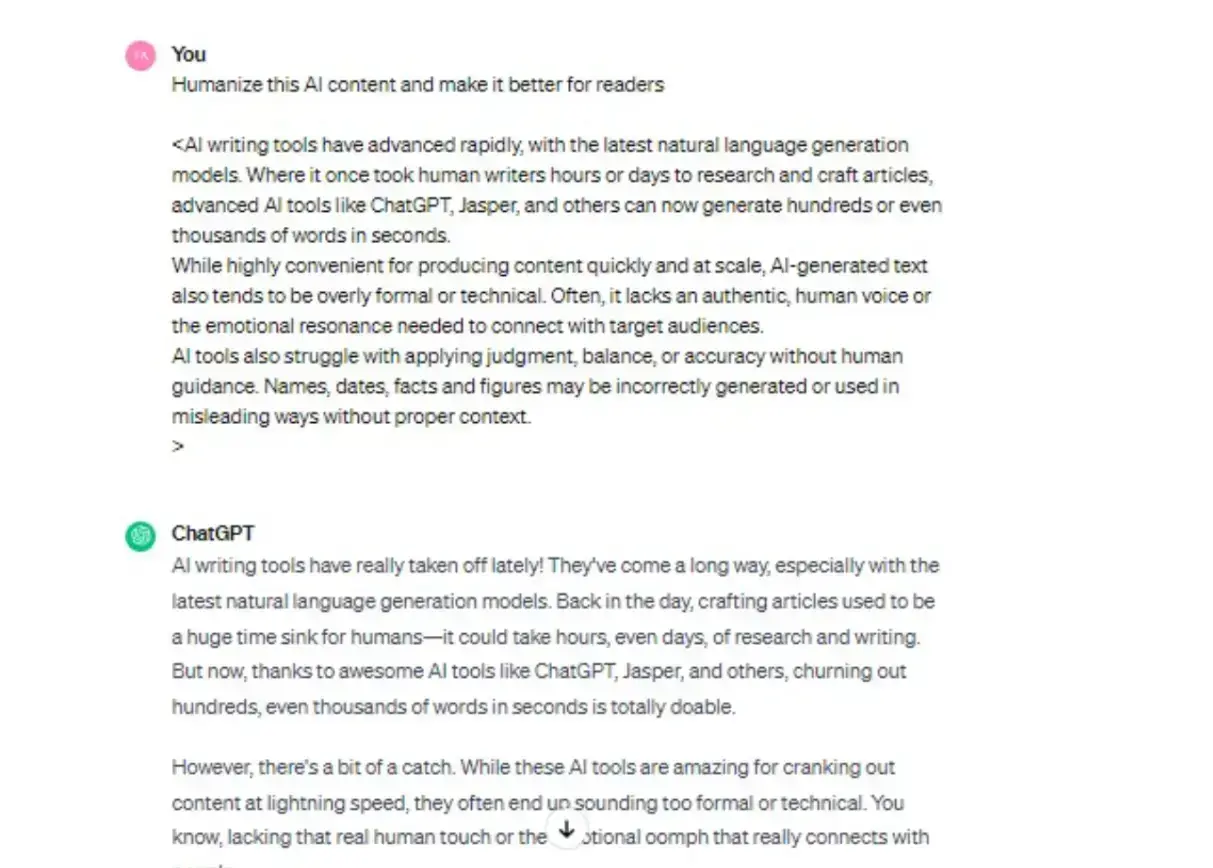
ChatGPT is a great tool that makes AI writing sound more human. It's like having a super smart helper for writing right there with you.
Pros
- Makes AI content more human-like
- Helps write faster with suggestions
- Useful for essays, blog posts, and stories
- Great for students to improve their writing
Cons
- ChatGPT may sometimes make errors or give the wrong info
- Advanced features can be pricey and not affordable for all
- Over-reliance on AI can hinder personal writing growth
- Raises questions about plagiarism and originality
 Mick Essex
3. JustDone
JustDone is an all-in-one AI writing platform that offers over 25 tools for content creation, editing, AI detection, and research. It helps students, writers, and professionals manage their entire workflow in one place instead of switching between multiple apps.
The platform includes tools like AI Detector, AI Humanizer, Plagiarism Checker, paraphraser, summarizer, citation generator, grammar checker, and more.
JustDone works with texts created or edited by ChatGPT, GPT-4/5, Claude, Gemini, and other AI models.
Its AI Detector uses a dual-model system trained on more than one million samples to identify patterns commonly associated with AI-generated writing.
The Humanizer rewrites AI-generated text to sound more natural and human-like.
Pros
- Offers 25+ writing and editing tools in one platform
- Includes AI Detector, Humanizer, and Plagiarism Checker
- Supports 25+ languages
- Helps reduce switching between different tools
- Provides export options like PDF, DOCX, and TXT
- Useful for students, writers, editors, and researchers
Cons
- No fully free version available
- Some advanced features require a paid subscription
- AI detection results are not always 100% guaranteed
4. Jasper
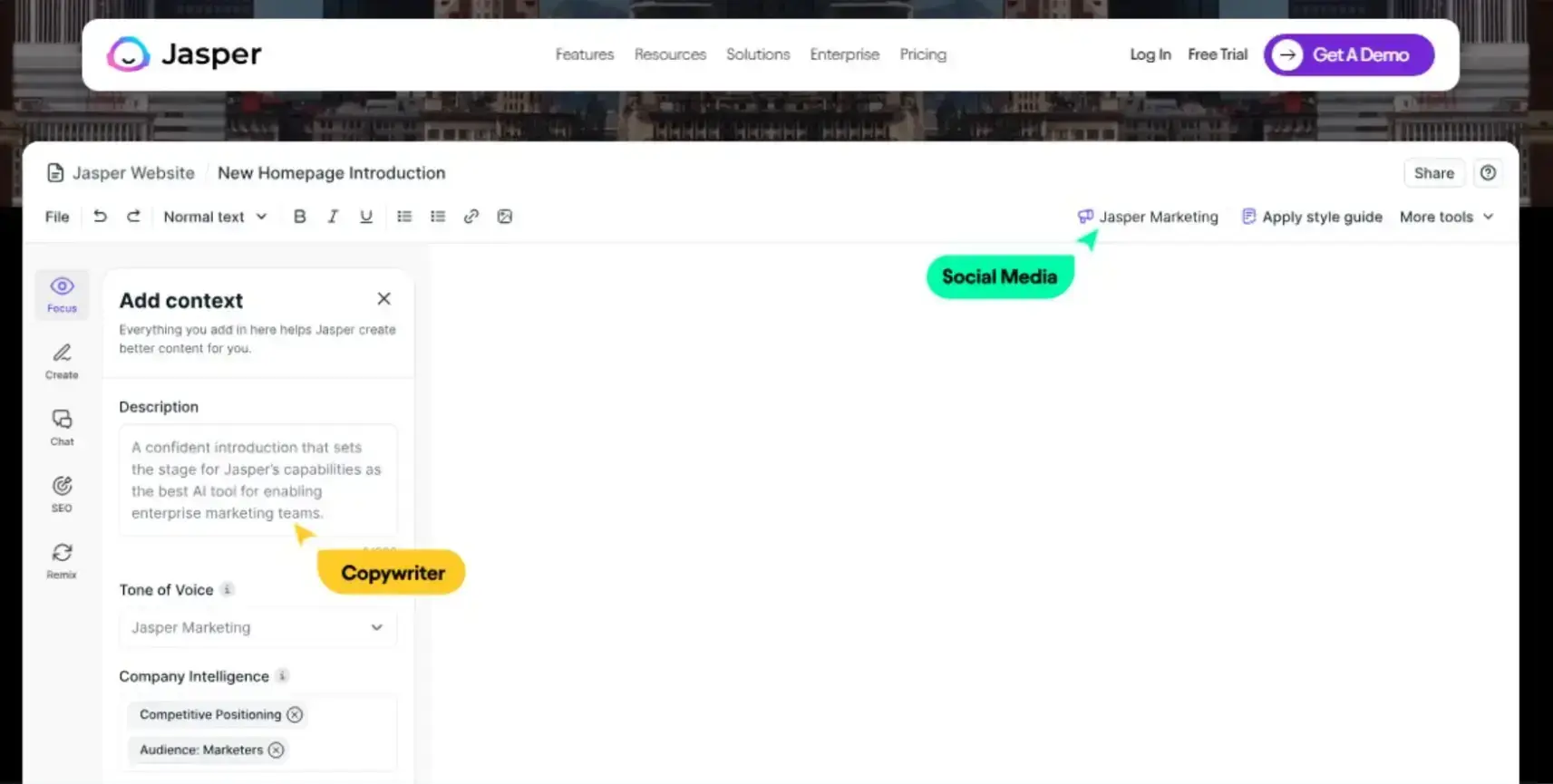
Jasper is another fantastic tool, much like ChatGPT. It lets human editors change, rewrite, or add to the paragraphs it makes.
This helps train Jasper to understand how you like your writing to sound and make it more accurate.
Pros
- Allows real people to edit content
- Enhances understanding with edits
- Offers freedom to shape content
- Helps AI match your writing style
Cons
- Requires more time for editing compared to automation
- Access and human editing can be expensive
- Requires good editing skills for optimal results
- Usage needs to be ethical and responsible
5. Rewording Tool
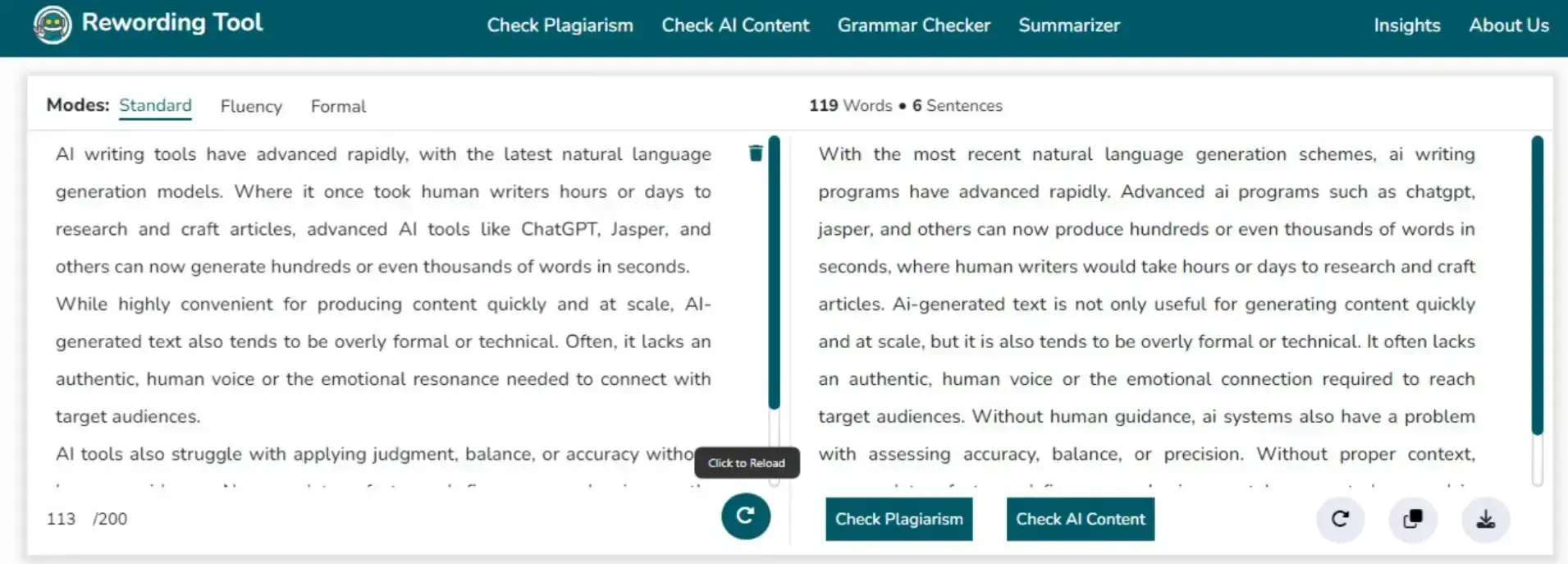
The rewording tool is pretty awesome. It can improve the quality of AI-generated text by using many professionally edited sentences as examples.
This makes the words sound more natural, fancy, and interesting, just like a human wrote them.
Pros
- Improves writing effortlessly
- Enhances content diversity
- Saves time compared to manual rewriting
- Polishes message delivery
- Better than any other Online writing assistant
- Can rewrite a maximum range of words at the same time
Cons
- Overuse requires more attention.
- Use it more responsibly to avoid plagiarism.
6. Claude
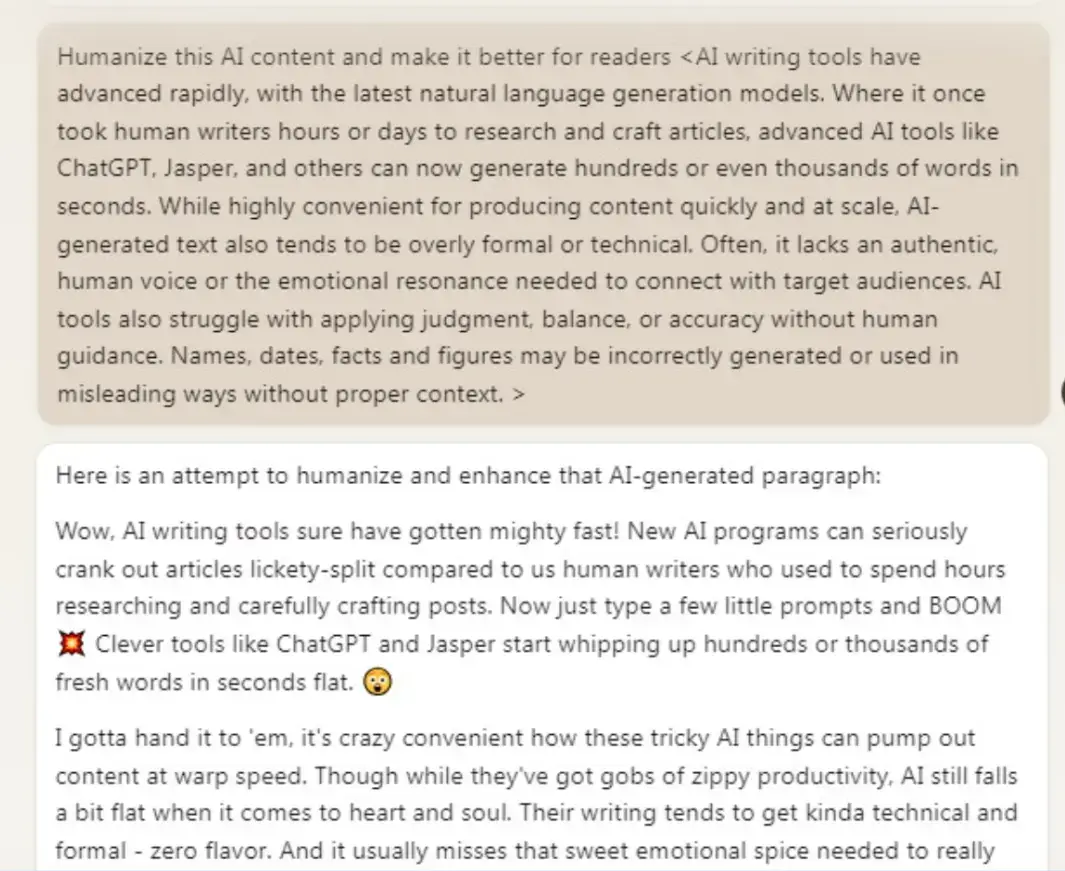
Claude is a pretty cool assistant. It lets you chat about your writing.
You can ask questions about what you wrote, check if it sounds right, make sure you're talking about the right stuff, and ask for changes to make your writing perfect for publishing.
Pros
- Facilitates useful discussions
- Ensures appropriate tone and coverage
- Allows precise adjustments
- Prepares content for publishing
Cons
- Quick responses may not always be feasible
- Access might involve a fee
- Overuse may hinder personal writing improvement
- Proper usage is crucial to avoid plagiarism
7. Wordtune
Wordtune is a helpful editing tool that works as you write. It highlights sentences that sound too stiff or awkward when AI writes them and suggests simpler, more human-like ways to say them.
When it comes to summarizing text, WordTune and paragraph summarizer are the best options. Unlike many other tools, they strictly adhere to the context before accurately summarizing paragraphs.
Besides adding a human touch to content, WordTune also enhances its quality and improves sentences. This is a very handy tool for junior writers!
Pros
- Improves writing on the go
- Ensures sentences are easily understood
- Enhances human-like writing
- Helps improve writing skills
Cons
- Suggestions might not always be perfect and need review
- Access might involve a fee
- Overreliance may impede personal growth
- Responsible use is crucial to avoid plagiarism
 Mick Essex
8. Quillbot
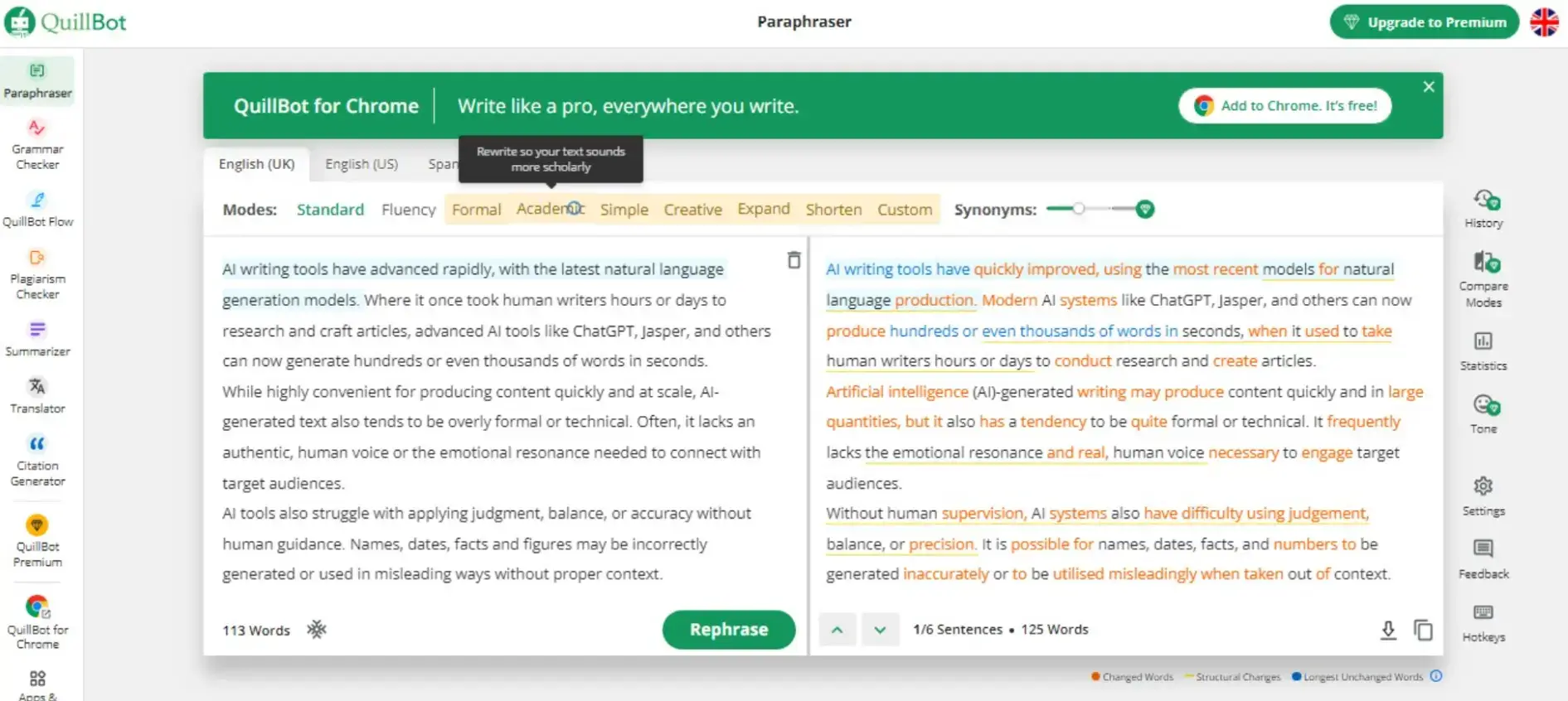
Quillbot is an awesome writing tool that, when AI is writing, looks for sentences that might sound a bit too formal or awkward. It then suggests simpler and more human-friendly ways to express those ideas.
Pros
- Quillbot helps you make your writing better as you write
- Provide crystal clear and easy for your readers to understand
- Your content will sound more like it was written by a real person
Cons
- Sometimes, Quillbot's suggestions might need a quick review to ensure they fit your writing style
- Access to Quillbot might come with a fee
- It allows you to paraphrase only 125 words
Explore top AI Product Description Generators That Businesses Must Try
9. Narrato AI
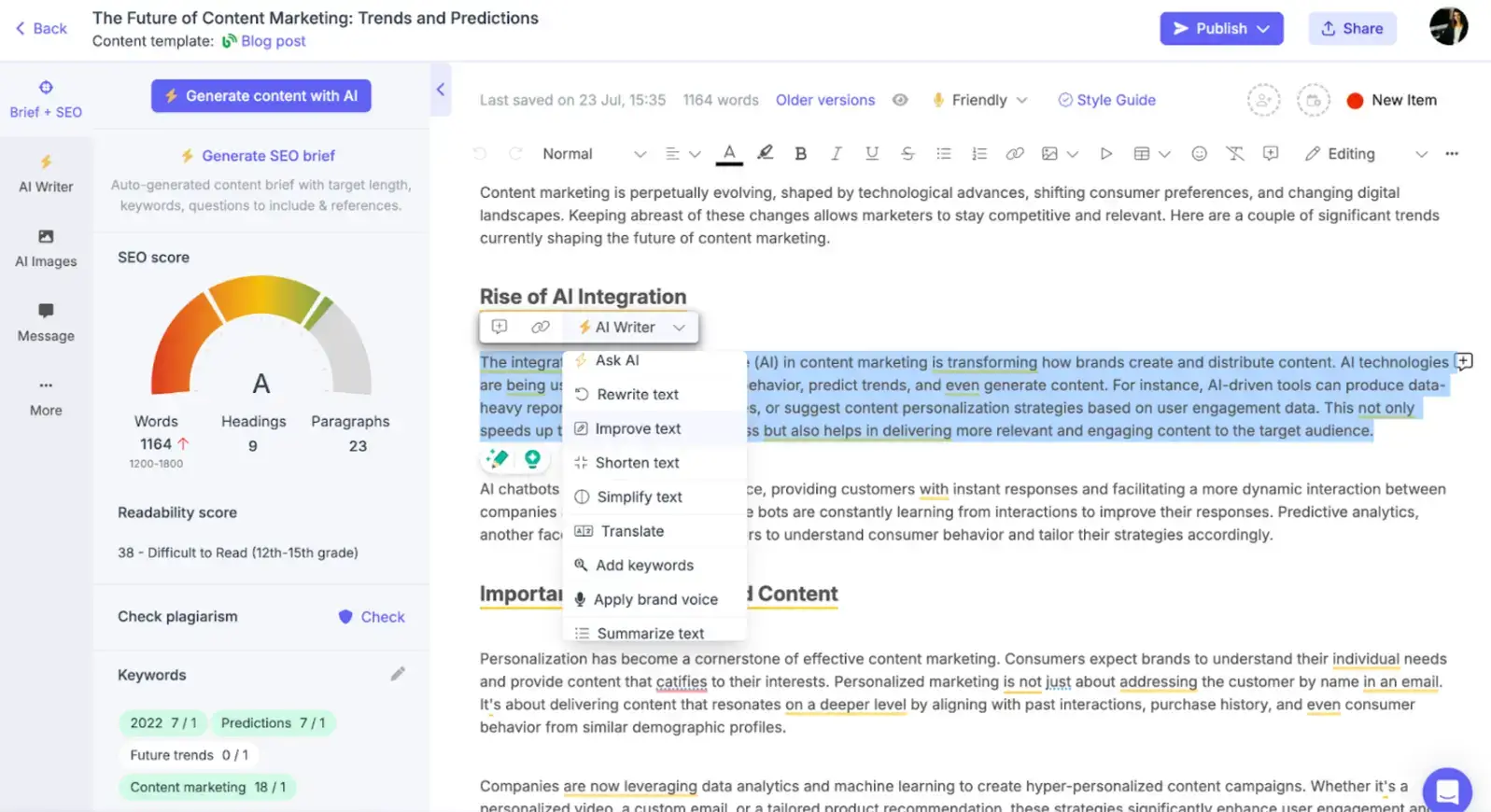
This content creation tool provides more than 100 AI templates for tasks ranging from writing content to optimizing it for SEO, and, of course, paraphrasing and humanizing text.
Narrato’s AI paraphraser doesn’t just swap words for synonyms; it completely restructures sentences to create a fresh rewrite that sounds human.
Alongside this, the in-line AI writing assistant offers various features to enhance content, such as Content Improver, Simplify, Expand, and more.
Pros
- Paraphrases content in desired tones
- Bulk writing and rewriting options
- Grammar and spelling correction tool
- Content translation in over 20 languages
- In-built plagiarism checking tool
- Easy to use
Cons
- There is no forever-free version, but you can enjoy a 14-day free trial
10. Typeface
Typeface is an AI content platform designed for enterprises that empowers marketers to craft personalized, humanized content across various types and channels. Its AI Copilot feature lets users generate content that aligns seamlessly with their brand elements and data.
The platform offers powerful AI templates for creating, repurposing, and editing content efficiently.
Pros
- AI content creation templates and storytelling tools for creating brand-consistent content
- Magic Prompts automatically improve prompts for high-quality content creation
- Easy integrations for personalized content and distribution
- Enterprise safety and brand governance tools
Cons
- Access involves a fee
Bottom Line
By using tools like ChatGPT, Jasper, Rewording Tool, Claude, and WordTune, we mix AI and human creativity to improve AI-written text. These tools help us work faster and fix things AI might get wrong. We need to use them responsibly.
This means we can write faster and better while keeping our writing human-like and genuine. Following these tips, you can use AI to create content that feels real and interesting to people.
Combining AI's efficiency with human understanding, you can make great website content, social media posts, newsletters, and more that attract and engage your audience.
You'll get even better at using AI to improve your writing with practice.
