

In a competitive market, it’s necessary to understand the tactics that can help you to uphold your position. It may be a difficult task that requires continuous struggle and updates.
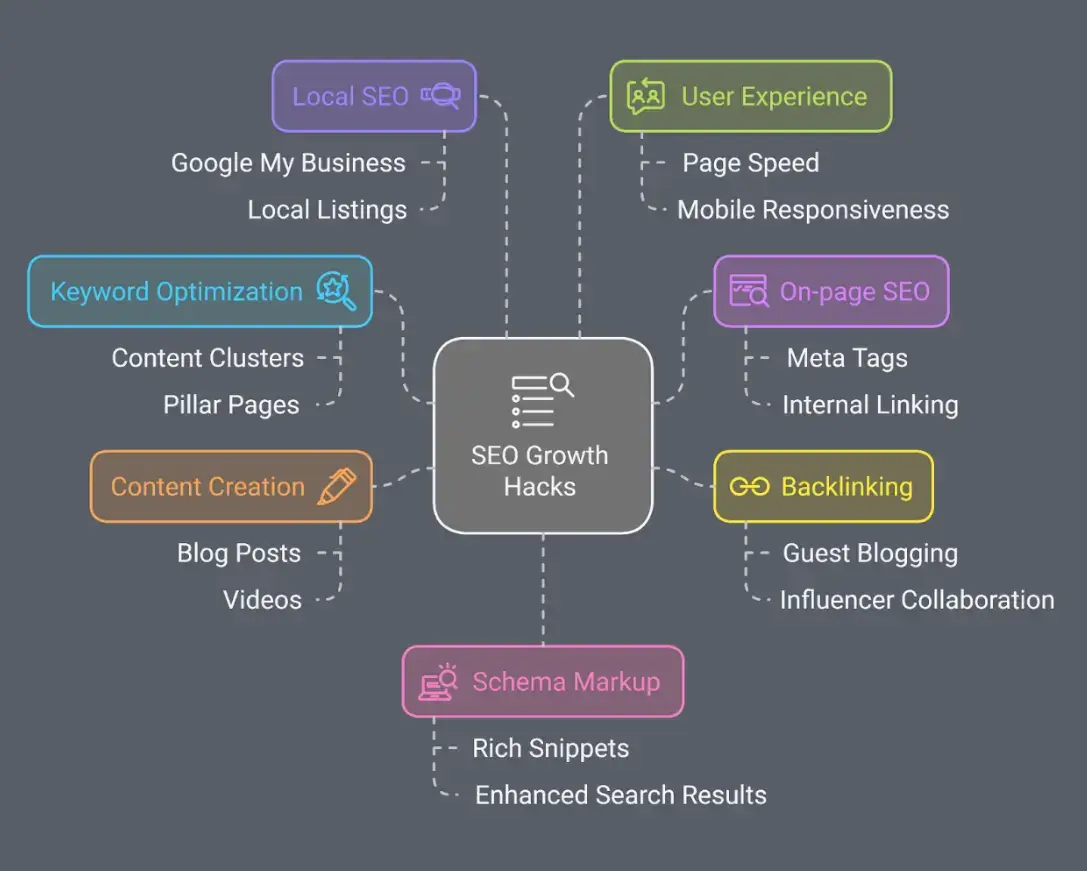
Here are SEO growth hacks to boost website growth rapidly. In this guide, we will discuss the top 10 SEO hacks. Let’s start with the basics of SEO growth hacks.

What are SEO Growth Hacks?
SEO growth hacks are strategies or techniques for rapidly increasing website traffic. These techniques are usually budget-friendly for businesses of all sizes.
The Top 10 SEO Growth Hacks
1. Leverage competitor analysis for keyword opportunities
Start by identifying which keywords your competitors use. You can use different tools (to make the keyword analysis process easy), such as Ahrefs and the SEMrush free trial.
This approach lets you discover keywords that they rank for and identify gaps in your strategy.
Steps to Find Keyword Opportunities:
- Identify Your Competitors: Look for websites ranking for keywords you want to target.
- Analyze Their Keywords: Use SEO tools to pull their top-ranking keywords.
- Look for Gaps: Spot keywords they rank for, but you don’t, especially long-tail keywords with lower competition.
2. Optimize on-page SEO elements
On-page SEO is the foundation for boosting search visibility. Simple changes to key elements on your page can significantly impact rankings.
Key Elements to Focus On:
- Title tags: Write titles that are keyword-optimized.
- Meta description: Meta description should have keywords and clear calls to action (CTA).
- Headers: Use proper heading levels (H1, H2, H3) to make the content easier for readers to understand.
- Image optimization: Use keywords to optimize image alt text.
3. Analyze and replicate competitors' backlink profiles
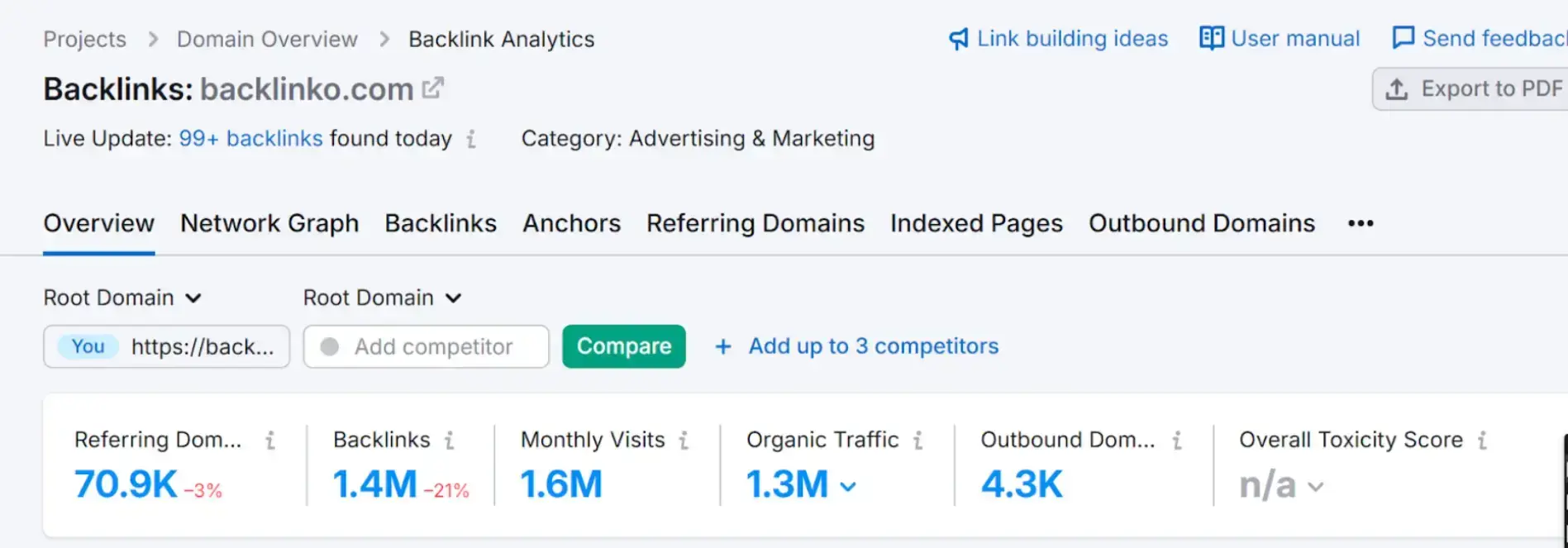
Backlinks remain a significant ranking factor.
You can determine where your competitors' backlinks are placed and identify potential websites to target with your backlinking strategy by reviewing their backlink profiles.
One effective method for acquiring these links is through niche edits, where you insert your backlink into existing relevant content on those websites, helping you boost your SEO efforts more efficiently.
To manage and streamline this process, consider using an AI link insertion tool to automate and optimize your link-building efforts.
How to Conduct a Successful Backlink Analysis:
- Use a Backlink Analysis Tool
- Find High-Quality Links
- Strategically Reach Out
4. Prioritize user experience and core web vitals
Google usually prioritizes websites that are easy to use. Improving the user experience can directly impact rankings.
The main areas to concentrate on are mobile friendliness and loading speed.
Rapid User Experience Gains:
- Optimize Page Speed: Identify issues by using tools like Google's PageSpeed Insights.
- Make sure your website is mobile-friendly by making sure it works properly across all platforms.
- Minimize intrusive advertisements and pop-ups to create a smooth experience.
5. Craft engaging, comprehensive content
Visitors are drawn to and remain on your page longer when you have high-quality content. In-depth articles that cover a lot of ground score highly on search engines and can surpass brief, superficial posts.
Tips for content creation:
- Compile as much data as you can, addressing every subtopic.
- Add videos, infographics, or pictures to make the content more interesting.
- To keep the old content current, optimize it by rewriting the text with new information.
6. Implement schema markup for rich snippets
Schema markup can enhance how your website appears in search results and help search engines better understand your content.
You can leverage a free tool like Attrock Schema Markup Generator to create and implement schema markup and improve your chances of getting featured in rich snippets.
Rich snippets, such as reviews or frequently asked questions, can boost click-through rates by making your listing stand out.
How to Include Schema Markup:
- Utilize the Structured Data Markup Helper on Google: Generating the necessary code is made simple by this tool.
- Pay Attention to the Important Pages: Use schema on sites that make sense, like FAQs or product pages.
- Use Google's Structured Data Testing Tool to ensure that your markup is accurate and error-free.
7. Use content clusters and pillar pages
Creating a central "pillar" page that covers a topic in general and connecting it to related "cluster" sites that delve deeper into subtopics is known as content clustering.
This method raises rankings for connected keywords and enhances the website's structure.
How to create a content cluster:
- Choose a Broad Topic: Decide on a subject that will interest your readers.
- Create an All-Inclusive Pillar Page: This page should serve as a comprehensive reference.
- Connection to Cluster Content: Compose articles about related subtopics and include links to each pillar page.
8. Optimize for featured snippets

Position zero, also known as featured snippets, provides prominent placement in Google's search results. You can improve your chances of getting the snippet slot by optimizing your content to directly address frequently asked queries.
How to Target Featured Snippets:
- Firstly, try to make question-based headings and structure them as frequently asked questions (FAQs)
- Keep the answer simple yet meaningful. Give a 40–50-word answer by using easy-to-understand language.
- Use different formats that are less confusing. For example, use lists, tables, or bullet points.
9. Focus on local SEO (If applicable)

Optimizing your website for local SEO can generate targeted traffic. Using local SEO software improves a website's local ranking. An optimized page will appear at the top of Google Maps.
Important Local SEO Strategies:
Some of the important strategies for local SEO are listed below.
- Improve Google My Business: Add up-to-date information and images to your listing.
- Use local keywords: Make sure to include your city or area name in the keyword.
- Encourage reviews: A website's credibility increases with reviews. When you have good reviews, it will also raise the website’s ranking.
10. Track, measure, and adjust with data
Monitoring your outcomes is crucial for optimizing your SEO. Use Google Analytics and Google Search Console to track metrics and make data-driven changes.
Metrics to Track:
- Traffic and interaction: Examine the sites that receive the greatest interaction and visitors.
- Bounce Rate and Dwell Time: High dwell times and low bounce rates are signs of high-quality content.
- Keyword Rankings: Monitor target keyword performance and make necessary adjustments.
Conclusion
These easy SEO growth tips may significantly impact your rankings. Every strategy, from competitor analysis to schema markup, calculates how to raise your website's exposure.
By consistently implementing these methods and monitoring their results, you can stay ahead of the competition and get the most from your SEO efforts.
Frequently Asked Questions
1. How can I find keyword opportunities through competitor research?
There are several ways to find keyword opportunities through competitor research. First, you can use tools like Ahrefs and SEMrush to identify ranking keywords. Then, look for keyword gaps. Find the keywords (especially long tail keywords) on which your competitors are ranking, but you miss them.
2. What are some key elements of on-page SEO?
On-page SEO has several elements. Some of the key elements are listed below.
- Meta title
- Image optimization
- Header tags
- Meta description
- Internal linking
These elements make your content more user-friendly and improve the chances of ranking.
3. How to improve user experience for SEO?
To improve user experience, utilize tools such as Google PageSpeed Insights. These tools enhance the user experience in various ways, such as:
- Boosting page speed
- Ensuring mobile compatibility
- Minimizing harmful ads
4. What is schema markup, and how does it help?
Schema markup is a code that helps search engines better understand your content. Afterward, it becomes easier for Google to display higher-level snippets, such as reviews or FAQs, in search results. Ultimately, with a higher ranking, your click-through rates also increase.
5. What tools can I use to manage my SEO performance?
You can manage your SEO performance by using Google Analytics and Google Search Console. These tools help to monitor different metrics such as traffic, bounce rate, dwell time, and keyword rankings.
6. Why is local SEO important, and how do I optimize for it?
Local SEO helps to attract traffic to your local area. You can optimize for it by updating your Google My Business profile, using local keywords, and promoting positive feedback.

Author Bio
Joshua Turner is an experienced content marketer and outreach specialist with a strong background in SEO and digital marketing. Passionate about helping businesses grow, he focuses on driving organic traffic and acquiring high-quality backlinks. Joshua has collaborated with a wide range of industries, particularly the SaaS industry, providing tailored content strategies and effective outreach solutions.