


In today’s competitive digital landscape, attention alone doesn’t drive sales—action does. Whether you run an e-commerce store, SaaS business, online course, or promotional campaign, one of the biggest challenges is motivating visitors to act before they leave your site.
That’s where countdown widgets become powerful conversion optimization tools.
A countdown timer visually communicates scarcity and urgency marketing by showing visitors exactly how much time remains before an offer, event, or promotion ends. When used strategically, countdown widgets can significantly improve website engagement, increase conversions, and boost e-commerce sales.
In fact, research from the CXL Institute shows that urgency and scarcity tactics can meaningfully increase purchase intent when applied authentically.
Whether you're running a flash sale timer, promoting a webinar, or encouraging cart completions, countdown widgets help create momentum and reduce hesitation.
In this guide, you’ll learn:
- What a countdown widget is
- Why countdown timers improve conversions
- Different types of countdown timers
- Where to place them for maximum impact
- Step-by-step setup instructions
- Advanced conversion optimization strategies
- Common mistakes to avoid
- Best practices backed by marketing psychology
What is a Countdown Widget?
A countdown widget is a dynamic timer that counts down to a specific date, time, or event. It can be embedded in:
- Websites
- Landing pages
- E-commerce product pages
- Checkout pages
- Popups
- Email campaigns
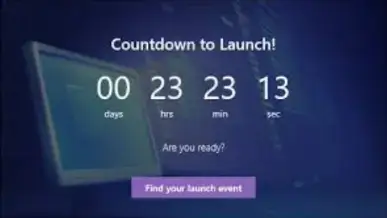
Source: Microsoft
Examples include:
- “Sale ends in 02:15:30”
- “Your discount expires in 24 hours”
- “Webinar starts in 10 minutes”
These widgets work because they activate psychological triggers tied to scarcity marketing and FOMO (Fear of Missing Out).
Why Countdown Widgets Are So Effective
Countdown timers are far more than visual website elements—they’re proven conversion optimization tools.
1. They Create Urgency (FOMO Marketing)
When users believe an opportunity is limited, they’re more likely to take immediate action. This is the foundation of urgency marketing.
Amazon, Booking.com, and countless ecommerce brands use scarcity messaging like:
- “Only 2 left”
- “Offer ends tonight”
- “Sale expires in 1 hour”
Countdown timers visually reinforce that urgency.
2. They Increase Conversion Rates
According to ConversionXL, time-sensitive offers paired with urgency indicators can increase conversions substantially when the offer is genuine.
Flash sale timers are especially effective during:
- Black Friday promotions
- Product launches
- Seasonal sales
- Limited inventory campaigns
3. They Improve Website Engagement
Timers naturally attract visual attention. This helps direct users toward key actions like:
- Purchasing a product
- Registering for a webinar
- Signing up for a newsletter
- Completing checkout
The clearer the deadline, the lower the decision friction.
4. They Reduce Cart Abandonment
Cart countdown timers are commonly used in e-commerce sales tactics to encourage shoppers to complete purchases before discounts expire.
This works particularly well when paired with:
- Free shipping deadlines
- Limited-time coupon codes
- Inventory scarcity
Baymard Institute reports that nearly 70% of carts are abandoned online, making urgency optimization a valuable tactic.
5. They Build Anticipation
For launches, live events, and webinars, countdown widgets create excitement and anticipation before the event begins.
Brands frequently use countdowns to:
- Grow waitlists
- Increase launch-day traffic
- Improve event attendance
Types of Countdown Widgets
Choosing the right timer depends on your conversion goal.
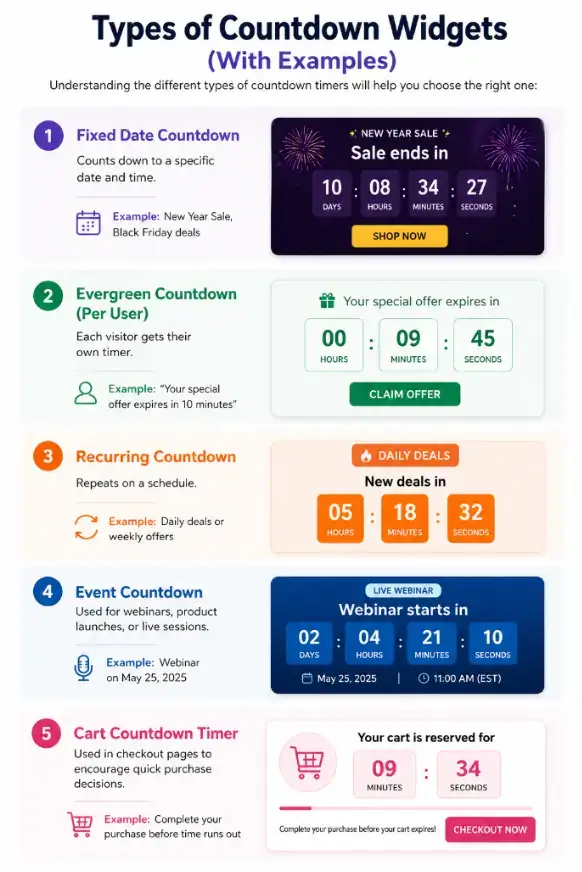
1. Fixed Date Countdown
Counts down to a specific date and time.
Best for:
- Black Friday sales
- Holiday promotions
- Product launches
2. Evergreen Countdown Timer
Each visitor receives their own personalized timer.
Example: “Your exclusive discount expires in 15 minutes.”
Evergreen timers are widely used in conversion funnels and lead generation campaigns.
3. Recurring Countdown
Automatically repeats on a schedule.
Best for:
- Daily promotions
- Weekly sales
- Recurring webinars
4. Event Countdown Timer
Perfect for:
- Webinars
- Live streams
- Conferences
- Course launches
5. Cart Countdown Timer
Used during checkout to encourage immediate purchases. These are particularly common in e-commerce conversion optimization strategies.
Where to Place Countdown Widgets for Maximum Results
Placement has a major impact on effectiveness.
High-converting locations include:
- Homepage hero banners
- Product pages
- Landing pages
- Checkout pages
- Popups
- Sticky bars
- Email campaigns
For even stronger engagement, businesses often combine countdown widgets with:
- social proof
- live visitor counts
- customer reviews
- social feeds
You can also pair timers with engagement tools like Walls.io to showcase live community interaction during promotions.
Step-by-Step Guide: How to Add a Countdown Widget
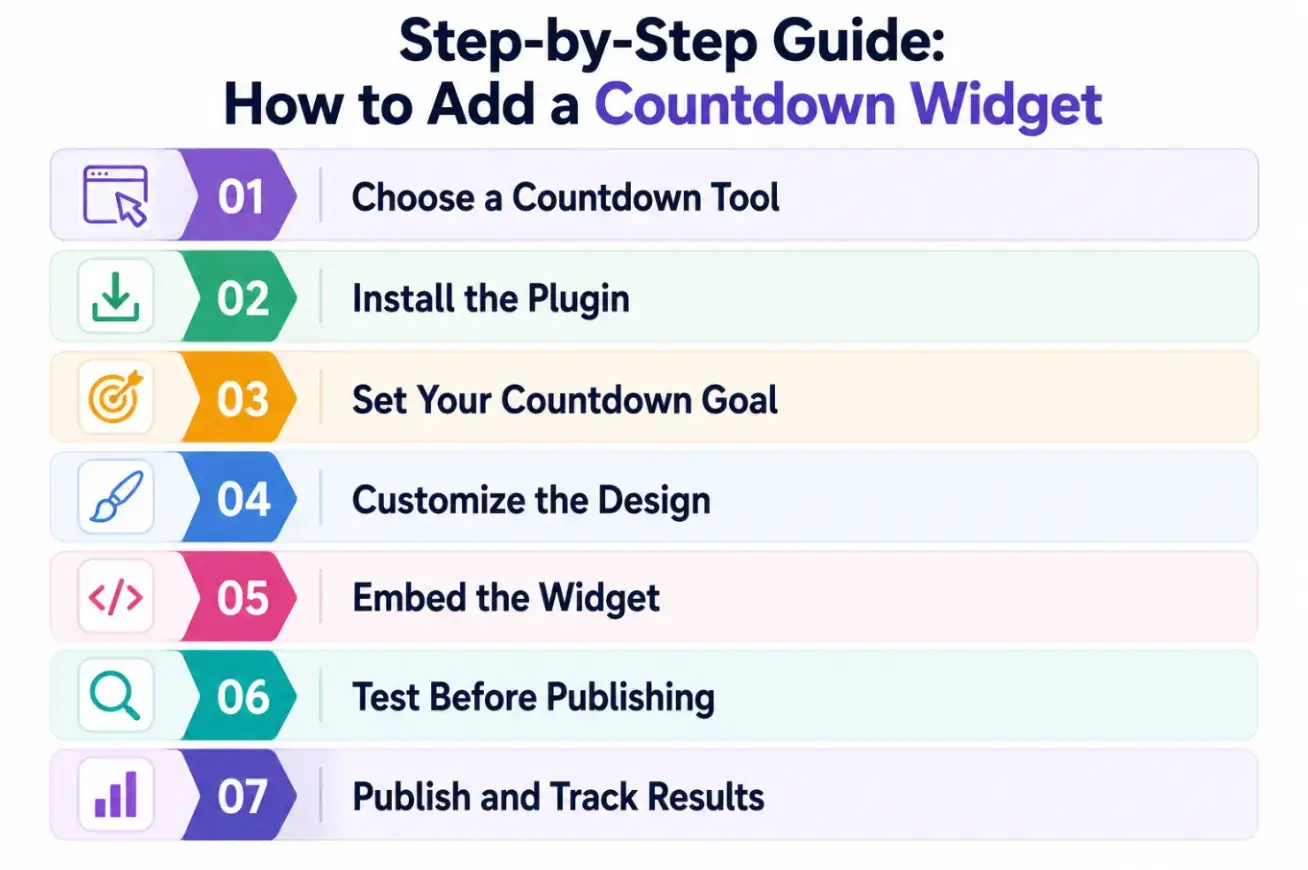
Step 1: Choose a Countdown Timer Tool
Select a tool compatible with your platform.
Popular options include:
- POWR Countdown Timer
- Shopify timer apps
- WordPress countdown plugins
- Wix countdown widgets
If you use POWR, you can quickly install and customize timers without coding.
 Mick Essex
Step 2: Install the Widget
Most platforms support one-click installation.
Examples:
- WordPress: Plugin directory
- Shopify: Shopify App Store
- Wix: Wix App Market
No development experience is required.
Step 3: Define Your Conversion Goal
Before creating the timer, identify the objective:
- Increase e-commerce sales
- Generate leads
- Promote a webinar
- Reduce cart abandonment
- Increase email signups
The timer type should support that goal.
Step 4: Customize the Design
Your countdown widget should match your brand identity while remaining visually prominent.
Best practices:
- Use contrasting colors
- Keep fonts readable
- Add subtle animations
- Include a strong CTA
Examples:
- “Hurry! Sale Ends Soon”
- “Claim Your Discount Before Time Runs Out”
Step 5: Place the Widget Strategically
Place countdowns near conversion-focused elements like:
- Buy buttons
- Signup forms
- Checkout CTAs
Avoid burying the timer below the fold.
Step 6: Test Across Devices
Always verify:
- Mobile responsiveness
- Accurate timing
- Fast loading speed
- Browser compatibility
Mobile optimization is critical since mobile e-commerce traffic continues to grow globally.
Step 7: Measure Performance
Track:
- Conversion rates
- CTR (click-through rates)
- Bounce rates
- Revenue increases
- Cart completion rates
A/B testing different countdown styles can produce valuable optimization insights.
Advanced Countdown Widget Features
Modern countdown timer tools include advanced functionality such as:
- Auto-reset timers
- Time-zone detection
- Exit-intent popups
- Email platform integrations
- Dynamic evergreen campaigns
- Redirect actions after expiration
These features make countdown widgets much more effective for marketing automation and conversion optimization.
Best Practices for Countdown Timer Conversion Optimization
Keep Urgency Authentic
Fake scarcity damages trust. Never reset timers dishonestly or create misleading expiration dates. Authenticity improves long-term customer loyalty.
Pair Timers with Strong Offers
Urgency alone won’t convert users if the offer is weak.
Combine timers with:
- Discounts
- Free shipping
- Exclusive bonuses
- Limited inventory
Use Clear Messaging
Visitors should instantly understand:
- What’s expiring
- Why it matters
- What action they should take
Optimize for Mobile Users
Large portions of e-commerce traffic now come from smartphones.
Ensure:
- Timers scale properly
- CTAs remain clickable
- Text stays readable
Avoid Overusing Timers
Too many countdowns create visual fatigue and reduce credibility. Use them strategically during high-priority campaigns.
Common Countdown Widget Mistakes to Avoid
- Using fake urgency
- Setting unrealistic deadlines
- Overloading with animations
- Poor mobile optimization
- Placing timers in low-visibility areas
- Forgetting to test expiration behavior
Avoiding these mistakes improves trust and performance.
Conclusion
Countdown widgets remain one of the most effective website engagement and conversion optimization tools available today.
When implemented strategically, they:
- create urgency
- improve focus
- reduce cart abandonment
- increase ecommerce sales
- strengthen marketing campaigns
The key is balancing urgency marketing with authenticity.
Instead of relying on gimmicks, use countdown timers to support real promotions, limited-time opportunities, and meaningful customer experiences.
Whether you’re running a flash sale, launching a product, or improving your conversion funnel, a well-designed countdown widget can help turn passive visitors into active customers.
If you want an easy way to build high-converting countdown timers without coding, POWR Countdown Timer offers customizable widgets for Shopify, Wix, WordPress, and more.
FAQ: Countdown Widgets
1. Do countdown timers really increase conversions?
Yes. Countdown timers can improve conversion rates by creating urgency and reducing hesitation. They’re especially effective during limited-time offers, flash sales, and ecommerce promotions.
2. What’s the best place to add a countdown widget?
High-performing locations include:
- product pages
- checkout pages
- homepage banners
- landing pages
- popups near CTAs
3. Are evergreen countdown timers effective?
Yes. Evergreen timers personalize urgency for each visitor, making them highly effective in funnels, lead generation, and automated sales campaigns.
4. Can countdown widgets hurt user trust?
They can if used dishonestly. Fake scarcity or endlessly resetting timers may damage brand credibility. Always use authentic deadlines.
5. What industries benefit most from countdown widgets?
Countdown timers work well for:
- ecommerce
- SaaS
- online education
- webinars
- events
- digital products
- agencies
- service businesses
