

The Pay-Per-Click (PPC) advertising model remains prevalent almost three decades after the launch of the first PPC ad space.
In 2023, digital ad spending is set to surpass $701 billion globally, and nearly half of that will be from US companies. Why is this important?
What is PPC?
PPC campaigns allow advertising businesses to bid on keywords for space on different advertising platforms.
The advertisers then pay for the user clicks generated from the ads. As a result, this model is more efficient and profitable than traditional advertising.
The potential of PPC advertisements is promising. However, you can only see and benefit from them if you manage your eCommerce PPC campaigns properly.
Alternatively, partnering with a specialized contract management and B2B PPC agency can provide expertise in contract management, PPC campaign optimization, and ROI maximization.
Platforms like Zegal and Spotdraft offer comprehensive solutions for contract lifecycle management, providing businesses with tools and resources to streamline their contract processes and ensure efficient management.
Are you looking to learn more about effective eCommerce PPC management practices?
6 Must-Know Principles of Proper PPC Management for eCommerce
- Run A/B tests
- Target long-tail keywords
- Add negative keywords
- Optimize product pages
- Match seasonal demands
- Competitor analysis
Let’s go!
1. Run A/B tests
A/B tests help you compare different variables in your PPC strategy, making it easy to identify the best options. This is why you need to run A/B tests for various factors and features of your PPC campaign.
That may include elements like the ad headline, landing page text, graphics, and the CTA in your advert.
For instance, you may try two separate value propositions on your landing page. You can then track the conversions over a given period.
Besides that, A/B testing will also help you learn a lot about your target audience, especially their online shopping patterns and specific interests.
You can then use the information to develop strategies to ensure each customer has a positive user experience.
You should run A/B tests regularly to optimize the company's PPC campaigns. Also, avoid multivariate testing on different elements simultaneously.
This could make it harder to identify the aspects influencing the results. Instead, test one or two features per round.
2. Target long-tail keywords
PPC campaigns run on a keyword bidding system. So you should choose relevant keywords to make your ads visible in the search results.
Keyword research will help you find these keywords that match your industry. Long-tail keywords are one such keyword category.
Long-tail keywords are more specific and longer than other keywords. They often range between 3 and 5 words.
Here is a visual breakdown of how to create long-tail keywords and how they work:
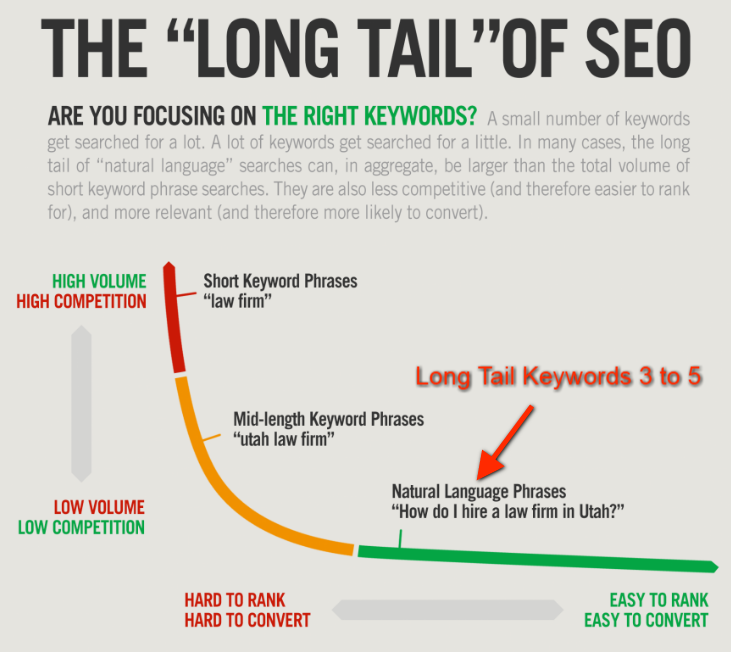
Long-tail keywords can be used in natural language phrases. Like the example above, instead of “law firm,” you could use ‘How do I hire a law firm in Utah.” The latter is more specific and attracts target customers more likely to purchase.
To succeed with long-tail keywords, include details such as your physical location. For instance, if you own a sportswear store, you could use the keyword “women’s sportswear store in Seattle” instead of “sportswear store.”
Also, if you have an internal search feature, you could use the search data to guide you on what is currently popular with your users. Then you can include the phrases in your long-tail keywords to attract qualified traffic.
3. Add negative keywords
The success of a PPC campaign depends heavily on reaching the right potential customers on your eCommerce platform.
This is why part of your eCommerce PPC management plan should focus on identifying negative keywords.
The example below shows how adding negative keywords works. The negative keyword “running shoes” prevents an ad from showing when a query has two words.
This is the reason the ad will not pop up in the last three search queries below:
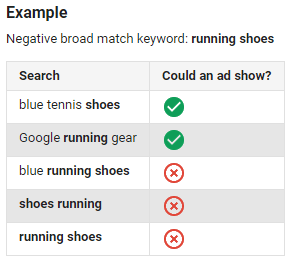
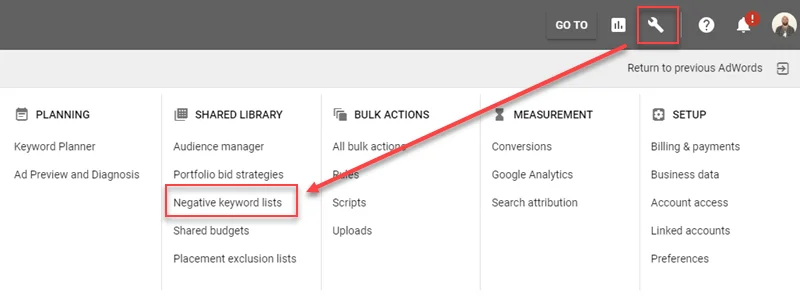
You can easily add negative keywords to your Google Ads account to avoid spending money unnecessarily. Build a negative keywords list and add it to your PPC campaign as shown below:
Finally, you need to think beyond the obvious irrelevant keywords for your sector for better results.
For instance, if you bid for the keyword “quality refurbished laptops,” you could add “new laptops” as a negative keyword. This way, you attract only buyers looking for refurbished laptops.
4. Optimize product pages
The state of your product pages determines whether the potential customers you have enticed through your PPC advertising will stay and make purchases.
Even qualified leads will leave your site if your product pages are unappealing or poorly optimized. But you can make changes to your product feed to boost customer engagement and click-through rates. They include:
- Ensuring you have clear and quality product images and videos
- Sharing customer feedback and testimonials
- Using good product titles
- Adding updated and relevant product information
- Including keywords in the page title tags and product descriptions
- Consistent branding and logo placement
Nike's online store features well-optimized, appealing product pages. Here’s an example of one:

Nike has well-designed product pages with customer reviews, ratings, and internal links to relevant pages for users. You will also notice they use high-quality images and clear product descriptions, all neatly designed.
If you want to achieve similar, clean, neat designs on your product pages, you can use the POWR media gallery. The plugin lets you display articles, images, and videos in a block-style gallery and customize it to maintain brand consistency.
Note, when optimizing your product pages, especially those advertised, ensure they contain similar information.
You can use online tools to rephrase some text from the ad and the landing page. However, make sure the brand voice and tone remain consistent.
Users mostly click on advertisements because certain information catches their attention. Therefore, leaving the information on your product page may make them feel deceived, leading to mistrust.
5. Match seasonal demands
Good eCommerce PPC management helps track consumer behavior, purchasing patterns, and changes in demand.
This guides you on when to spend more or less on a specific eCommerce PPC strategy. You can use the POWR Hit Counter app to help you track the number of visits on each webpage.
In addition to your customers' data and online behavior, you must also understand industry trends. Understand when business is booming or slow, and identify factors influencing these changes.
For instance, if your eCommerce website sells warm knitted attire, you know your peak period is winter.
So you should invest more in PPC advertising during the season for more profits. But you can also use PPC during low seasons to boost your revenue.
They also make it easy for businesses with multiple locations to know when to increase bids or alter PPC marketing budgets in each area. This makes it easier to boost your lead conversion rates and earn control of a larger market share.
Try Shift4Shop to launch your eCommerce business today.
6. Competitor analysis
An eCommerce PPC management plan is incomplete without a thorough competitor analysis.
The analysis will also provide information you could use to adjust your PPC strategy and make informed decisions.
For example, if they have been bidding on a particular keyword for a long time, they probably get decent returns. So, your brand could try bidding for the same keyword.
The analysis can also help you notice search queries and keyword gaps your competitors overlook.
Then you can use them in your PPC ads to discover untapped traffic opportunities with a higher likelihood of attracting future customers.
Here is an example of an analysis that focuses on keyword gaps:
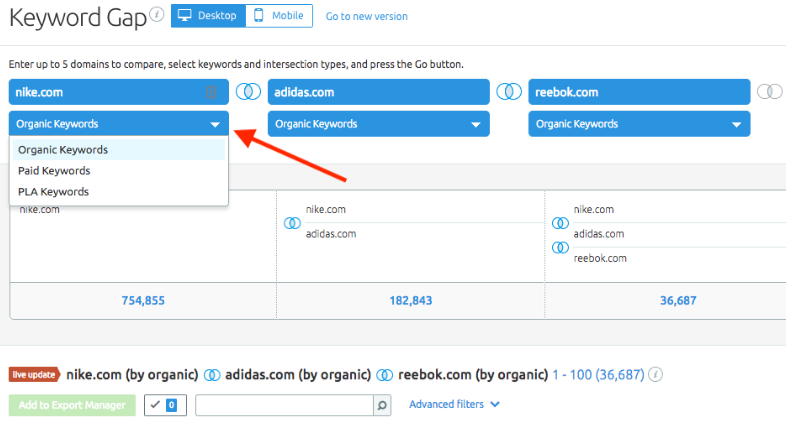
A competitor analysis will also help you discover your competitors’ spending patterns and the profit they make. This will help you make informed decisions about factors such as your PPC campaign budget.
You can use platforms like SE Ranking or SEMRush to run the analysis and generate a custom report that makes it easier to understand and interpret the data.
Another way to spy on your competitors is through the Facebook ads library.
To see the ad details, scroll down to the competitor's Facebook profile. Click the “Page transparency” tab to view the general page and ad details.
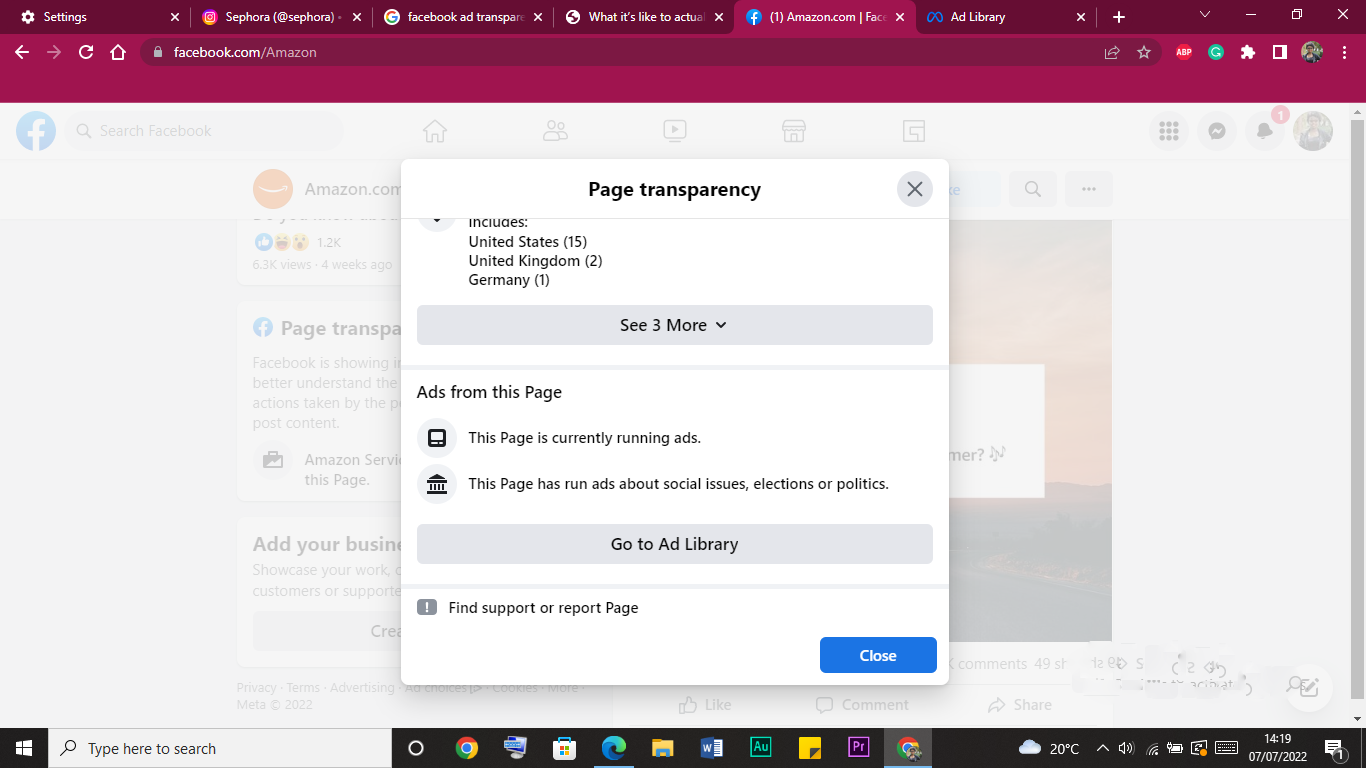
Click “Go to Ad Library” for more details about the active ads, including content types and brand landing pages. You can also get the ads to report with more details, like brands’ spending.
In Closing
Any business looking to achieve the best ROI on every dollar spent on PPC advertising must practice effective eCommerce PPC management.
Proper management will help you keep track of each step and guide your decisions throughout the PPC campaign.
So ensure you pay attention to the steps discussed above. Run A/B tests, use long-tail keywords, add negative keywords, optimize product pages, match seasonal demands, and run competitor analysis.
Follow these eCommerce PPC management steps, and you’ll have an easier time managing your campaigns. Most importantly, they’ll help you optimize your ROI from each campaign.
All the best!
Frequently Asked Questions about eCommerce PPC Management
1. What is eCommerce PPC management?
eCommerce PPC management involves planning, executing, and optimizing paid advertising campaigns where businesses pay for clicks. It focuses on improving visibility, driving traffic, and increasing conversions through platforms like Google Ads and social media.
2. How much budget should I allocate to PPC campaigns?
Your PPC budget depends on your business goals, industry competition, and target audience. Start with a manageable budget, track performance, and gradually scale based on ROI and campaign effectiveness.
3. How long does it take to see results from PPC campaigns?
PPC can deliver results quickly—often within days—but meaningful optimization and consistent ROI typically take a few weeks of testing, refining, and analyzing campaign performance.
4. What are the most important metrics to track in PPC?
Key metrics include click-through rate (CTR), conversion rate, cost per click (CPC), return on ad spend (ROAS), and overall ROI. These help you understand performance and guide optimization decisions.
5. Should I manage PPC campaigns myself or hire an expert?
If you have the time and knowledge, you can manage campaigns yourself. However, hiring a PPC expert or agency can help you achieve better results faster, especially in competitive industries where optimization is critical.

Author Bio
Plamen Popov is the content and communications specialist for Writer, an AI writing assistant designed for teams. Plamen has previously developed content marketing strategies for brands such as MFG, Kinguin, Acronis, and Metrilo.