
Are you concerned about why your online e-commerce store isn’t performing as well as you would like? The problem might be with the foundation of your digital storefront — your e-commerce website.
Custom ecommerce website development enables businesses to build online stores tailored to their specific needs, offering greater flexibility, scalability, and control than standard ecommerce templates.
On-demand platforms are convenient because they offer unique features and flexibility that set your business apart from competitors.
Custom e-commerce website development is the best option for a retail business that needs to attract customers globally. While platforms like Shopify make it easy to create an online store, they might not meet all your business requirements.
In this article:
- What is Custom Ecommerce Website Development?
- Why is a Custom E-Commerce Website Important?
- What to Look For Before Building a Custom E-Commerce Website?
- What are the Key Features of Custom E-Commerce Websites?
- What are the Advantages of Custom E-Commerce Development Services?
- Custom Ecommerce Development vs Template Platforms
- Steps in Custom Ecommerce Website Development
In this post, we’ll discuss the benefits of a custom e-commerce website and cover all the key factors to consider before starting development.
With e-commerce gaining increasing importance, now is the perfect time to explore custom solutions for your business’s growth.
Source: ebizneeds
What is Custom Ecommerce Website Development?
Custom ecommerce website development refers to building an online store from scratch or heavily customizing an existing ecommerce framework to meet a business’s unique requirements.
Custom ecommerce development often involves:
- front-end design and UI customization
- backend development for order management
- payment gateway integration
- inventory management systems
- third-party software integrations
This approach is commonly used by businesses that require specialized features or advanced scalability.
Why is a Custom E-Commerce Website Important?
Custom web development enables you to create a website that performs specific functions and delivers a great user experience for your target audience.
While e-commerce platforms are popular for ease of access and payment options, custom e-commerce website development offers several advantages:
- Better customer satisfaction
- Improved business integration
- Support for unique processes
- Greater customization
- Enhanced search engine optimization
Custom e-commerce development helps businesses reach a global audience, build presence, and stand out from competitors.
Many companies choose to work with developers in Ukraine due to their expertise in scalable, high-performance e-commerce solutions.
By building an e-commerce website, businesses can increase customer engagement, improve brand image, increase sales, and succeed in a competitive landscape.
What to Look for Before Building a Custom E-Commerce Website?
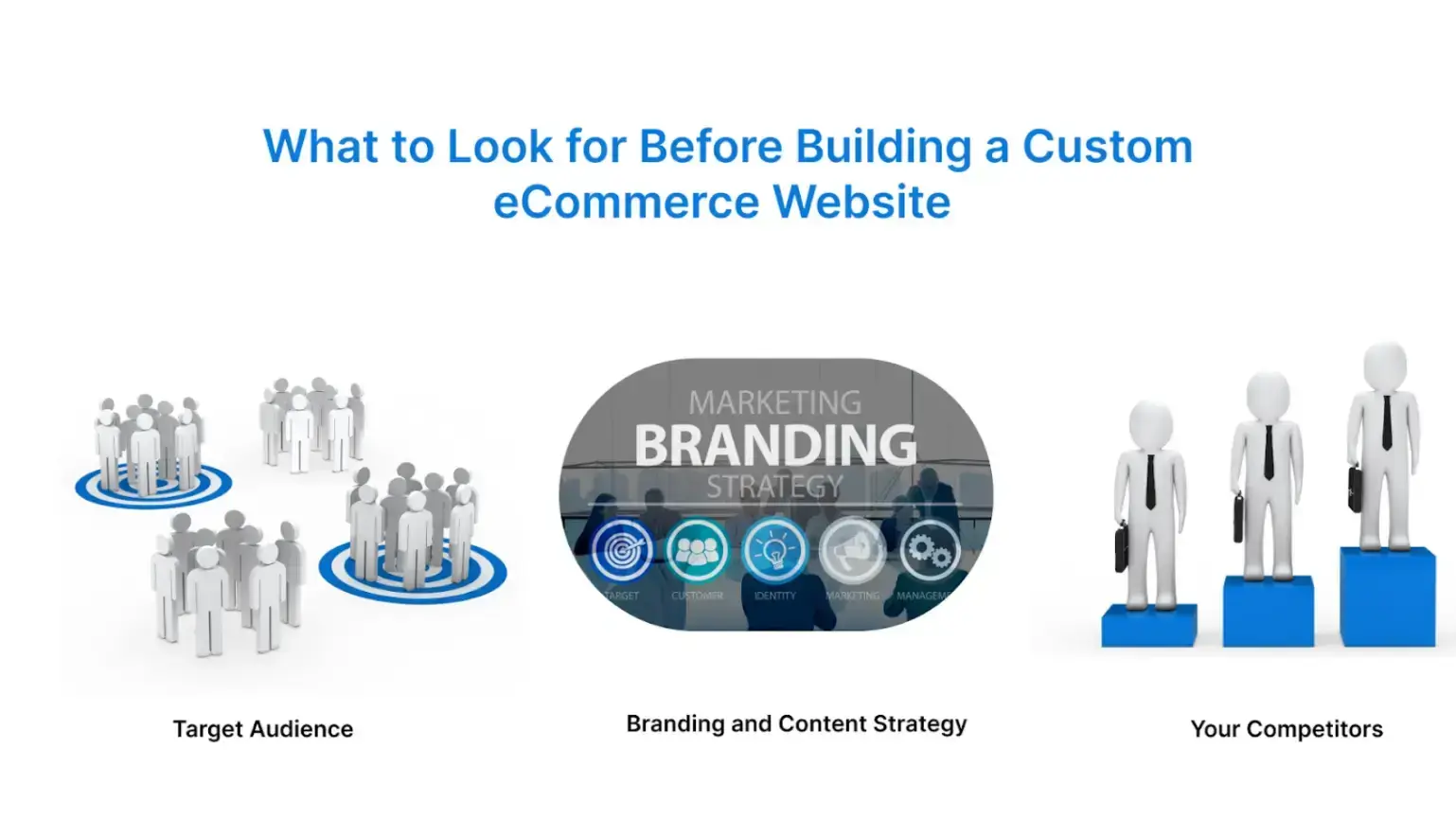
If you decide to create a custom e-commerce website, consider the following:
1. Target Audience
Before creating an e-commerce website, start by understanding your target audience:
- Who are your customers?
- What do they want?
- How do they shop?
This helps you create a custom e-commerce website that meets their needs and increases satisfaction.
2. Your Competitors
Understanding your competition is essential.
Analyze competitor branding, products, pricing, and strategies to understand customer expectations.
3. Branding and Content Strategy
Your branding and content strategy should be part of early planning. Setting your brand tone and design direction early saves time and money throughout development.
What are the Key Features of Custom E-Commerce Websites?
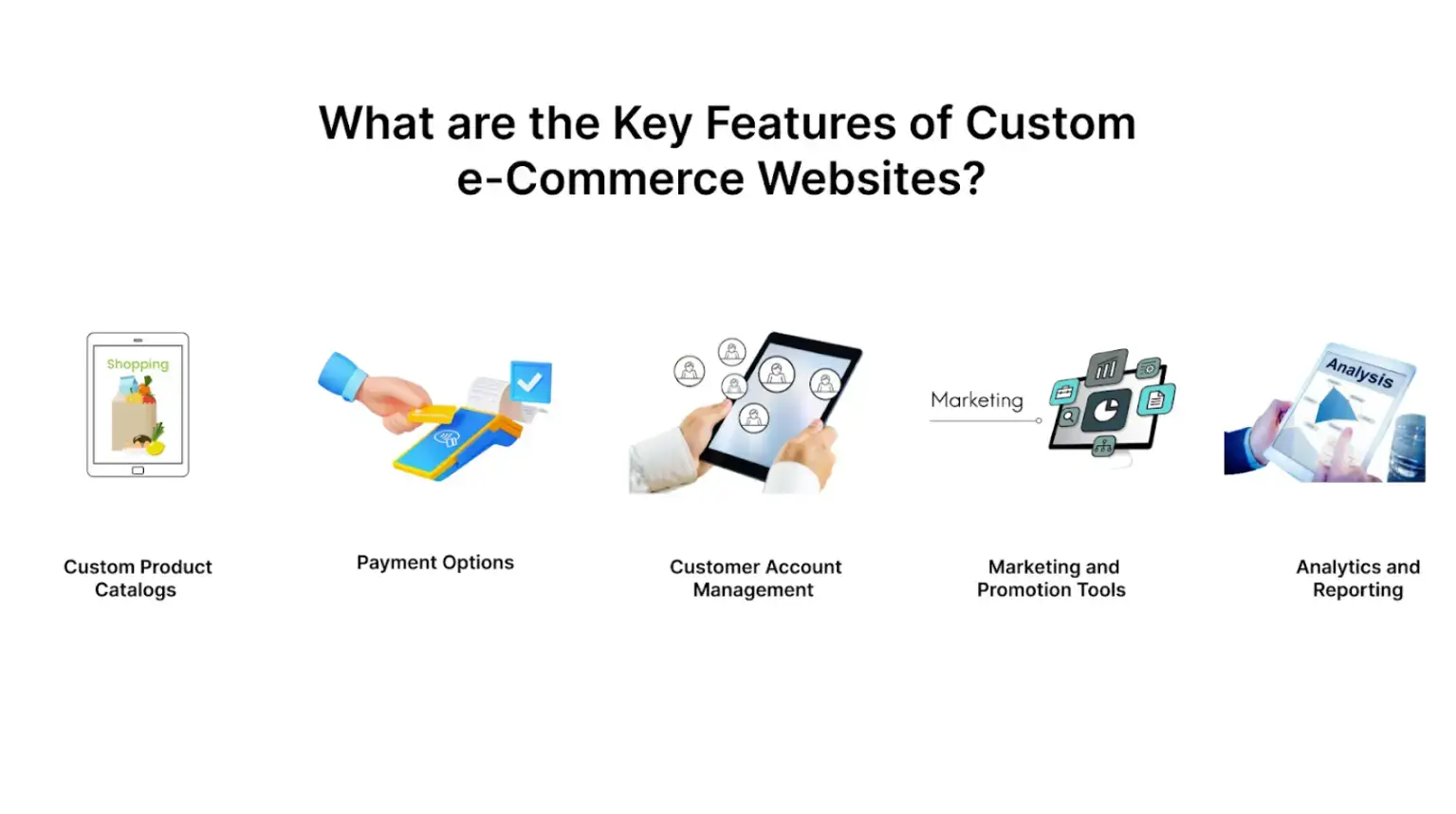
Successful ecommerce websites typically include several core features that support both user experience and operational efficiency.
A custom e-commerce web development approach gives businesses the flexibility and control to create a personalized online shopping experience.
Here are some common features of custom e-commerce website development:
Product Catalog Management
An organized product catalog enables businesses to efficiently manage product listings, categories, and product information.
Payment Options
Custom ecommerce platforms often integrate multiple payment gateways to support credit cards, digital wallets, and alternative payment methods.
Choose from payment gateways such as PayPal, Stripe, and Authorize.net.
Businesses can also add QR codes generated through The QR Code Generator to receipts or packaging for quick access to support or tracking pages.
Customer Account Management
Custom e-commerce sites can include account functionality where customers save payment and shipping details and view their order history.
Marketing & Promotion Tools
Custom platforms can integrate:
Mobile optimization
As mobile commerce usage increases, ecommerce websites must provide seamless experiences across smartphones and tablets.
Analytics & Reporting
Custom websites allow powerful analytics and reporting using tools like a marketing reports generator.
What are the Advantages of Custom E-Commerce Development Services?
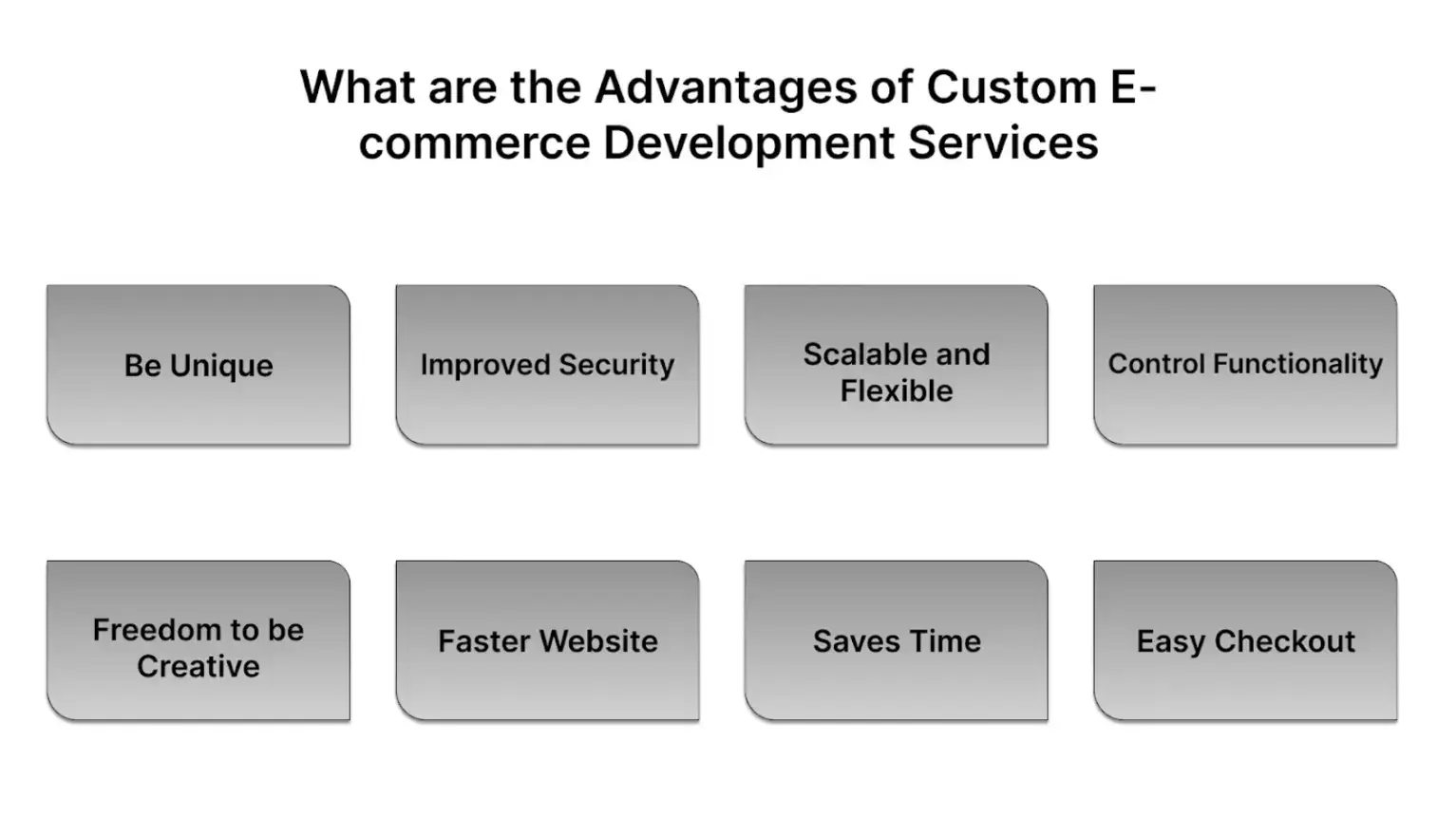
Custom e-commerce websites offer several advantages over off-the-shelf solutions.
Be Unique
Your website should be unique. Custom builds, or Headless Commerce, help your business stand out from template-based competitors.
Improved Security
Security is crucial. High-risk industries benefit from encryption, firewalls, and secure browsing using specialized software.
Scalable and Flexible
You must stay adaptable as the business grows.
Better SEO is another key advantage, as custom sites can be structured to improve visibility.
Control Functionality
You decide the exact features your website needs—ensuring customers stay engaged and enjoy the shopping experience.
Freedom to Be Creative
Custom design allows businesses to maintain consistent branding across their website and marketing channels.
Custom development lets your store reflect your brand and creativity without limitations. This leads to better customer experience and business alignment.
Faster Website
Speed is critical for e-commerce success. A well-developed custom site ensures customers find products quickly and efficiently.
Saves Time
You can save time with a tailored website or custom design.
With custom website and application development, you save time, improve productivity, and differentiate your brand.
Easy Checkout
A smooth checkout is essential. Custom developers can ensure the checkout flow is optimized and simple for users.
Custom Ecommerce Development vs Template Platforms
Businesses often choose between fully custom ecommerce development and template-based platforms such as Shopify or WooCommerce.
| Custom Development | Template Platforms |
|---|---|
| Highly flexible | Limited customization |
| Requires development expertise | Easy to launch quickly |
| Greater scalability | Faster setup |
| Higher initial cost | Lower upfront cost |
Many businesses start with template platforms and later transition to custom development as their requirements grow.
Steps in Custom Ecommerce Website Development
Building a custom ecommerce website typically follows several stages.
1. Planning and requirements analysis
Businesses identify their goals, required features, and technical requirements.
2. UX and design
Designers create wireframes and layouts that define the website’s user experience.
3. Development
Developers build the website’s front-end and backend systems.
4. Testing
Before launch, the website undergoes testing to ensure functionality, security, and performance.
5. Deployment and maintenance
Once launched, the website requires ongoing updates, maintenance, and performance monitoring.
FAQs
1. What is a custom e-commerce website?
A custom e-commerce website is built specifically for your business needs, products, and brand identity. It helps expand global reach and accessibility.
2. Why choose a custom e-commerce website over a pre-built platform?
Custom platforms offer:
- better security
- scalability
- advanced customization
- integration with third-party solutions
3. What should you consider when choosing an e-commerce development company?
Focus on:
- experience and skills
- portfolio
- communication
- post-project support
4. How long does it take to develop a custom e-commerce website?
Timelines vary based on complexity and features. Typically, a custom e-commerce website takes 3–6 months.
Conclusion
If you're planning to build your own e-commerce website, this can be a good option — but it’s not ideal for everyone. Small businesses with tight budgets may prefer platforms like Shopify.
