

If you own an online business, you simply cannot ignore the importance of content marketing. The claim "Content is King" remains valid in 2023 as it was in 2013.
To boost your business, nurture leads, and create and expand your digital footprint, you need an aggressive content marketing plan.
- According to recent research, 82% of businesses invest regularly in content marketing, and only 10% say they don't use content marketing in their marketing plans (HubSpot).
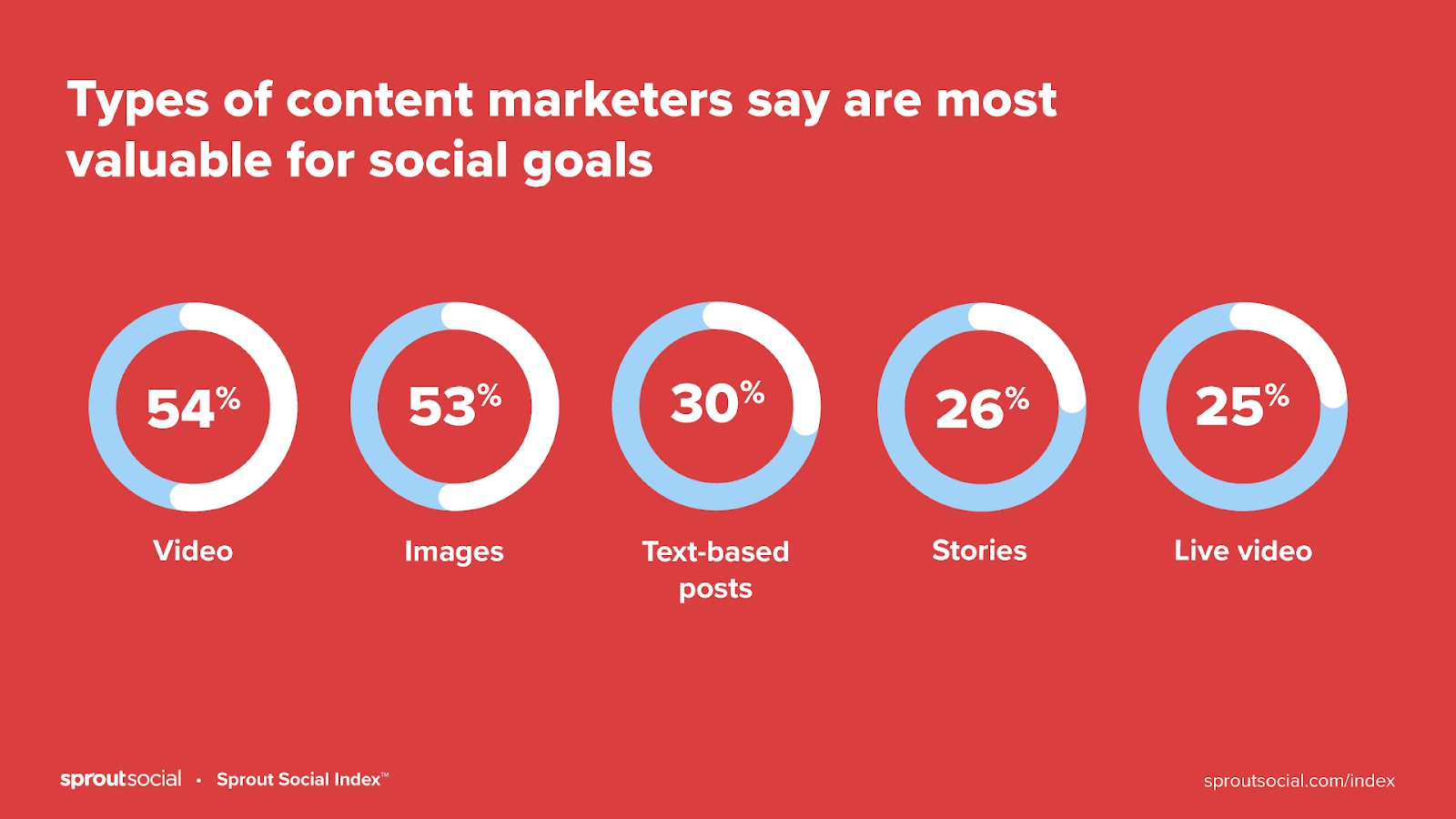
- Next comes video content. Almost 69% of respondents in a survey say they prefer a short video to written content when learning about a new product. Around 18% prefer text-based content, and only 4% prefer infographics. A small percentage prefer an ebook, a webinar, a pitch, or a sales call or demo (Wyzowl).
- Most importantly, 81% of businesses see content as a core business strategy (CMI).
- Here is why content marketing is a must. It generates over 3x the leads as outbound marketing and costs 62% less (Demand Metric).
1. Prepare Your Overall Content Marketing Strategy
Your initial steps involve identifying your ideal client and the platforms you will focus on. Each platform has a different set of features that caters to different demographic audiences.
Who is your ideal customer?
Find out your ideal client. It’s one of the most important things you can do whenever you are creating content to promote your business, product, or SAAS services like urgent care ehr software. It helps if you create an avatar of the person.
You will want to know their income level, interests, demographics, geography, gender, and other details. When you get these details, you will be able to target them specifically.
Each platform has a different demographic and income level. You will want to consider the platform you want to create content for your business.
Where can you find your ideal customer?
You will need to find out where your ideal client is located. There are different platforms where you can put your content.
You will need to consider where you want to post your content to reach your ideal client. Each platform has a different demographic it focuses on as well.
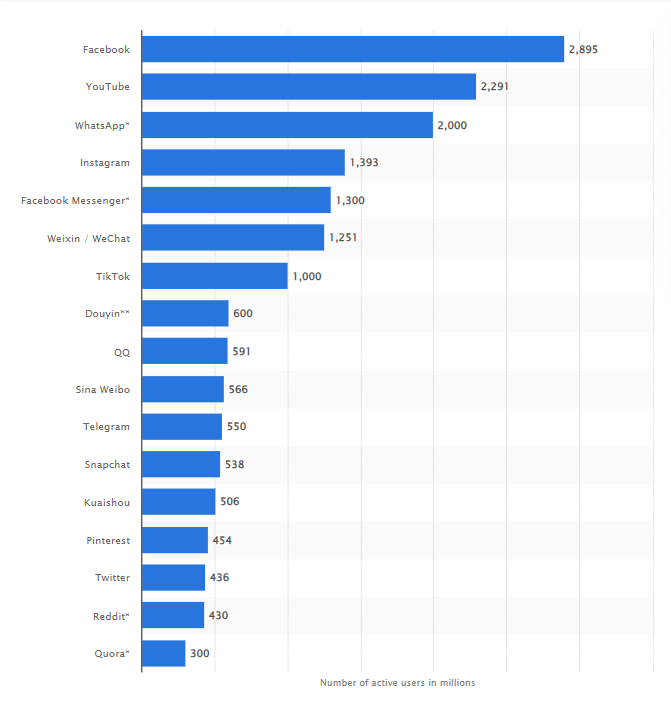
Image source: Statista
What platforms should you focus on?
Find out where your customers are consuming content. You will want to create content on that platform. Emerging platforms often have younger demographics and growth opportunities.
Platforms that have been around longer have more topics, opportunities, and competition.
These platforms will help you bring traffic and build your brand. Focus on creating content that you can build up into a major following.
Look at combining it with a social media platform. You could use a React-based CMS, for instance, to repurpose your content into images or captions for your social media platform.
2. Organize Your Content Marketing Strategy
It is important to map and organize your content marketing strategy. You might be able to do a makeshift organization tool on an Excel sheet, but it’s increasingly easier to do it with some kind of project management software.
If you're on a tight budget, you might want to consider the best free project management tools.
How do I organize my content strategy?
Consider using software to organize your data. Organize your workflow on how you want your content creation and promotion to flow.
It will be a good way to track the stage of all of your ongoing content. By organizing your content electronically, you can easily outsource your work.
For small business owners who want to extend that logic beyond content — to their entire online presence — done-for-you website services like UENI take the same approach, handling everything from build to ongoing updates.
Using online proofing software can further help to enhance content review and approval processes.

What are some project management software tools?
- Trello - Starter option (free), and you can upgrade when you have a team involved.
- Asana - Good for small and medium-sized companies; integrates with Evernote. Check the best Asana alternative for comparison.
- Monday - Good for medium companies: they have more security procedures.
- ProofHub - Includes a chat tool option for more teamwork opportunities; it’s more expensive than other options.
- Airtable - It’s an upgraded spreadsheet with the ability for your team to see information in multiple ways.
Tracking your content creation
Organizing your content creation is vital for your content marketing strategy. It gives you a clear idea of the steps to follow and helps you identify problems with your process.
Outsource parts of your content creation
Consider hiring freelancers or having your employees handle different parts of your content marketing strategy. It may involve content creation, graphics, promotion, research, and more.
If you can’t find the necessary talent locally, consider hiring internationally instead — you might be surprised at the kind of expertise you can afford by recruiting globally.
You can maintain accountability for your members across all the different parts of your content marketing strategy. Many tools let you assign specific parts and set deadlines.
3. Get Content Ideas
Look at ideas for your content. There are multiple ways to generate ideas. You can use software or search for what people are interested in.

What software can you use to get content ideas?
- Ahrefs - Find articles that people are searching for based on a keyword
- Semrush - Similar to Ahrefs, and has data on paid traffic if you go that route
- Buzzsumo - Find topics that have gone viral on social media
- Answer the Public - Come up with different questions and related topics
- HubSpot Blog Topic Generator - Generate multiple topic ideas based on a keyword
The software can only help you generate ideas. A lot of times, you can get an idea and model what is working for other content creators.
Looking for ideas
Whenever you get an idea, write it down and research it more for more content ideas.
Look at the titles that are doing well. I usually search for a keyword on Google or YouTube and see what comes up. It helps formulate ideas and identify which titles are doing well.
As you think about your ideas, you will want to write them down quickly. Find a way to get it on your project tracking software.
Once it’s in your project management tool, you can expand the idea into multiple articles, video content, or audio content.
4. Research and SEO - Make Your Content Searchable
For most businesses, consider carefully if you should get into Blogging and YouTube. One of the benefits of going with these platforms is that, over time, you can build traffic that remains searchable for years.
However, it will take time to build these platforms, so it really is a long-term solution.
Use content you create on these platforms and share it with your social media. You can adjust the content structure to make it more appropriate for social media.
If you share posts on Facebook, Instagram, or Twitter, your content will disappear after a short while.
Research to see if your content ideas can get traffic
During your research phase, make sure that people are actually interested in your topic. The easiest way to track whether they are interested in a particular topic is to see whether people are searching for it or if it has gone viral on social media.
Over 90% of pages get zero traffic from Google. Absolutely none. While just under 10% get 10 visits or fewer per month.
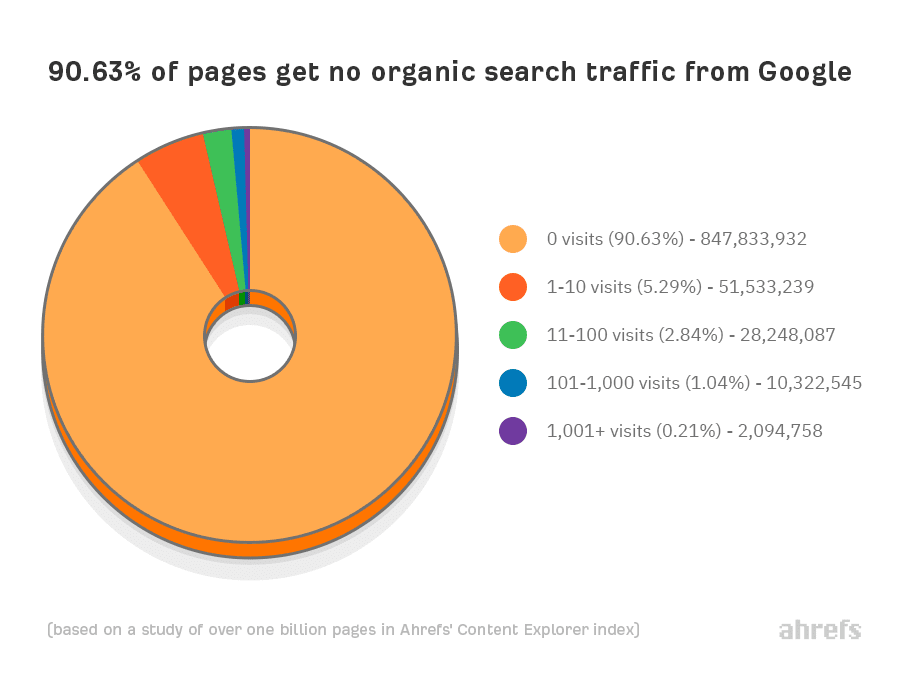
How to research your content
- Ahrefs, Semrush, BuzzSumo, or Moz - Paid subscriptions to find out how much traffic or engagement a piece of content receives
- ABC Method on Google or YouTube - look at the suggested keywords from their platform
- Google Keyword Planner - Free option to check content traffic
There are different ways to determine whether a topic will do well. You just want to make sure people are engaged with your content and that it’s not a waste of time.
Create a good hook for your content
Look at creating a good title. A good title needs a good hook. It will ultimately increase your Click Through Rate (CTR). A CTR is based on the number of clicks you get based on the number of impressions.
A good hook will include one of these elements:
- Mystery - use your words to invoke curiosity
- Ask a Question - questions help people find what your video will be about
- Pain Point - people want to know the negatives
- Hope - inspire people to go beyond themselves
Whenever you have a topic, you are competing with the surrounding content. So by having a hook, you increase the chance that they will click your content over another piece.
5. Content Creation - Creating Video or Written Content
Whenever you are ready to create your content, make sure your tools and research are ready. With everything in place, your content creation process will speed up.
Have a script or outline
Make sure to have a script or outline for your content. This will help you create your content when it’s time.
Already pre-created outlines will help your writers structure their writing accordingly. Find topic ideas that are best for your niche by researching view count and engagement rates on YouTube.
There are many niche-specific challenges that brands can leverage to create engaging content.
Give your content more authority
Whenever possible, use examples and data. You want your content to have good information. The more you utilize examples and data, the more you can establish your authority on the topic.
6. Editing and Creating Graphics For Different Platforms
Creating and editing all your graphics can be time-consuming. You will want to have a process for completing and organizing all of your graphics.
What are the graphic sizes by platform?
Each platform has different graphic sizes and rules. You will want to know the sizes needed for each post. Once you know the platforms that you want to focus on, you will be able to have this ready.
- Facebook Post Image (1,200 x 628 pixels)
- Instagram Post Image (1080 x 1080 pixels) - Graphics
- Instagram Reels Video (1080 x 1920 pixels) 20-30 secs
- Instagram Story (1080 x 1920 pixels) 15 secs
- WordPress Featured Image - (1,200 x 628 pixels)
- WordPress Article Images - (640 x 427 pixels)
- YouTube Thumbnail (1280 x 720 pixels)
Look at using a resize tool to get your images in order. A popular tool is Canva. You will be able to resize images for all of your graphics and video edits.
How many graphics do you need?
If you plan to be on multiple platforms, you will need to create multiple graphics, especially for social media.
Some platforms, like Instagram, have multiple features. You can do a post, a story, a reel, IGTV, or a guide. Having a variety of pictures and video edits will help your profile and brand.
Organizing graphics in Google Drive or a similar platform
Use a cloud-based program like Google Drive or Dropbox to store your images and video edits. It will help you and your team organize your content graphics.
Consider creating folders for each of your content. Look at repurposing them for other platforms whenever possible, especially for social media.
7. Posting and Scheduling Your Content
Find out when you will be posting your content. There are tools to help you with this process. You want to keep your content posted regularly.
When and how often should I post content?
Find different businesses and influencers within your niche. Look at how often they are posting content and what it looks like. You will be able to get an idea of how frequently they post on their platform.
You will want to model your frequency after what other successful businesses and influencers are posting.
Content Scheduling Software Tools
- Sprout Social - Facebook, Instagram, Pinterest
- Hootsuite - Twitter, Facebook, Instagram, LinkedIn
- Tweetdeck - Twitter
- Later - Instagram
- Tailwind - Pinterest and Instagram
*YouTube and WordPress have scheduling tools within their platform.
Engaging with potential customers
Figure out a sales process for your potential clients. Find out how you plan on funneling your followers or viewers to become clients.
A lot of times, you will have a call to action to get their email, go to your online store, attend a webinar, or set up a call for a higher-ticket offer. Consider how you want to acquire clients and determine what works best for your business.
Final Thoughts - Optimizing and Promoting Your Content
To run effective digital marketing campaigns, it all starts with a healthy strategy for producing and distributing your content.
Find ways to collaborate with different businesses and influencers. Create more partnerships to accelerate your growth and viewership.
Promotion is important when your authority hasn’t been established on the platform. The more you can claim authority, the more people will recognize you as an authority for your business.
FAQs
1. Why is a content marketing strategy important for an online business?
A content marketing strategy helps online businesses attract the right audience, build authority, nurture leads, and generate long-term traffic. Without a clear strategy, content tends to be inconsistent and less effective at supporting business growth.
2. How do I choose the right platform for my content?
Start by identifying where your ideal audience spends time and what type of content they prefer. For many businesses, platforms like blogs, YouTube, podcasts, and selected social media channels work best because they help build visibility and trust over time.
3. What tools can help with content planning and organization?
Project management and planning tools like Trello, Asana, Monday, Airtable, and ProofHub can help organize workflows, assign responsibilities, track deadlines, and manage content production more efficiently.
4. How do I know if a content idea is worth creating?
Research whether people are already searching for the topic or engaging with similar content online. Tools like Ahrefs, Semrush, BuzzSumo, Google Keyword Planner, and Answer the Public can help validate interest before you invest time creating content.
5. How often should I publish content?
The right frequency depends on your platform, resources, and audience expectations. Consistency matters more than volume. It’s better to publish on a realistic schedule you can maintain than to post heavily for a short time and then stop.
