

Images are essential for selling your solutions online.
After all, 75% of online buyers rely on product photography to make purchase decisions. It's only natural to want to avoid bad product photography.
Nevertheless, perfecting your product imagery isn't always straightforward. Yes, you want to invest in high-quality shots to show off your offer in the best possible light. But there's much more to producing product photos that sell than getting the technical details right.
In this article, we'll examine the most common mistakes in product imagery and offer suggestions to avoid poor product photography harm your conversion rates. Let's get started.
In this article:
- Not Understanding the Basic Requirements for Product Imagery
- Failing to Prepare Your Subject
- Only Displaying a Couple of Product Shots
- Ignoring Video and Interactive Formats
- Saving UGC for the Reviews Section of Your Product Page
- Using the Same Product Imagery for All Purposes
- Not Being Consistent with Your Brand's Visual Identity

Source: Depositphotos
1. Not Understanding the Basic Requirements for Product Imagery
As someone who's not an expert in photography, you may think that capturing that perfect product shot requires immense skill and resources. But this is only partially correct.
In truth, anyone can capture product photos with high conversion potential by adhering to a few basic requirements (no professional equipment is needed), especially when leveraging high-quality visual assets from platforms like DepositPhotos.
According to an empirical study from 2014, consumers prefer product photos that share the following characteristics:
- Large key object.
- Low entropy.
- Warm color palette.
- High contrast.
- High depth-of-field.
- More social presence.
All in all, these criteria shouldn't be too hard to meet.
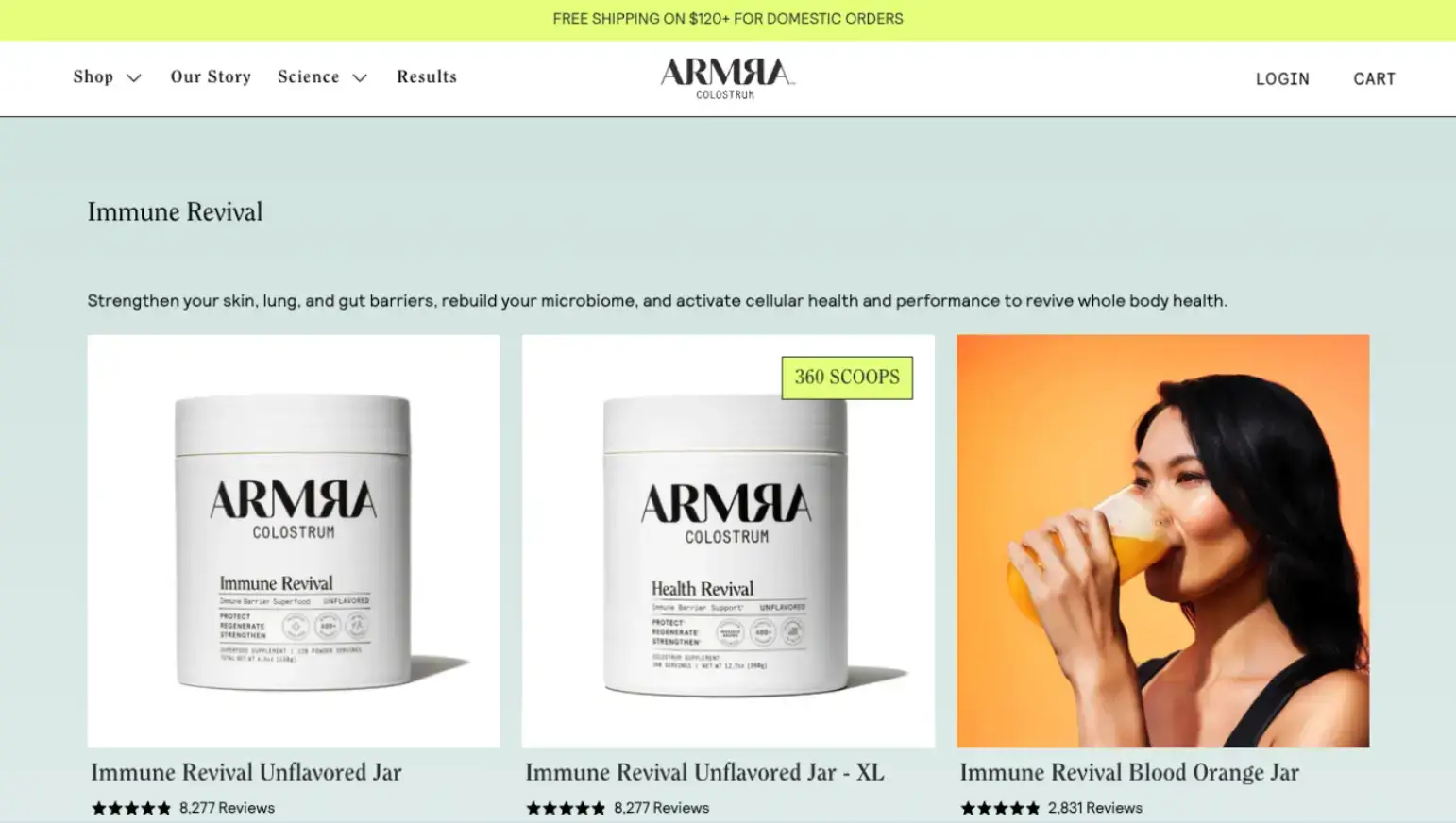
In fact, if you check out the Best Colostrum Supplement page on Armra, you'll see just how uncomplicated great product photography can be.
The brand hits all the right notes with the images it uses to showcase its solutions.
Source: Armra
2. Failing to Prepare Your Subject
Why do consumers assign so much importance to product photos?
In an online setting — which prevents buyers from touching and interacting with items in the real world — shoppers must rely on images and product descriptions to evaluate potential solutions to their pain points.
With this in mind, you must be careful when presenting your offer in your ecommerce store.
Showing off inventory items without highlighting their strengths (or, worse yet, emphasizing their flaws) can significantly harm your conversion rates.
In addition to cleaning, polishing, or pressing the items, explore tactics to present them in the best possible light. This might involve using external aids, such as mannequins.
Or it might require you to create a context that accentuates your solution's full potential.
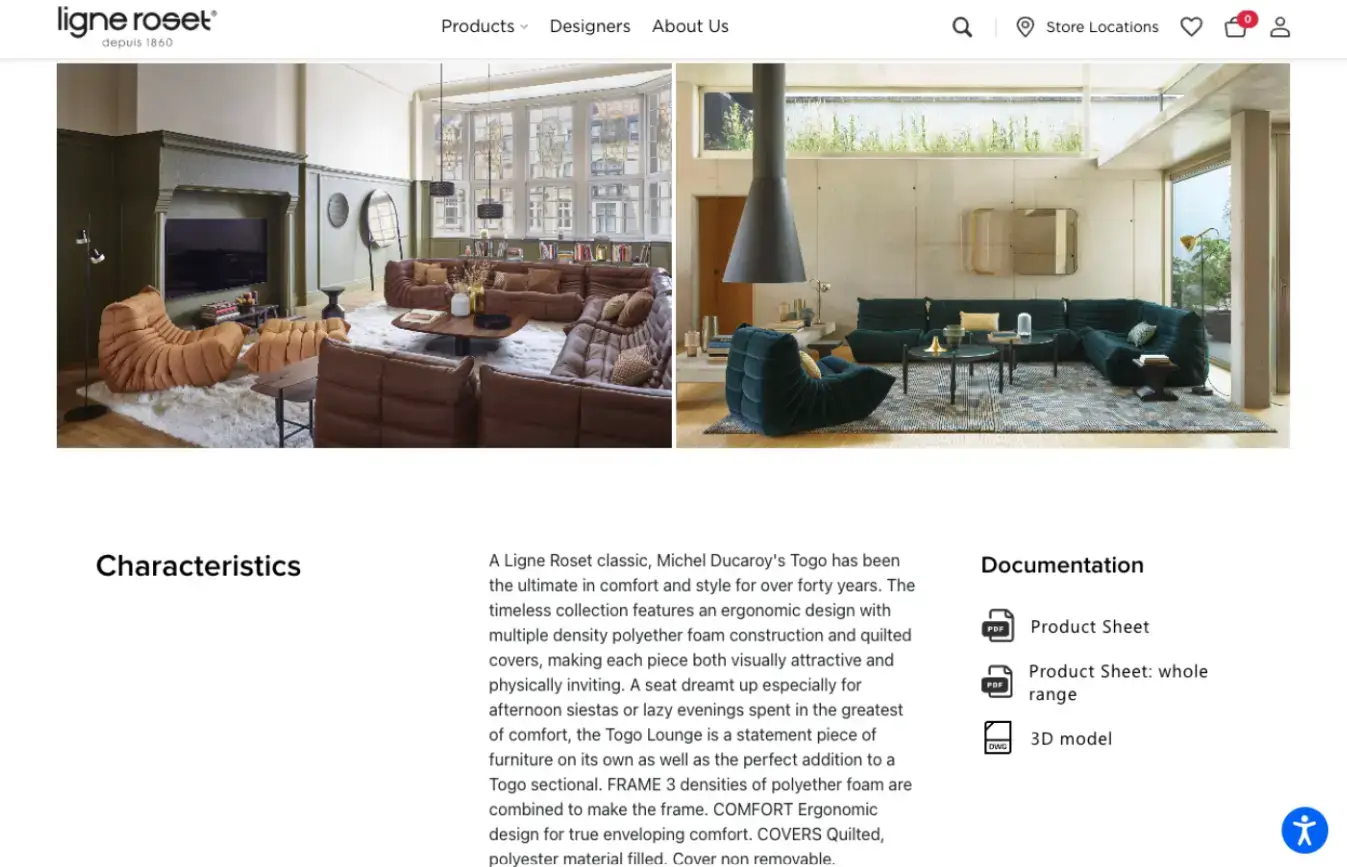
For inspiration on how to do this, check out how Ligne Roset does it on the Togo Loveseat product page.
The brand provides shoppers with seven high-quality product shots against a white backdrop, along with contextual photos.
These demonstrate the full breadth of the product's versatility in different interior settings, making it more likely that shoppers will recognize a design style they want to recreate in their homes.
Source: Ligne Roset
3. Only Displaying a Couple of Product Shots
Another common product photography mistake you must avoid is only showing your offer from one or two angles.
Again, it's important to remember that online shopping doesn't check all the boxes for today's consumers.
So, what can you do to avoid bad product photography practices in this context? A good rule of thumb is to provide your audience with at least five product photos on your conversion-oriented pages.
Of course, you don't want to use five random shots. Instead, do your best to showcase your products from multiple angles. Illustrate unique and relevant details up close. And ensure your website visitors can zoom in on each photo.
With options like Omi’s virtual studio, it's now possible to generate consistent, detailed visuals without relying on physical photo shoots, allowing for more dynamic and comprehensive product displays.
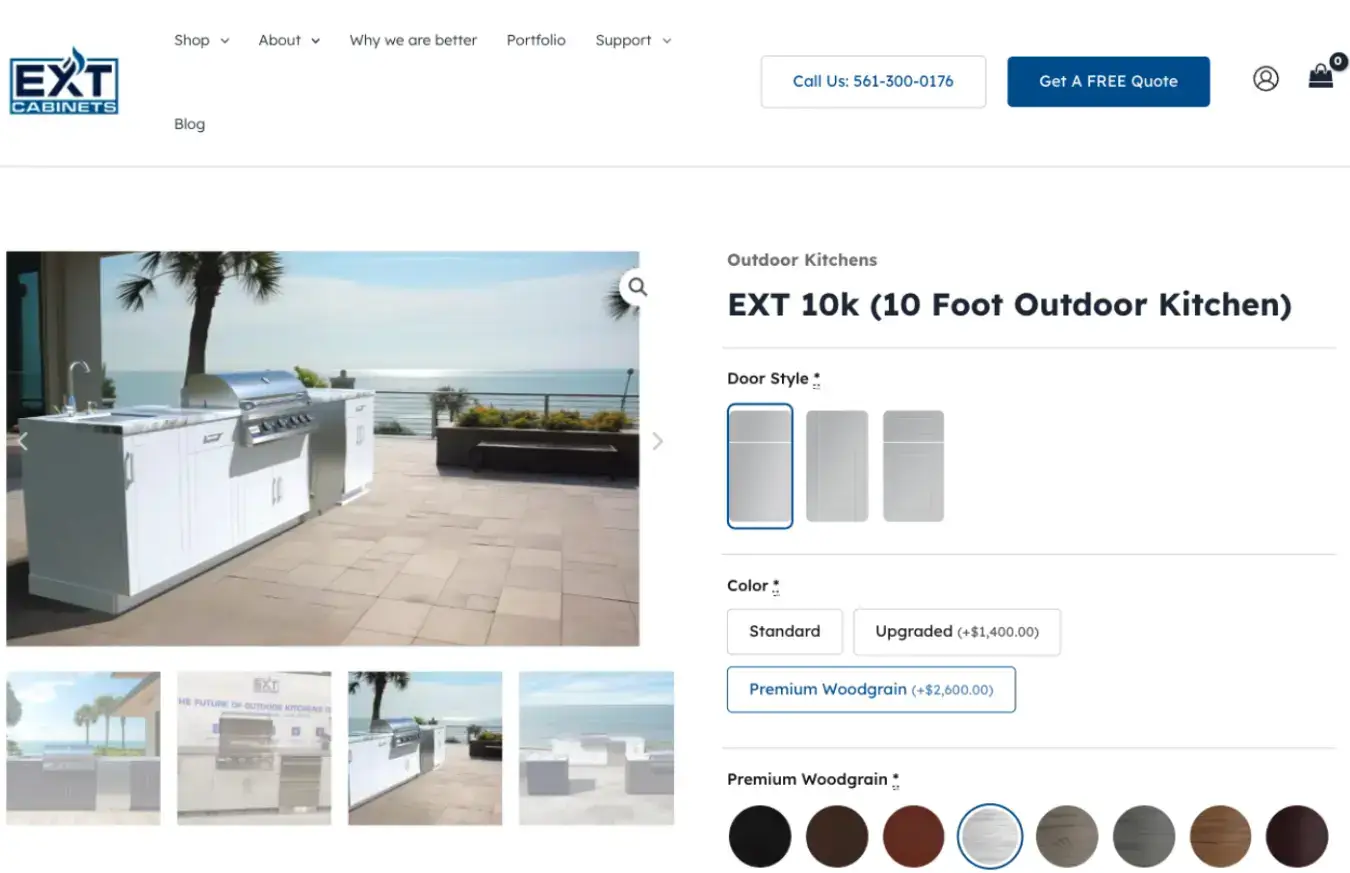
EXT's 10k (10 Foot Outdoor Kitchen) product page is an excellent example of presenting your offer in an attractive and user-oriented way:
- The page includes several distinct high-quality photos of the product in question.
- The site's UI allows visitors to zoom in on the images by hovering.
- Each customization option features a related visual to help shoppers build the perfect outdoor kitchen for their needs.
Source: Extcabinets
4. Ignoring Video and Interactive Formats
To avoid product photography mistakes, you must stop limiting yourself to old-school formats. Yes, photos are the most convenient way to showcase your solutions, but they're not always what consumers want.
In fact, if you're looking for tips on how to make your product imagery more effective at driving purchase intent, consider investing in more modern visuals.
Product videos, for example, are among the most customer-oriented visuals you can add to your online presence.
Consumer research shows that people want to see more brand videos. In addition, 87% of shoppers were convinced to buy a product or service after watching an explainer video.
With this in mind, it's no surprise that businesses selling innovative solutions use video rather than photography to explain the value they offer.
A quick look at Bay Alarm Medical reveals an insightful "How It Works" video that introduces the brand's target audience to the alert system's capabilities in an engaging, accessible way.

Source: Bay Alarm Medical
You can take things even further with interactive and innovative formats.
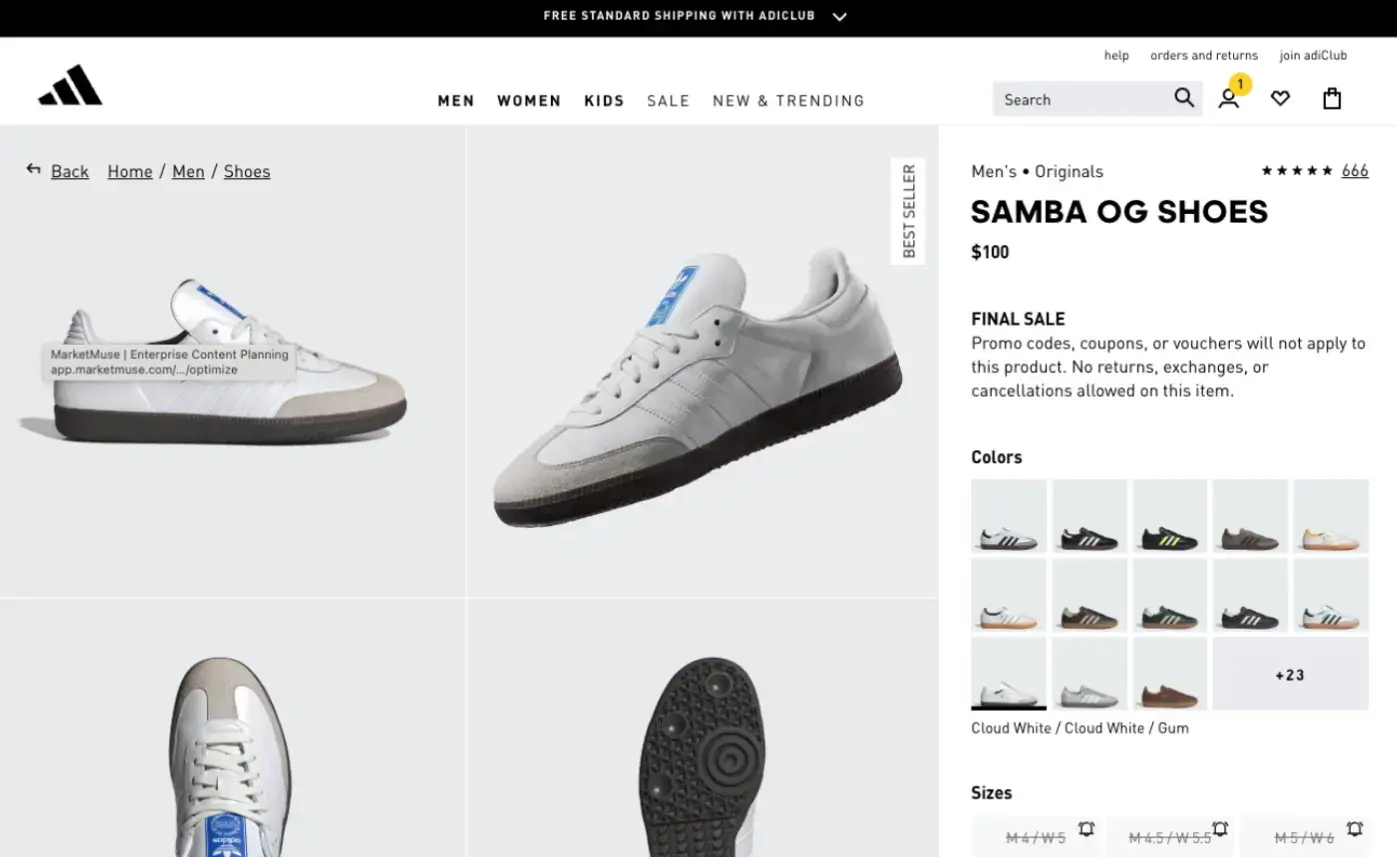
Something similar to Adidas' 360-degree view on the Samba product page is another great way to show off your products in detail. Or you might even experiment with AR product visualization for a truly immersive experience.
Source: Adidas
5. Saving UGC for the Reviews Section of Your Product Page
Although user-generated photos aren't professionally shot, they can still be an invaluable part of your online presence. Why? Because they're authentic and trustworthy — far more so than branded content.
So, to avoid product photography mistakes that might harm your conversion rates or reputation, learn to use UGC to its full potential.
For example, real-life customer experience ranks among the top purchase-inspiring factors for shoppers. Using UGC to showcase the type of CX you offer can be an effective way to boost conversions and differentiate your business.
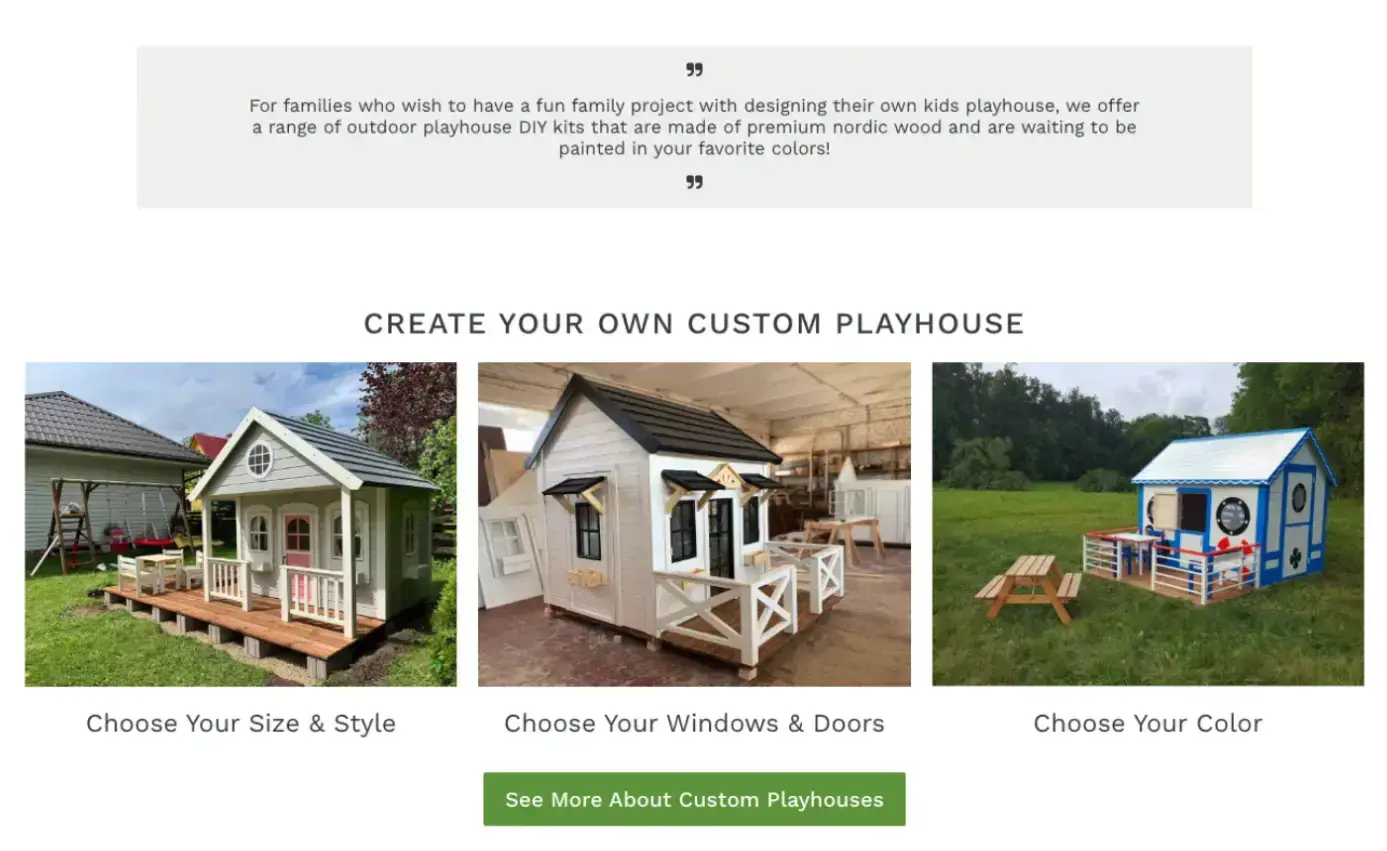
This is precisely what WholeWoodPlayhouses does on its website. This brand prioritizes user-submitted product photos over studio shots or stock photography and regularly includes UGC in its content strategy.
The result is an insightful window into what it really looks like to build and use one of the brand's playhouses. It encourages consumers to imagine how the brand's products would work for them, naturally nudging them toward the bottom stages of the sales funnel.
Source: WholeWoodPlayhouses
6. Using the Same Product Imagery for All Purposes
When it comes to common mistakes in product imagery you want to avoid, it has got to be repetition.
Yes, hiring a professional to shoot and edit your product photos can be expensive (and the DIY route is no less resource-intensive). Nevertheless, the investment pays off, mainly because different applications require different visual styles.
For example, product-on-white photographs are exceptional at showcasing your solutions in the mid-to-bottom stages of the funnel. However, they're not nearly as exciting as contextual photographs that depict the value your solutions offer.
So, if you want to avoid bad product photography from harming your business goals, you must choose visuals that align with your goals.
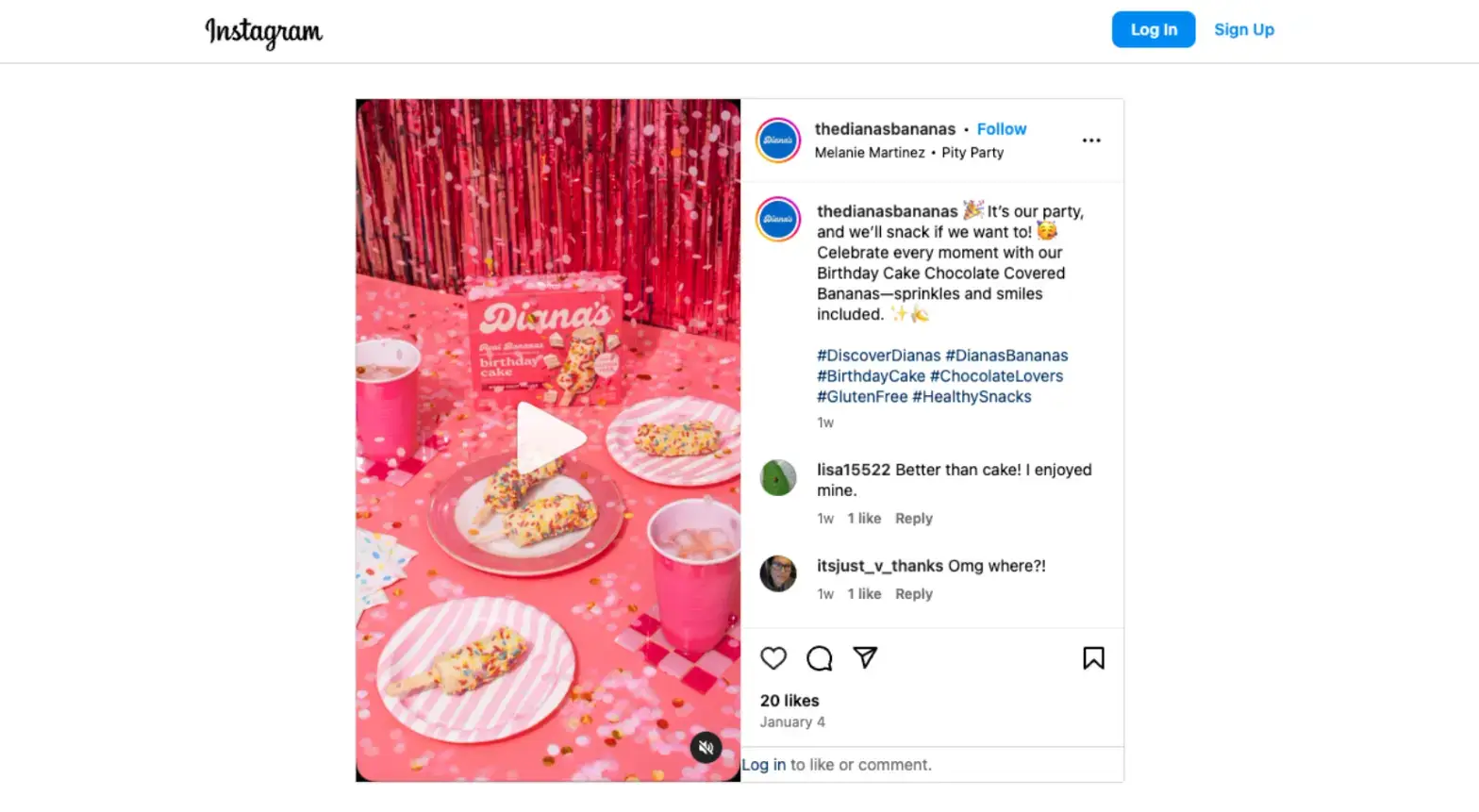
For instance, if you want to attract your target audience on social media, use exciting, contextually relevant visuals that grab your prospects' attention—similar to what Diana's Bananas does below.
Source: Instagram
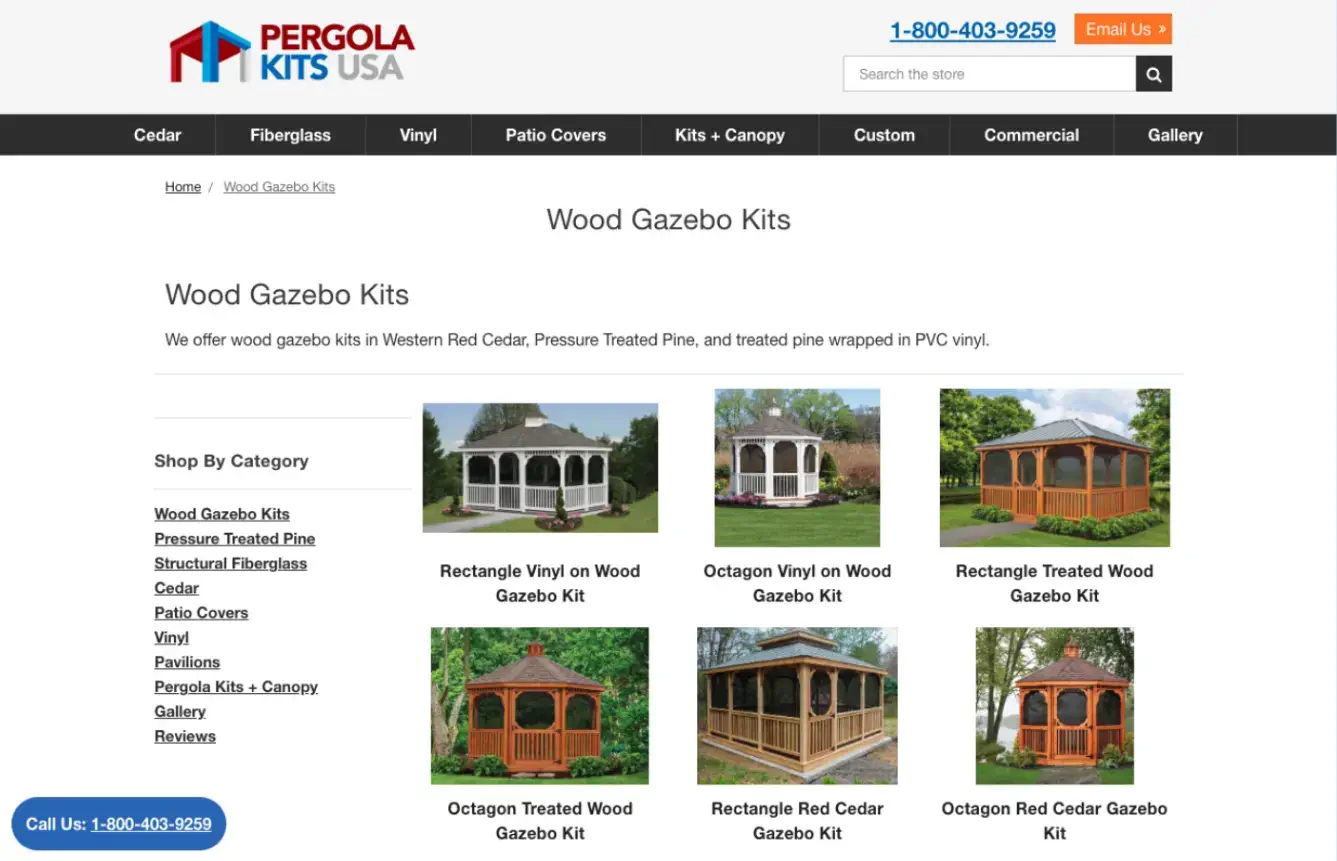
On the other hand, if your goals include empowering evaluation-stage shoppers to interact with product pages, you'll want to use far more toned-down product imagery, like the photos Pergola Kits USA uses on its Wood Gazebo Kits product collections page.
Source: Pergola Kits USA
7. Not Being Consistent with Your Brand's Visual Identity
Last but not least, to avoid product imagery mistakes in your online presence, choose visuals that align with your brand's visual identity.
Ultimately, consumers regularly form brand opinions based on appearances. Moreover, your visual identity may impact your ability to convert customers, seeing as website aesthetics directly influence purchase intent.
Ultimately, a clean yet professional product shot is far more likely to inspire a purchase than a humorous image presented in the wrong context or to the wrong audience.
Final Thoughts
Bad product photography can seriously harm your business's potential for success. The good news, however, is that you can produce stunning, conversion-inspiring visuals by following the tips in this guide.
FAQ
1. Do I have to outsource product photography to a professional?
Although it may be easier to leave things to the pros, it's understandable if you don't have the budget to do so right now. In this case, you can easily produce stunning, conversion-inspiring product photos by taking a DIY approach. If this is the direction you choose, make sure you pay close attention to photo quality and product styling. These will hugely determine the attractiveness of your offer.
2. Why is product photography so important?
When shopping online, consumers don't have the chance to interact with your solutions. So, they have to make their buying decisions based on what's available — product photos and descriptions.
By making these appealing and user-oriented, you can ensure your prospects understand the value you offer and maximize their chances of becoming customers.
3. How many product photos do I need per product page?
A good rule of thumb is to aim for at least five high-quality photos from different angles.
Additionally, you can include video or interactive formats on your product pages. These formats allow web visitors to evaluate your offer from multiple angles.
Also, don't forget to include a Zoom function in your site's UI!
4. Do I really have to invest in lifestyle and contextual imagery?
Although these may not seem that relevant when producing visuals for your ecommerce store, they're essential for creating an attractive online presence.
Moreover, such shots will be useful for your digital marketing strategies. They're a great asset for engaging consumers on social media.

Author Bio
Natasha Lane is a content marketer and one hell of a geek. She's been working with individual clients and companies of all sizes for more than a decade. Natasha specializes in crafting compelling content about design, branding, digital marketing, and business growth. She's happily addicted to art in all its forms and grilled tofu.