

When was the last time you decided to watch just a few Insta posts on your mobile and stopped after watching just those few? I’ll say never!
You do not even realize when a couple of minutes of casual scrolling turn into endless scrolling. It is just too hard to stop, especially when you like what you are watching, and it keeps coming.
Based on your previous viewing history, social media algorithms continually serve up content you cannot resist.
This is similar to customized marketing, wherein you create highly targeted content that hooks your audience. Any brand in any industry is customizing or personalizing its marketing strategy more than ever.
If you are also exploring ways to customize your marketing strategy for your specific industry, this is the right blog for you to invest your time in.
Benefits of Customizing Your Marketing Strategy to Your Industry
Mass marketing may never become obsolete, but in today’s instant-gratification, technology-savvy world, customized marketing is much more effective and works like a charm.
The leading benefits from personalization, as of March 2020, according to marketing professionals in the US, are:
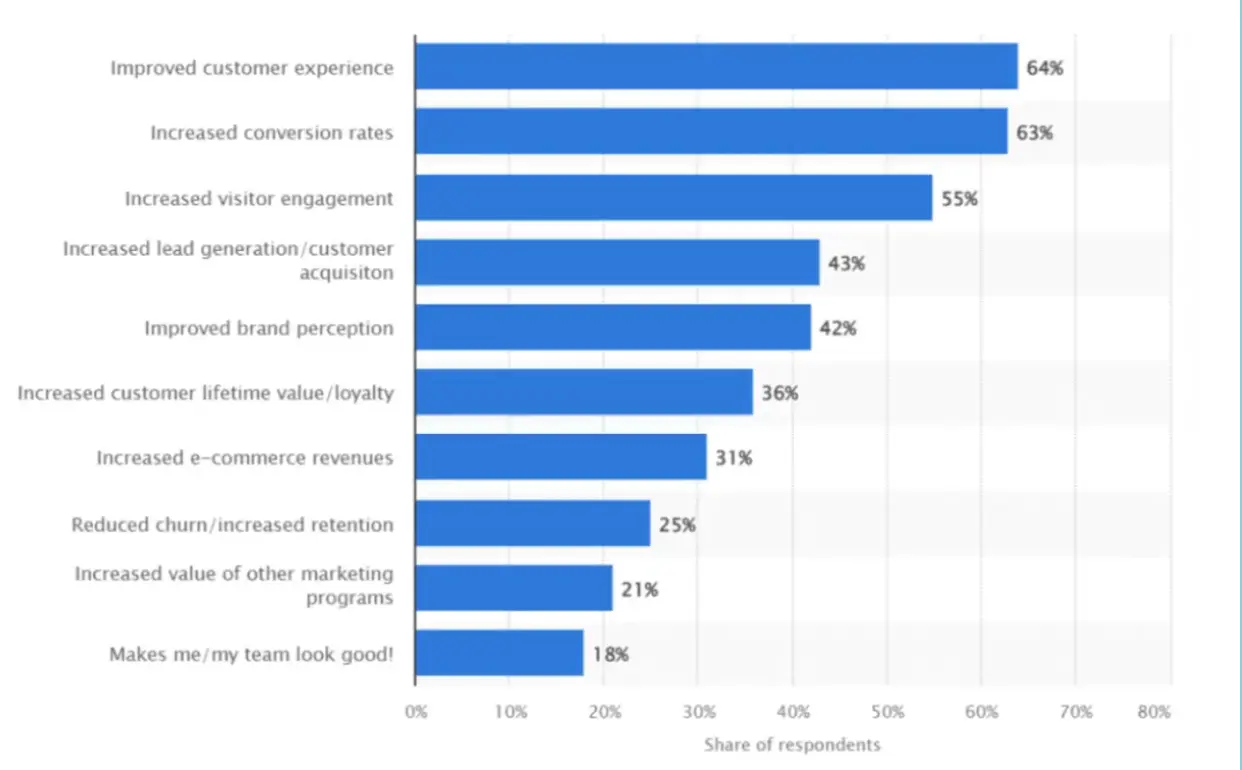
Among others, improved customer experience and increased conversion rates were the most significant benefits. What more can a marketer ask for?
Now that we know how important it is to customize your marketing strategy to your specific industry, let us discuss some useful tips for doing so.
6 Tips to Tailor Your Marketing Strategy To Your Specific Industry
- Ask the right questions
- Use customer data
- Make conversations personalized
- Include useful videos
- Direct selling and inbound marketing
- Meaningful 'Thank You' page and apology emails
Let's review each tip in more detail to better understand it.
1. Ask the right questions
The first and most important step towards addressing or solving any issue is asking the right questions.
Some of the most relevant and important questions that you need to ask are:
- What business objectives need to be supported through the marketing strategy
- Who are you customizing for, and what segments do they belong to? What are the needs, wants, and desires of each segment?
- What are the sales triggers for each segment that can help to time the right content at the right time? A Digital Asset Management solution can help you manage media assets and distribute content that aligns with a specific customer’s journey and stage, just like school asset management software manages and distributes physical devices.
- What messaging and content should be positioned for each of these customer segments? The content could include blogs, case studies, infographics, explainer videos, product demos, webinars, etc.
- Where will this content be used? Customization must be based on where the strategy will be executed, such as a landing page, email, forms, etc.
2. Use customer data
Marketing action is based on data. But marketers may suffer from ‘infobesity’, which means an inability to execute decisions due to information overload.
To help overcome this inability, the following key types of data are useful for successful personalization:
- Demographic data — such as the name, title, email, and location of a person
- Firmographic data — such as the company's name, industry, number of employees, annual revenue, etc. This data can be useful for B2B companies.
- Behavioral data — reveals information about the visitor's actions while using your app or website, such as links clicked, pages visited, number of visits, and average time spent on the site.
- Contextual data — provides context for visitor behavior, such as browser type, device, location, and time of day.
Demographic and firmographic data can be obtained by asking visitors to fill out and submit forms, subscribe to a newsletter, register for a demo, and so on.
Once obtained, the right data can be used to personalize marketing strategies — this is one of the use cases of mail merge, for instance, and it allows you to automate this whole process.
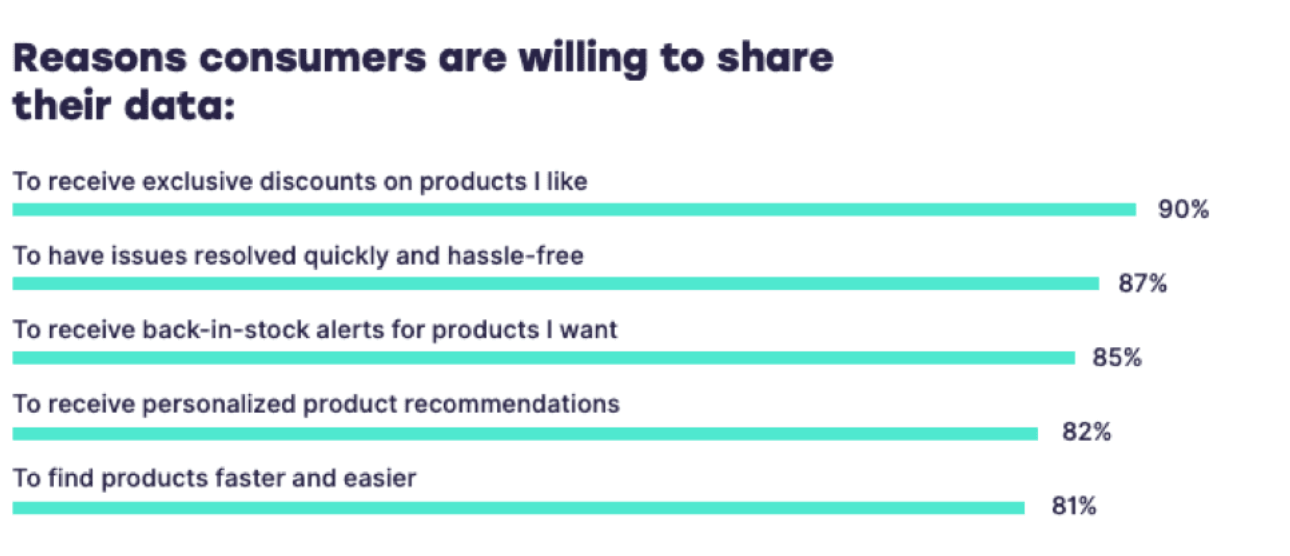
Many visitors also willingly share their data, and some of the reasons include:
3. Make conversations personalized
From welcome emails to personalized conversations such as newsletters, campaigns, and other tailored messages, customers like receiving them better than impersonal communication.
According to Adobe, 42% of customers are frustrated with impersonalized content, and 72% of consumers prefer to engage only with personalized messaging.
Email is the most preferred way for customers to be communicated with.
A few tips to personalize your email include using first names to connect with them more easily and communicating in a friendly, relatable tone.
Social media is the next popular communication channel, and a personalized marketing strategy can work wonders. Various methods for personalized social media marketing are:
- Retargeted advertisement is showing ads to people who have already been on your website. This helps because people are already aware of the brand, and you can pinpoint the exact pages they visited and personalize relevant advertisements accordingly.
- Story features of many social media platforms, such as Instagram and Facebook, can be used to create engaging and personalized content.
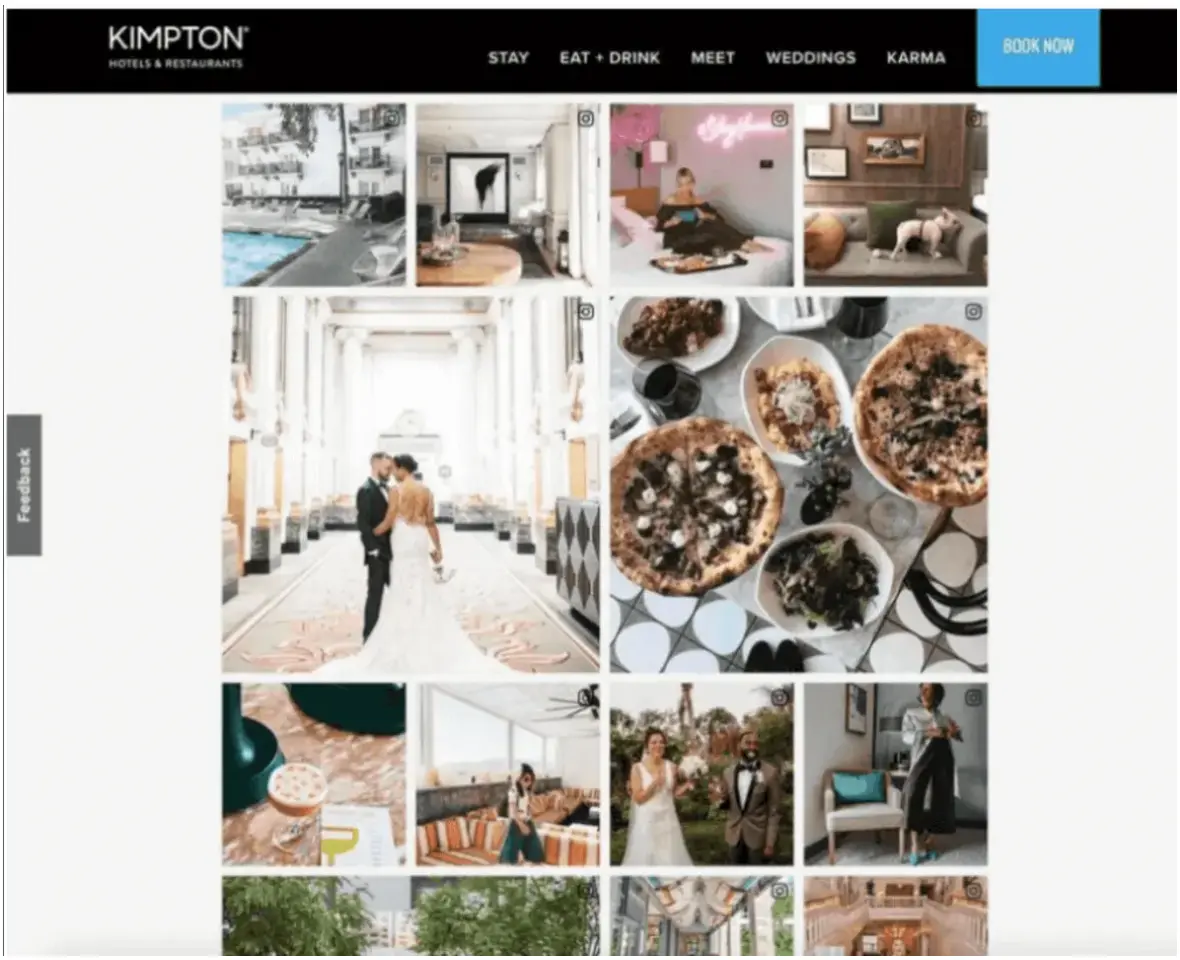
- User-generated content is a great way to ensure personalization. This encourages more sharing and engagement on social media. Many players in the hospitality industry use this strategy to increase customer interaction.
One such example is the premium hotel brand Kimpton, which actively seeks updates and photos from its guests. It then seeks their permission to share this content on the hotel’s social media accounts.
4. Include useful videos
Videos are the most consumed form of content today. It is easy, fast, and provides a human angle. This makes personalized videos and testimonial videos very effective personalized marketing strategies.
Facebook and Instagram Stories, or live streaming, are some channels you can use to personalize your marketing strategy.
Explainer videos about your product or service, along with other videos such as customer testimonials, can help attract attention too.
Testimonials make people willing to buy your product or service, as they build trust and authenticity. Since videos have a high retention rate, video testimonials are distinct, genuine, and the most preferred way to reach potential customers.
Include reviews and testimonials in your social media accounts, website, and community groups. Highlight glowing reviews with a shout-out to customers and address negative reviews genuinely with some solution to offer.
5. Direct selling and inbound marketing
Selling products directly to consumers and building a network of customers and sales representatives has worked for over a century and has immense potential. Some well-known examples include Amway, Avon, Herbalife, etc.
For many B2B products/services and industries, direct sales remains a very effective strategy. The principles that underpin direct sales are building a relationship, personalization, and the power of storytelling.
Inbound marketing is another strategy that can effectively customize marketing efforts. It is a pull strategy that attracts traffic and converts them into customers through content and other valuable resources and offers.
Here are some of the inbound marketing strategies you can use to provide a customized experience:
- Draw visitors organically through high-quality blog content
- Build email newsletter campaigns to nurture sign-ups into sales
- Contribute guest articles to reputable websites and publications in your industry
- Post authentic images and videos on social media channels such as Instagram and LinkedIn.
6. Meaningful 'Thank You' pages and apology emails
Everyone likes being thanked for things they have done to help. This includes being your customer or even a visitor to your website or social media accounts.
Other ways to link Thank You pages are:
- Requesting them to complete a survey and thanking them once it is done
- Linking to high-performing and relevant content
- Encouraging you to subscribe to your social media and share
- Providing a special offer, promotion, or discount
To err is human, but acknowledging and making it right is precious. Apology emails are a valuable tool for creating a personalized connection with customers and showing that you care.
Apology emails should be personalized, have the right tone, and be sincere. Sometimes a touch of humor may do wonders.
For instance, a company Fab sent a random cat photo to its subscribers, and in response, sent them a coupon in its apology email along with funny cat-related puns.

Conclusion
Your customer is in charge of your business success, and personalizing your marketing strategy helps ensure they feel extra special and continue to have a delightful customer experience.
The tips discussed above will help you craft your customized marketing strategy that suits your specific industry and target customers.
But you also need to keep in mind the art of subtlety.
Do not overdo it, or the customer may feel their privacy has been invaded. It should be done with a finesse that does not distress but delights them.

Author Bio
Tim Ferguson is a writer and editor of Marketing Digest. He helps marketing agencies with SEO, link building, content marketing, online reputation management, and blogger outreach. When he is not writing and editing for Marketing Digest, he learns more about content marketing and gets better at it.
