
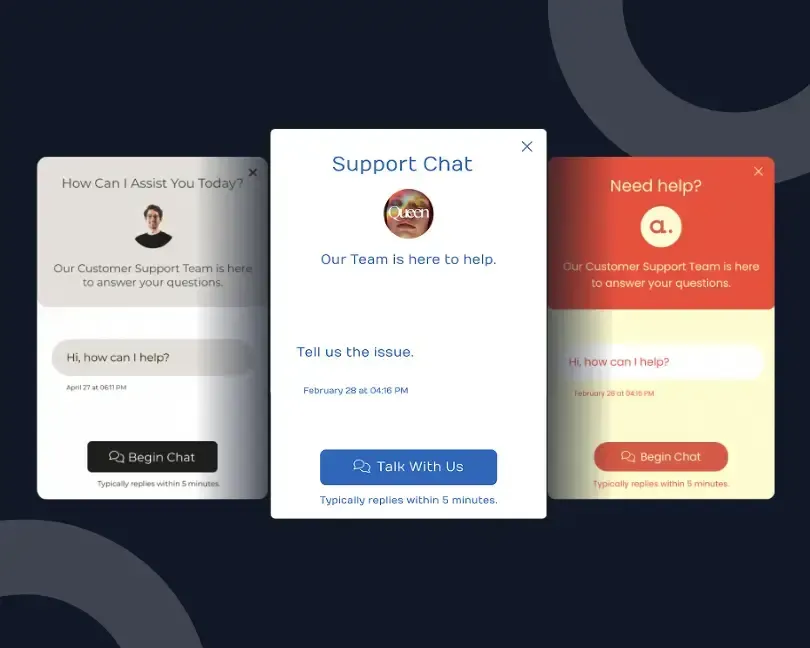
There's a familiar challenge in digital marketing: a potential customer visits your website outside business hours, reviews your pricing or product pages, and leaves without taking any action. Traditional lead capture methods often provide no opportunity for real-time engagement or qualification.
AI lead generation chatbots were designed to address that gap.
Over the past few years, conversational AI has evolved from a novelty feature into a practical customer acquisition tool. Businesses use these systems to engage visitors, qualify intent, schedule meetings, and route leads into their existing CRM and marketing workflows.
Forms Can't Answer in 10 Minutes. Buyers Won't Wait
For years, lead generation relied on static contact forms, gated downloads, and email nurture sequences. Those tactics still have value, but buyer expectations have changed.
Research from HubSpot shows that most consumers consider an immediate response important when asking a sales question, with "immediate" typically meaning within 10 minutes.
A standard form cannot provide that experience. A conversational interface can.
Rule-Based Bots Break on the First Unexpected Question. AI Bots Don't
A useful distinction is between rule-based bots and AI-powered conversational bots.
Rule-based bots follow predefined decision trees and struggle when users phrase questions unexpectedly.
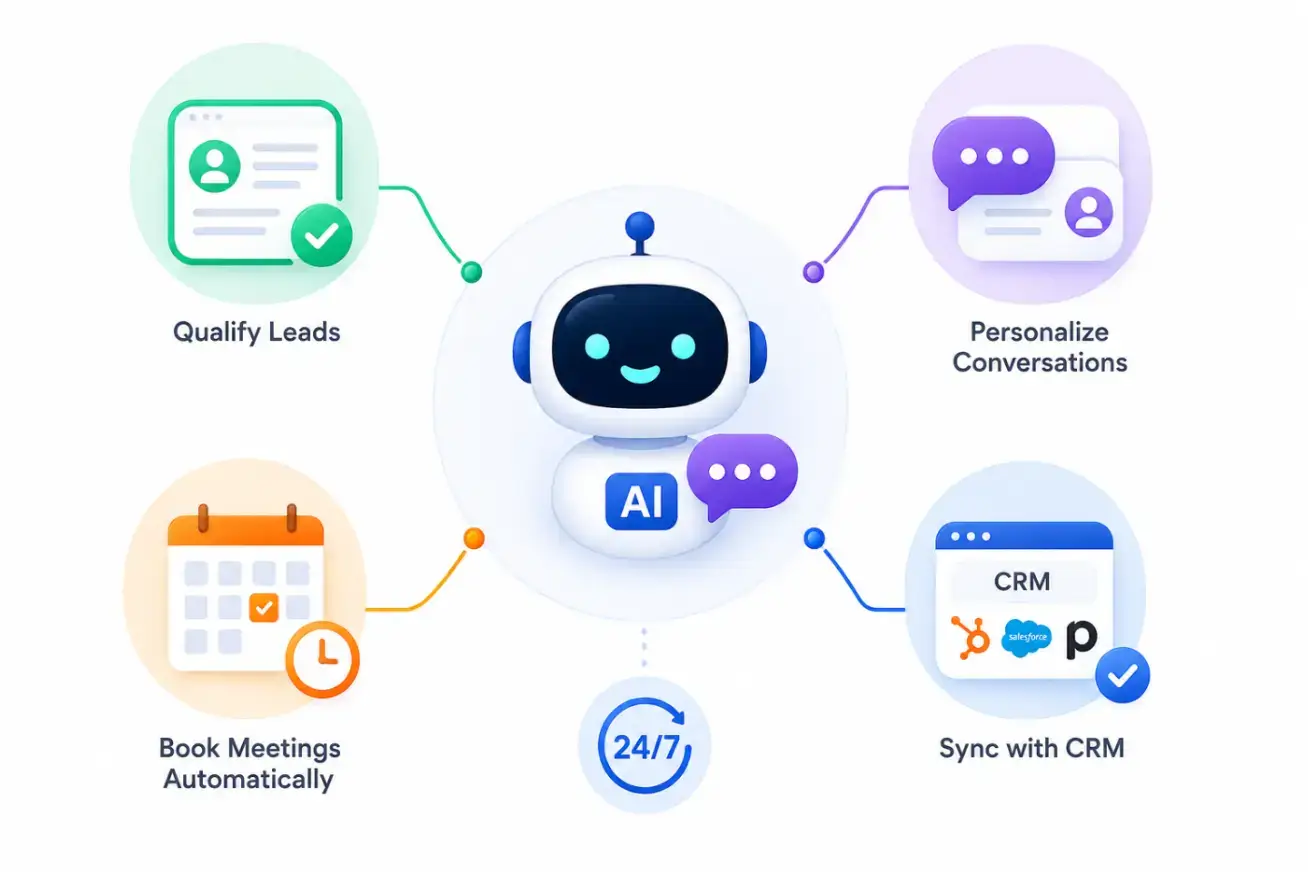
Modern lead generation chatbots can:
- Qualify visitors in real time with targeted questions
- Personalise conversations based on pages viewed, location, or browsing behaviour
- Schedule demos or meetings automatically
- Push qualified lead data into CRMs such as HubSpot, Salesforce, or Pipedrive
Capturing a lead is only the first step in the customer acquisition process.
To maintain engagement and build stronger relationships, many businesses integrate chatbot data with AI email marketing software, enabling more personalised nurturing campaigns based on visitor behaviour, interests, and conversation history.
Faster Response Wins the Lead. The Data Agrees
Industry research suggests that conversational engagement can improve lead conversion compared with static form-only experiences.
While results vary by industry and implementation quality, the consistent pattern is that faster engagement and better qualification improve acquisition efficiency.
Chatbots Belong Everywhere, Not Just on Support Pages
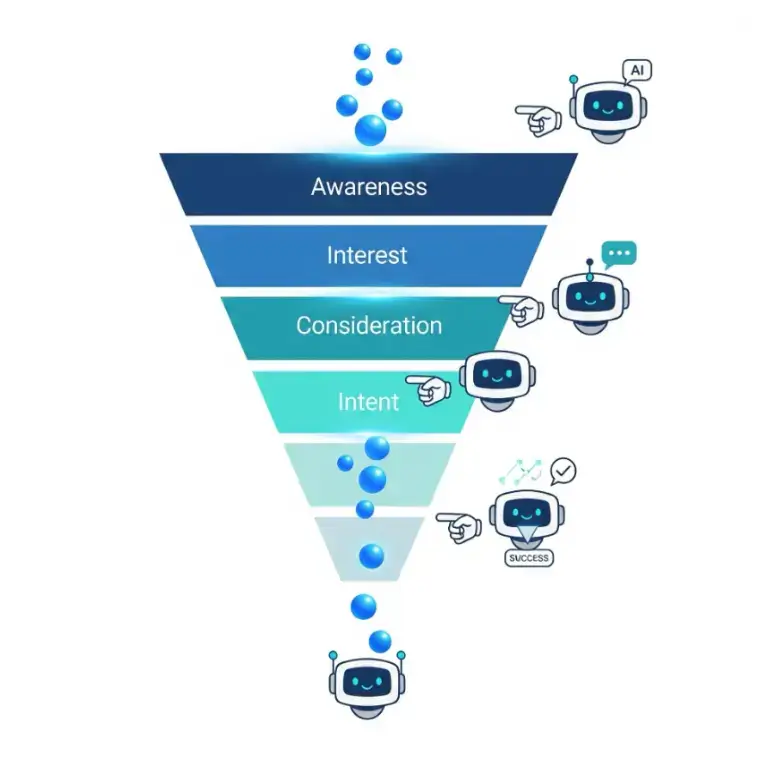
One common misconception is that chatbots belong only on support pages. The strongest implementations support top-, middle-, and bottom-of-funnel interactions.
Top: Educate, Don't Pitch
A visitor reading a blog post receives a contextual prompt such as "Would you like a short guide on solving this problem?" The goal is engagement and education, not an immediate sales pitch.
Middle: Qualify, then Route
A prospect revisiting pricing pages can be asked about team size, timeline, or use case, and then routed to sales if the fit is strong.
Bottom: Book the Demo Before the Rep Is Awake
After-hours demo requests can be scheduled automatically, with confirmations and follow-up information sent before a sales representative joins the conversation.
What This Looks Like in Four Industries
- SaaS and technology: Early qualification helps sales teams focus on higher-intent prospects and can shorten sales cycles.
- E-commerce: Chatbots answer product questions, recover abandoned carts, and recommend relevant products during the buying journey.
- Professional services: Firms collect key qualification details before a consultant, advisor, or attorney joins the conversation.
- Healthcare and wellness: Appointment scheduling, intake questions, and common FAQs can be handled in a conversational tone, reducing administrative workload.
Four Things to Check Before You Buy a Platform
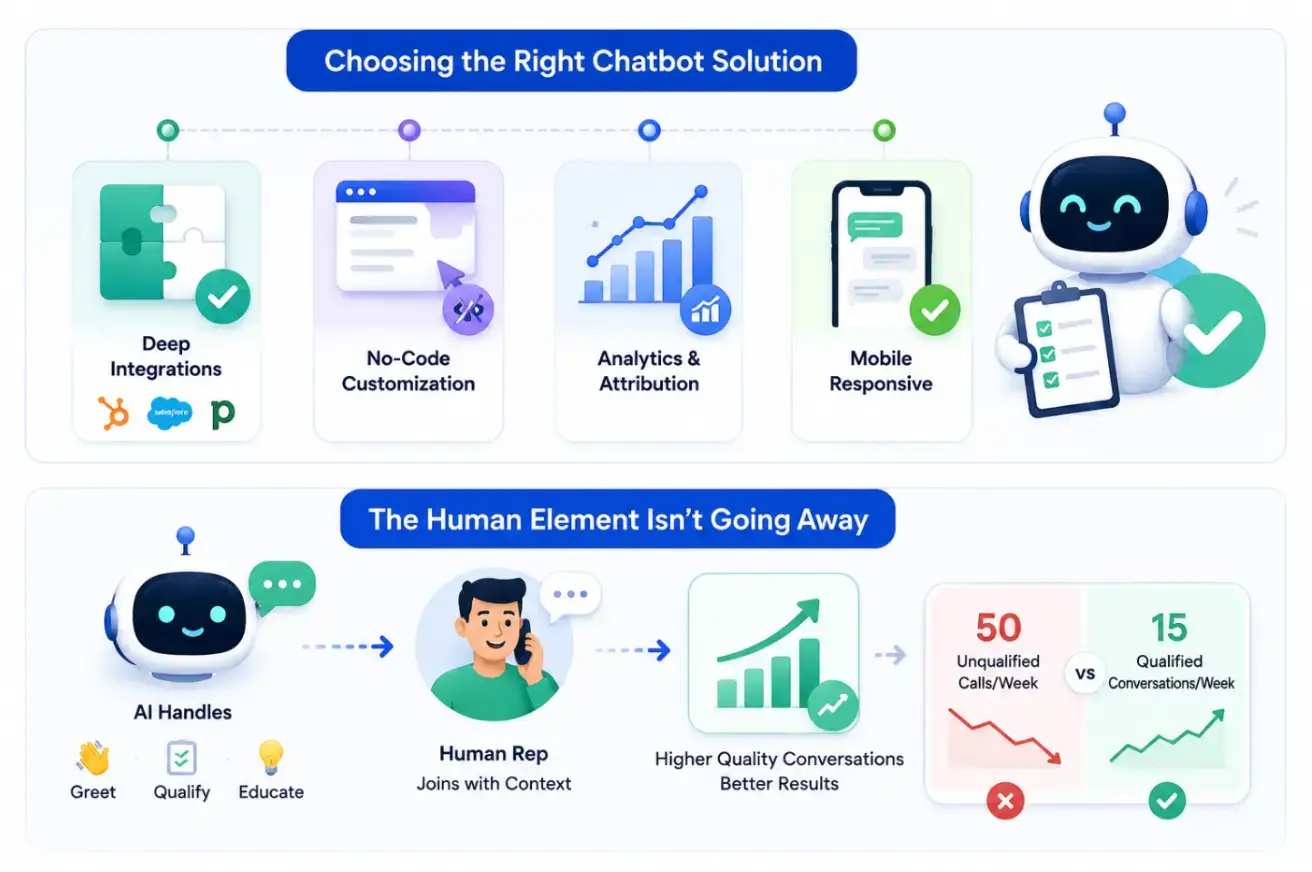
Not every chatbot platform is designed for lead generation. When evaluating options, prioritize these capabilities:
- Deep integrations: CRM, marketing automation, and calendar integrations are essential.
- No-code customization: Marketing teams should be able to build and test flows without developer involvement.
- Analytics and attribution: Conversation data should connect to the pipeline and revenue reporting.
- Mobile performance: The experience must work smoothly on smaller screens, where a large share of website traffic originates.
Organisations that need highly customised conversational systems often work with specialised development partners. The BotsCrew guide to AI development companies provides a useful framework for evaluating when custom AI development is appropriate versus when a no-code platform is sufficient.
AI Handles Qualification. People Close the Deal
The goal of an AI lead generation chatbot is not to replace salespeople. It is to ensure that human teams spend more time on qualified conversations and less time on repetitive qualification tasks.
In practice, the most effective setups let AI handle greeting, qualification, and scheduling, then transition the conversation to a human representative once the prospect demonstrates meaningful buying intent.
Conclusion
AI lead generation chatbots are changing customer acquisition by reducing response times, improving lead qualification, and automating routine conversion tasks across the funnel.
The key takeaways are straightforward:
- Modern buyers expect immediate engagement.
- AI chatbots can qualify, schedule, and route leads automatically.
- Integration with CRM and email systems is critical for measurable results.
- Successful implementations combine automation with human sales expertise.
As acquisition costs continue to rise, improving the conversion rate of existing website traffic is often more efficient than simply buying more traffic.
For many businesses, conversational AI has become a practical way to capture and qualify more of the visitors they already have.
Frequently Asked Questions
1. What is an AI lead generation chatbot?
An AI lead generation chatbot is a conversational tool that uses natural language processing and AI models to engage website visitors, qualify leads, answer questions, and route prospects into sales or marketing workflows.
2. How is an AI chatbot different from a rule-based chatbot?
Rule-based chatbots follow predefined scripts and decision trees. AI chatbots can understand natural language, interpret intent, maintain context, and handle a wider variety of customer questions.
3. Can AI chatbots improve lead conversion rates?
Many businesses see improved conversion performance because chatbots engage visitors immediately, qualify intent in real time, and reduce the delay between interest and follow-up.
4. Do AI lead generation chatbots replace sales teams?
No. The most effective implementations use AI to handle initial qualification and scheduling while human sales representatives focus on high-value conversations and closing deals.
5. What should businesses look for in a chatbot platform?
Prioritize CRM integrations, no-code customisation, analytics and attribution, mobile responsiveness, and the ability to hand off qualified conversations to human team members when needed.

Author Bio
Muhammad Waqas is an SEO specialist and content marketing expert, helping businesses grow their online presence through strategic optimization and high-quality content.