
Working at the Shopify Plus level can be totally different from the Standard plan.
If you’re a Plus merchant, your order volumes are higher, your catalogs are bigger, and you need more options for B2B. The app stack that solves those problems isn't the same one you'd recommend to a smaller store.
Some of the most popular Shopify apps simply don't scale to enterprise-level traffic. Others do, but only their Plus-tier features matter at that volume.
But there are a few that are built specifically with Shopify Plus in mind, with Checkout Extensibility, Shopify Functions, Flow, Shopify Markets, and B2B operations at the core of their architecture. We covered them all in 8 categories, with AOV in mind.
This guide is organized by category to avoid the confusion of typical lists. Use it to figure out which categories you actually need, then evaluate the apps within them.
We focused on bundles, upsells, and cross-sells, marketing options, B2B, and all other features you look for in a well-rounded Shopify Plus app stack.
In this article:
- Plus Isn't Just Bigger Shopify. The App Stack Is Different Too
- Pre-Purchase: Bundles Do the Heaviest AOV Lifting
- Fast Bundle & Upsell App
- Pumper Bundles Quantity Breaks
- Which Bundle Approach Is Best for Shopify Plus?
- Checkout and Post-Purchase: Catching Revenue at the Most Sensitive Points
- Rebuy Personalization Engine
- AfterSell Post Purchase Upsell
- UpsellPlus
- Which Upsell Approach for Plus?
- Subscriptions: Where AOV Becomes LTV
- Recharge
- Email and SMS: The Highest-Margin Channel on Plus
- Klaviyo
- Omnisend
- Which Email Approach for Plus?
- Maestra
- Lead Capture: The Front Door to Your Email Channel
- POWR Sales Popup
- Support and Returns: Revenue Most Plus Stores Leave on the Table
- Gorgias
- Loop Returns
- Which Support Approach for Plus?
- B2B: Where AOV is 5 to 10x DTC
- SparkLayer B2B
- Which B2B Approach for Plus?
- Search: Invisible Until Your Catalog Hits 1,000 SKUs
- Algolia
- Which Search Approach for Plus?
- Stack the Layers in Order. Not All at Once
- What Industry Experts Say About App Stacks
- Where Plus Stacks Usually Leak AOV
The Full Plus Stack at a Glance
Plus Isn't Just Bigger Shopify. The App Stack Is Different Too
If you're already on Plus, skip ahead. If you're considering the move or in the middle of a migration, the foundation matters.
Checkout Extensibility. Shopify replaced checkout.liquid with Checkout Extensibility, a system where apps inject UI extensions into checkout as native blocks. Only Shopify Plus stores get the full extensibility surface. Apps built on it from the ground up stand out.
Shopify Functions. Plus stores can deploy custom code inside Shopify's commerce engine. If you have developers, Functions removes the need for some apps entirely and extends what others can do.
Shopify Flow. A workflow automation tool included with Plus that connects apps and triggers actions based on store events. The right app stack is one where Flow can coordinate cleanly across tools.
Shopify Markets. For brands selling across multiple regions, Markets localizes pricing, currencies, languages, and checkout from a single store. Apps that integrate cleanly with Markets are a better fit for international operations.
B2B on Shopify. Plus stores get a native B2B catalog with customer-specific pricing and a complete checkout. Apps that work for DTC don't always work for B2B.
Volume requirements. Shopify Plus stores typically operate at significantly higher order volumes and larger catalogs than standard stores. Apps that work for smaller stores don't always scale smoothly. As Shopify's research on AOV shows, even small AOV improvements at high volume compound into substantial revenue.
Pre-Purchase: Bundles Do the Heaviest AOV Lifting
Bundle and upsell apps drive AOV by encouraging customers to add more products before reaching checkout.
Product bundling at its core is the practice of grouping complementary items into a single offer, which makes the bundle layer one of the highest-leverage parts of the stack.
On Shopify Plus, merchants typically move toward platforms that support multiple bundle types, stronger merchandising control, and scalable AOV strategies. The pre-purchase layer is one of the highest-leverage parts of the stack.
Customers haven't committed to checkout yet, which means there's room to influence basket size before friction kicks in.
Baymard Institute's research on cart abandonment shows that the average cart abandonment rate is around 70%, which makes pre-purchase AOV optimization one of the few levers that doesn't depend on solving checkout friction first.
Fast Bundle & Upsell App
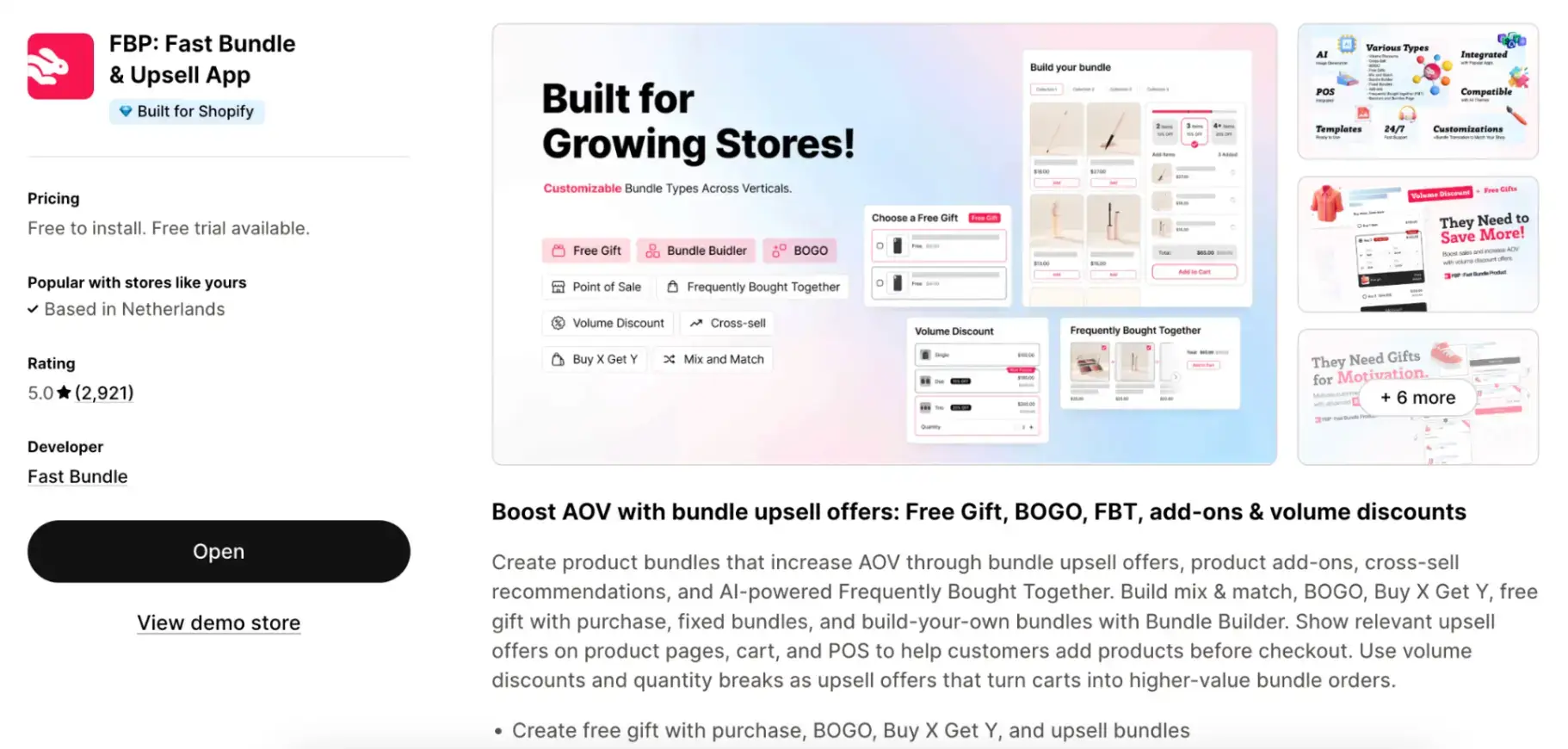
Best for: Shopify Plus brands looking to increase AOV through bundles, add-ons, volume discounts, and merchandising offers.
Rating: 5.0 (2,940+ reviews)
Pricing: Free to install; paid plans from $19/month.
Fast Bundle helps Shopify Plus merchants increase average order value through multiple bundle and upsell strategies within a single platform.
Instead of focusing on a single offer type, it supports fixed bundles, mix-and-match bundles, volume discounts, Buy X Get Y promotions, BOGO offers, product add-ons, and AI-powered Frequently Bought Together recommendations.
One of Fast Bundle’s biggest advantages for larger Shopify stores is consolidation. Merchants can manage several merchandising and AOV initiatives from one app rather than combining separate tools for bundles, quantity breaks, add-ons, and cross-sells. For high-volume stores, that often means fewer app conflicts, simpler operations, and easier campaign management.
Bundles and quantity breaks can be deployed on product pages, in the cart, and at POS, making Fast Bundle a strong pre-purchase AOV layer.
The app also carries Shopify’s Built for Shopify badge and supports Shopify Plus workflows, including Checkout Extensibility, Shopify Functions, Shopify Flow automations, and B2B operations.
Limitations: Pricing scales with bundle order volume rather than a flat fee, which can make the total cost less predictable at high traffic.
Plus-specific fit: Supports Shopify Plus workflows, including Checkout Extensibility, Shopify Functions, and B2B operations.
Pumper Bundles Quantity Breaks
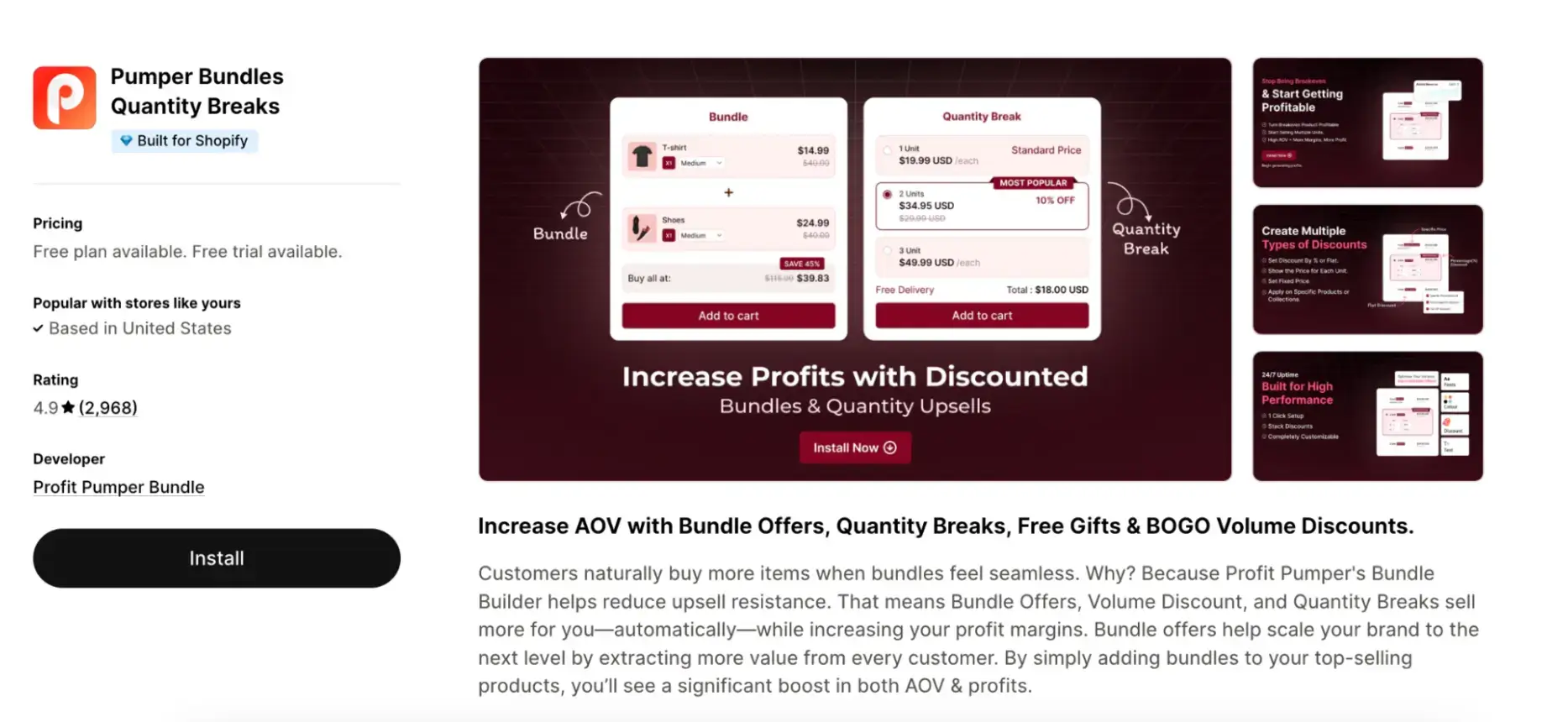
Best for: Plus stores focused on quantity-break and "buy more, save more" bundle psychology.
Rating: 4.9 (2,900+ reviews)
Pricing: Free plan available; paid plans start at $9.99.
Pumper Bundles Quantity Breaks (built by Profit Pumper) focuses on quantity-break and volume-discount bundles, but it has some BOGO and free gift options too.
The app comes with pre-built templates for common volume-discount offers, and the setup flow is designed to launch quickly. These make it a strong fit for stores that sell in bulk.
Setup is fast, and most stores can launch their first quantity-break offer in minutes. The free plan covers basic functionality for stores that want to validate the approach before committing.
Limitations: Narrower feature scope than multi-feature bundle apps. Stores needing mix-and-match builders or AI recommendations alongside volume discounts will likely need an additional app.
Plus-specific fit: Works on any plan; benefits from Checkout Extensibility on Plus.
Which Bundle Approach Is Best for Shopify Plus?
- If you need multiple bundle types with predictable setup and operational simplicity, Fast Bundle covers the most common Shopify Plus bundle and upsell use cases in one platform.
- If quantity breaks and “buy more, save more” pricing are your primary AOV strategy, Pumper’s focused execution and free tier make it easy to test volume-discount offers quickly.
Checkout and Post-Purchase: Catching Revenue at the Most Sensitive Points
These apps aim to catch revenue at the most sensitive points: in cart, during checkout, and right after purchase.
On Plus, the most relevant apps in this category are built on Checkout Extensibility, which lets them place offers natively inside the checkout flow.
Rebuy Personalization Engine
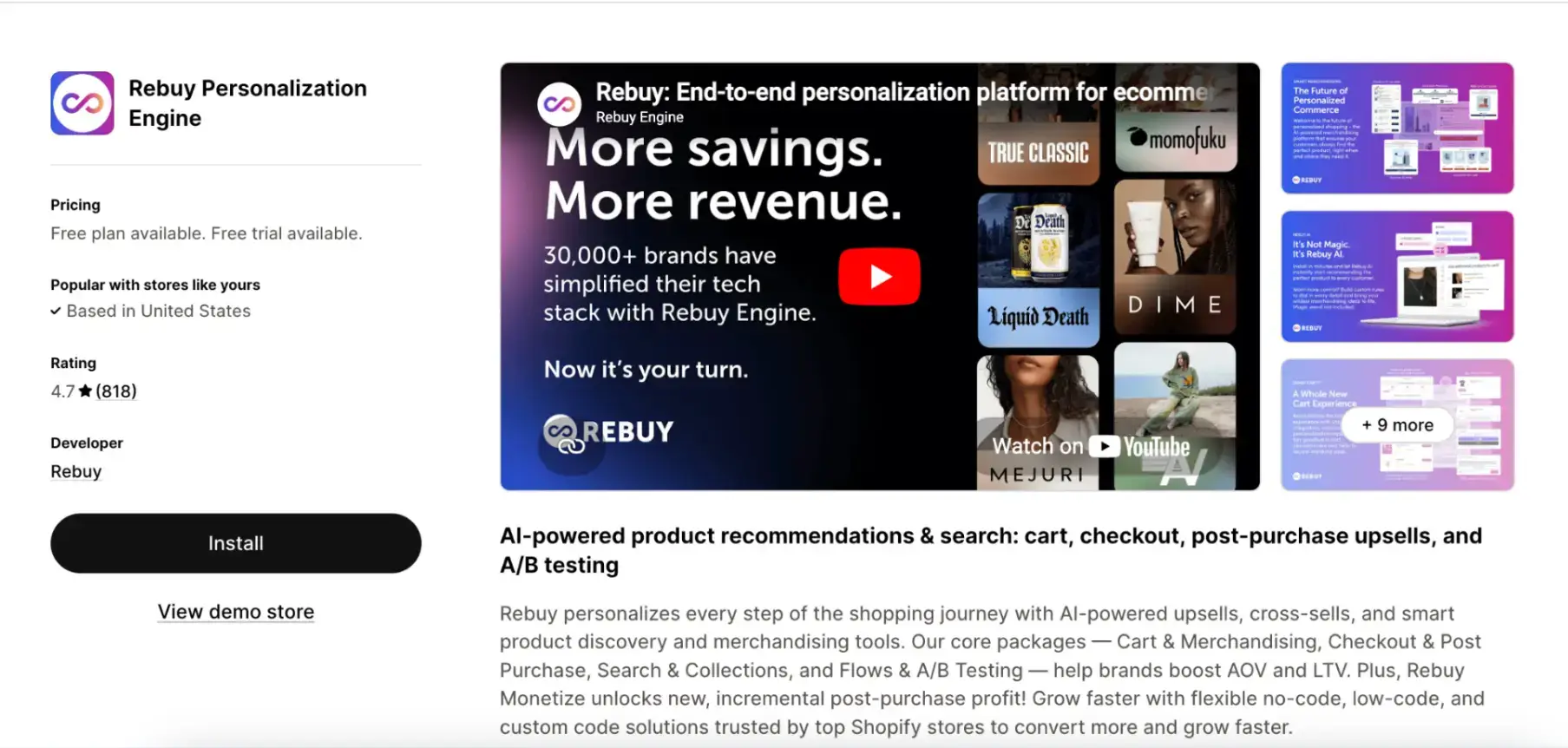
Best for: Plus stores with developers, optimizing AOV through AI-driven personalization across every touchpoint.
Rating: 4.7 (800+ reviews)
Pricing: Paid plans from $99/month.
Rebuy is a personalization platform built specifically for Shopify Plus. It exposes a Liquid-based widget system that lets you build essentially any upsell flow (from FBTs, to in-cart upsells, to smart search), all powered by an AI engine that learns from your store's purchase data.
For stores already running multiple personalization, recommendation, or upsell tools, Rebuy can consolidate them into a single platform, though the entry price starts at $99/month.
Limitations: Steepest learning curve in this category. Overkill for smaller Plus stores or teams without dev support.
Plus-specific fit: Built for Plus from the start; deep Functions and Checkout Extensibility support.
AfterSell Post Purchase Upsell
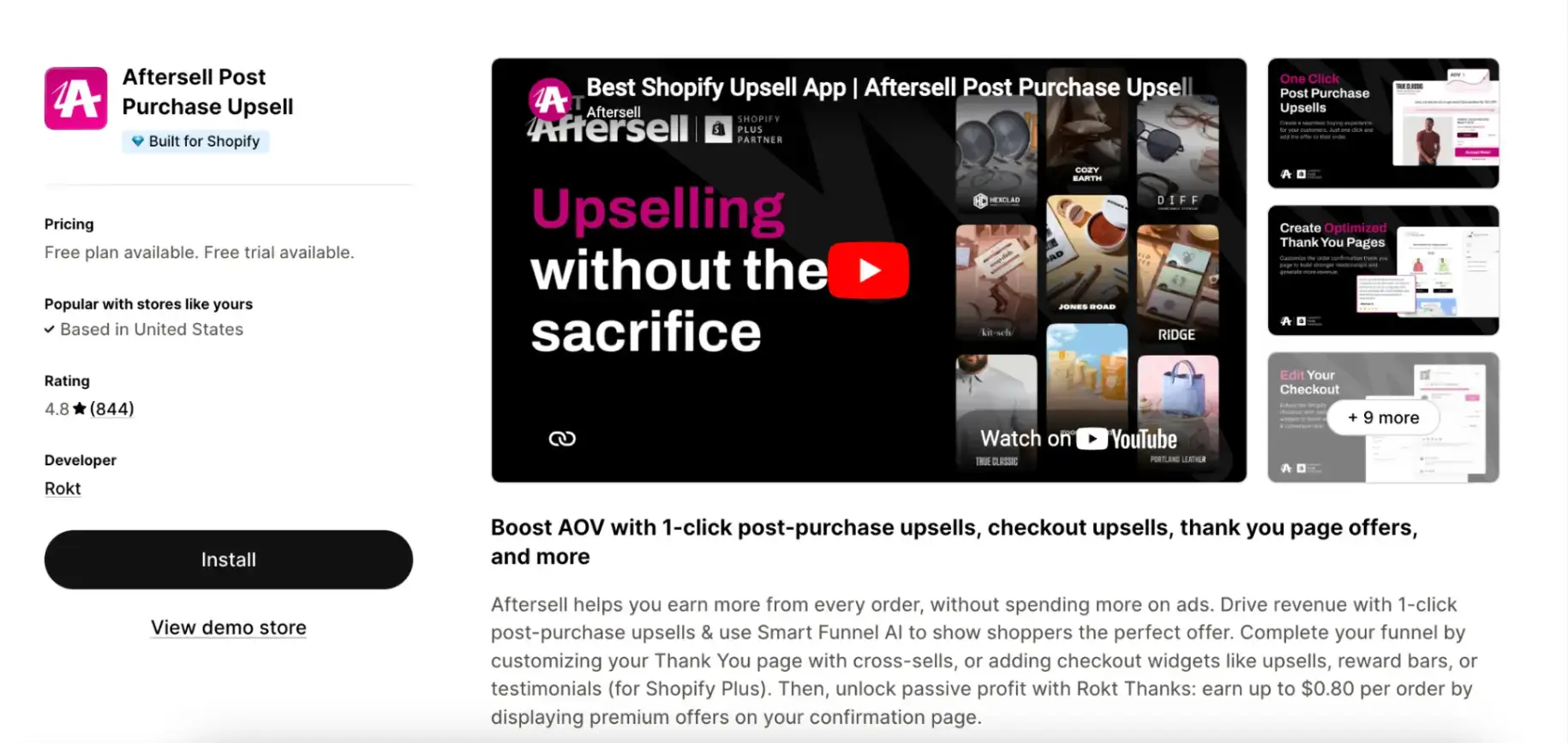
Best for: Plus stores running native checkout extension upsells with strong AOV attribution.
Rating: 4.8 (800+ reviews)
Pricing: Free plan available; paid plans from $34.99/month
AfterSell was one of the first apps to leverage Checkout Extensibility for a native checkout that fully upsells. Offers render directly inside the checkout flow as native checkout extensions.
The A/B testing and attribution are built around incremental AOV measurement, which is what Plus merchants need to justify upsell investments.
The pricing is flat rather than revenue-share based, which many Plus merchants prefer at scale.
Limitations: Most powerful features require Shopify Plus; smaller stores get less value.
Plus-specific fit: Native checkout extensions are Plus-only territory.
UpsellPlus
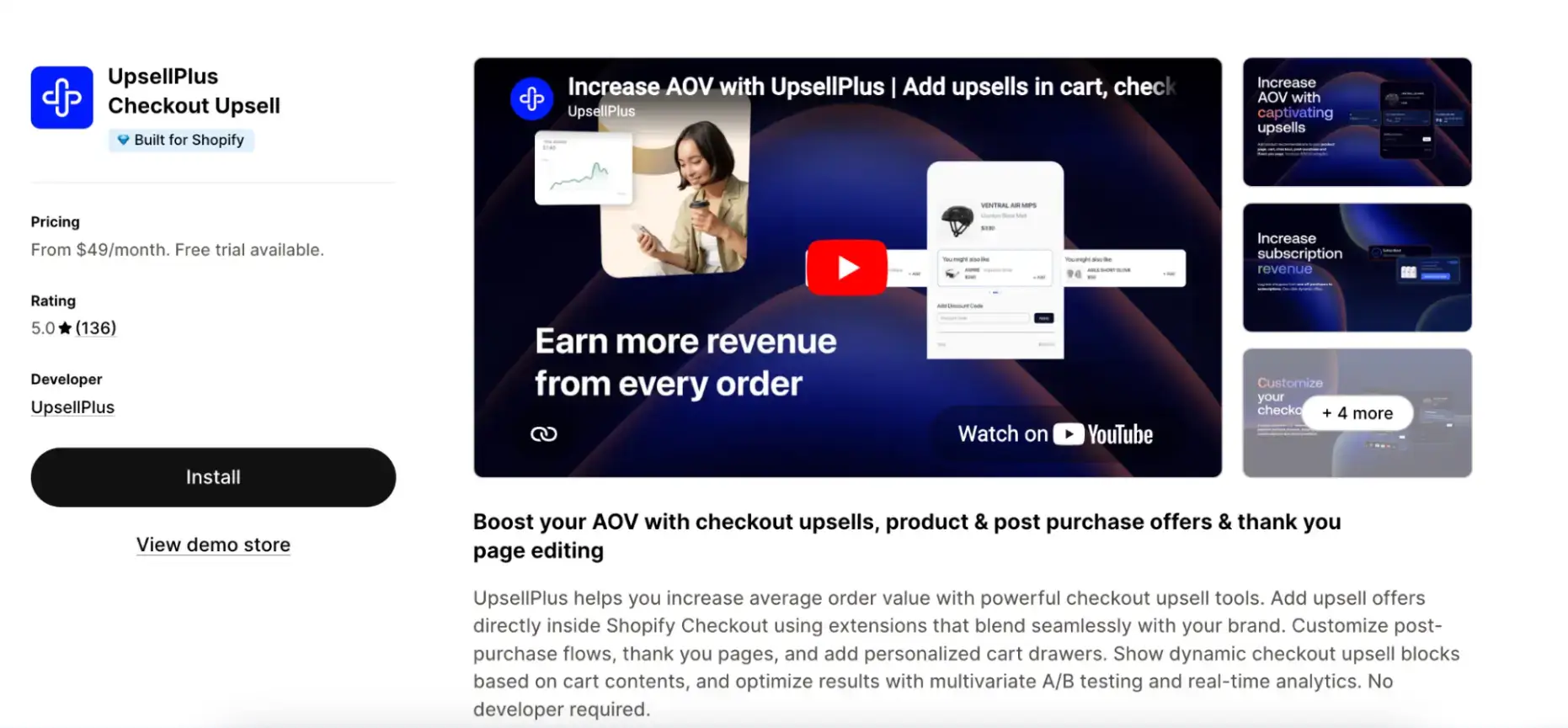
Best for: Plus stores wanting fast-deploy checkout upsells without dev work.
Rating: 4.9 (250+ reviews)
Pricing: Paid plans from $19/month.
UpsellPlus is a newer Plus-focused app built exclusively for Checkout Extensibility. Fast setup, modern UI, and ease of use are the main advantages. For Plus stores that just need checkout upsells working in a day, it's often the simplest path.
Limitations: Plus-only (can't be used on Shopify or Advanced).
Plus-specific fit: Built exclusively for Plus checkout extensions.
Which Upsell Approach for Plus?
- If you want fast deployment with minimal learning, UpsellPlus.
- If you want flat-fee pricing and strong attribution: AfterSell.
- If you want one app to replace several and have devs available: Rebuy.
Subscriptions: Where AOV Becomes LTV
Recharge
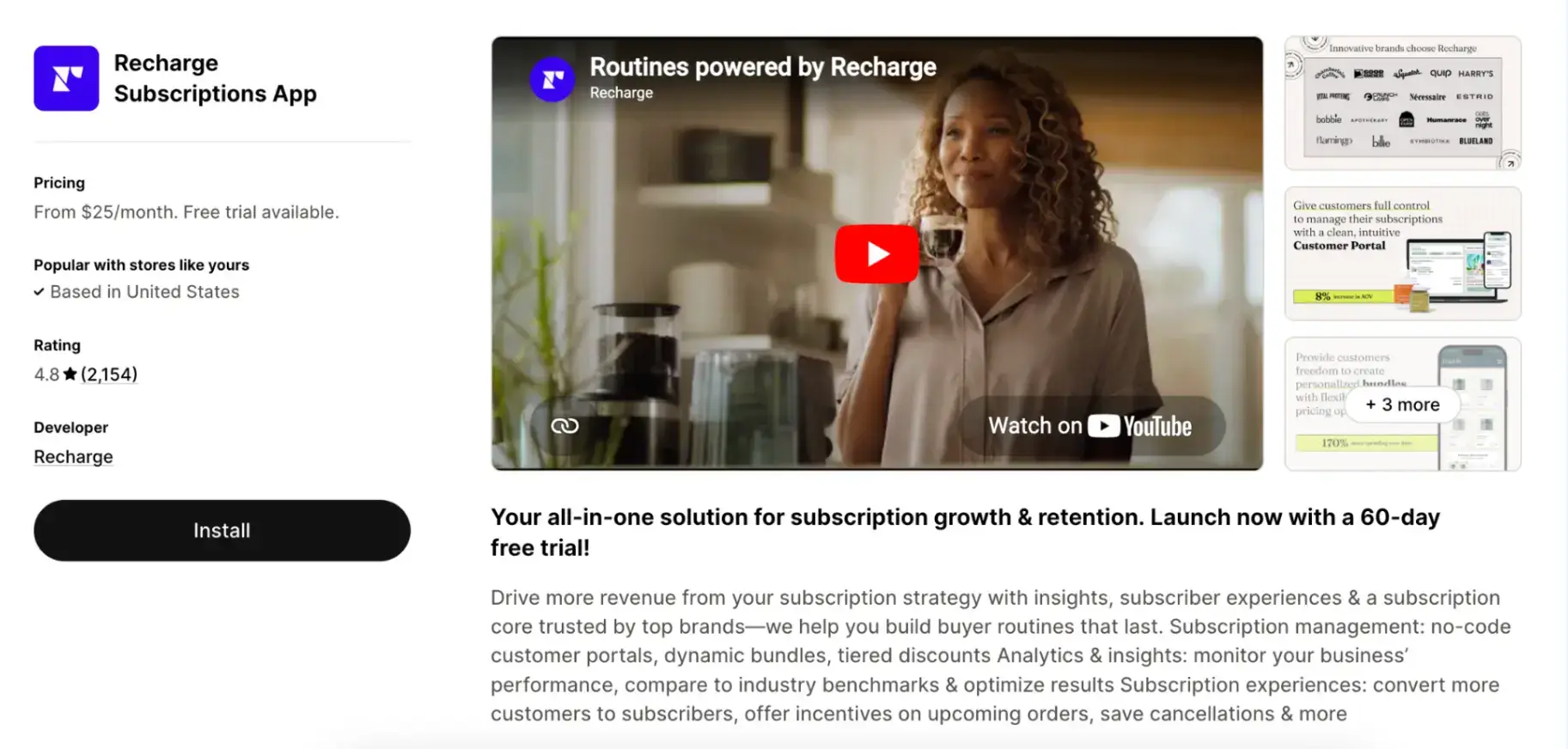
Best for: Plus brands where subscriptions are a core revenue channel.
Rating: 4.8 (2,100+ reviews)
Pricing: Paid plans from $99/month.
Recharge is one of the longer-running subscription platforms on Shopify Plus, with a large installed base across DTC categories. It handles recurring orders, subscriber portals, flexible delivery scheduling, mixed carts (one-time + subscription products in the same checkout), and retention workflows.
For Plus brands where recurring revenue is a meaningful channel, supplements, coffee, skincare, pet food, wellness, Recharge is a common choice for these categories.
The AOV angle: subscription customers have higher lifetime value than one-time buyers, and Recharge supports cross-sells and upsells within the subscription experience itself. Customers can also self-manage subscriptions (skip, pause, swap, adjust delivery), which reduces support load and helps retention.
Limitations: Overbuilt for stores with experimental or small subscription programs. Works best when subscriptions are already meaningful revenue or planned to become so.
Plus-specific fit: Works on any plan; Plus stores benefit from deeper integrations with Klaviyo, Shopify Flow, and B2B catalogs.
Email and SMS: The Highest-Margin Channel on Plus
Email and SMS tools rarely show direct AOV lift the way bundle or upsell apps do, but they significantly impact total customer value through abandoned cart recovery, post-purchase nurture, replenishment reminders, and VIP segmentation.
Owned-channel marketing is also where Shopify Plus brands recapture the highest margin per touchpoint, as our coverage of top Shopify apps notes, email tools like Omnisend remain among the highest-rated in the App Store.
Klaviyo
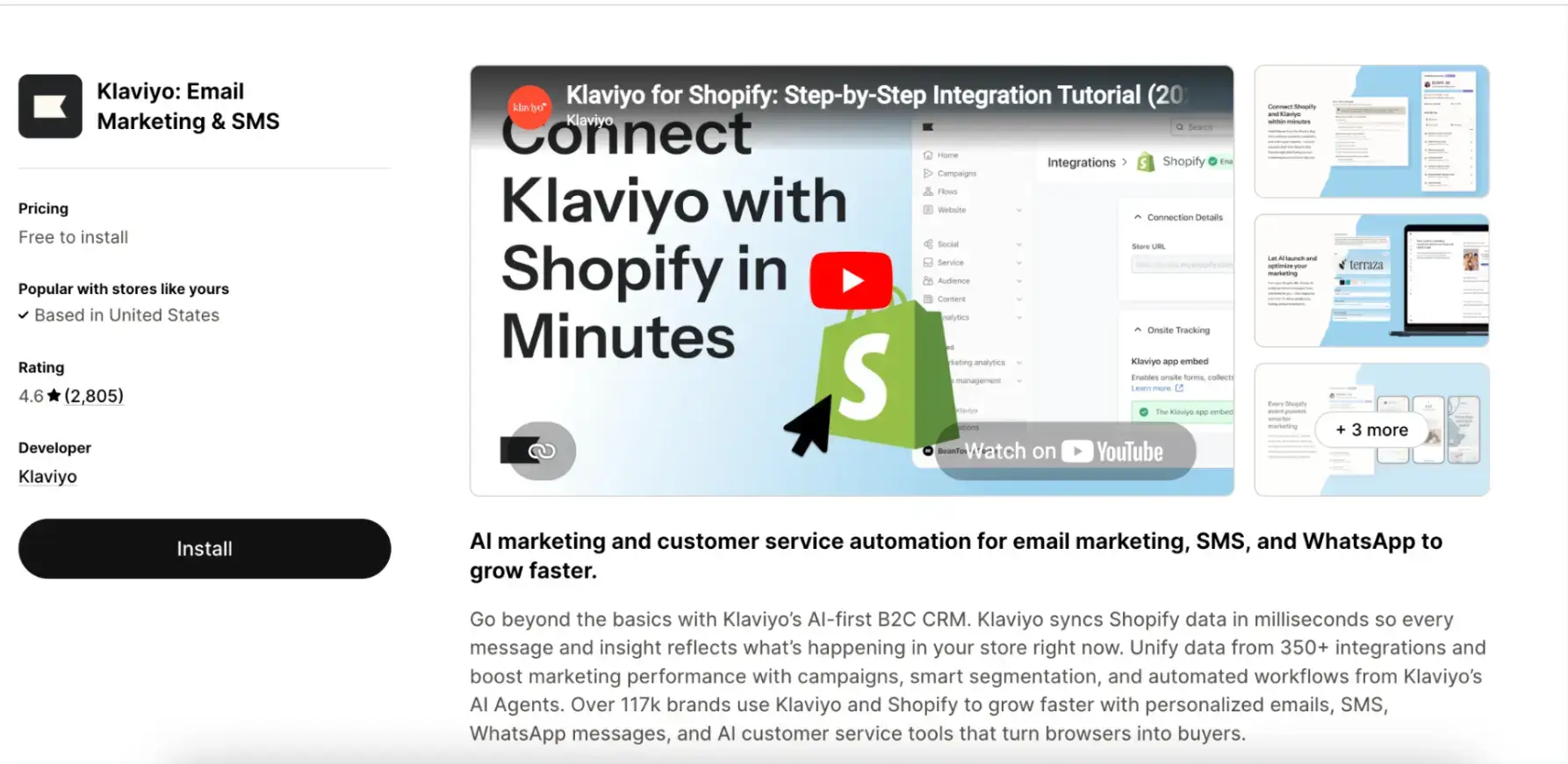
Best for: Lifecycle marketing, segmentation, and email/SMS-driven AOV growth on Plus.
Rating: 4.6 (2,800+ reviews)
Pricing: Free up to 250 contacts; paid plans scale with contact volume.
Klaviyo is widely used as the email and SMS platform on Plus. Its Shopify integration covers real-time event sync, product feed integration, predictive analytics on customer LTV, and native Shopify segments. Most Plus stores in 2026 are running Klaviyo, whether or not they're maxing out the platform's capabilities.
Limitations: Pricing scales aggressively as your contact list grows.
Plus-specific fit: Integrates with Shopify Flow and B2B; works on any plan, but enterprise features show up at Plus volume.
Omnisend
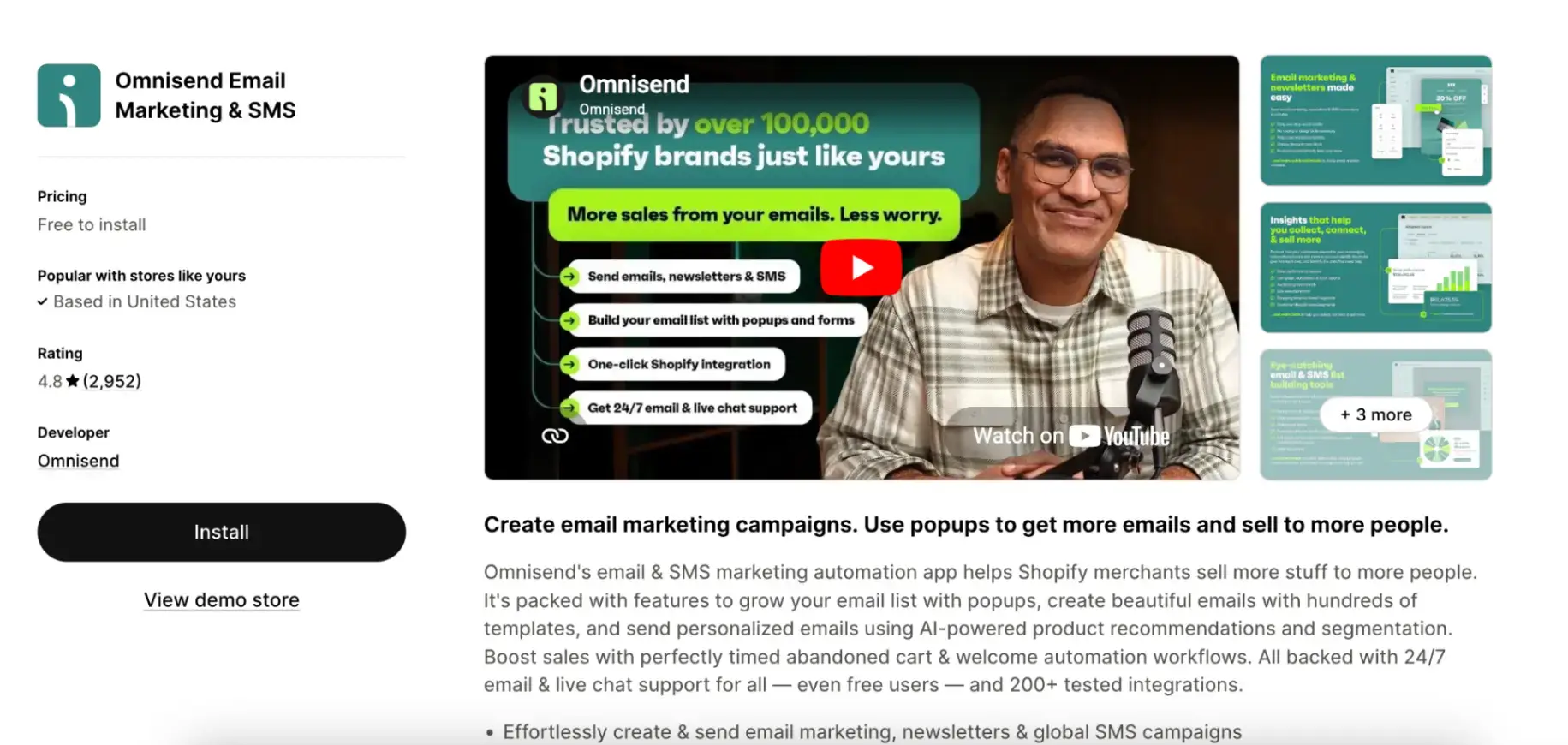
Best for: Plus stores wanting simpler execution than Klaviyo at lower complexity.
Rating: 4.8 (2,900+ reviews)
Pricing: Free plan available; paid plans from $16/month.
Omnisend is the most common Klaviyo alternative on Plus. It touches almost every step of the customer journey: email, SMS, and push notifications with pre-built automation templates for ecommerce-specific flows. The simple UI also makes deployment faster for smaller teams.
Limitations: Less powerful for advanced segmentation and predictive analytics than Klaviyo. Integrations exist, but aren't as deep.
Plus-specific fit: Works on any plan; Plus integration is solid but less mature than Klaviyo's.
Which Email Approach for Plus?
- For most mid-to-large Plus stores: Klaviyo, because the deep Shopify integration and segmentation capabilities pay off at volume. Maestra offers the same, plus real-time personalization and a dedicated marketer who launches upsell mechanics for you at no extra cost.
- For smaller Plus stores or teams that prioritize simplicity over depth: Omnisend.
- For stores already using a different platform (Mailchimp, ActiveCampaign), the migration cost usually justifies switching only if you're hitting limitations.
Maestra
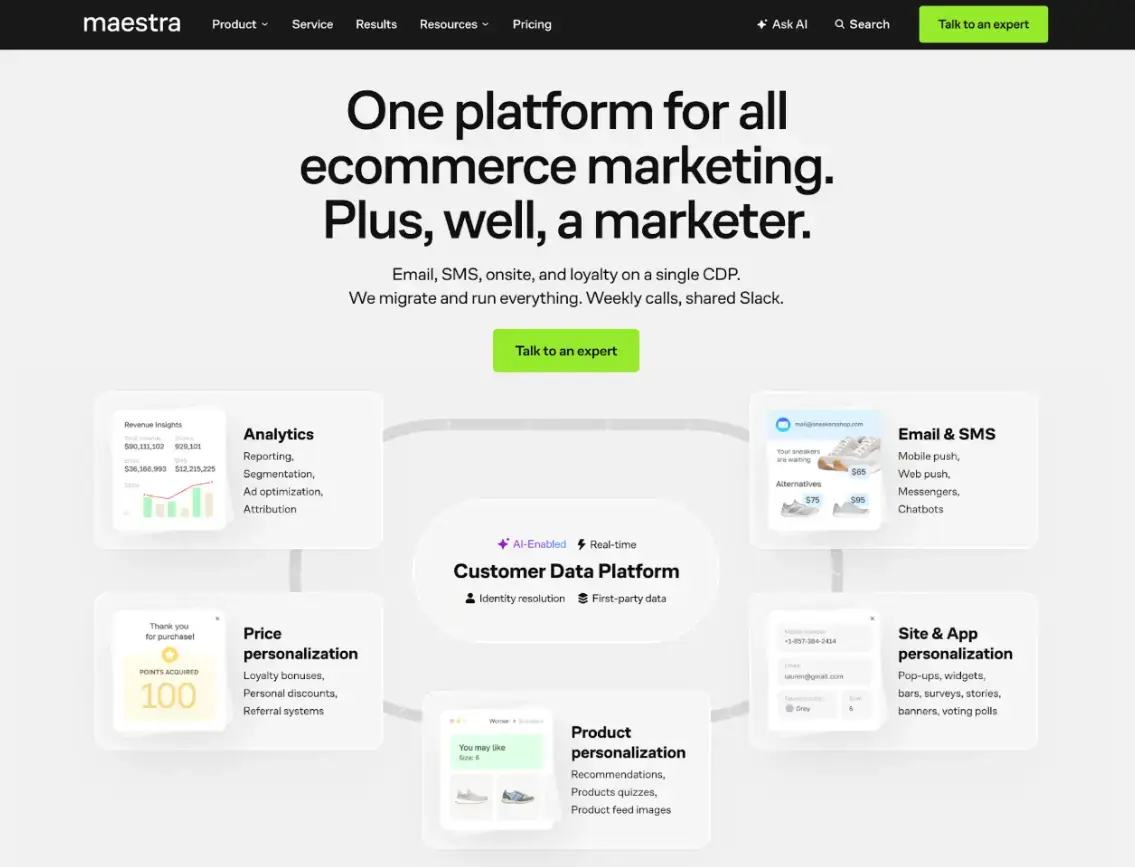
Best for: Journey-wide personalization, lifecycle marketing, granular segmentation, advanced flows.
Rating: 5.0 (2 reviews)
Pricing: From $2,000/month for 100,000 active profiles, unlimited email sends, and a dedicated forward-deployed marketer.
Maestra runs upsells and cross-sells everywhere a shopper meets the brand: in email and SMS, in push and messengers, on the site and in the app, and even at in-store POS and self-checkout terminals.
Fourteen AI algorithms – from Often Purchased With to Post-Purchase Cross-Sell – power the product recommendations.
Upsell bars, cart add-ons, and ready-made bundles nudge shoppers to buy more. Everything runs on a real-time customer data platform, so each offer reflects what a shopper just did, the moment they do it.
Every account includes a forward-deployed marketer who launches all of it for you. For example, the marketer dedicated to Enlightened Equipment set up a smart upsell bar in just one hour. This bar drove +38.7% AOV and +$99.8 per order.
Limitations: No trial or free plan. Overkill for early-stage stores with a small customer base.
Plus-specific fit: Native Shopify integration. Works on any plan, though the real-time CDP and the included marketer pay off most at Plus volume.
Lead Capture: The Front Door to Your Email Channel
Pre-purchase lead capture is often underestimated as an AOV driver.
Capturing email signups, displaying promotional popups, and gating offers behind opt-ins all feed downstream into the email and lifecycle channels, where the real AOV compounding happens.
Klaviyo's benchmark report on email marketing shows that ecommerce email flows triggered from lead capture forms consistently outperform broadcast campaigns by a significant margin.
As Shopify's own guidance on conversion rate optimization notes, on-site engagement tools are most effective when they support, rather than interrupt, the buying journey.
POWR Sales Popup
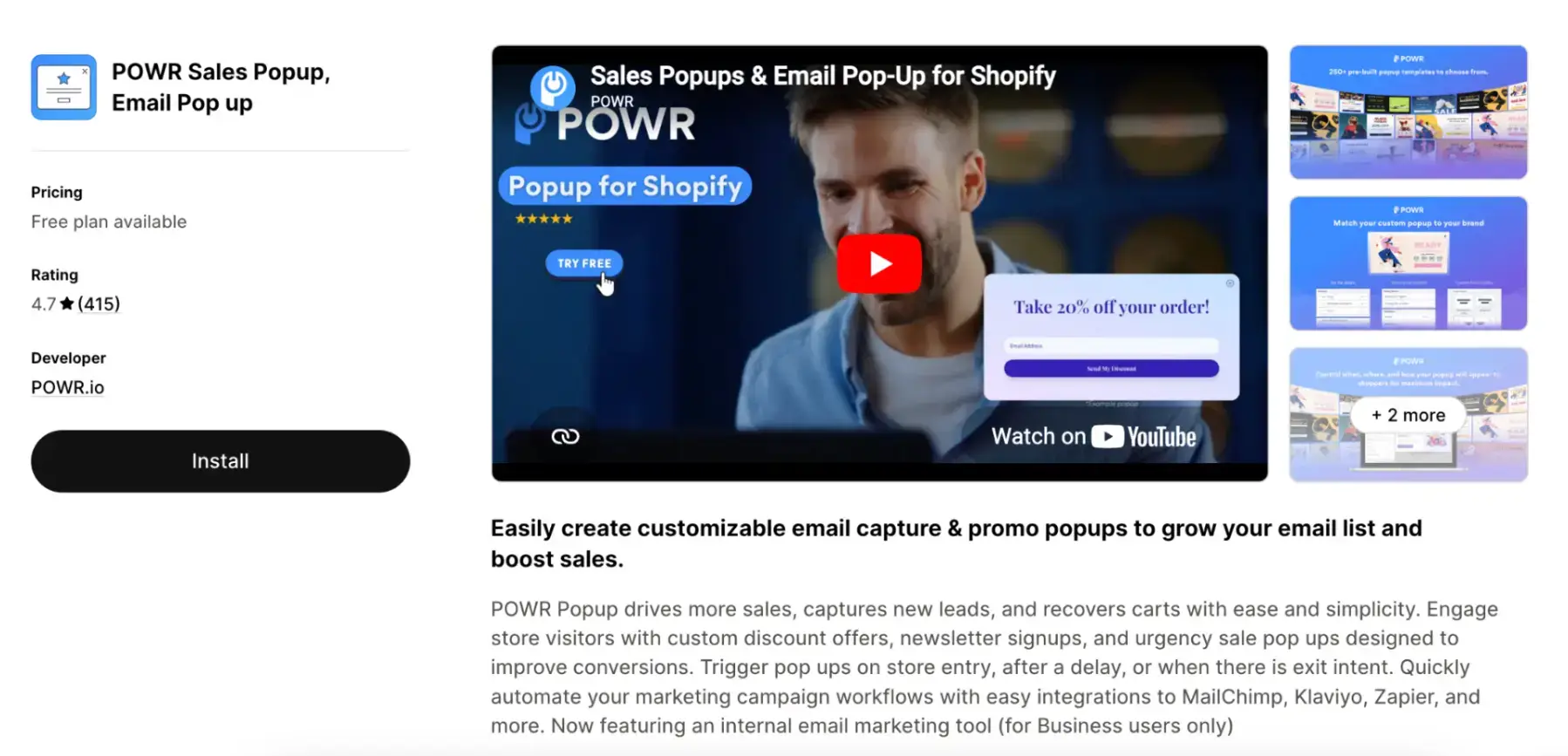
Best for: Plus stores wanting fast, customizable pop-ups to capture leads, display promotions, and reduce exit intent.
Rating: 4.7 (416+ reviews)
Pricing: Free plan available; paid plans scale with feature access.
POWR Sales Popup is part of the POWR suite of 60+ Shopify apps. It supports sign-up forms, exit-intent popups, promotional banners, and discount displays, useful for capturing pre-purchase intent that downstream email and SMS tools can convert into revenue.
The app integrates with Shopify natively and offers extensive customization without requiring code.
Limitations: Focused on lead capture and promotional display rather than full personalization or AI-driven recommendations.
Plus-specific fit: Works on any Shopify plan, including Plus, and pairs well with email platforms like Klaviyo and Omnisend.
Support and Returns: Revenue Most Plus Stores Leave on the Table
Support apps and returns platforms aren't the first thing Plus merchants think of when planning AOV. But on Plus, they drive big revenue through things like ticket-based upsells and post-purchase experience.
Gorgias
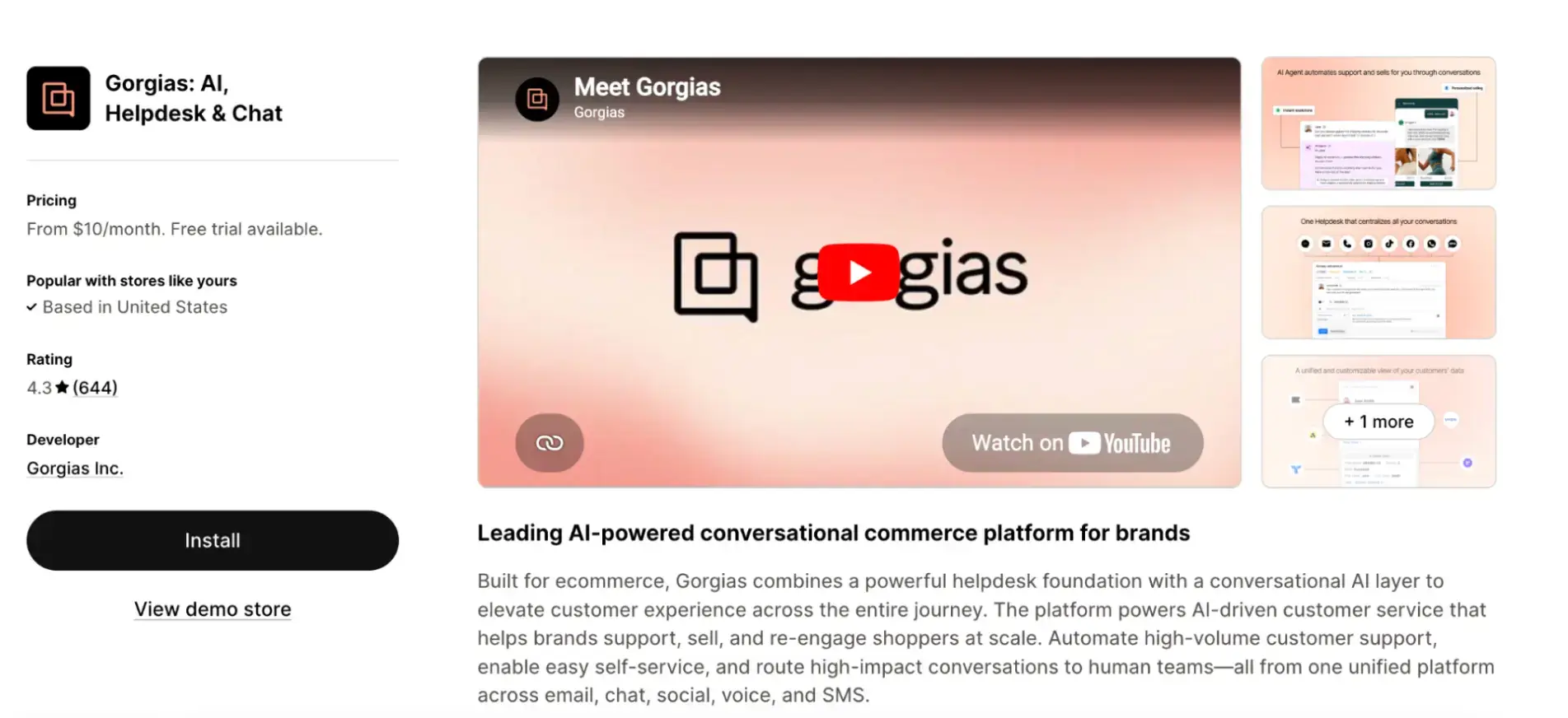
Best for: Customer support that drives AOV through in-ticket order management and upsells.
Rating: 4.3 (640+ reviews)
Pricing: Paid plans from $10/month.
Gorgias is the most-installed customer support platform on Plus. The reason it’s in an AOV guide: support agents on Plus stores routinely upsell during ticket resolution. "I see you ordered the medium size. Would you like to add the matching accessory for 15% off?" That conversation, automated through Gorgias macros tied to Shopify customer data, can significantly increase AOV.
Plus-tier features include advanced automation, multi-store support, and Shopify Flow integration.
Limitations: Pricing scales with ticket volume; high-support categories (apparel, electronics) can see large bills.
Plus-specific fit: Designed for high-volume support teams; integrates with Klaviyo, Recharge, and Shopify Flow.
Loop Returns
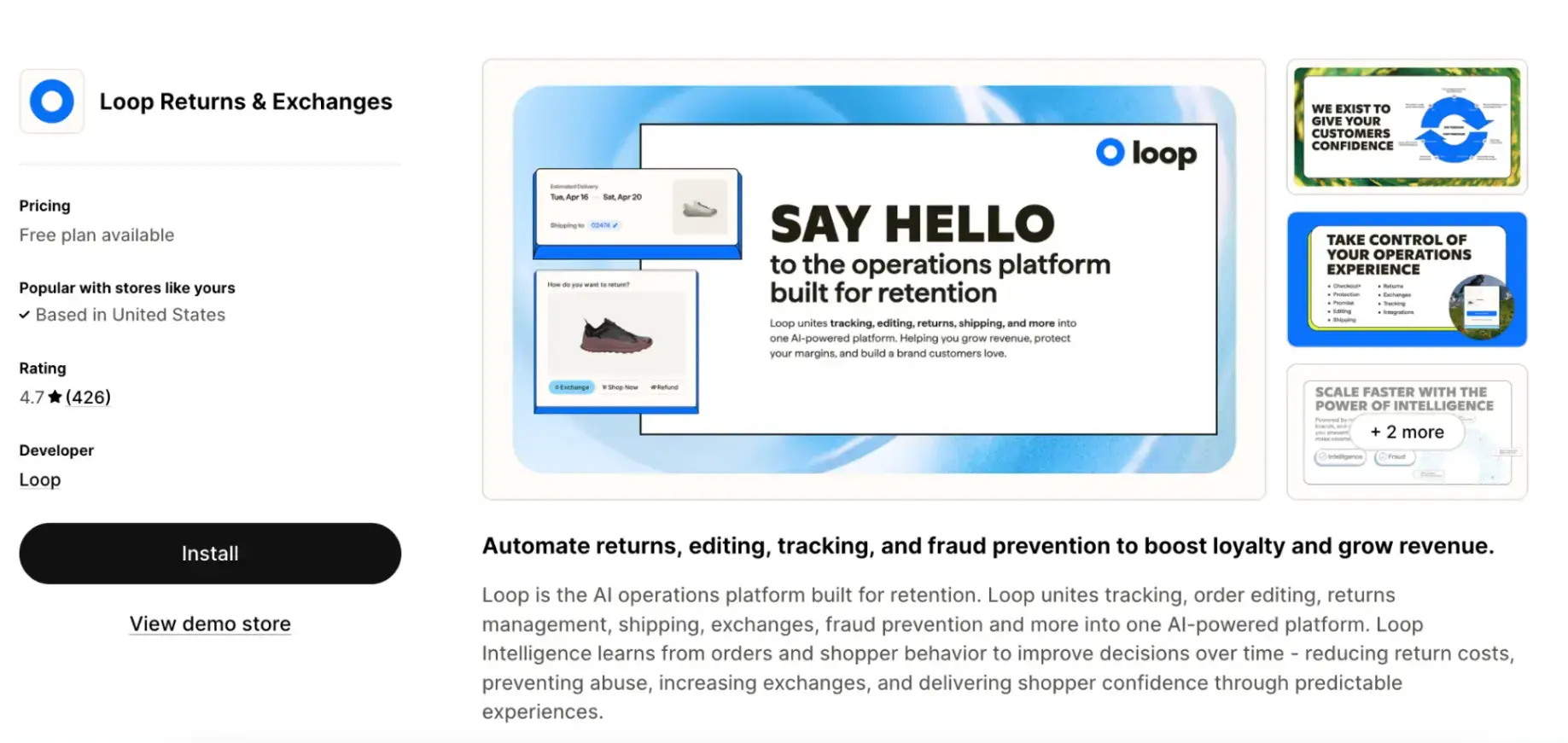
Best for: Plus stores where returns are frequent, and exchange flows can preserve revenue.
Rating: 4.7 (420+ reviews)
Pricing: Paid plans from $29/month.
Loop routes return requests through an exchange flow before processing a refund. Customers see suggested upgrades, alternative SKUs, and store credit options, which can preserve revenue that would otherwise leave the store as a refund.
It has become standard infrastructure for apparel, footwear, and other categories with high return rates.
Limitations: ROI math is category-dependent. Setup requires careful policy design.
Plus-specific fit: High return volume only makes sense for Plus-scale stores.
Which Support Approach for Plus?
- If you're handling 100+ support tickets per day, Gorgias is essentially required infrastructure.
- If returns are 15%+ of your order volume (typical for apparel and footwear), Loop pays for itself fast.
Stores in other categories often delay Loop until later in the stack-building sequence.
B2B: Where AOV is 5 to 10x DTC
For Plus stores running wholesale alongside DTC, the right apps unlock revenue that can't be created only through DTC apps. B2B order sizes are typically 5-10x DTC, which makes B2B AOV optimization unusually high-leverage.
SparkLayer B2B
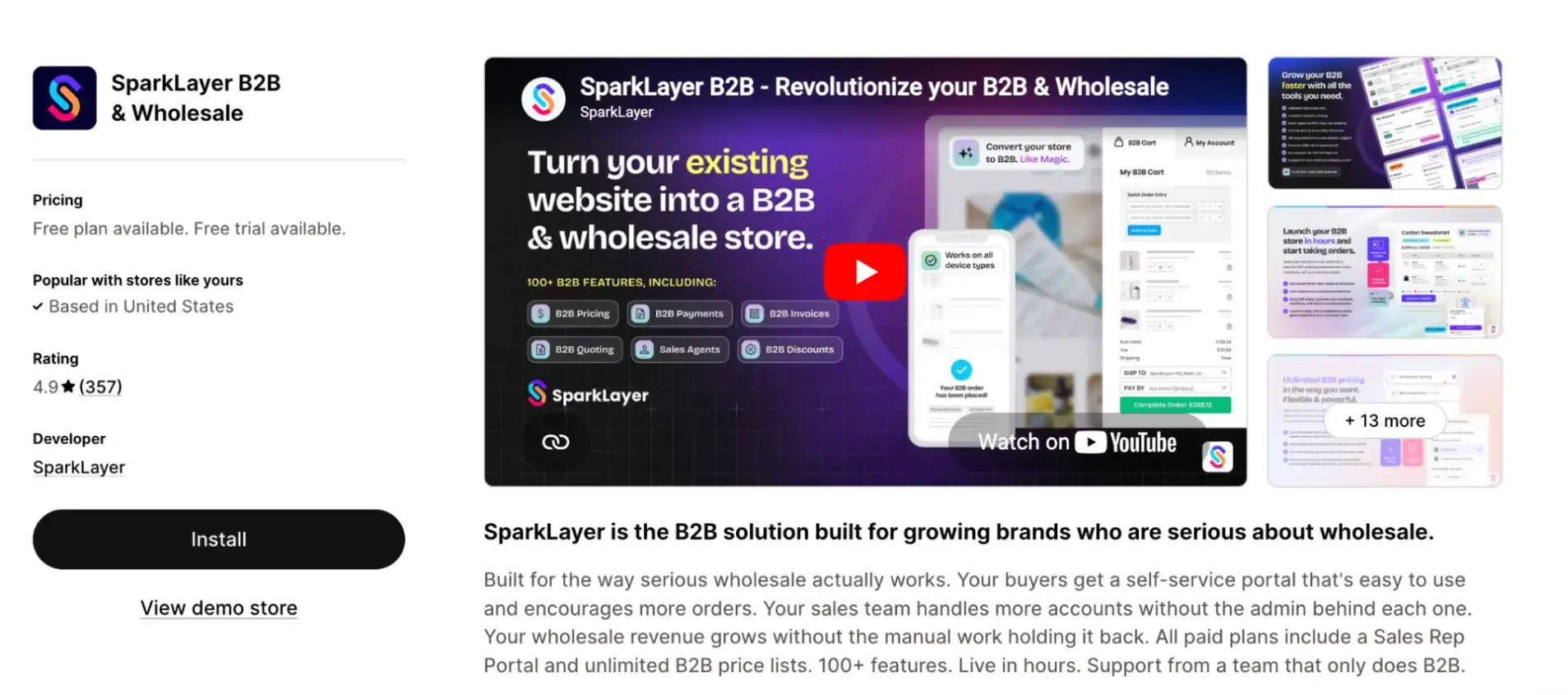
Best for: Plus stores running B2B or wholesale alongside DTC.
Rating: 4.9 (350+ reviews)
Pricing: Paid plans from $99/month.
SparkLayer adds enterprise-grade B2B functionality on top of Shopify Plus's native B2B catalog. It handles customer-specific pricing and quote workflows, sales rep portals, and all the things native B2B doesn't fully cover.
For Plus merchants where B2B is 20%+ of revenue, SparkLayer is one option for keeping wholesale operations inside Shopify rather than running a separate B2B platform.
Remember that B2B orders are typically much larger than DTC. This is where AOV is lifted with quantity breaks, suggested complementary SKUs, and account-based recommendations.
Limitations: B2B-only
Plus-specific fit: Plus-only; non-Plus stores can't use Shopify B2B.
Which B2B Approach for Plus?
- If B2B is under 10% of revenue: stick with Shopify's native B2B catalog and revisit when it grows.
- If B2B is 20%+ of revenue or you have specific requirements (sales rep portals, complex pricing tiers, quote workflows), SparkLayer.
Search: Invisible Until Your Catalog Hits 1,000 SKUs
Search isn't the first place merchants think to invest in AOV, but on Plus stores with large catalogs, it's often where the difference is made. Better search means more products are discovered per session and fewer customer abandonments.
Algolia
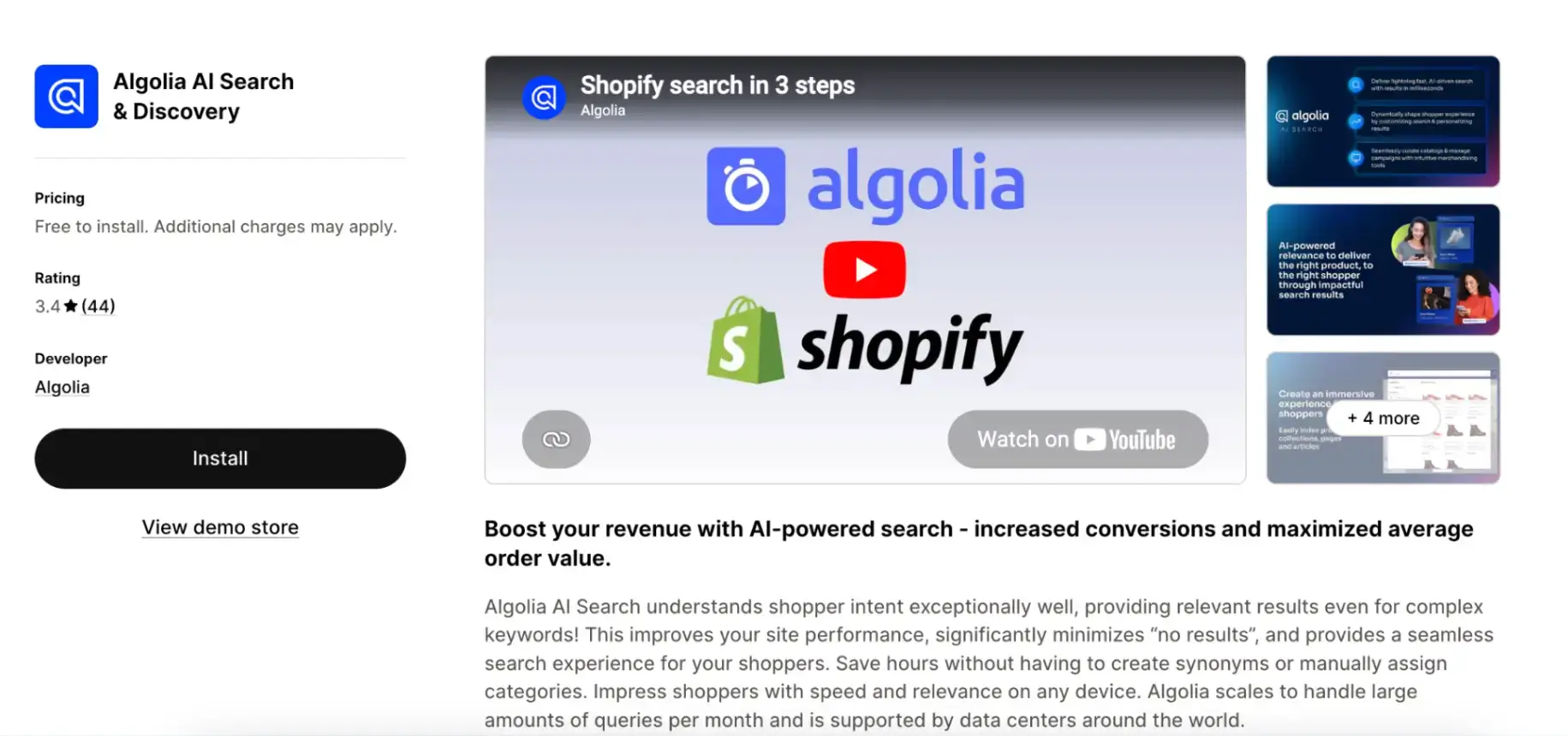
Best for: Plus stores with 1,000+ SKUs that have outgrown Shopify's native search.
Rating: 3.6 (45+ reviews)
Pricing: Free to install; pay-as-you-go based on indexing and search volume.
Algolia provides intent-based search results, personalization, and merchandising controls for Shopify stores.
On large catalogs, it can surface more relevant products per query than native Shopify search, which matters when search-related bounce is hurting conversion.
The low App Store rating reflects real merchant friction: the pricing model is harder to predict than flat-fee competitors, setup typically requires developer involvement, and the value depends heavily on catalog size.
Stores with under 500 SKUs rarely see enough lift to justify the cost or integration effort. The app is most often considered when search is a measurable bottleneck, not as a default install.
Limitations: Usage-based pricing can scale unpredictably with large catalogs. Setup requires technical resources. A low rating suggests merchant satisfaction varies significantly by store size and use case.
Plus-specific fit: Available on all Shopify plans, but the ROI math typically only works at the Plus-level catalog size and traffic.
Which Search Approach for Plus?
- If your catalog has fewer than 500 SKUs, Shopify's native search is usually sufficient.
- If your catalog is 1,000+ SKUs and you're seeing search-related bounce in analytics, Algolia, or a comparable enterprise search tool.
Stack the Layers in Order. Not All at Once
The mistake most Plus stores make is installing so many apps in their first month, only to face complications and slow things down. The merchants who win build their stack in a deliberate sequence. Let’s see how it’s done.
Layer 1: Pre-purchase AOV (months 1-2): Pick one bundle/upsell app for the product page and cart. Run it solo for 30 days; measure incremental AOV against your pre-install numbers.
For a broader product page and conversion context, our ultimate guide to Shopify store optimization covers complementary levers, theme choice, navigation, page speed, and on-site engagement that pair well with bundle apps without overloading the product page.
Layer 2: Checkout and post-purchase (months 2-4): Add a checkout extension app (AfterSell, UpsellPlus, or Rebuy). Sequencing this second lets you decide where the lift is coming from.
Layer 3: Email and lifecycle (months 1-3, parallel to Layer 1): Klaviyo or Omnisend for abandoned cart, post-purchase nurture, and replenishment flows. Pair with a lead capture tool like POWR Sales Popup to feed the email database.
Layer 4: Support, returns, and B2B (months 3-6): Gorgias for support-driven upsells. Loop for return-to-exchange recovery. SparkLayer if B2B is meaningful revenue.
Layer 5: Search and discovery (when catalog hits 1,000+ SKUs): Algolia or comparable enterprise search.
What Industry Experts Say About App Stacks
Expert commentary on the importance of building a careful, well-sequenced app stack rather than over-installing tools:
This range, 10 to 40 percent, is why pre-purchase and post-purchase apps consistently sit at the center of any Plus AOV strategy.
The variance comes from execution: stores that test bundle combinations carefully, time their upsell offers correctly, and measure incremental lift land at the high end; stores that install apps and let defaults run usually land at the low end.
Where Plus Stacks Usually Leak AOV
Stacking too many widgets on the product page. FBT + cross-sell + sticky cart upsell + free shipping bar + popup signup = a cluttered page that converts worse than no widgets at all.
Ignoring page speed cost. Shopify Plus stores carry higher traffic, which means even small JavaScript from apps has an outsized impact. Apps without the Built for Shopify badge should be benchmarked with PageSpeed Insights before and after install.
Not leveraging Shopify Flow. Shopify Plus includes Flow for free, but most stores never connect it to their app stack. Order over $200 → tag for VIP segment → Klaviyo flow triggers → Rebuy adjusts on-site recommendations next session. This is where Plus stops being "just bigger Shopify" and starts compounding.
Treating B2B and DTC as the same store. B2B customers have different price sensitivities and patterns. Bundle logic, upsells, and Klaviyo flows need separate configurations.
Forgetting mobile. Shopify Plus stores see higher mobile traffic than average DTC stores. Apps that break on mobile cost a significant share of potential AOV lift. As our guide on increasing conversion rates emphasizes, mobile experience is now the default.
Conclusion
Building a Shopify Plus app stack that actually moves AOV comes down to one question: where is revenue leaking, and which app is built to close that specific gap?
For pre-purchase bundling and product-page AOV, Fast Bundle and Pumper Bundles cover the most common Plus use cases.
For checkout and post-purchase upsells, AfterSell, UpsellPlus, and Rebuy lead the category depending on whether you need flat-fee pricing, native Plus checkout extensions, or full personalization.
Recharge anchors the subscription side. Klaviyo and Omnisend handle email and SMS retention.
POWR Sales Popup feeds the lead capture layer. Gorgias and Loop close the loop on support-led revenue and exchange recovery. SparkLayer handles B2B at scale, and Algolia steps in when search becomes a bottleneck on large catalogs.
The Plus merchants who win don't install all of this on day one. They start with the layer where the gap is biggest, usually pre-purchase bundles or post-purchase upsells, measure the incremental AOV lift over 30 to 60 days, and only then move to the next layer.
Pick the category first, evaluate the apps inside it on the criteria that actually matter for your store (Built for Shopify status, Checkout Extensibility support, pricing model, B2B compatibility), and let the results from one layer guide what you add next.
The stack that compounds isn't the largest one. It's the one where every app earns its place.
Frequently Asked Questions
What are the best Shopify Plus apps for increasing AOV?
Most Shopify Plus stores increase AOV through a combination of bundle apps, checkout upsells, post-purchase offers, and retention tools. Popular choices include Fast Bundle for bundles, Rebuy for personalization, AfterSell and UpsellPlus for upsells, Klaviyo for retention marketing, and POWR Sales Popup for pre-purchase lead capture.
Do Shopify Plus stores need different apps than standard Shopify stores?
Not always, but Shopify Plus stores usually need apps that can handle higher order volume, larger catalogs, B2B workflows, Shopify Functions, and Checkout Extensibility.
What is Shopify Checkout Extensibility?
Shopify Checkout Extensibility is Shopify’s framework for customizing checkout using checkout extensions, Shopify Functions, and app integrations. It replaced checkout. liquid for Shopify Plus stores.
What are Shopify Functions?
Shopify Functions allow merchants and app developers to run custom logic inside Shopify for discounts, shipping rules, payment methods, and other commerce workflows.
How long does it take to see AOV improvements from new Shopify Plus apps?
Bundle and upsell apps often show measurable AOV improvements within a few weeks. Retention and subscription tools usually take longer because they depend on repeat purchases.
How should Shopify Plus merchants build their app stack?
Most Shopify Plus brands combine a bundle layer, checkout upsells, lifecycle marketing, customer support automation, and retention tools rather than relying on a single app.
