

AI appointment setting enables sales and customer success teams to automate lead qualification, schedule meetings in real time, personalize outreach at scale, and reduce no-shows.
By following best practices like multi-channel engagement, intelligent routing, CRM integration, and continuous optimization, organizations can significantly improve booking rates and overall revenue performance.
In this article:
- What Is AI Appointment Setting?
- AI Appointment Setting for Small Businesses and Solopreneurs
- Why AI Appointment Setting Matters in 2026
- 8 Best Practices for AI Appointment Setting
- How to Implement AI Appointment Setting (Step-by-Step)
- AI Appointment Setting for Sales Teams
- AI Appointment Setting for Customer Success Teams
- Common Mistakes to Avoid
- How AI Improves Appointment Conversion Rates
- Future of AI Appointment Setting
Why Appointment Setting Is Broken (and How AI Fixes It)
In today’s fast-paced digital environment, speed and personalization are everything. Whether it’s a sales team trying to convert inbound leads or a customer success team aiming to engage clients proactively, appointment setting plays a critical role in driving business outcomes.
Yet, traditional scheduling processes are often inefficient. They involve back-and-forth emails, delayed responses, missed opportunities, and high no-show rates. These inefficiencies not only waste time but also directly impact revenue.
This is where the AI appointment setting is changing the game.
AI-powered systems can instantly engage prospects, qualify them, book meetings, send reminders, and even optimize interactions over time.
However, simply implementing AI tools is not enough. To truly unlock value, businesses must follow proven best practices tailored to both sales and customer success functions.

Source: Freepik
What Is AI Appointment Setting?
AI appointment setting refers to the use of intelligent systems to automate and optimize the scheduling process across the customer journey.
These systems can:
- Initiate conversations with prospects in real time
- Ask qualifying questions
- Recommend appropriate meeting slots
- Sync with calendars and CRM systems
- Send confirmations and reminders
- Learn from past interactions to improve performance
Unlike traditional scheduling tools, AI acts as a proactive assistant, not just a passive booking interface.
According to Harvard Business Review, companies that respond to leads within five minutes are significantly more likely to convert them into opportunities.
AI Appointment Setting for Small Businesses and Solopreneurs
AI appointment setting is not limited to large enterprises.
Small businesses and solo operators can benefit even more by automating time-consuming scheduling tasks without increasing headcount.
For smaller teams, AI helps:
- Respond instantly to inbound leads without dedicated staff
- Qualify prospects automatically before booking calls
- Reduce time spent on back-and-forth scheduling
- Maintain consistent follow-ups without manual effort
This allows founders, consultants, and small sales teams to focus on high-value activities like closing deals and building relationships, while AI handles repetitive coordination tasks.
Impact: Higher productivity, faster response times, and improved conversion rates without additional hiring.
Why AI Appointment Setting Matters in 2026
The importance of AI in appointment setting is driven by several key trends:
1. Rising Competition for Attention
Prospects expect immediate responses. Delays can result in lost opportunities.
2. Increasing Lead Volume
Marketing teams are generating more leads than sales teams can handle manually.
3. Demand for Personalization
Generic outreach no longer works; customers expect tailored experiences.
4. Pressure for Operational Efficiency
Organizations are under pressure to do more with fewer resources. AI addresses all these challenges by enabling instant, scalable, and intelligent engagement.

Source: Freepik
8 Best Practices for AI Appointment Setting
1. Use Intelligent Lead Qualification
One of the biggest mistakes organizations make is booking meetings with unqualified leads. AI should be configured to filter and prioritize prospects before scheduling.
AI can:
- Ask dynamic qualification questions
- Score leads based on intent and fit
- Route leads to the appropriate team
For example, a high-value enterprise lead can be routed to a senior sales rep, while smaller leads may go to inside sales or automated nurturing workflows.
Impact: Better meeting quality, higher conversion rates, and improved sales efficiency.
2. Enable Multi-Channel Engagement
Modern buyers interact across multiple platforms. AI appointment setting should not be limited to a single channel.
Best-performing systems engage users through:
- Website chatbots
- Email automation
- SMS or messaging apps
- Social media platforms
This ensures that prospects can book meetings wherever they are most comfortable.
Impact: Higher engagement rates and increased booking conversions.
3. Optimize Speed-to-Lead
Speed is one of the most critical conversion factors. Research consistently shows that responding within minutes dramatically increases the chances of booking a meeting.
AI enables:
- Instant responses to inbound inquiries
- Real-time conversation initiation
- Immediate scheduling options
Instead of waiting hours or days for a response, prospects can book meetings within seconds.
Impact: Significantly higher lead-to-meeting conversion rates.
This is where AI delivers a clear competitive advantage.
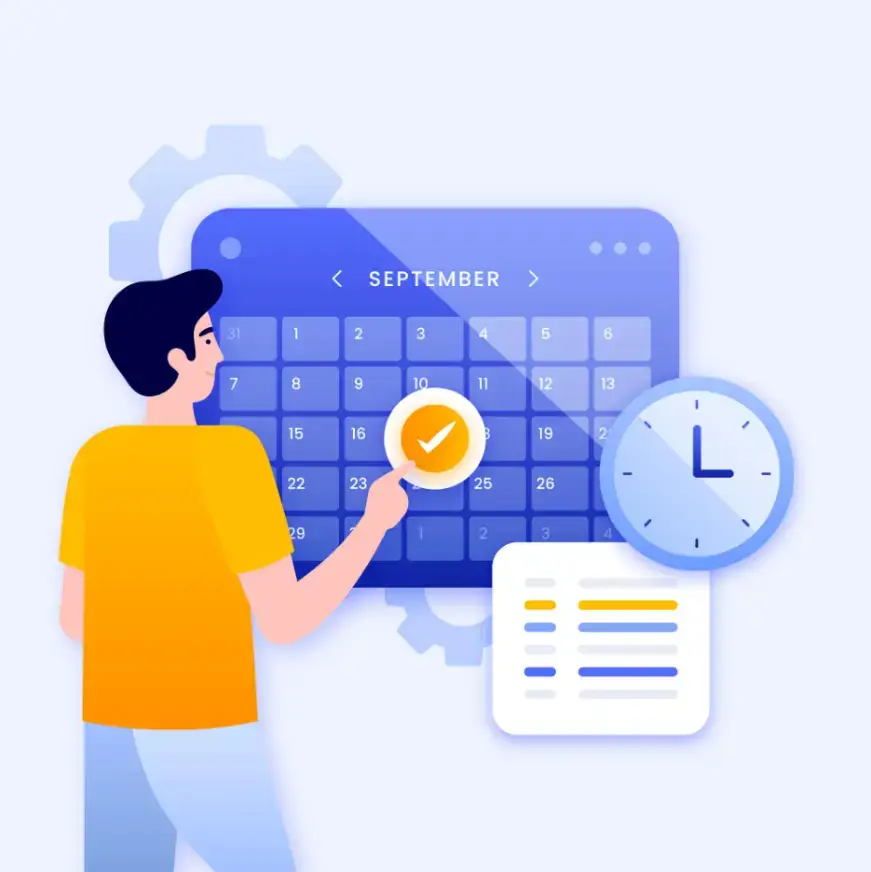
4. Integrate Real-Time Calendar Availability
A seamless scheduling experience is essential. AI systems should integrate directly with team calendars to:
- Display real-time availability
- Automatically adjust for time zones
- Prevent double bookings
- Allow easy rescheduling
This eliminates the traditional back-and-forth communication and creates a frictionless experience.
Impact: Faster scheduling and improved user experience.
Source: Freepik
5. Personalize Conversations at Scale
Personalization is no longer optional; it’s expected.
AI systems should leverage data such as:
- User behavior on the website
- Past interactions
- Industry or company size
- Stage in the buyer journey
Based on this data, AI can tailor messages, recommend relevant meeting types, and create a more human-like interaction.
Impact: Higher engagement, trust, and conversion rates.
6. Reduce No-Shows with Smart Follow-Ups
No-shows are a major challenge in appointment setting. AI can proactively address this by:
- Sending automated reminders via email or SMS
- Confirming attendance before the meeting
- Offering easy rescheduling options
- Sending calendar invites with all relevant details
Some advanced systems even adjust reminder timing based on user behavior patterns.
Impact: Reduced no-show rates and better time utilization.

Source: Freepik
7. Integrate with CRM and Revenue Systems
For AI appointment setting to deliver full value, it must be integrated with existing systems such as:
- CRM platforms (for lead tracking)
- Marketing automation tools
- Sales engagement platforms
This ensures that all interactions are recorded, enabling teams to track performance and maintain a unified view of the customer journey.
Impact: Improved data visibility and better decision-making.
8. Continuously Optimize Using Data
AI systems should not remain static. They should continuously learn and improve based on:
- Booking rates
- Conversion rates
- No-show patterns
- Customer responses
By analyzing this data, organizations can refine:
- Messaging strategies
- Qualification criteria
- Scheduling timing
Impact: Ongoing performance improvement and higher ROI.
How to Implement AI Appointment Setting (Step-by-Step)
To get the most value from AI appointment setting, organizations should:
- Start with a single high-impact use case (e.g., inbound lead qualification)
- Define clear success metrics such as booking rate and no-show rate
- Continuously test messaging, timing, and qualification criteria
- Ensure seamless integration with existing CRM and calendar systems
This practical approach helps teams move from experimentation to measurable results faster.
AI Appointment Setting for Sales Teams
For sales teams, AI appointment setting focuses on pipeline growth and conversion.
Key Benefits for Sales
- More qualified meetings
- Faster lead response times
- Reduced administrative workload
Example AI Scheduling Workflow
- A prospect visits the website
- AI initiates a conversation
- The lead is qualified
- A meeting is scheduled instantly
- Follow-ups are automated
This streamlined process allows sales reps to focus on closing deals rather than managing schedules.

Source: Freepik
AI Appointment Setting for Customer Success Teams
Customer success teams use AI appointment setting to maintain and grow customer relationships.
Key Use Cases
- Onboarding sessions
- Quarterly business reviews
- Renewal discussions
- Upsell opportunities
Benefits for Retention and Growth
- Proactive engagement
- Improved customer satisfaction
- Increased retention and revenue
AI ensures that no important interaction is missed.
Common Mistakes to Avoid
Over-Automation
Avoid making conversations feel robotic. Maintain a human tone.
Poor Qualification Logic
This can lead to low-quality meetings.
Lack of Human Escalation
AI should hand off complex cases to human agents.
Ignoring Performance Data
Failing to optimize leads to stagnant performance.
How AI Improves Appointment Conversion Rates
AI improves conversion rates by eliminating delays, personalizing interactions, and simplifying the booking process. It ensures that prospects are engaged at the right time, with the right message, and can schedule meetings instantly—leading to higher conversion and attendance rates.
Future of AI Appointment Setting
The future of AI appointment setting will go beyond scheduling. AI systems will:
- Predict the best time to engage prospects
- Automatically adjust outreach strategies
- Act as full conversational sales assistants
- Integrate deeply into revenue operations
AI will evolve into a core component of revenue generation, not just a support tool.
Final Thoughts: Why AI Appointment Setting Is Now Essential
AI appointment setting is no longer a “nice-to-have,” it’s a strategic necessity.
Organizations that adopt these best practices can:
- Engage leads faster
- Book more high-quality meetings
- Improve customer experience
- Drive consistent revenue growth
The future of sales and customer success is powered by intelligent, automated, and always-on AI systems.
FAQ: AI Appointment Setting
1. What is AI appointment setting?
AI appointment setting uses intelligent systems to automate lead engagement, qualification, and scheduling, reducing manual effort and improving efficiency.
2. How does AI reduce no-shows?
AI sends automated reminders, confirms attendance, and provides easy rescheduling options, ensuring better meeting attendance.
3. Is AI appointment setting suitable for small teams?
Yes, it allows small teams to scale operations without increasing headcount.
4. Can AI replace sales or customer success teams?
No, AI supports teams by handling repetitive tasks, allowing humans to focus on relationship-building and closing deals.
5. What ROI can businesses expect?
- ↑ 30–50% increase in bookings
- ↓ 40–60% manual effort
- ↑ higher conversion rates

Author Bio
Anand Subramanian is a technology expert and AI enthusiast, currently leading the marketing function at Intellectyx AI. With over a decade of experience supporting enterprise and government projects, he focuses on advancing data, digital, and agentic AI development services that help organizations innovate and scale.